

Female Hair Loss Clinic in Taichung
Female pattern hair loss, postpartum shedding, menopausal and stress-related hair loss usually show as a widening part and overall thinning rather than a bald patch. Scalp dermoscopy comes first, then the decision on blood tests and medication.
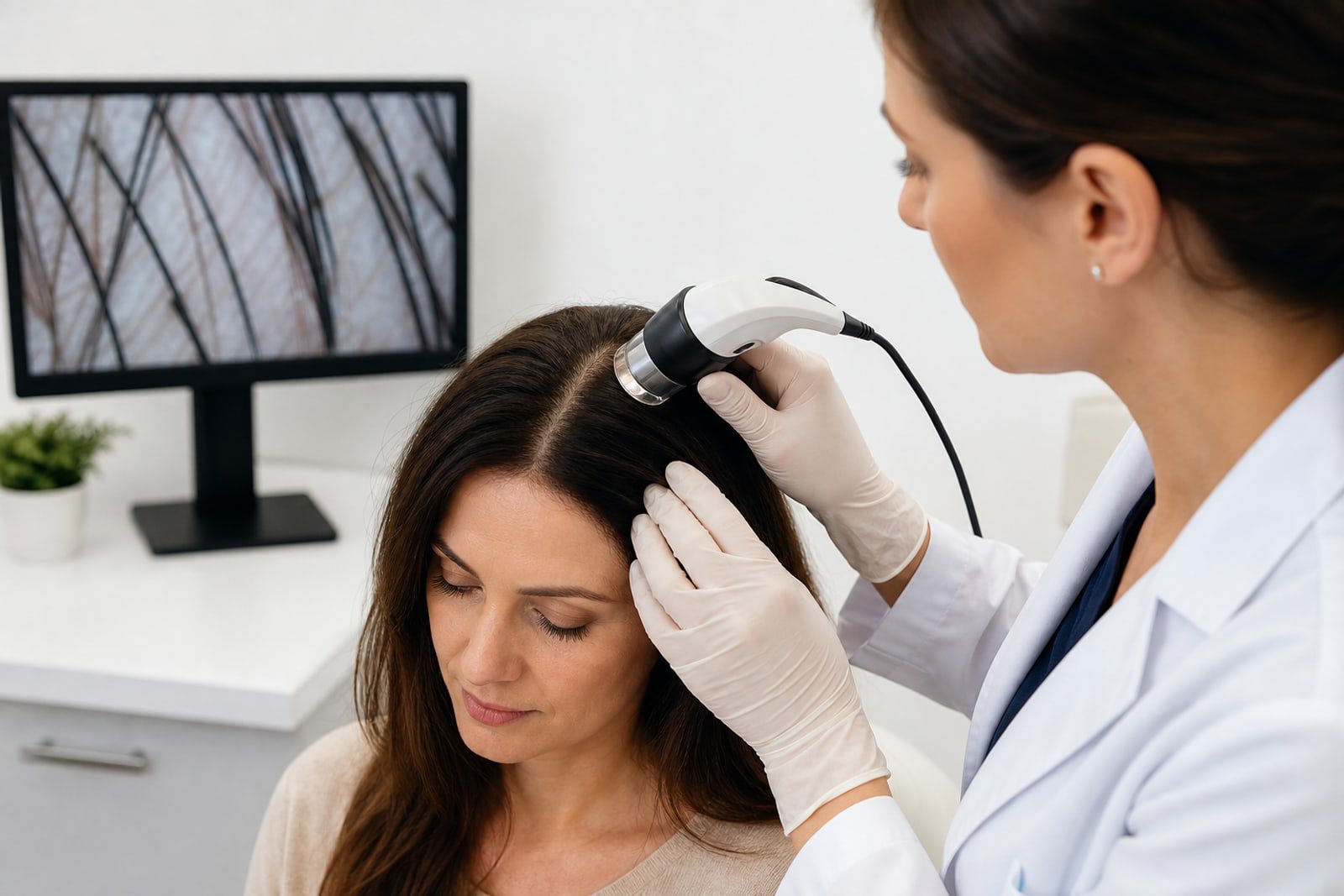
Common types of hair loss in women
Hair loss in women rarely has a single cause; hormones, nutrition, stress and the condition of the scalp often coexist. These are the six we see most often in clinic. Select one to read how it is identified and managed.
Female pattern hair loss
On average one in five adult women has some degree of female pattern hair loss. Unlike men, it usually shows as a gradually widening part at the crown and finer hair shafts, with the hairline generally preserved.
About female hair loss →Postpartum shedding
The heavy shedding that starts two to four months after birth is telogen effluvium: hair whose shedding was delayed during pregnancy comes out together. It usually settles within six to twelve months.
About postpartum hair loss →Menopause and hormonal change
As oestrogen falls around menopause, hair can become finer and the growth phase shorter. Stopping or switching the contraceptive pill and conditions such as polycystic ovary syndrome can also change the pattern of shedding.
Weight loss and nutritional shedding
Rapid weight loss over a short period, or not enough protein or iron, can push hair follicles into the resting phase early. Because of menstrual blood loss, iron deficiency is more common in women than in men to begin with.
About weight loss and shedding →Alopecia areata
A clearly bordered round bald patch, related to immune imbalance, stress and individual predisposition. The pattern differs from the overall thinning of female pattern hair loss, and so does the management.
About alopecia areata →Scalp inflammation and seborrhoeic scalp
A scalp that is repeatedly red, flaky, oily and itchy affects the environment the follicles grow in. Where hair loss comes with scalp symptoms, the scalp usually needs settling before hair growth is addressed.
About seborrhoeic dermatitis →When should you see a doctor?
Hair loss in women is usually gradual, so by the time it feels obviously thinner it has often been going on for a while. The situations below are worth assessing with dermoscopy rather than starting with a product you buy yourself.
Reasonable to watch
- Around 50–100 hairs a day, with no clear change in the width of your part or overall volume
- A brief increase in shedding at the change of seasons that settles within a few weeks
- Postpartum shedding that is decreasing month by month, with hair starting to grow back
Worth seeing a doctor
- The part keeps widening, or your ponytail feels noticeably thinner
- You can see the scalp at the crown in good light, or shedding has clearly increased for several weeks
- Postpartum shedding has not settled after a year, or your hair is clearly thinner than before pregnancy
- A clearly bordered round bald patch appears, or a patch keeps growing
- Hair loss comes with changes in your cycle, fatigue, feeling cold, or clear weight change
- The scalp is repeatedly red, itchy, flaky or has pustules
The above is general health education and does not replace a consultation; diagnosis and treatment must be assessed by a doctor in person.
Assessment and treatment options
Managing female hair loss usually means identifying the type first and combining approaches second. The table below sets out what this clinic actually offers and what each is suited to, so you have a picture before your visit.
| Option | Available here | Worth discussing for | Points to note |
|---|---|---|---|
| Scalp dermoscopy | Yes | Telling overall thinning from a discrete patch, judging how uneven the hair shafts are, and assessing scalp inflammation | Serves as the baseline for follow-up; images are best taken under the same conditions each time |
| Blood tests to rule out causes | Yes, arranged case by case | Suspected iron deficiency, thyroid dysfunction, anaemia or hormone-related hair loss | Iron deficiency is more common in women because of menstrual blood loss; which tests are ordered depends on the suspicion, and results are explained at a follow-up visit |
| Topical hair growth preparations | Yes | Early to moderate female pattern hair loss, or where you would rather start non-invasively | Needs several months of continued use before it can be judged; a temporary increase in shedding can occur early on |
| Oral medication | Yes, assessed case by case | Moderate to severe or faster-progressing female pattern hair loss, after assessment | Some anti-androgen ingredients are unsuitable while trying to conceive, pregnant or breastfeeding; family plans and contraindications must be confirmed first, and these cannot be obtained on your own |
| Scalp injection treatment | Yes, feasibility assessed first | Where follicles have not fully shrunk and you want more than medication alone | Multiple sessions; who it suits and its limits are explained before treatment |
| Scalp conditioning and home care | Yes | Where oiliness, flaking or inflammation of the scalp also need settling | Adjusting washing frequency, water temperature and styling habits alongside treatment gives steadier results |
This table sets out what can be discussed in clinic; it does not mean every patient is suitable for or needs each option. Results vary from person to person, and the actual plan is decided by a doctor after assessing indications and contraindications.
Assessment and hair care programme
From examination and classification through to medication and home care, the plan is built around the pattern of hair loss, your family plans and your daily routine, so it can be followed over the long term.
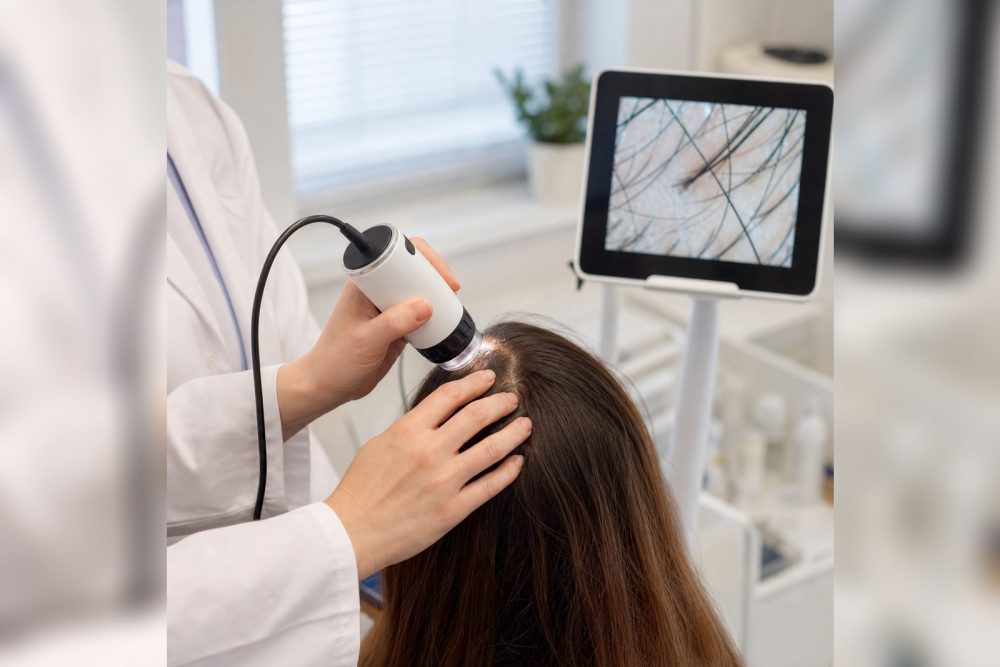
Scalp dermoscopy
High-magnification examination of follicle density, the proportion of uneven hair shafts, and how oily, red or flaky the scalp is, which then serves as the baseline for comparison.
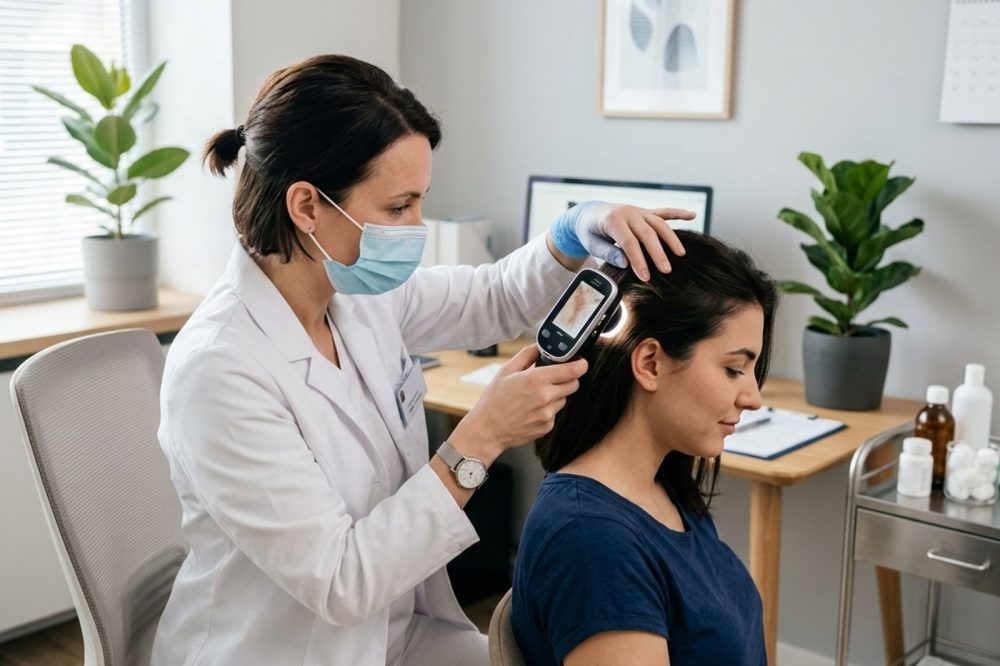
History-taking for women
Beyond when the hair loss started and family history, we ask about your cycle, childbirth, contraceptive pill or hormone medication, weight loss and diet, which matter particularly in women.
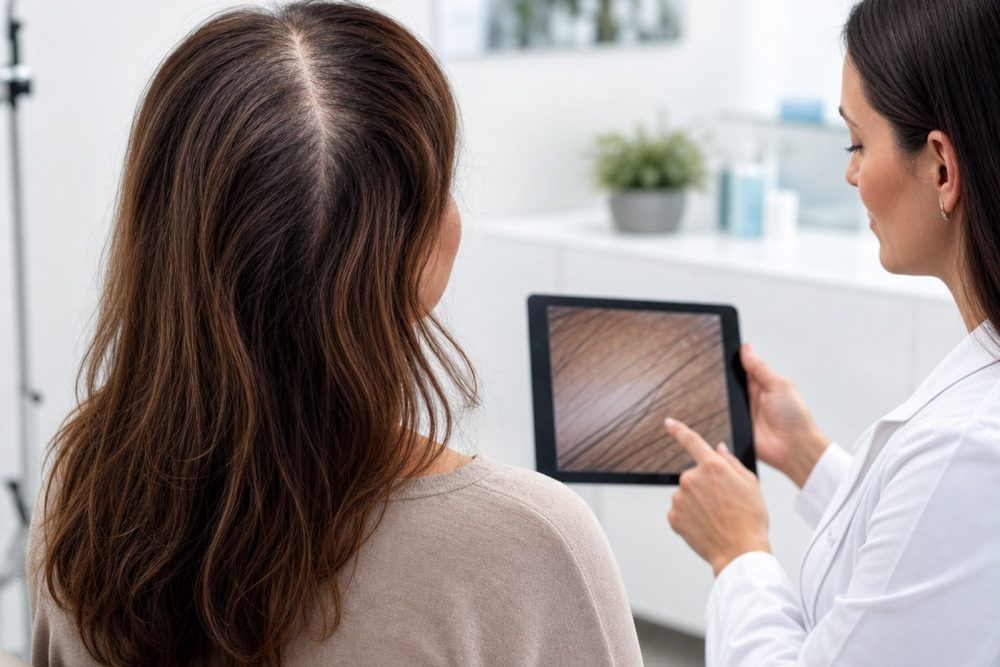
Explaining the pattern
Using the images to show whether this is overall thinning, a discrete patch or telogen effluvium, so you can see your own pattern before we discuss how far to take treatment.
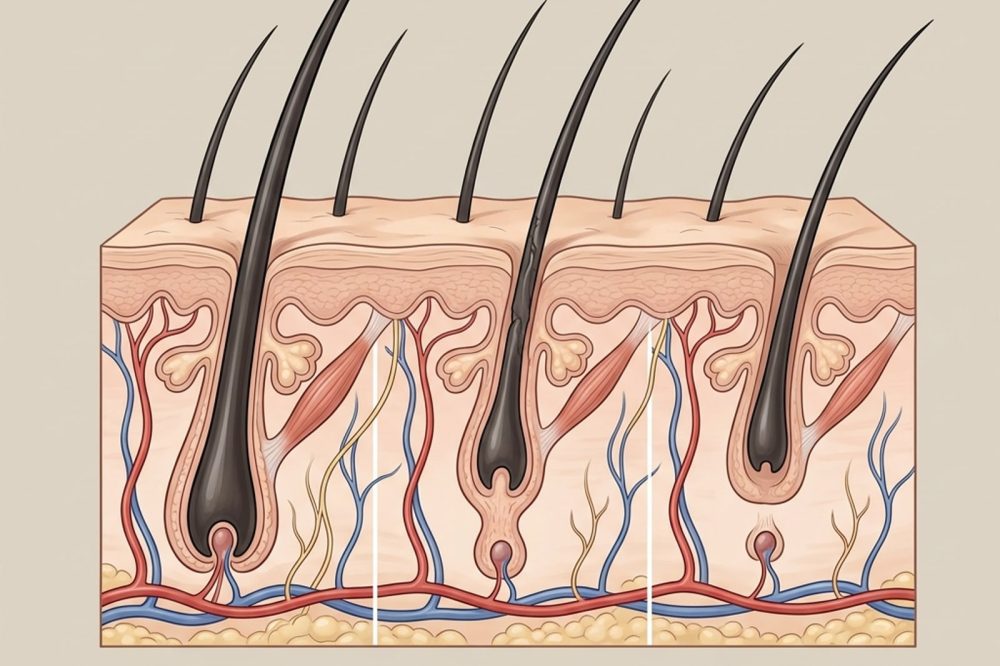
The hair cycle and what to expect
Hair has growing, transitional and resting phases, so any treatment has to cross a full cycle before change shows. Setting out the timeline first helps you avoid giving up midway.
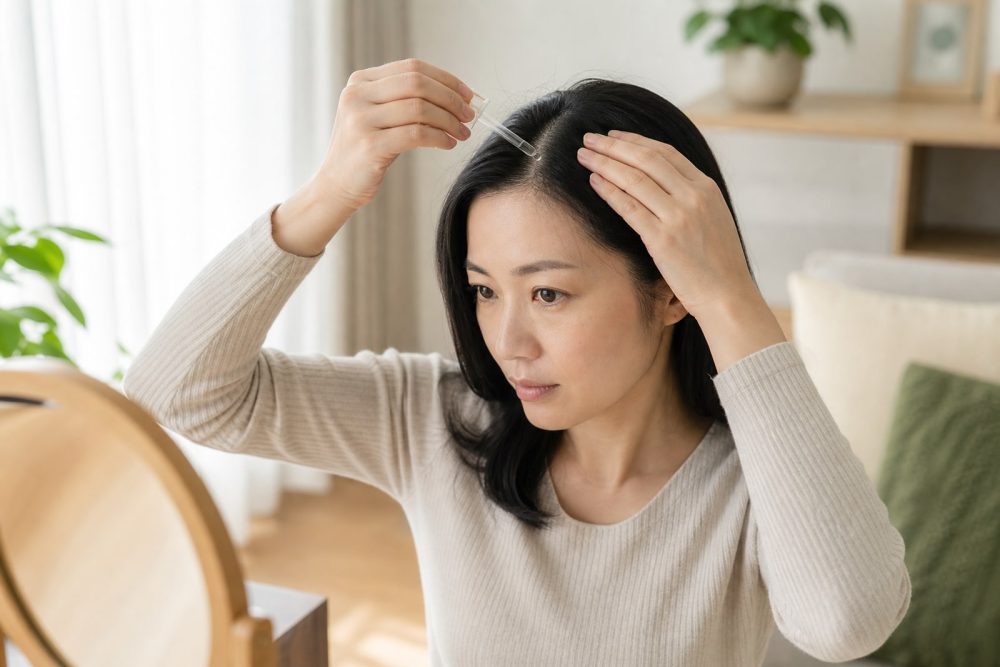
Topical hair growth preparations
Applied to the scalp daily, with the strength and number of applications adjusted to the state of your scalp and how well you tolerate it. It takes several months before it can be judged.

Assessment for oral medication
Suitability is judged from age, family plans, your cycle and any contraindications, with regular follow-up for effect and side effects. Trying to conceive and breastfeeding need particular assessment.
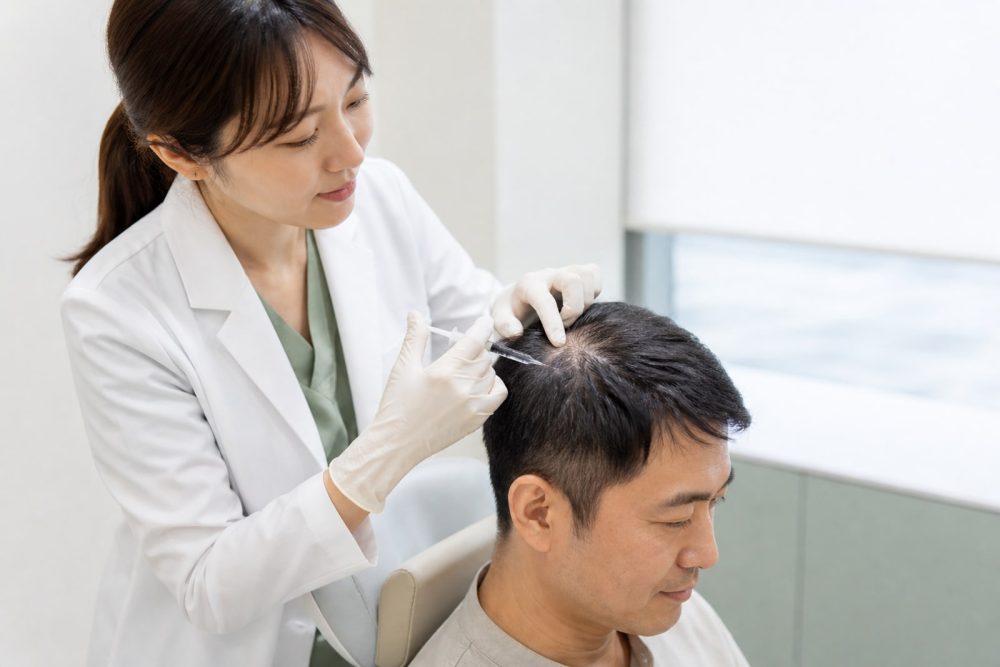
Scalp injection treatment
An injectable treatment into the scalp, suited to those whose follicles have not fully shrunk and who want more than medication alone. The number of sessions and intervals are explained beforehand.

Washing and home care
Washing frequency, water temperature, blow-drying, the interval between colouring or perming, and how tightly you tie your hair all affect the scalp. Doing this alongside clinic treatment gives steadier results.
This article is disease education information. It is not drug advertising and does not recommend or sell any specific medicine.
What to expect at your visit
Initial consultation and history
When the hair loss started and how quickly, family history, your cycle and any childbirth, contraceptive pill or hormone medication, weight loss and diet, along with stress and sleep.
Scalp dermoscopy
Looking at follicle density and distribution, the proportion of uneven hair shafts, and oiliness, inflammation and redness of the scalp, to determine which pattern this is.
Any tests needed
A hair pull test, blood work or hormone-related tests are arranged according to the suspicion, to rule out iron deficiency, anaemia, thyroid and other endocrine factors.
An individual hair plan
Topical treatment, oral medication, injection sessions and home care are combined according to the diagnosis, with the expected timeline and possible reactions explained once family plans are confirmed.
Regular follow-up and adjustment
Follicle density and volume are compared at follow-up visits, medication or treatment intervals adjusted, and side effects and recurrence guarded against.
Female Hair Loss Clinic Team
Seen by a dermatology specialist, combining specialist backgrounds from medical centres including NTUH and Veterans General Hospital with clinical experience.

Dr. Tseng

Dr. Lin
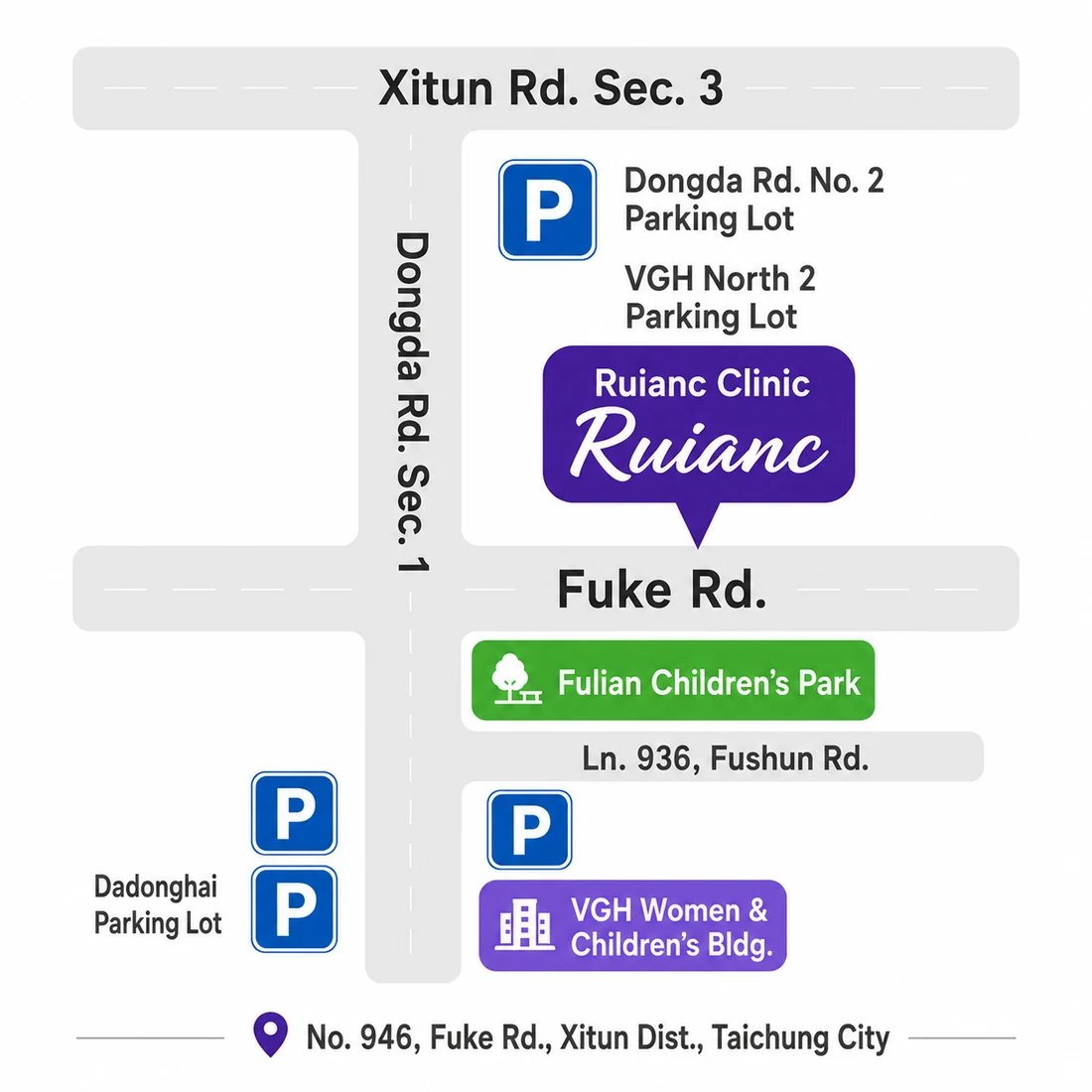
Location and Directions
Behind Taichung Veterans General Hospital・Near Central Taiwan Science Park・Ruilian Tiandi Block D
Saturday afternoon 13:15–17:00; closed Sunday. Latest registration 20:45; hours follow the weekly schedule.
Partner employers: AU Optronics・Winbond Electronics・Corning Taiwan・TSMC・ProMOS Technologies
Frequently Asked Questions
QDo women get pattern hair loss too?
Yes. On average one in five adult women has some degree of female pattern hair loss. Unlike men, women rarely develop an obvious receding hairline; instead the part at the crown gradually widens and the hair shafts become finer, which makes it harder to notice early.
QHow long does postpartum shedding last?
Postpartum shedding is telogen effluvium. It usually becomes obvious two to four months after birth and settles within six to twelve months. If it has not settled after a year, your hair is clearly thinner than before pregnancy, or the part has widened, have it assessed for other contributing factors.
QDo I need blood tests for female hair loss?
Not always; it depends on the history. If there is also fatigue, heavy periods, feeling cold or clear weight change, or if you are vegetarian or have lost weight rapidly, the doctor may arrange tests to rule out iron deficiency, anaemia or thyroid dysfunction. Iron deficiency is more common in women because of menstrual blood loss.
QCan hair loss be treated while trying to conceive or breastfeeding?
Some oral anti-androgen ingredients are unsuitable while trying to conceive, pregnant or breastfeeding. Please tell the doctor about your family plans and whether you are breastfeeding, so the available options can be adjusted. Scalp care and other non-contraindicated approaches usually take priority.
QIs hair loss related to colouring, perming or ponytails?
Frequent colouring and perming damage the hair shaft and make it break more easily, but they do not usually shrink the follicle itself. Tying hair tightly over a long period can cause traction alopecia, most often at the hairline and sides. If the scalp is already visible, have it assessed for other patterns of hair loss as well.
QHow long before treatment shows results?
Hair grows in cycles, so it usually takes several months before change shows, and longer still to stabilise. The actual timeline depends on the pattern and the individual. Comparing dermoscopy images taken under the same conditions at follow-up is more reliable than going by impression.
QDo over-the-counter hair growth products work?
Some can help as an adjunct, but without matching the actual cause the benefit is limited, and it can delay treatment while the follicle can still be helped. Get a diagnosis first, then decide what to use.
QDo I need to book the female hair loss clinic in advance?
Booking is advisable. Phone and LINE bookings open 30 days before the clinic date and you can request a particular doctor and session. Walk-in registration is also accepted, with the last registration at 20:45. Sessions follow the weekly schedule, so it is worth confirming before you set out.