

What is urticaria, and is it contagious?
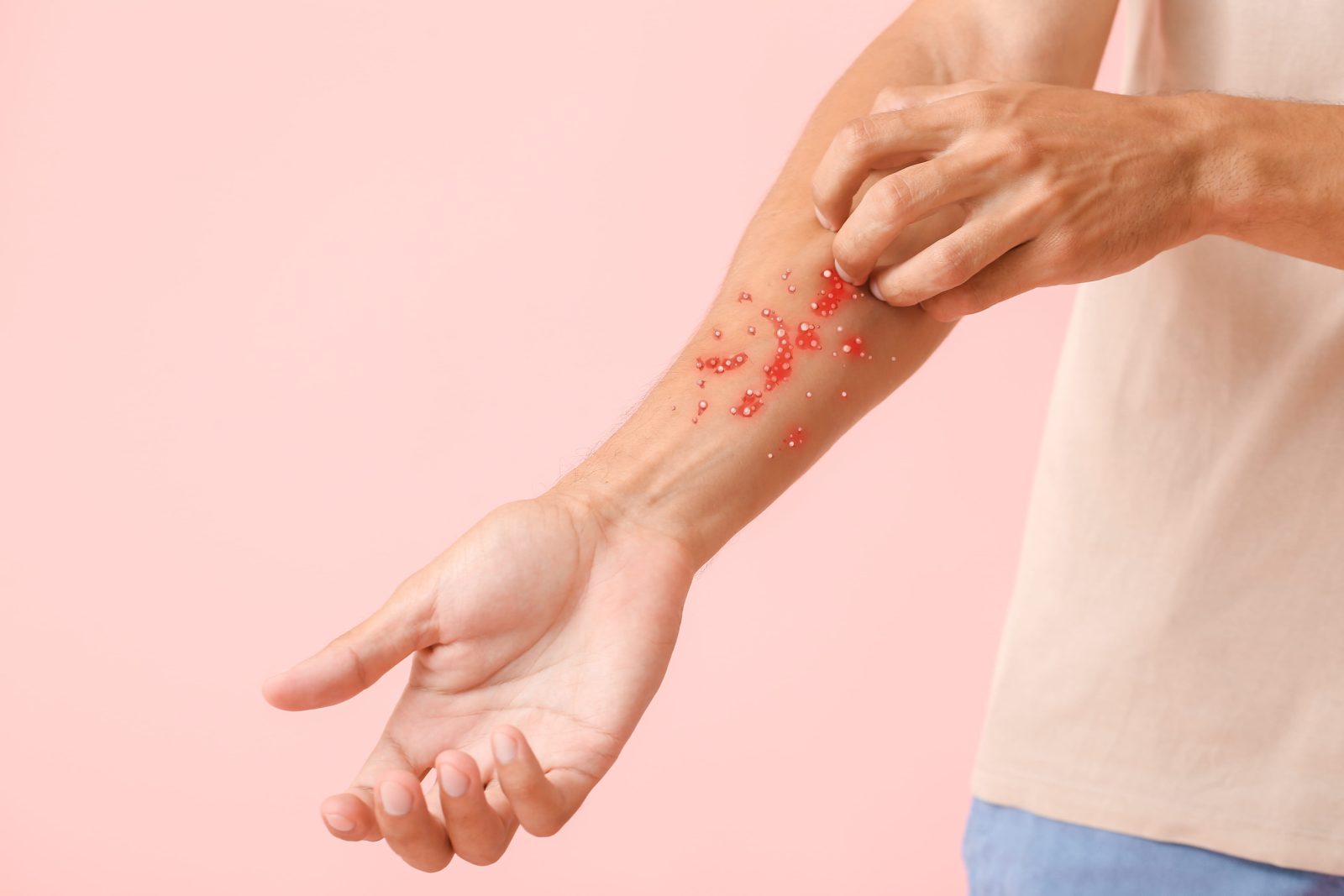
Hives are wheals caused by temporary leakage from blood vessels in the upper layer of the skin. They typically appear as raised, very itchy patches with irregular borders, and can be red, pink or close to skin colour.
Urticaria itself is not passed on by contact. It behaves more like an inflammatory response to some stimulus: some people can identify a clear trigger, while for others no single cause emerges even after investigation.
A single wheal usually appears over minutes to hours and settles within 24 hours, then may reappear somewhere else on the body. If one patch stays put, is markedly painful, or looks like a bruise once it fades, it needs assessing for urticarial vasculitis, a drug eruption, infection or another skin condition.
What are the symptoms, and when is it an emergency?
The usual picture is patches of wheals appearing suddenly with itching, prickling or a burning feeling, on the face, trunk, limbs or wherever the skin has been under pressure. Some people also get angioedema, which is deeper swelling around the eyelids, lips, hands, feet or genitals.
- Typical features: raised wheals, surrounding redness, itching, position changing quickly, each lesion usually settling within 24 hours.
- May come with: swelling of eyelids, lips, hands or feet, sometimes with tightness, tingling or tenderness.
- Worth seeing a doctor: recurring for more than six weeks, itching that disrupts sleep, needing medication frequently, or a suspected link to a medicine, food or infection.
- Needs emergency care: difficulty breathing, wheezing, throat tightness, swelling of the tongue or throat, chest tightness, dizziness, a drop in blood pressure, or a whole-body allergic reaction.
An itchy rash on its own can usually wait for a clinic appointment, but anything involving the airway, swallowing, consciousness or circulation cannot be watched with an oral antihistamine alone. That may be a severe allergic reaction and needs immediate medical care.

What causes hives? Is it always a food allergy?
Hives are not always a food allergy. Acute urticaria often relates to a viral or bacterial infection, medication, food, an insect bite or contact with an irritant; chronic urticaria is often spontaneous or immune-related, and a single allergen may never be found.
It helps to note the time of each flare, what you ate, any new medicine or supplement, symptoms of infection, stress, sleep, exercise, sweating, changes in temperature, pressure from clothing, the temperature of your shower and where you are in your menstrual cycle. Keeping a regular record often tells the doctor more about avoidable triggers than running many tests at once.
Chronic urticaria is defined as recurring for more than six weeks, and in many of those cases no single food or environmental allergen is directly responsible. Without a clear lead, cutting out foods or repeatedly testing for allergens is not necessarily helpful; what matters is confirming the diagnosis, controlling symptoms and following the course over time.
What is the difference between acute and chronic urticaria?
Urticaria is classified by duration, trigger and accompanying symptoms. The point of classifying it is not to label yourself but to help the doctor decide whether to observe, medicate, investigate or refer.
The table below is an orientation, not a substitute for a diagnosis. If your symptoms keep returning, the appearance is not typical, or there are whole-body symptoms, bring photographs and your notes to the appointment.
| Type or similar condition | Usual clues | Common triggers | What matters in management |
|---|---|---|---|
| Acute urticaria | Less than six weeks; wheals come and go quickly | Infection, food, medication, insect bites, contact irritants | Look for a recent trigger; assess antihistamines and when to return |
| Chronic spontaneous urticaria | Recurring beyond six weeks, often with no single clear allergen | May relate to immune response, stress, a post-infectious state, or no identifiable cause | Regular follow-up; assess long-term symptom control and any tests needed |
| Inducible urticaria | Flares after a specific stimulus such as cold, heat, pressure, sweating or sunlight | Temperature, exercise, pressure, friction, standing for long periods, a backpack strap | Confirm the pattern, discuss prevention and where the safe limits lie |
| Angioedema | Deeper swelling of eyelids, lips, hands or feet, with or without wheals | May relate to urticaria, medication or another mechanism | If it affects the tongue, throat, breathing or swallowing, go to emergency care |
| Suspected urticarial vasculitis | The same lesion lasting beyond 24 to 48 hours, painful, leaving bruising or colour change | May relate to vessel inflammation or an immune condition | Needs dermatology assessment; blood tests or a skin biopsy where indicated |
This table is for initial understanding only and does not replace an examination. If the rash looks atypical, keeps returning or comes with whole-body symptoms, it still needs a dermatology specialist to examine it.

How is urticaria treated, and how long do antihistamines take?
Treatment is adjusted according to whether the condition is acute or chronic, how severe it is, whether angioedema is present, and personal medical history. The usual aims are to reduce itching and wheals, lower how often it comes back, and avoid dangerous triggers as well as unnecessary dietary restriction.
Antihistamines are a common option. Doctors usually assess a non-sedating H1 antihistamine and adjust according to response. Different antihistamines vary in sedation, dry mouth and drug interactions, so pregnancy, breastfeeding, children, older adults, and anyone with liver or kidney disease need a doctor to judge which is appropriate.
Steroids and advanced treatments are not suitable for self-medication. In a severe acute flare a doctor may assess other medication for short-term use; where the condition is chronic and poorly controlled, the diagnosis may need confirming before other treatments are discussed. None of this should be bought over the counter or used repeatedly over the long term, since side effects, contraindications and how often follow-up is needed vary from person to person.
Topical creams are usually not the main answer. Urticaria is a temporary reaction within the skin, and an anti-itch or steroid cream alone generally cannot manage recurring wheals. Topical treatment is added when the skin has been scratched open, has become eczematous, or another form of dermatitis is present.
| Approach | Worth discussing for | Limits and cautions |
|---|---|---|
| Trigger management and record-keeping | The basis for all urticaria | Chronic cases often have no single trigger; broad long-term food restriction is not advisable |
| Non-sedating antihistamines | A common first-line option in both acute and chronic urticaria | Sedation, dry mouth and interactions differ by drug; pregnancy, breastfeeding and liver or kidney disease need assessment |
| Short course of oral steroids | A severe acute flare, assessed by a doctor | Has side effects and contraindications; not for self-medication or repeated long-term use |
| Advanced treatment | Chronic, poorly controlled, with the diagnosis confirmed | The diagnosis must be confirmed and other conditions excluded first; follow-up frequency varies |
| Topical anti-itch or moisturiser | A support measure when skin is scratched open, eczematous or inflamed | Cannot manage recurring wheals; not the main treatment for urticaria |
Responses vary from person to person. This table is to help you understand the options before your visit and is not a guarantee of results. Medication is decided by a doctor after assessing indications and contraindications.
How do you manage hives day to day and reduce flares?
Day-to-day care comes down to reducing irritation, recording triggers and following up regularly. Without clear evidence of a food allergy, broad long-term dietary restriction is not advisable, since it affects nutrition and quality of life.
- Photograph a flare, and note the time, the site, how long it lasted, and whether one patch stayed put.
- Wear loose, breathable clothing, and cut down on friction, overheating, pressure and hot shower water.
- Avoid scratching the skin open; a cool compress or gentle moisturiser can take the edge off.
- Tell your doctor about any recent new medicine, painkiller, antibiotic, supplement or herbal preparation.
- If flares follow exercise, sweating, temperature change or stress, record the pattern first, then discuss safe adjustments with your doctor.

When should you see a dermatologist?
The situations below are worth having assessed rather than watching on your own or repeatedly buying medication yourself.
- It has kept returning for more than six weeks, or the symptoms are affecting sleep and work.
- You need to keep taking medication to hold it down, and it returns as soon as you stop.
- It comes with swollen eyelids or lips, or you have had throat tightness or difficulty swallowing before.
- The person affected is a child or is pregnant, so the choice of medication needs particular care.
- You suspect a link to a new medicine, a painkiller or an antibiotic.
- The lesions are painful, last beyond 24 to 48 hours, or leave bruising and colour change behind.
The doctor decides from your history and skin findings whether blood tests, allergy assessment or other investigations are needed. Not everyone needs a full allergen panel.
A note from the dermatology team: recurring hives are not always one allergen
Hives make people want to identify which food is to blame straight away, but in practice chronic urticaria that recurs beyond six weeks cannot always be explained by a single allergen. Rather than cutting out foods long term, what matters more is recording when flares happen, how long they last, whether one patch stays put, any recent infection or medication, and whether there is swelling of the lips and eyelids or any airway symptom.
If wheals keep returning, disrupt your sleep, or come with angioedema, have a dermatology specialist assess you in person. The doctor will discuss antihistamines, trigger management, how often to follow up and whether further investigation is needed, based on your history, skin findings and any tests required.
- Work out first whether this is acute, chronic or inducible, then decide between observing, medicating and investigating.
- For pregnancy, breastfeeding, children, older adults and anyone with liver or kidney disease, the choice of antihistamine needs a doctor to judge.
- When there are airway, swallowing, consciousness or circulatory symptoms, go straight to emergency care rather than taking medication and watching.