

Hair Loss Clinic in Taichung
Male and female pattern hair loss, a receding hairline, alopecia areata, and shedding after childbirth or stress. We use scalp dermoscopy to identify the pattern and the state of the follicles first, then decide on medication, treatment and follow-up.
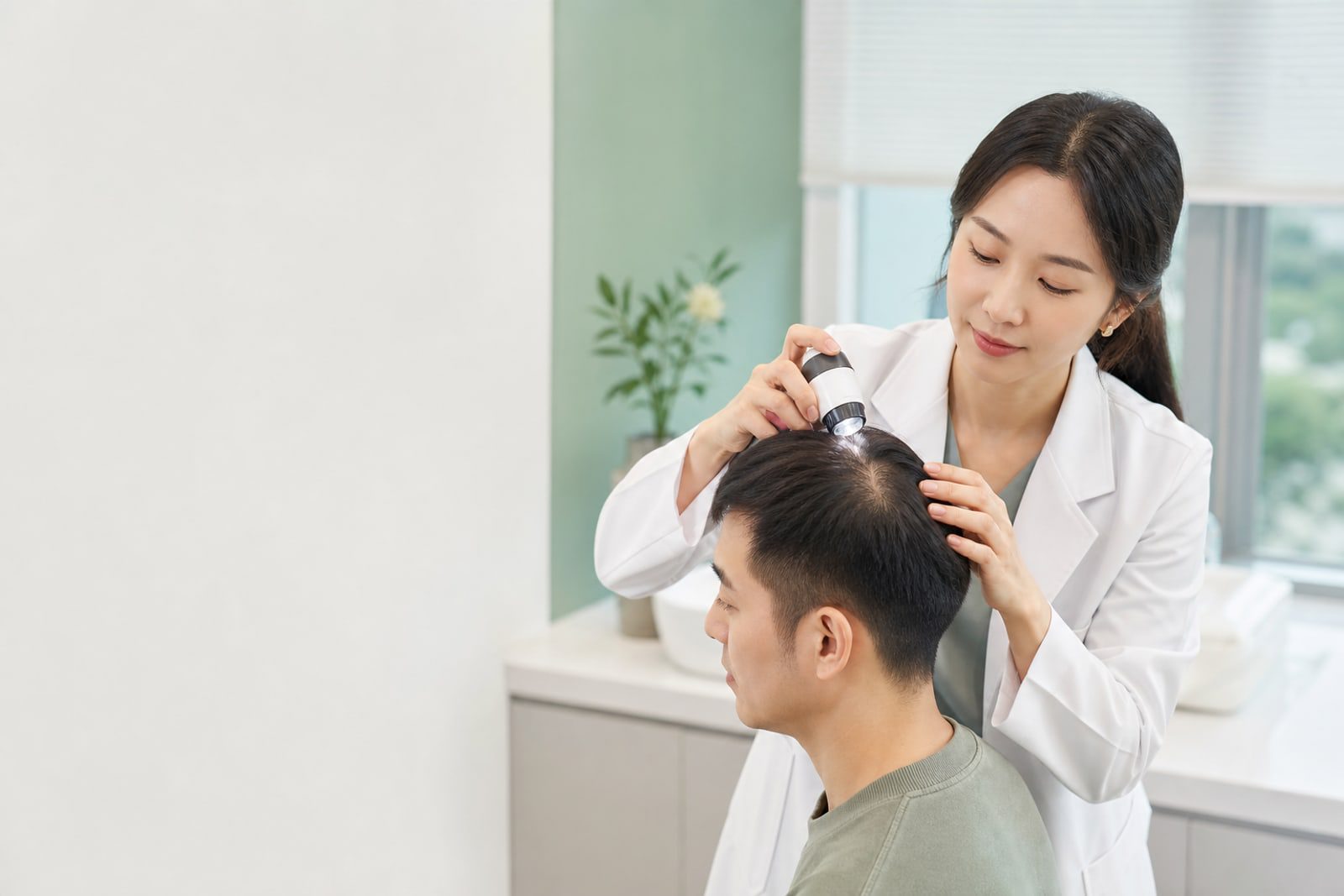
Common Types of Hair Loss
The six patterns we see most often. Hair loss that looks similar can have very different causes, and the cause is what decides the treatment.
Male Pattern Hair Loss
Follicles gradually miniaturise under genetic and hormonal influence, usually starting at the hairline and crown. Acting before the follicles have fully shrunk gives more room to slow it down.
Female Hair Loss
Often linked to hormonal change, low iron and nutrition, stress and sleep. It usually shows as diffuse thinning along the part and crown rather than distinct bald patches.
Learn more →Alopecia Areata
Well-defined round patches, associated with immune imbalance, stress and individual constitution. Mild cases can recover on their own, but they may also recur or spread.
About alopecia areata →Postpartum and Stress-Related Shedding
Heavy shedding two to three months after childbirth, rapid weight loss, fever, surgery or major stress. This is telogen effluvium, and it usually settles once the trigger has passed.
Learn more →Scalp Inflammation
Recurring redness, flaking, oiliness and itching damage the environment the follicles grow in. When hair loss comes with scalp symptoms, the scalp usually has to be settled first.
About seborrheic dermatitis →Follicle Miniaturisation and Timing
Miniaturisation to full loss of the follicle is gradual. Dermoscopy shows changes in hair shaft diameter and the proportion of miniaturised follicles, which indicates how much room is left to intervene.
When Should You See a Doctor?
Seasonal or short-term changes in shedding are common, but the situations below are worth a dermoscopy assessment rather than buying a product first.
You Can Watch and Wait
- Around 50 to 100 hairs a day, with no visible change to the hairline or density
- A brief increase in shedding at the change of seasons that settles within a few weeks
- Shedding after childbirth or illness that is decreasing month by month
Worth Seeing a Doctor
- Shedding clearly heavier for several weeks in a row, or visibly less hair
- A receding hairline, a widening part, or scalp showing through at the crown
- Well-defined round bald patches, or patches that keep spreading
- A scalp that is repeatedly red, itchy, flaking, or has pustules
- Hair loss alongside fatigue, changes in your cycle, or marked weight change
The above is general health information and does not replace an in-person consultation; diagnosis and treatment require assessment by a qualified doctor.
Assessment and Treatment Options
Hair loss is usually handled by identifying the cause first and combining options second. The table sets out what this clinic actually offers and what each option suits.
| Option | Offered here | Worth discussing for | Points to note |
|---|---|---|---|
| Scalp dermoscopy | Yes | Judging the degree of miniaturisation, shaft changes and scalp inflammation | Used as the baseline for follow-up; best compared under the same conditions each time |
| Blood tests | Yes, arranged case by case | Suspected iron deficiency, poor nutrition, thyroid or autoimmune causes | Which tests depends on what is suspected; results are explained at a follow-up visit |
| Topical treatment | Yes | Early to moderate hair loss, or wanting to start non-invasively | Needs several months of consistent use before assessing; a short phase of increased shedding is possible at first |
| Oral medication | Yes, assessed by sex and individual factors | Moderate to severe or faster-progressing pattern hair loss | Ingredients such as 5-alpha reductase inhibitors require assessment of sex, age, pregnancy plans and contraindications; do not obtain them on your own |
| Scalp injections | Yes, after a feasibility assessment | Follicles not yet fully miniaturised, wanting to add to medication | A course of several sessions; suitability and limits are explained beforehand |
Response to treatment varies from person to person. This table is only to help you understand the options before your visit and is not a guarantee of results.
Assessment and Hair Treatments
From assessment through treatment to home care, combined according to the pattern of loss and the state of the follicles, and arranged after assessment by a doctor.
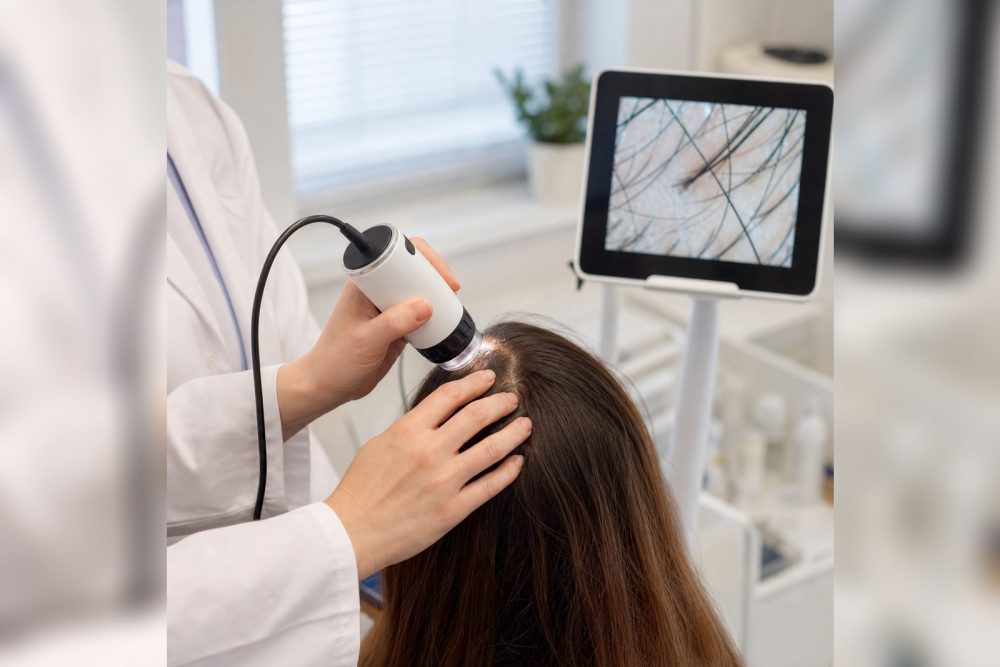
Scalp Dermoscopy
High-magnification view of follicle density, shaft thickness and the proportion of miniaturised follicles, and it also shows oiliness, inflammation and blocked pores.
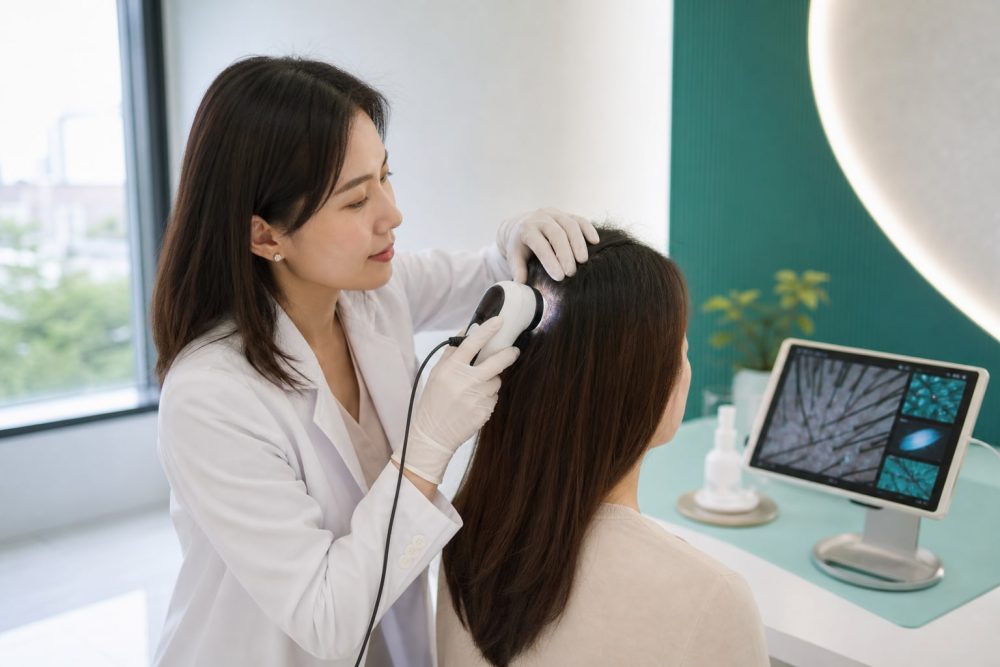
One-to-One Assessment
The doctor asks when the shedding started and how fast, family history, medication and weight-loss history, and for women any hormonal changes, in order to tell the patterns apart.
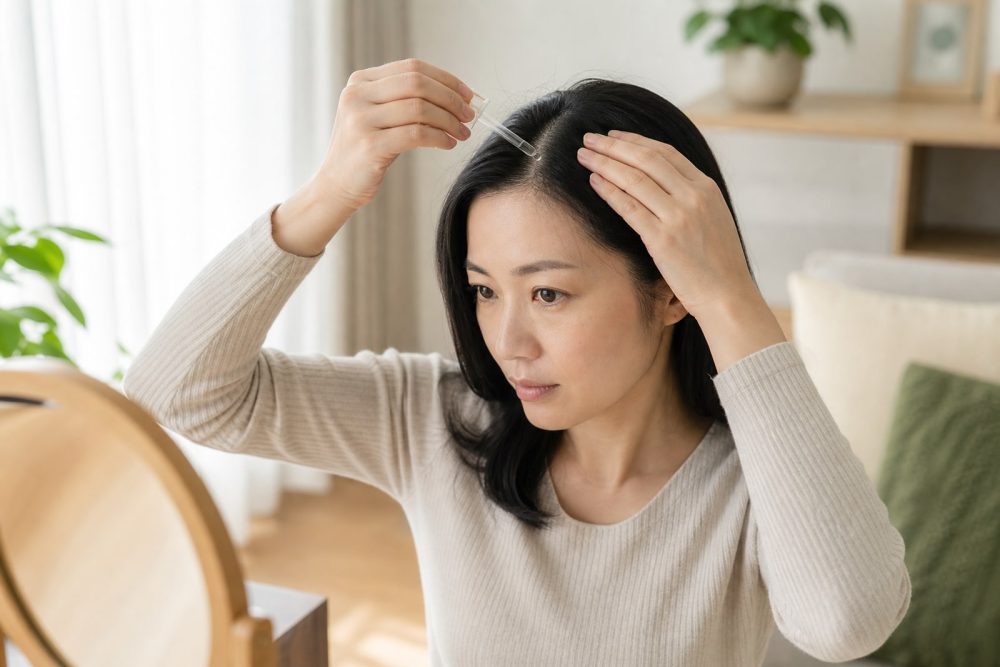
Topical Treatment
A preparation applied to the scalp daily, with the ingredients and strength adjusted to your scalp and tolerance. It needs several months before the response can be judged.

Oral Medication Assessment
Whether it suits you is assessed against sex, age, pregnancy plans and contraindications, with regular follow-up of both effect and side effects.
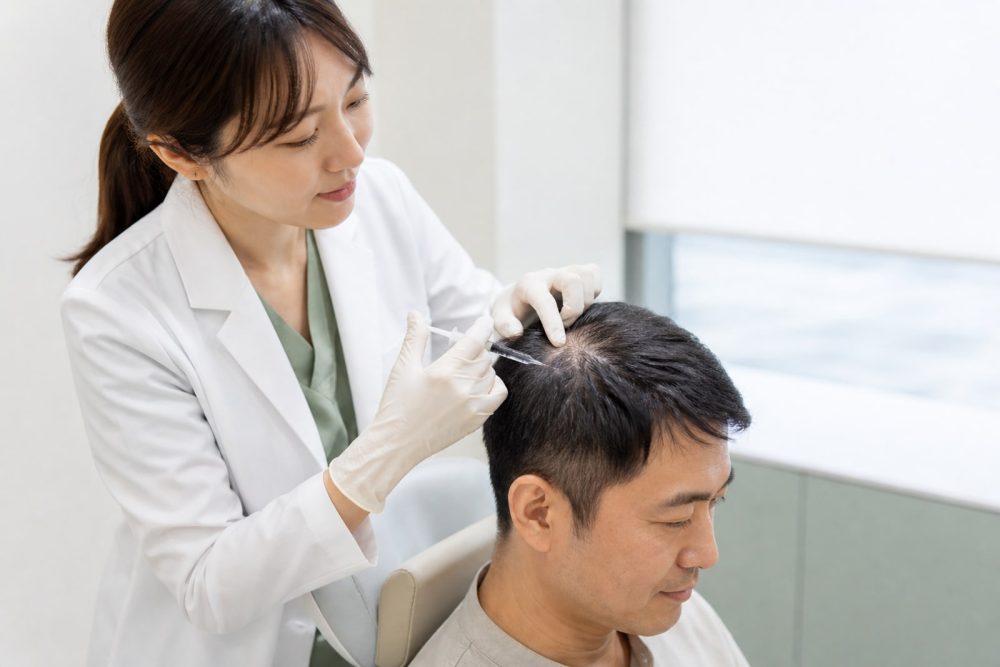
Scalp Injection Treatment
Injections into the scalp. The doctor assesses the state of your follicles first, and the number of sessions and the limits are explained beforehand.

Scalp and Home Care
Adjusting washing frequency, water temperature, drying and scalp care so that home routine and in-clinic treatment work in the same direction.
This article is disease education information. It is not drug advertising and does not recommend or sell any specific medicine.
Assessment and Treatment Steps
History and consultation
When the shedding started and how fast, family history, sleep, stress and diet, and any medication, weight loss or illness.
Scalp dermoscopy
Follicle density and distribution, changes in shaft thickness, the proportion of miniaturised follicles, and scalp oiliness, inflammation and redness.
Further tests if needed
A pull test, blood work or immune-related tests depending on what is suspected, to rule out nutritional and hormonal causes.
A plan built around you
Topical, oral, injection treatment and home care combined according to the diagnosis, with the expected timeline and likely responses explained.
Follow-up and adjustment
Comparing follicle density and density of hair at review visits, adjusting medication or intervals, and watching for side effects and recurrence.
Our Hair Loss Team
Care from dermatology specialists, with clinical backgrounds from National Taiwan University Hospital, Veterans General Hospital and other medical centres.

Dr. Tseng

Dr. Lin
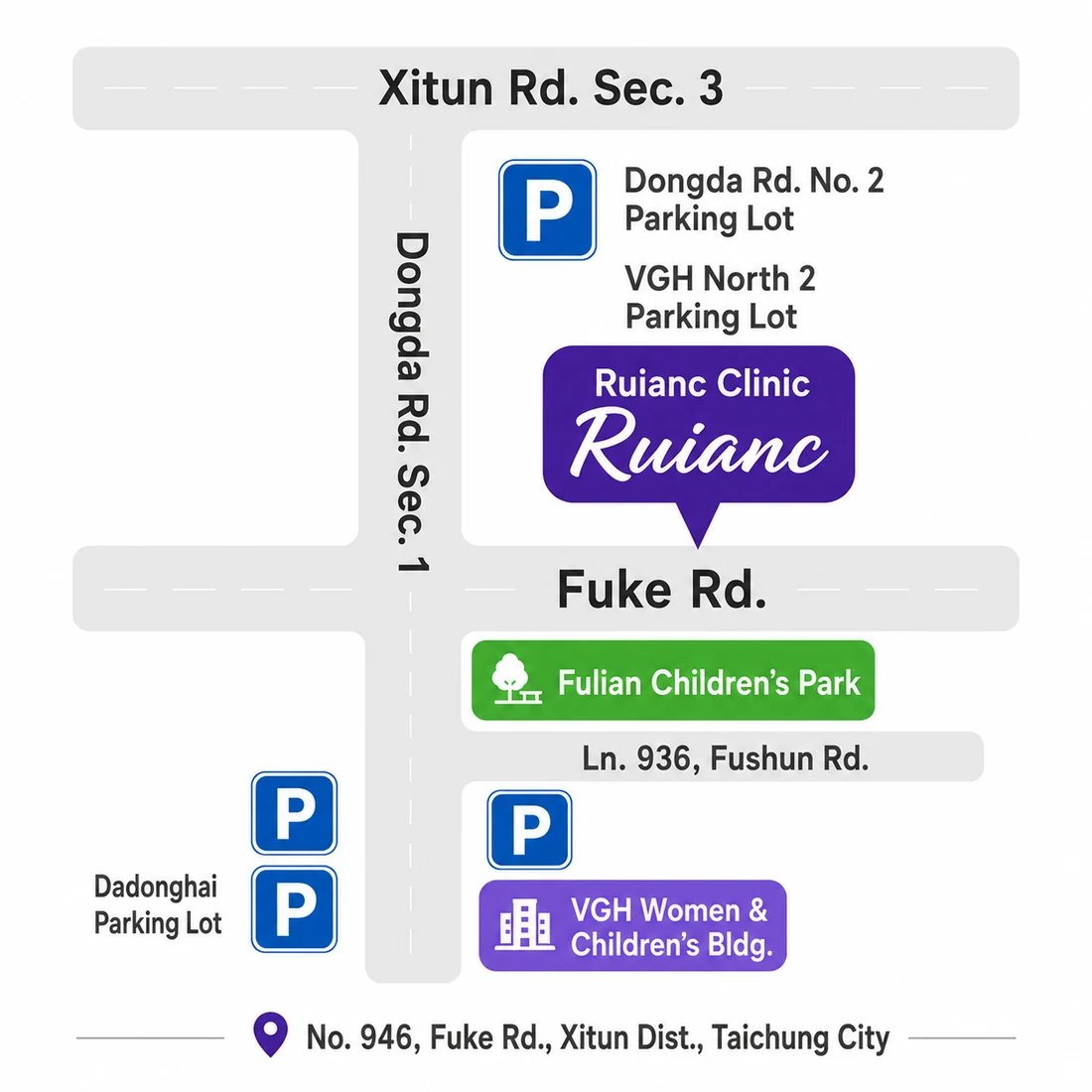
Location and Directions
Behind Taichung Veterans General Hospital・Near Central Taiwan Science Park・Ruilian Tiandi Block D
Saturday afternoon 13:15–17:00; closed Sunday. Latest registration 20:45; hours follow the weekly schedule.
Partner employers: AU Optronics・Winbond Electronics・Corning Taiwan・TSMC・ProMOS Technologies
Frequently Asked Questions
QHow much hair loss a day is normal?
Around 50 to 100 hairs a day is usual. If you are clearly above that for several weeks in a row, or you also have a receding hairline, a thinning crown or bald patches, it is worth being assessed.
QDoes hair loss always mean pattern baldness?
No. It can also come from stress, illness, poor nutrition, immune problems, medication or scalp inflammation. Many people assume they have pattern hair loss and turn out to have something else alongside it, so it needs a doctor to tell them apart.
QCan a receding hairline be improved?
It depends on whether the follicles are still there. While they have not fully shrunk, early treatment and ongoing management can slow the decline and improve appearance; how much it improves varies from person to person, and the earlier you are assessed the more there is to work with.
QDoes alopecia areata get better on its own?
Mild cases can recover on their own, but there is a risk of recurrence or of the patches spreading. An assessment with follow-up is advisable, along with a look at stress and immune-related factors.
QHow long before I see a difference?
Hair grows in cycles, so it usually takes several months before change is visible, and longer still to stabilise. The actual timeline depends on the pattern of loss and on you.
QDo over-the-counter hair products work?
Some can help as a supplement, but if they do not match the actual cause the effect is limited, and you may lose the window in which the follicles can still respond. It is better to have a diagnosis first.
QDo I need to book in advance?
Booking is recommended. Phone and LINE bookings open 30 days before the clinic day and you can choose the doctor and time slot; walk-ins are also accepted, with the last registration at 20:45. Sessions follow that week's schedule, so it is worth checking before you set off.