

Lifting Treatments in Taichung
Radiofrequency, ultrasound and thread lifting act on different layers and suit different degrees of laxity. Decide the area and the recovery you can accept, then choose the method.

Common Concerns About Laxity
Where the laxity shows decides which method fits. These six areas are what we treat most often.
Sagging Cheeks
Reduced support in the mid-face, which usually makes the nasolabial folds more obvious at the same time. This generally needs a method reaching the deeper layers.
A Blurred Jawline
The jaw no longer looks crisp and the boundary with the neck becomes unclear. It is one of the first places laxity gets noticed.
Double Chin
It can come from fat, from lax skin, or from both, and the direction of treatment changes depending on which dominates.
Fine Lines and Loose Texture
Not obvious sagging, but skin that lacks firmness and radiance. This suits methods focused on stimulating collagen.
Neck and Décolletage
Laxity here is often overlooked, and because the skin is thinner the energy and parameters need adjusting separately.
Directional Lifting
Where firming alone will not change position, threads can provide support along a specific direction. This is minimally invasive.
Worth Thinking About Beforehand
Lifting addresses laxity, not every sign of ageing. Below is what suits a consultation and what should wait.
Worth a Consultation
- Mild to moderate laxity and you want to start non-invasively
- You have had lifting before and want to understand the differences
- You can accept gradual change rather than an immediate transformation
Wait and Deal With These First
- The area has a wound, inflammation or an active infection
- Pregnancy or breastfeeding, or an implanted device such as a pacemaker
- Recent facial surgery or another extensive invasive procedure
- Laxity clearly beyond what a non-surgical approach can address
- Expecting a single treatment to achieve a surgical-level change
The above is general health information and does not replace an in-person consultation; indications and contraindications require assessment by a qualified doctor.
How the Three Methods Differ
They differ in the layer they act on, whether there is a wound, and the recovery. In practice two are often combined.
| Method | Layer | Invasiveness and recovery | Points to note |
|---|---|---|---|
| Radiofrequency | Dermis to subcutaneous, heated by radiofrequency | Non-invasive, no wound, normal activity | Heat is felt during treatment; the change is gradual and usually clearer after weeks to months |
| Ultrasound | The deeper fascia, using focused ultrasound | Non-invasive, no wound, normal activity | Aching may be felt during treatment; it reaches deeper, so it suits laxity in the supporting layer |
| Thread lifting | Subcutaneous, support from threads | Minimally invasive, swelling or tightness for a few days | High-risk areas must be avoided; the thread specification is chosen for the area and recovery depends on the extent |
The extent of change and how long it lasts vary from person to person. This table is only to help you understand the options before your visit and is not a guarantee of results.
Lifting Treatments Offered
Chosen for the area and the recovery you can accept, and arranged after assessment by a doctor.
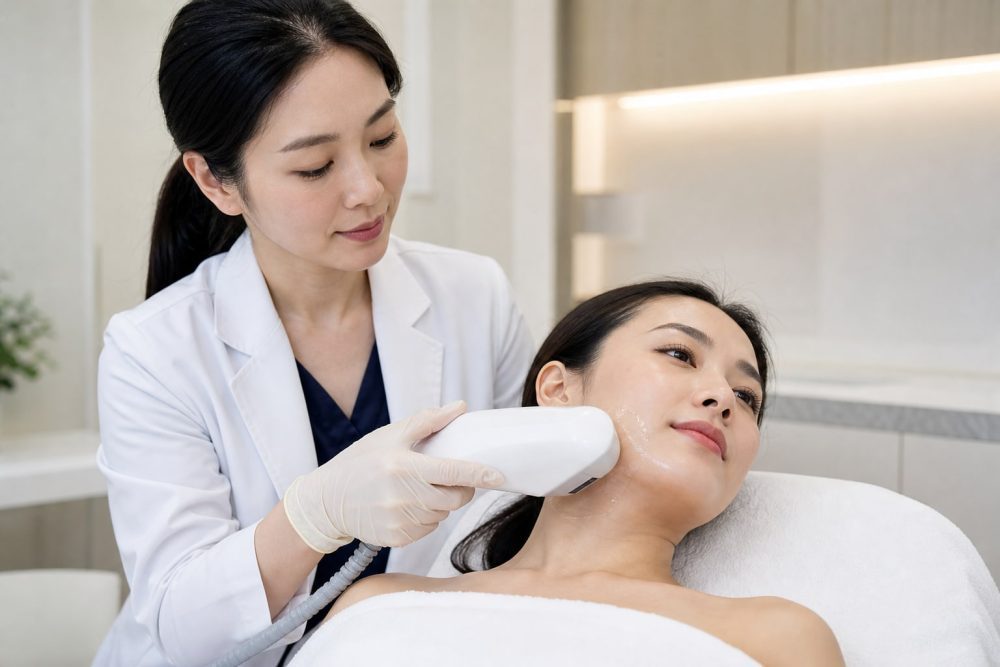
Thermage FLX
Radiofrequency heats deeper tissue to prompt collagen remodelling. Non-invasive with no wound, and heat is felt during treatment.
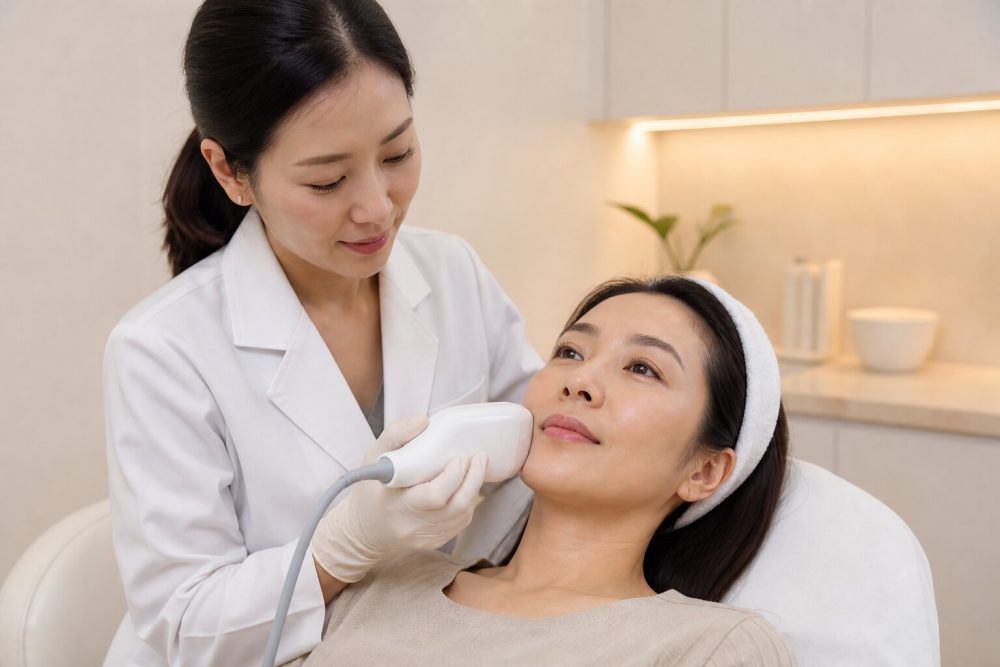
CPT Radiofrequency
Another radiofrequency device, chosen for the area and the goal. The principle is the same, with different parameters and tips.
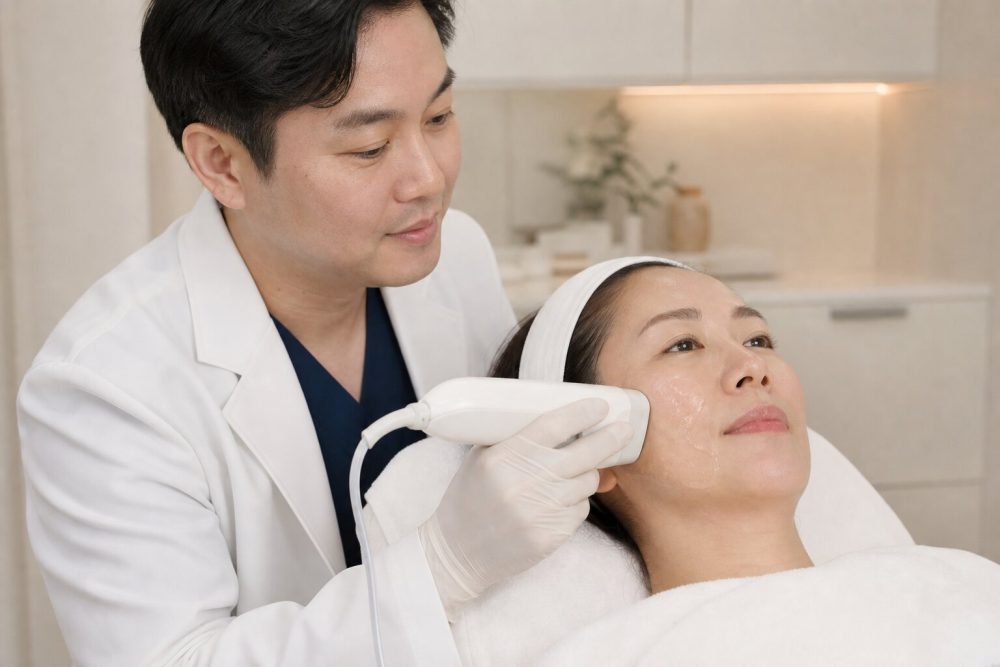
HIFU Ultrasound Lifting
High-intensity focused ultrasound passes through the epidermis to act on the fascia without damaging the surface, suiting laxity in the supporting layer.
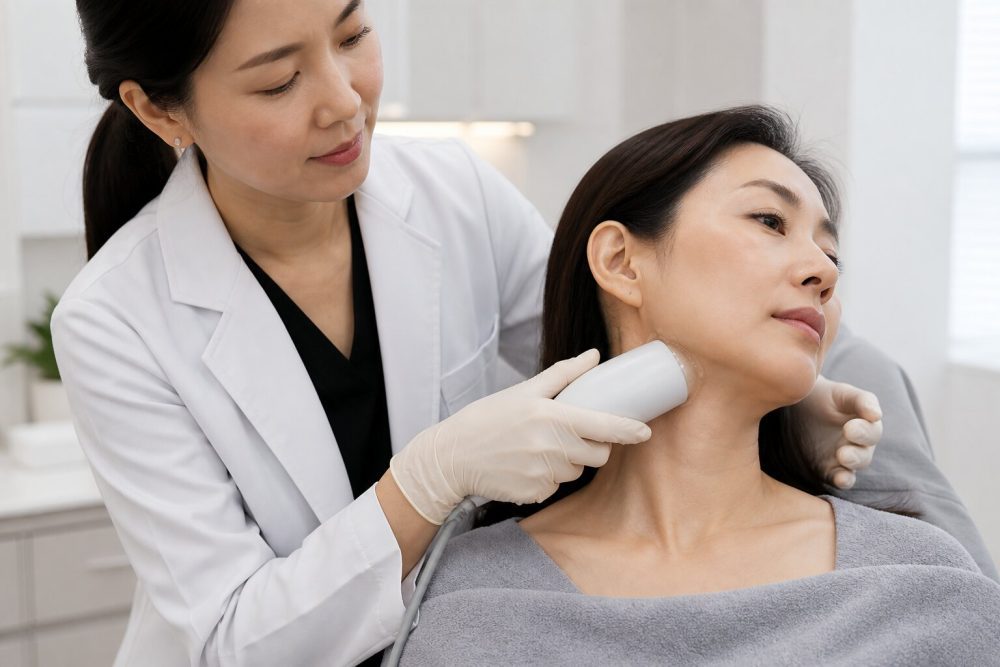
LV Liftera-V Ultrasound
Another ultrasound option, with a different way of delivering energy and depth configuration. The doctor decides by area.
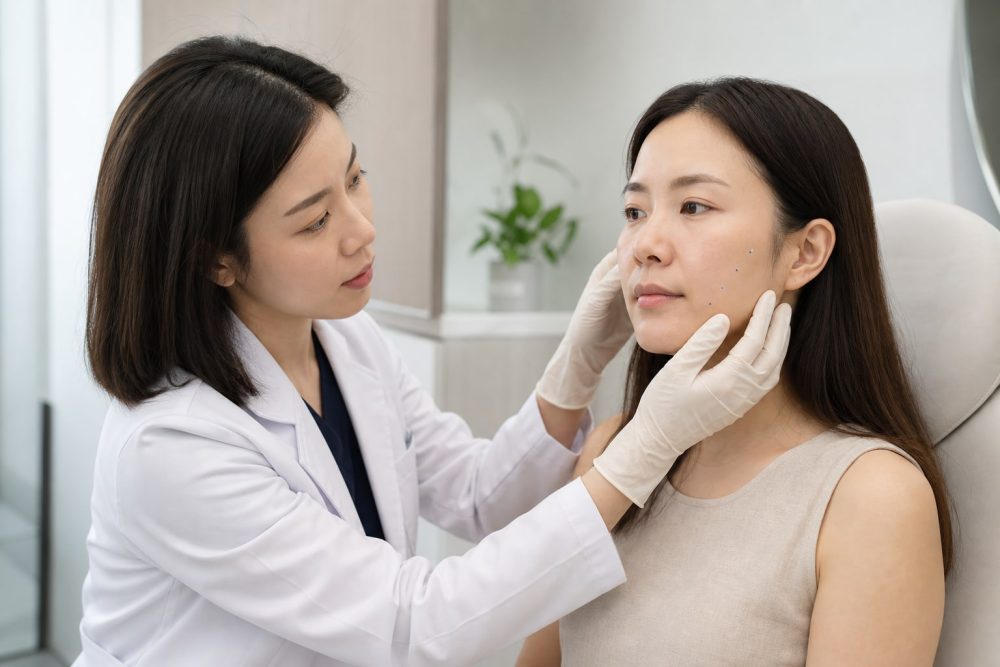
MIRACLE THREAD Lifting
Thread lifting with barbs whose angle, density and length are designed for the purpose, in 1-0 and 3-0 specifications.
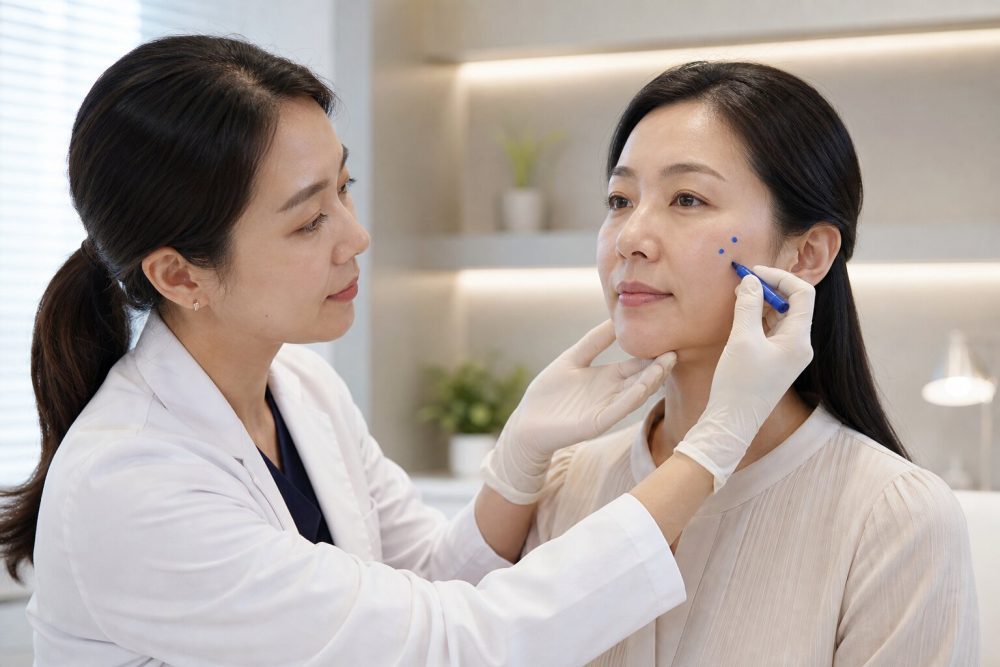
STRATAFIX Threads
Absorbable threads with a barbed structure, used where directional support is needed, with the direction planned by the doctor.
This article is disease education information. It is not drug advertising and does not recommend or sell any specific medicine.
What a Treatment Looks Like
Consultation and assessment
Confirming where and how much laxity there is, along with skin thickness and fat distribution, and what you most want to change.
Choosing the method
The differences between radiofrequency, ultrasound and threads are explained, along with recovery and what to expect, and you agree the scope together.
Preparation
Cleansing and removal of makeup, topical anaesthetic where needed, and marking of the treatment area.
Treatment
The doctor works through the planned layers and directions, checking how you feel as it goes.
Aftercare and review
Aftercare and the reactions to expect are explained, with a review appointment depending on the treatment.
Our Lifting Team
Treatment by doctors with an aesthetic medicine background, planning the layers and directions around facial anatomy.

Dr. Tseng

Dr. Lin

Dr. Lin

Dr. Li

Dr. Liao

Dr. Huang
Location and Directions
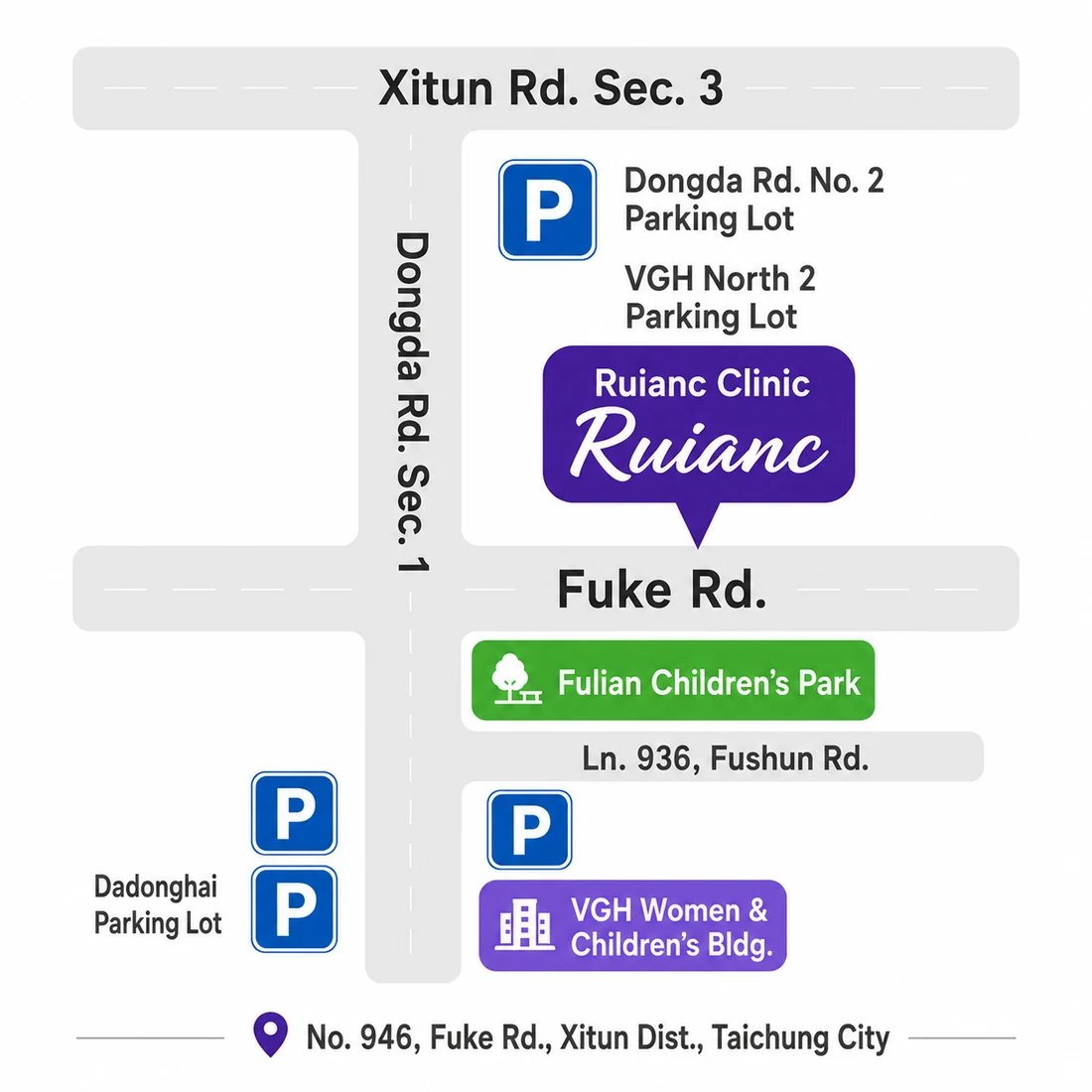
Behind Taichung Veterans General Hospital・Near Central Taiwan Science Park・Ruilian Tiandi Block D
Saturday afternoon 13:15–17:00; closed Sunday. Latest registration 20:45; hours follow the weekly schedule.
Partner employers: AU Optronics・Winbond Electronics・Corning Taiwan・TSMC・ProMOS Technologies
Frequently Asked Questions
QWhat is the difference between radiofrequency and ultrasound?
Mainly depth. Radiofrequency heats the dermis and subcutaneous layer; focused ultrasound reaches the deeper fascia. They address different layers of laxity and are often combined, with the doctor deciding based on where the laxity is.
QDoes it hurt? Is there a wound?
Radiofrequency and ultrasound are non-invasive with no wound; heat or aching may be felt during treatment, to varying degrees. Thread lifting is minimally invasive with local anaesthetic, and swelling or tightness is possible for a few days.
QWhen will I see a change?
With radiofrequency and ultrasound the change is gradual, usually clearer after weeks to months. With threads there is an immediate change in position, but it can only be judged once swelling settles. It varies from person to person.
QHow long does it last?
It depends on the method, the area treated, your age and your habits. Ageing continues, so lifting is usually maintained periodically rather than done once, and the doctor will suggest a suitable interval.
QDo the threads stay in the body?
The threads used are absorbable and are broken down over time; what remains is the collagen their presence prompted. How long absorption takes depends on the thread.
QDo I need to book in advance?
Booking is recommended. Phone and LINE bookings open 30 days before the clinic day and you can choose the doctor and time slot; walk-ins are also accepted, with the last registration at 20:45.