

What causes postpartum hair loss?
Postpartum shedding usually begins around two to four months after birth and relates mainly to hormonal change during and after pregnancy.
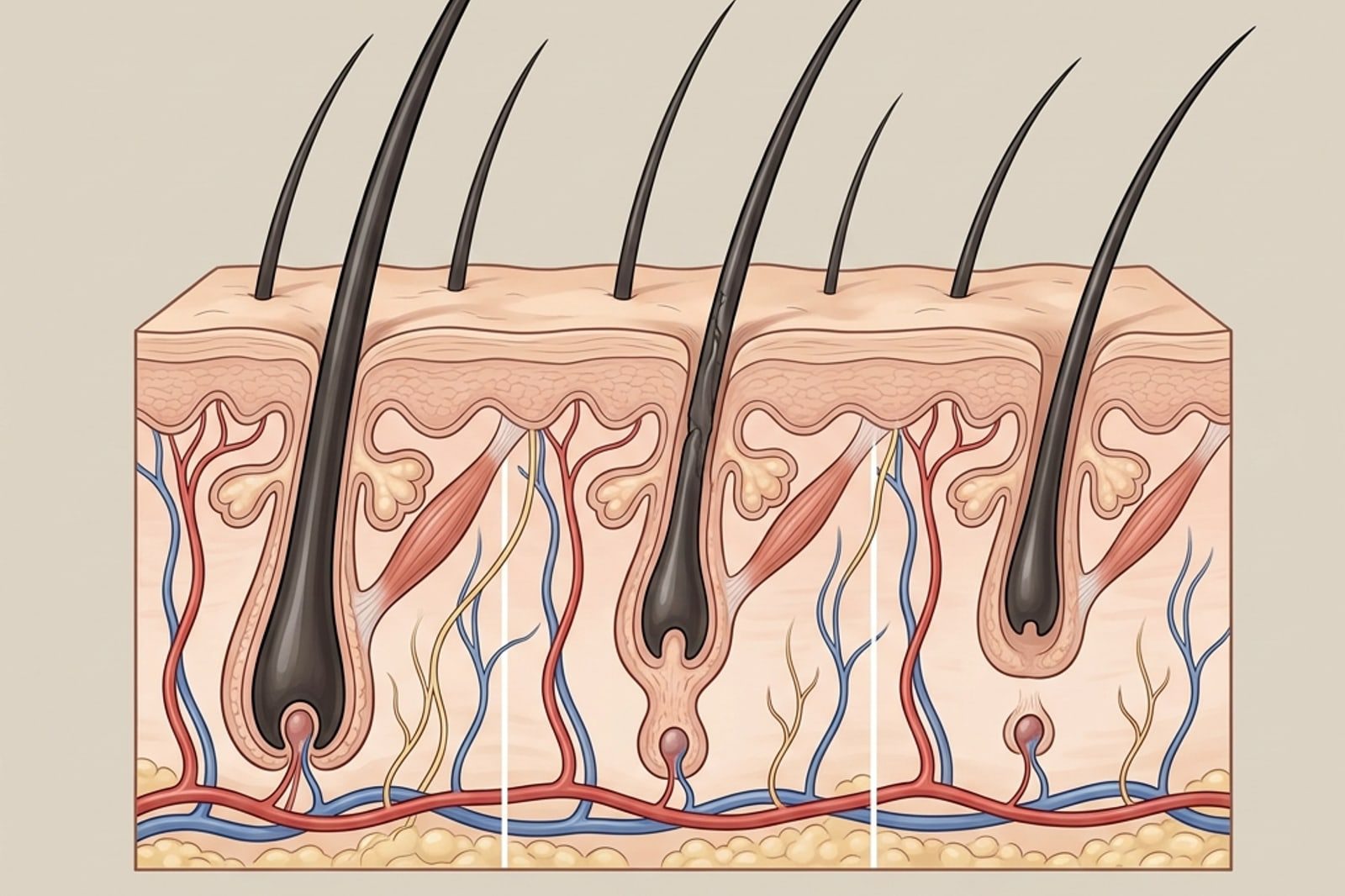
During pregnancy, higher oestrogen keeps more hair in the growth phase, which is why many women feel their hair is thicker while pregnant. After birth hormones fall quickly, and the hair whose shedding was delayed enters the resting phase together, producing heavy shedding over a short period.
Beyond hormones, the factors in the table below can make postpartum shedding more marked.
| Contributing factor | How it works |
|---|---|
| Hormonal change | Oestrogen falls after birth and hair enters the resting phase, producing heavy shedding |
| Lack of sleep | Caring for a newborn reduces sleep quality and affects the body's repair |
| Nutritional demand | Pregnancy, birth and breastfeeding all increase nutritional needs |
| More stress | The pressure, anxiety and mood swings of new motherhood can affect shedding |
| Iron or nutritional deficiency | Insufficient iron, protein, vitamin D or zinc can affect hair growth |
| Scalp problems | Scalp inflammation and seborrhoeic dermatitis can also make shedding more obvious |
Does postpartum hair loss recover on its own?
Most postpartum shedding is temporary and usually improves gradually within six to twelve months after birth. As hormones settle and daily routine adjusts, hair slowly returns to its normal growth cycle.
However, in the situations in the table below, waiting alone is not advisable and it should be investigated early.
| When to have it checked | What may need assessing |
|---|---|
| No improvement after twelve months | May be more than simple postpartum shedding |
| Hair clearly thinner, hairline receding | Needs assessing for coexisting pattern hair loss or another cause |
| Scalp red, itchy, flaky or painful | May come with scalp inflammation or seborrhoeic dermatitis |
| A round bald patch appears | Needs assessing for alopecia areata |
| Easily tired and pale after birth | Needs checking for iron deficiency, anaemia or other physical causes |
How is postpartum hair loss treated?
The point of treatment is not simply to make hair grow faster, but to determine the cause first and then arrange what suits the individual. Below are the usual directions.
| Treatment and care | What it involves |
|---|---|
| A healthy diet | Enough protein, iron, zinc, B vitamins and vitamin D |
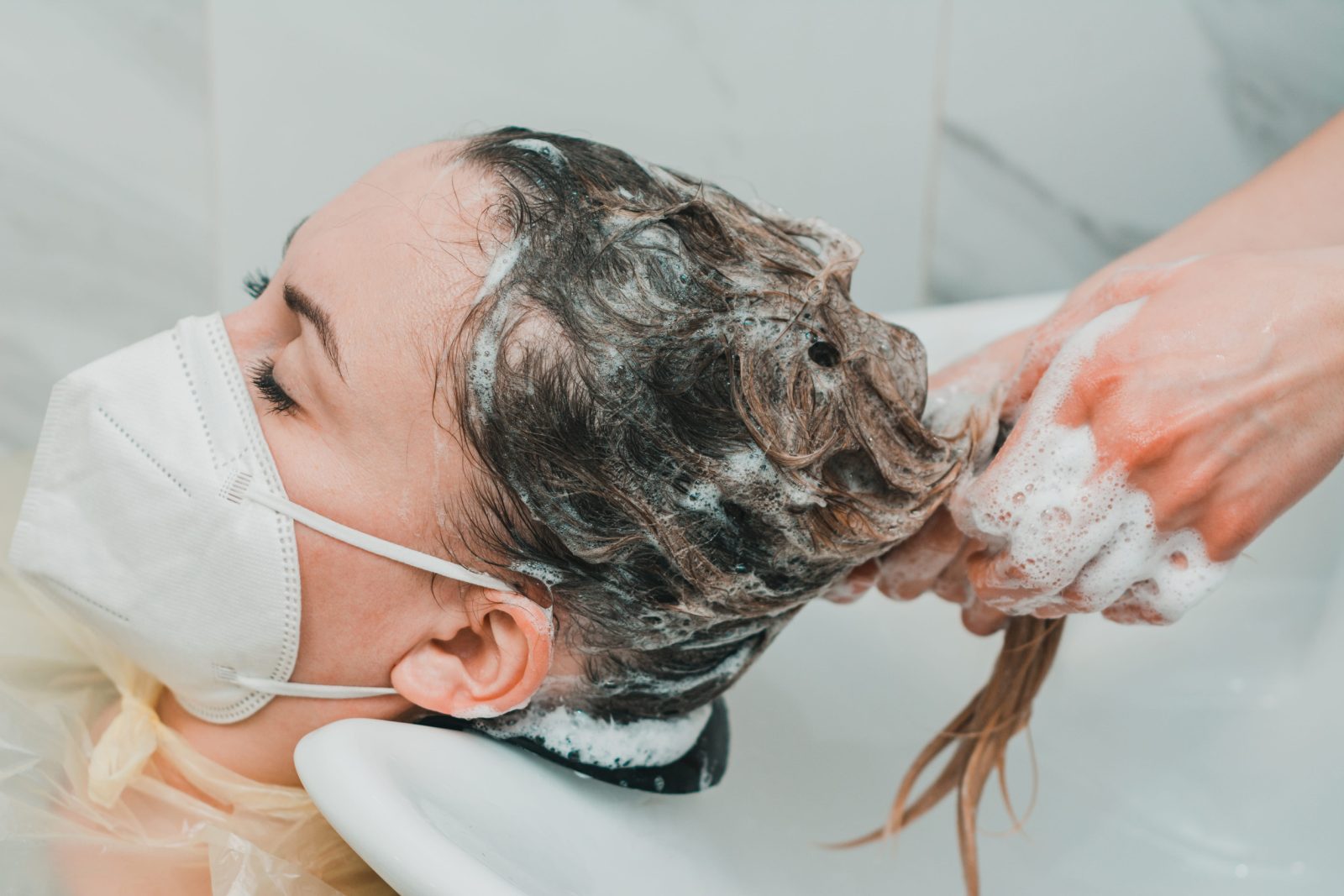
| Scalp care | A gentle shampoo, avoiding over-washing or irritating the scalp |
| Less heat damage | Cut down frequent perming, colouring, curling irons and high-heat drying |
| Stress management | Rest, exercise and help from family to reduce pressure |
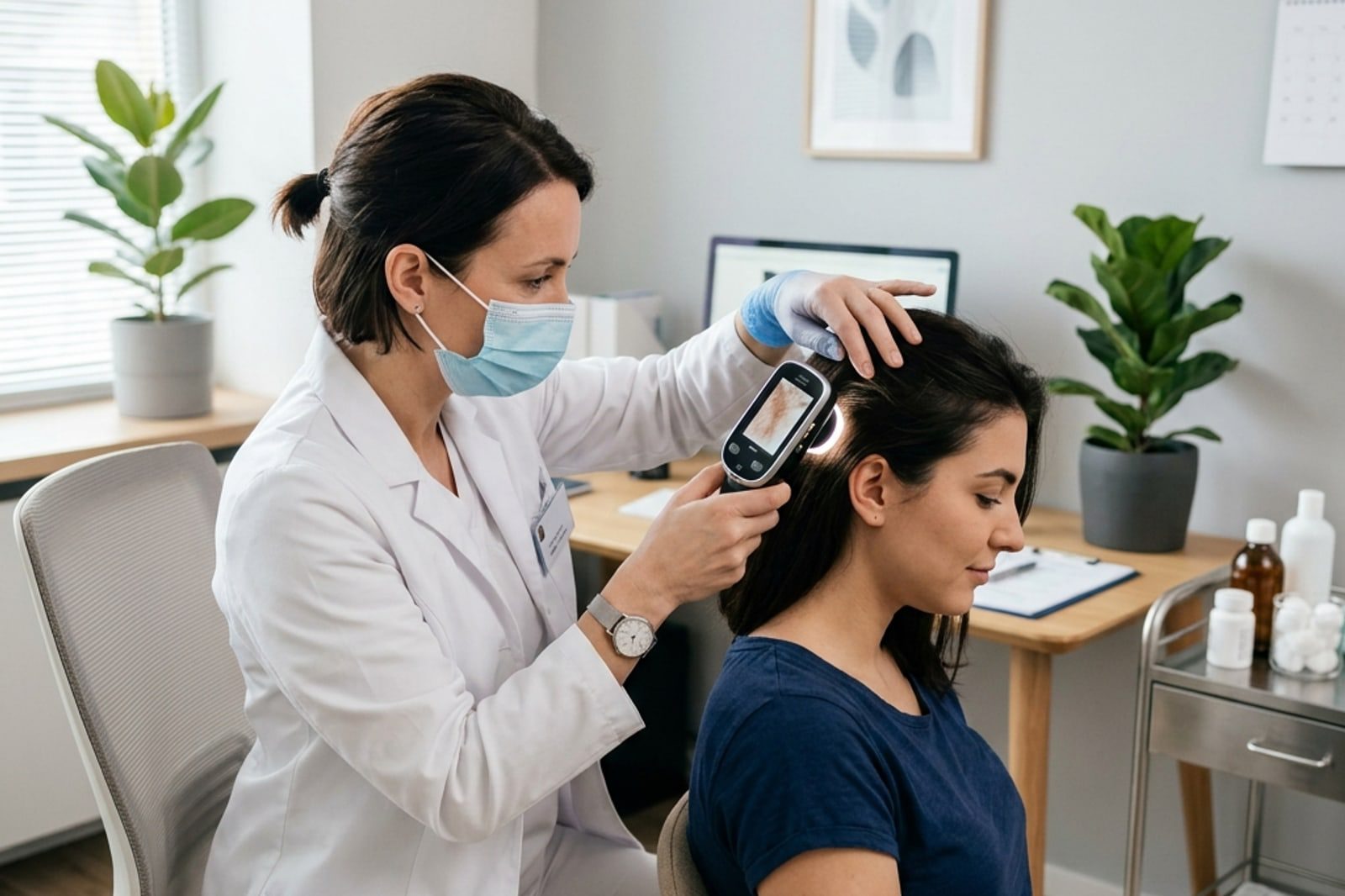
| Medical investigation | Assessing for iron deficiency, thyroid problems, scalp inflammation or another cause |
| Topical medication | Such as a topical vasodilator; suitability must be assessed by a doctor, with particular care while breastfeeding |
| PRP treatment | Can serve as an adjunct in some cases; whether it suits you must be assessed by a doctor |
Responses vary from person to person. This table is to help you understand the options before your visit and is not a guarantee of results. Medication and treatment are decided by a doctor after assessing indications and contraindications.
Day-to-day care during postpartum shedding
The principle for this period is to reduce extra pulling and irritation, and to make up nutrition and rest as far as caring for a newborn allows.
| Care point | What to do |
|---|---|
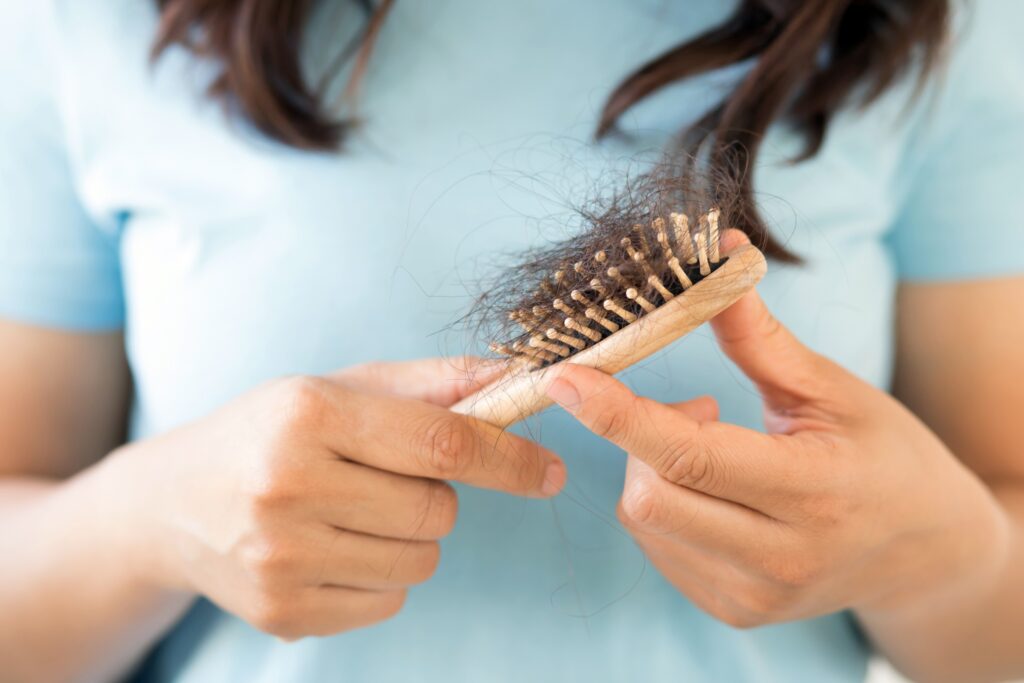
| Do not worry about washing | Seeing a lot of hair while washing does not mean washing causes it; that hair was already in the resting phase |
| Avoid tying it tightly | Cut down ponytails, buns and other styles that pull |
| Get enough protein | Hair is mainly protein, so postpartum eating should not be overly restricted |
| Catch up on sleep in stretches | Full nights are hard with a newborn, but family help can allow rest in stretches |
| Skip home remedies | Ginger, essential oils and hair products of unknown origin can irritate the scalp |
| Get it checked early | If shedding persists or comes with scalp discomfort, see a doctor |
When do you need to see a doctor?
The situations below are worth assessing by a dermatology specialist rather than just changing shampoo or taking supplements.
- Shedding has not improved after six to twelve months.
- Hair is clearly thinner, or the hairline is starting to recede.
- The scalp is red, itchy, flaky or painful.
- A round bald patch has appeared.
- There is fatigue, pallor or dizziness suggesting anaemia.
- You want to use hair growth medication while breastfeeding and need the safety assessed first.
A note from the dermatology team: no need to panic, but do not ignore the warning signs
Postpartum shedding is a stage many mothers go through, and in most cases it improves as the body recovers. But if shedding clearly increases, lasts too long, or comes with scalp or general symptoms, changing shampoo or taking supplements is not enough.
Having a doctor identify the cause, and then arranging nutrition, scalp care and medical treatment according to the individual, is what makes postpartum shedding manageable.
- Starting two to four months after birth and easing month by month is usually ordinary telogen effluvium.
- Not settling after a year, or a receding hairline alongside it, means assessing for coexisting pattern hair loss.
- Medication choices while breastfeeding need a doctor's assessment; do not buy them yourself.