

Seven common causes of hair loss in women
Hair loss in women usually has more than one cause. The table below sets out the seven types seen most often in clinic and how each is recognised. It is a starting point for orientation; which one applies still needs a doctor to determine.
| Type | What it is | Usual features |
|---|---|---|
| Female pattern hair loss | Related to genetics and follicle sensitivity to hormones; hair gradually thins at the front and crown. | The part widens, often in a "Christmas tree" pattern |
| Postpartum shedding | Hormonal change in pregnancy extends the growth phase; after birth hormones fall quickly and marked shedding follows. | Appears some months after birth and usually recovers gradually |
| Chronic telogen effluvium | Related to stress, changes in routine, chronic illness or a change in physical state, causing persistent heavy shedding. | Shedding clearly increases and overall volume drops |
| Iron-deficiency shedding | Low iron affects normal follicle growth; common with heavy periods, after childbirth, or with insufficient intake. | Often with fatigue and anaemia; hair becomes finer and sparser |
| Polycystic ovary syndrome | Endocrine imbalance raises androgen levels, which in turn affects follicle health. | May come with acne, irregular periods and weight gain |
| Post-menopausal shedding | Oestrogen falls after menopause, follicles lose some of their protection and hair becomes finer. | Thinning at the crown, finer hair, less overall body |
| Diffuse alopecia areata | Unlike the usual patchy form, this often presents as overall thinning with heavy shedding over a short period. | Shedding is rapid; needs distinguishing from female pattern hair loss |
This table is for initial understanding only and does not replace an examination. More than one cause at the same time is not unusual, and a dermatology specialist still needs to determine which applies.
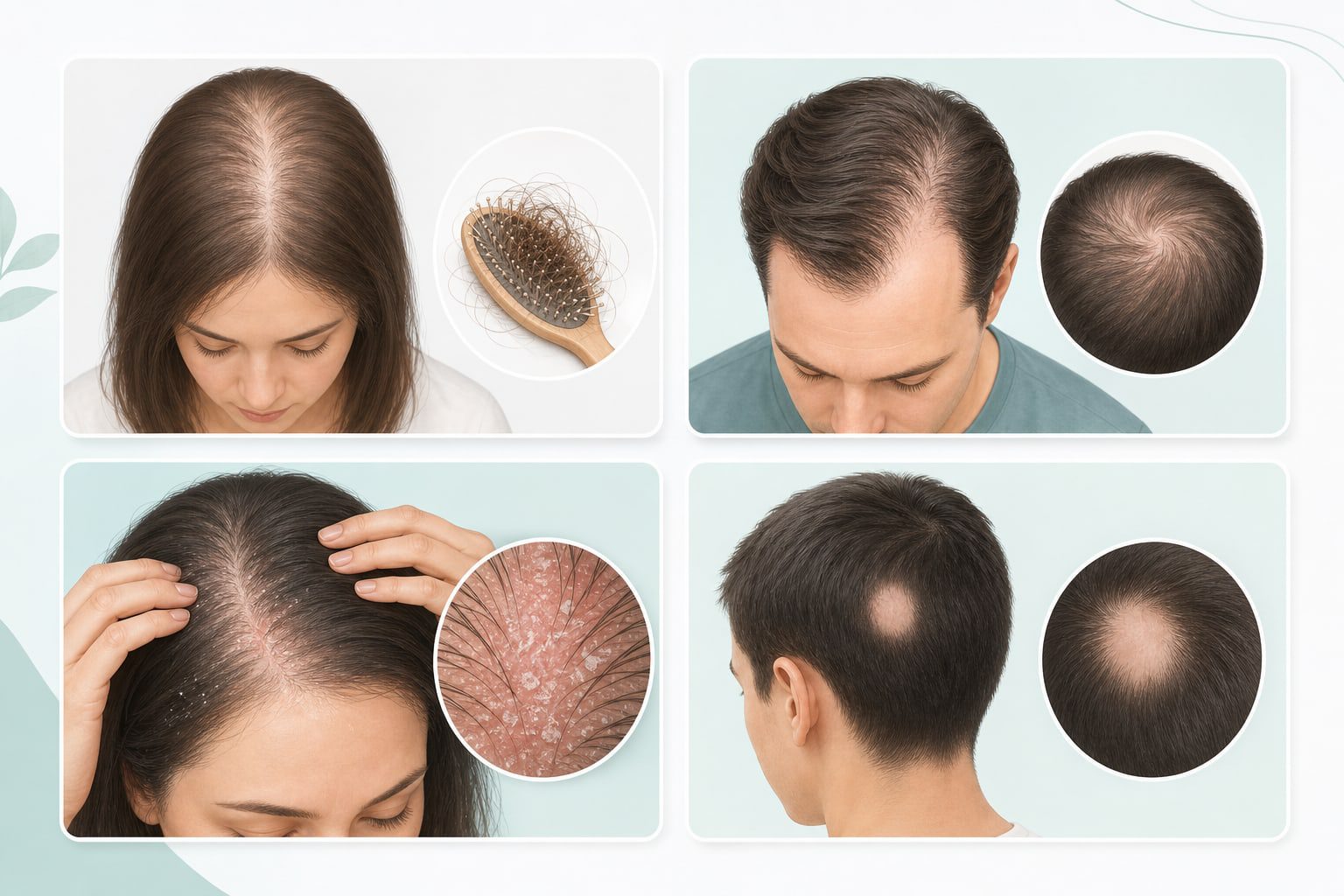
Everyday factors behind hair loss in women
Beyond the categories above, a number of everyday factors can make shedding worse. Hair loss in women rarely comes from one cause alone; more often several act together.
- Genetic predisposition.
- Hormonal change after childbirth.
- Illness, such as hypothyroidism, lupus or scalp ringworm.
- Excessive dieting or unbalanced nutrition.
- Long periods of overwork and mental stress.
- Tying hair tightly over a long time.
- Frequent colouring, perming or styling.
- Long exposure to sunlight.
- Wearing a hat or helmet for long periods.
- Abnormal scalp oiliness or inflammation.
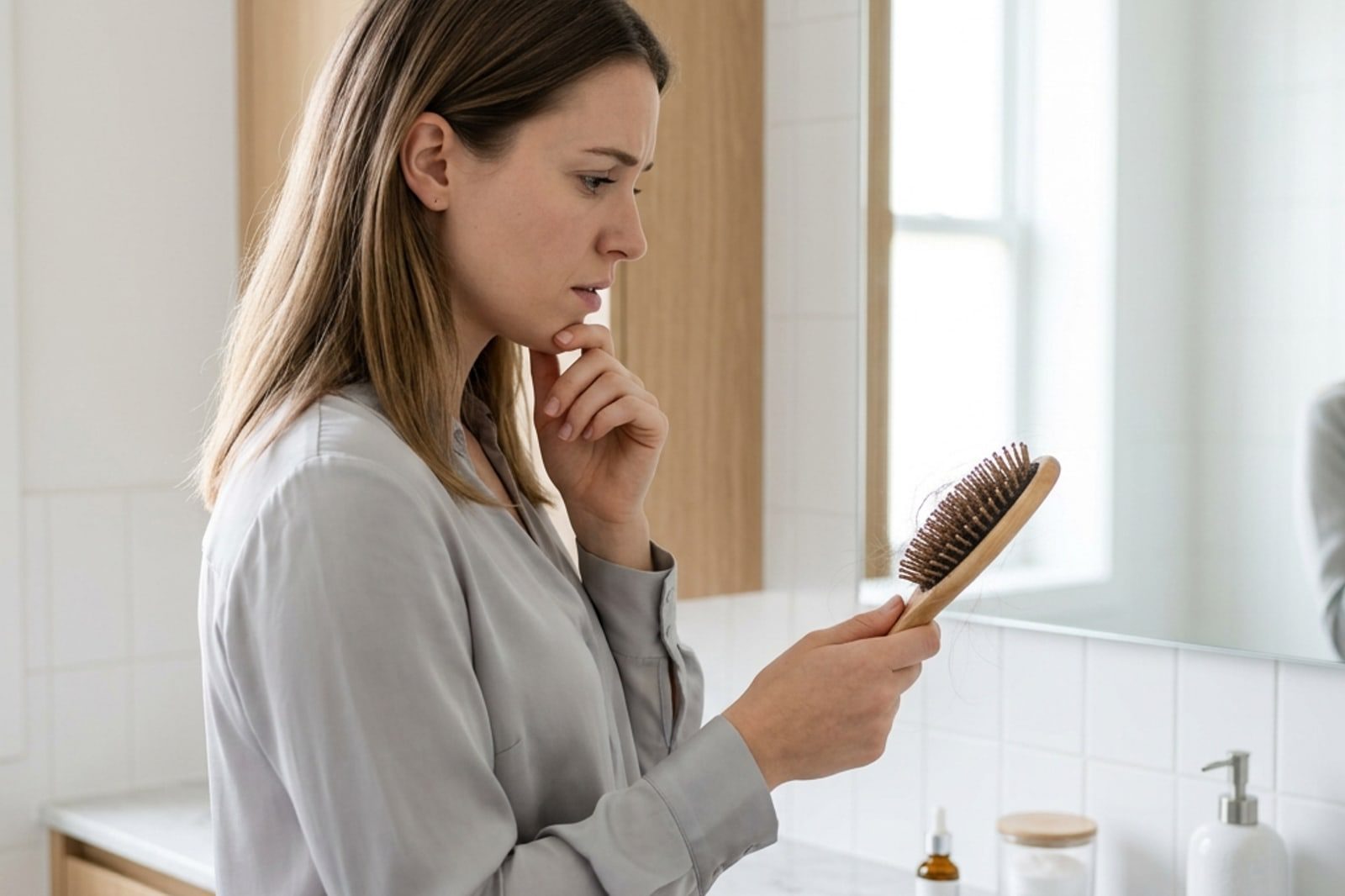
What are the early signs?
Hair loss in women is mostly gradual. The situations below are worth taking seriously, as they can all be early indicators.
- More than 100 hairs a day for over two months.
- Noticeably more flaking, along with an itchy scalp.
- The scalp produces more oil and hair feels greasy quickly.
- Hair is clearly finer and volume is gradually dropping.
- A parent in the family has thin hair or baldness.
- Handfuls of hair come out when combing or washing.
- Volume has dropped enough that the scalp shows clearly.
- The part keeps widening and the crown looks flatter.
How can hair loss in women be prevented?
Prevention comes down to reducing what disturbs the follicles and supplying what hair needs to grow. The table below sets out what can be adjusted day to day.
| Area | Why it matters | What to do |
|---|---|---|
| Cut down irritating foods | Spicy, very acidic and high-caffeine foods can irritate the scalp and also affect sleep and routine. | Avoid too much spicy food, strong tea, coffee and stimulating drinks; keep meals light and balanced. |
| Reduce stress and anxiety | Long-term stress can disturb the follicle growth cycle and make shedding more obvious. | Build in relaxation, regular exercise and habits that release pressure, and keep mood steady. |
| Keep a regular routine | Late nights, insufficient sleep and an irregular routine often make shedding worse. | Keep sleeping hours as fixed as possible and avoid habitual late nights, so the body can repair normally. |
| Choose a suitable shampoo | Shampoos that are too stripping or too alkaline can leave the scalp dry and sensitive and the hair fragile. | Choose a gentle shampoo suited to your scalp and avoid over-washing. |
| Get enough protein | Hair is mainly protein, and insufficient intake can affect hair health. | Include low-fat milk, eggs, white meat, fish and seafood as quality protein sources. |
| Eat less very greasy food | A high-fat diet can increase sebum production and affect the scalp environment and follicle health. | Cut down fried, high-fat and heavily seasoned food to keep the scalp settled. |
| Avoid excess tobacco and alcohol | Both can affect microcirculation in the scalp, which does not favour normal follicle growth. | Reduce how often you smoke and drink, and avoid long-term excess. |
| Watch iron and nutrition | Iron deficiency can relate to shedding, especially with heavy periods, after childbirth or with poor intake. | Include iron-containing foods such as liver, spinach and shellfish in moderation, and have it assessed by a doctor where needed. |
These are everyday measures, not treatment. If shedding is already worsening, adjust habits but still have the cause identified.
Avoid home remedies that can damage follicles
Many home remedies circulate for hair loss, such as rubbing ginger, chilli, toothpaste or even contraceptive pills into the scalp. These are not only unlikely to help but can irritate the scalp and cause inflammation, and in severe cases damage the follicles and make shedding worse.
If hair is already shedding persistently, becoming finer, the part widening or the scalp clearly showing, having a doctor examine the cause is far more useful than trying remedies yourself.

When should you have it assessed?
The situations below are worth assessing by a dermatology specialist as early as possible.
- Shedding has suddenly increased a great deal.
- The part keeps widening and thinning at the crown is obvious.
- Shedding has continued for more than two to three months.
- There are also endocrine signs such as irregular periods, more acne or weight change.
- There is fatigue, dizziness, anaemia, or a suspected thyroid problem.
- Overall volume has clearly dropped over a short period.
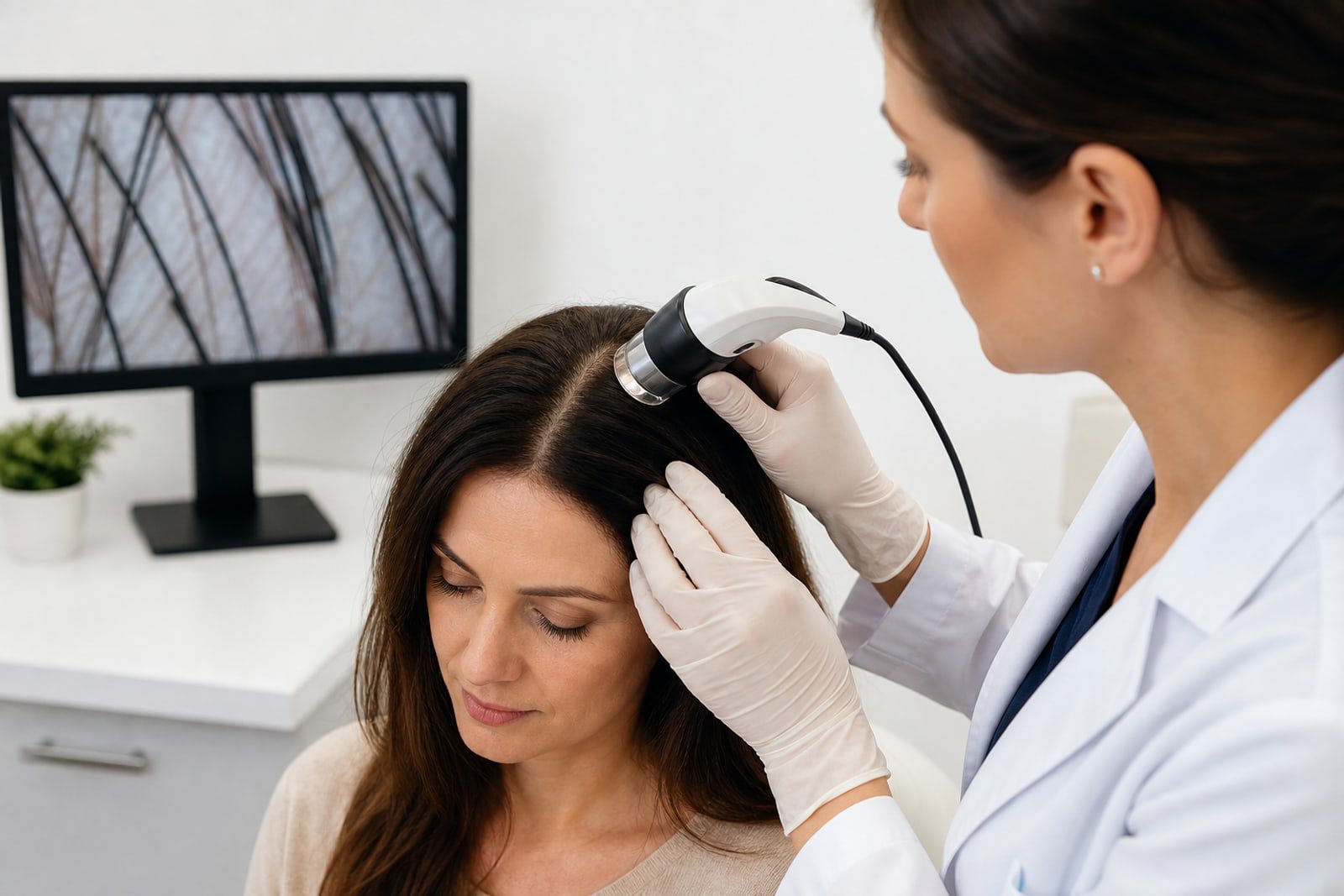
The doctor uses dermoscopy to look at follicle density and changes in hair shaft diameter, and decides from your history whether blood tests are needed. Not everyone requires a full panel.
A note from the dermatology team
Hair loss in women has many causes, from genetics and hormonal change to stress, nutrition and illness, all of which can affect follicle health. For women it is not only a matter of appearance but often of confidence and quality of life.
If you notice more shedding, thinner hair or a widening part, rather than covering it up or trying remedies, find out what is actually behind it — that is what makes improvement possible.
- Work out which pattern this is first, then decide between habits, nutrition and medication.
- Mention heavy periods, childbirth, a vegetarian diet or rapid weight loss to your doctor; these all relate to iron.
- Tracking with dermoscopy images taken under the same conditions is far more reliable than going by impression.