

What is alopecia areata?
Alopecia areata is a common form of non-scarring hair loss. The typical presentation is one or more round or oval bald areas that appear suddenly on the scalp, looking as though a patch has been shaved away.
It is not limited to the scalp and can also affect the eyebrows, eyelashes, beard or other hair-bearing areas of the body. The American Academy of Dermatology notes that alopecia areata can cause hair loss on the scalp, beard and elsewhere, and that it is not contagious.
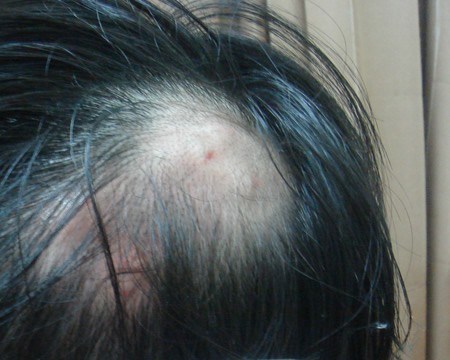
Is alopecia areata an autoimmune condition?
Alopecia areata is generally considered to involve an autoimmune response. The immune system is meant to protect the body, but in alopecia areata immune cells may mistakenly target hair follicles, causing inflammation around them so that hair suddenly enters a shedding phase.
The course varies: it sometimes improves on its own and can also recur. A small number of people progress to extensive hair loss affecting the whole scalp or body hair, so if the affected area is spreading quickly it is worth having a dermatology specialist assess it early.
What are the common symptoms?
The most common sign is sudden localised hair loss, though the presentation is not identical for everyone.
| Symptom | What you may notice |
|---|---|
| Round or oval patch | A coin-sized bald area on the scalp |
| Clearly defined border | The skin within the patch looks smooth, with no visible wound |
| Shedding speeds up suddenly | Noticeably more hair when washing or brushing |
| Several patches at once | More than one round patch may appear |
| Eyebrows, lashes or beard affected | Other hair-bearing areas can be involved in more severe cases |
| Regrowth starts white or fine | Early regrowth may come through as white or downy hair |
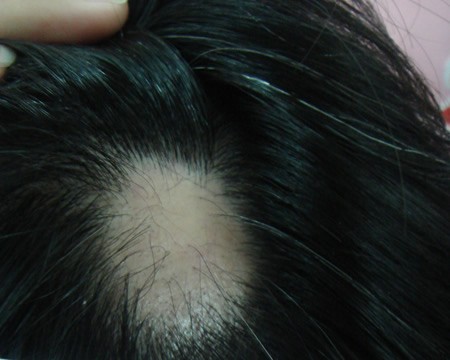
How is it different from male pattern hair loss?
Many people assume any hair loss is male pattern or stress related, but alopecia areata has its own typical features.
| Type of hair loss | Typical features | Usual location |
|---|---|---|
| Alopecia areata | Round, patchy loss that appears suddenly | Scalp, eyebrows, beard |
| Male pattern hair loss | Receding hairline and thinning crown, gradual | Front hairline, crown |
| Telogen effluvium | Overall shedding increases, usually diffuse | Whole scalp |
| Hair loss from scalp infection | May come with redness, scaling, itch or pain | The infected area |
Alopecia areata usually appears patch by patch, while male pattern loss is a receding hairline and gradually thinning crown. The two are treated differently, so it is better to confirm the cause than to buy a hair growth product and hope.
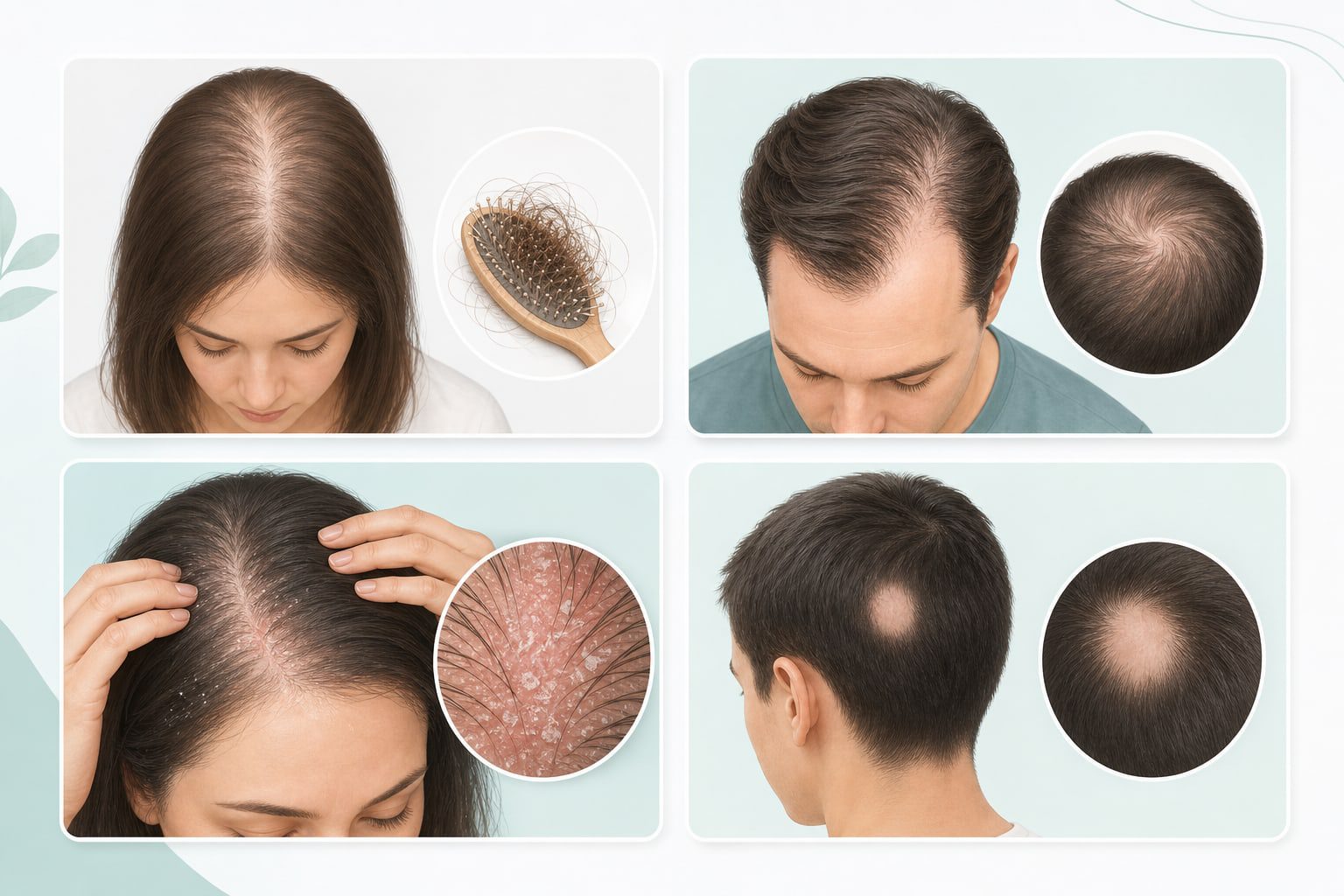
What causes alopecia areata?
It is rarely a single factor. Predisposition, immune activity and general condition tend to interact.
| Possible factor | Typical situation | Notes |
|---|---|---|
| Inherited predisposition | A family member has had alopecia areata, hair loss or an immune-related condition | Risk may be higher where there is relevant family history. |
| Autoimmune response | Immune cells mistakenly target hair follicles | This can cause inflammation around the follicle and localised hair loss. |
| Stress and anxiety | Prolonged stress, poor sleep, emotional strain | These can affect immune activity and the hair growth cycle, and may trigger or worsen an episode. |
| Other conditions and treatments | Thyroid disease, rheumatoid arthritis, chemotherapy or radiotherapy | Some conditions and treatments are associated with hair loss; a sudden increase is worth having assessed. |
When should you see a doctor?
Some small patches regrow within a few months, but if the area spreads quickly, is clearly extensive, keeps recurring, or affects the eyebrows and eyelashes, it is worth being seen sooner rather than later.
| Worth seeing a doctor | Why |
|---|---|
| The affected area is growing quickly | It may progress to more extensive loss |
| Several round patches appear | Severity and treatment direction need assessing |
| Eyebrows, lashes or beard also affected | Suggests it is not confined to the scalp |
| Scalp is red, itchy, painful or scaling | Infection and other skin conditions need ruling out |
| The hair loss is affecting how you feel | Addressing it early can reduce the anxiety around it |
| History of thyroid or immune disease | Related conditions may need checking |
The point of treating hair loss is not to wait until a lot has gone. When hair becomes finer, density drops, or shedding in the shower clearly increases, that is already a reasonable time to have it checked.
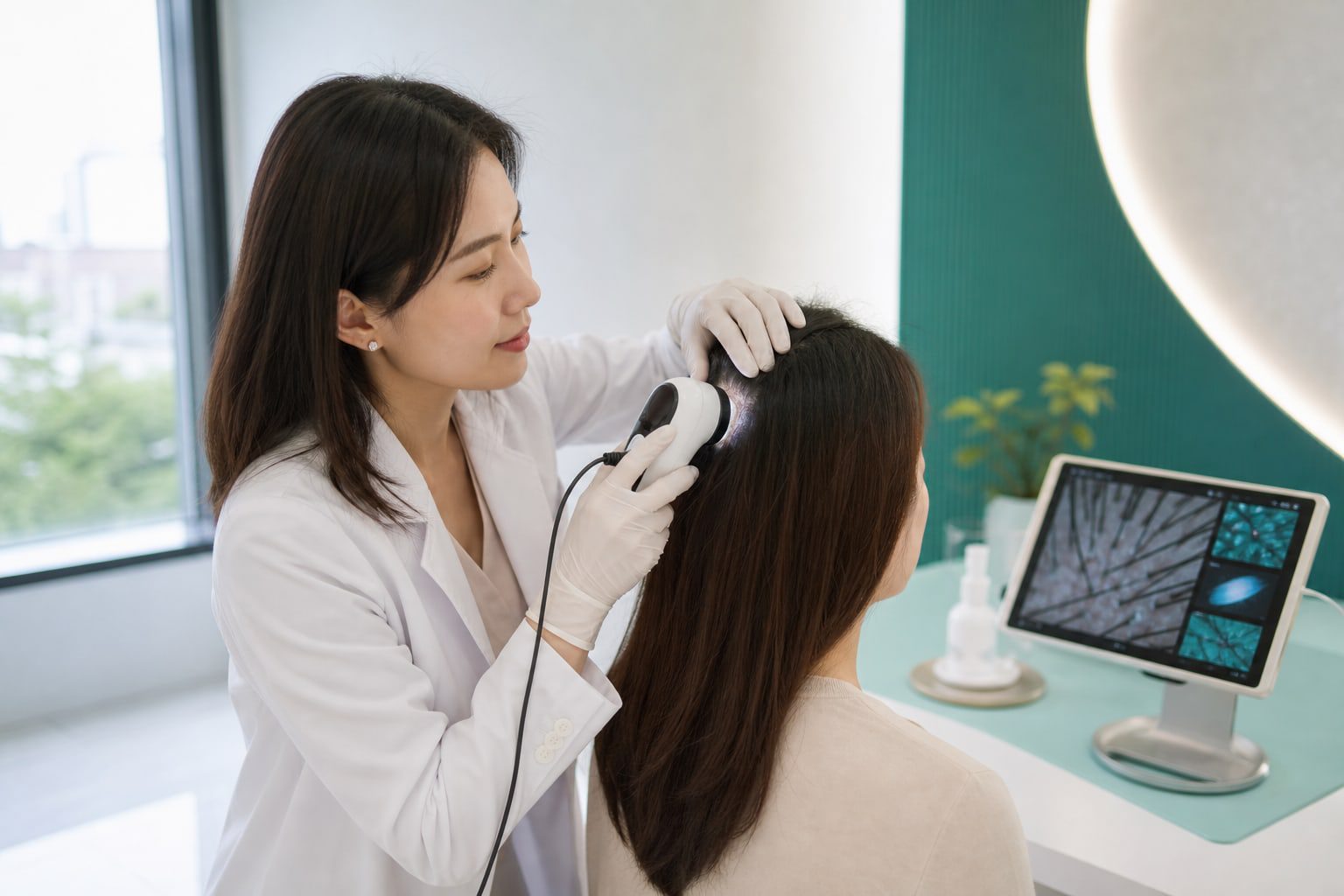
What treatments are available?
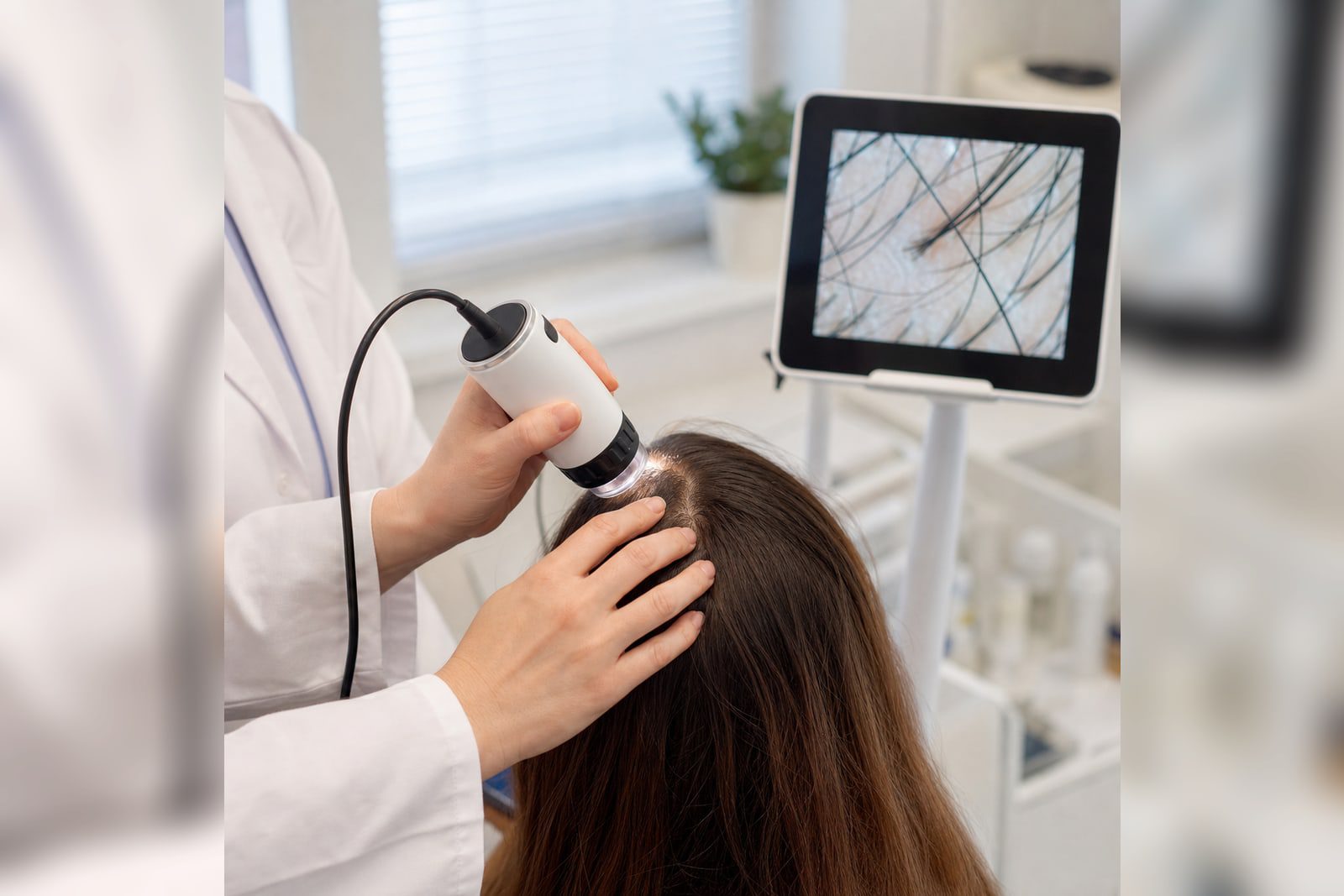
The approach depends on how much hair is affected, how long it has been going on, severity, age, and whether other conditions are present.
| Approach | How it works | Worth discussing for | Points to note |
|---|---|---|---|
| Topical medication | Reduces local inflammation and supports follicle recovery | Mild, small-area alopecia areata | Needs regular use and follow-up |
| Local corticosteroid injection | Suppresses immune inflammation around the follicle | Clearly defined single patches | Performed by a doctor |
| Oral medication | Controls a wider immune or inflammatory response | Moderate to severe or faster progressing cases | Side effects assessed and blood tests monitored |
| Oral JAK inhibitor | Inhibits the JAK1 / JAK2 signalling pathway, reducing the immune attack on follicles | Severe, extensive alopecia areata | Indications assessed by a doctor with ongoing monitoring |
| Topical immunotherapy | Modulates the skin immune response | Recurrent or larger areas | Redness and irritation are possible |
| Phototherapy | Modulates skin immunity and inflammation | Where topical treatment has limited effect | Requires several sessions |
| Scalp and growth factor treatments | Improves the scalp environment and supports follicle recovery | Where the scalp needs additional support | Supportive in nature, assessed by a doctor |
Responses vary from person to person. This table is to help you understand the options before your visit and is not a guarantee of results. Medication and treatment plans are decided by a doctor after assessing indications and contraindications.
What are JAK inhibitors for alopecia areata?
In recent years newer immune-modulating medication has become an option for severe alopecia areata, and JAK inhibitors are the class most often discussed. They work mainly by modulating immune signalling so that the immune attack on hair follicles is reduced.
The US FDA approved a JAK inhibitor for severe alopecia areata in adults in 2022, the first oral systemic medication it had approved for the condition. Several JAK inhibitors have since been approved, with different age ranges and criteria.
Whether this class is suitable depends on a doctor assessing indications, contraindications and the monitoring plan during treatment. Not every case of alopecia areata needs or suits this kind of medication.
How should you look after your scalp day to day?
Alongside treatment, adjusting daily habits helps the follicle environment settle.
| Focus | What helps |
|---|---|
| Regular sleep | Avoid consistently late nights so immune and hormonal rhythms stay steady |
| Reduce stress | Exercise, relaxation or psychological support all help |
| Balanced diet | Enough protein, iron, zinc and vitamins |
| Avoid rapid weight loss | Losing weight very quickly can worsen shedding |
| Gentle scalp cleansing | Avoid over-degreasing or harsh shampoos |
| Avoid pulling on hair | Less tight tying, heavy styling and frequent colouring or perming |
| Regular follow-up | Track whether patches are spreading or new hair is coming through |
Hair loss affects wellbeing too
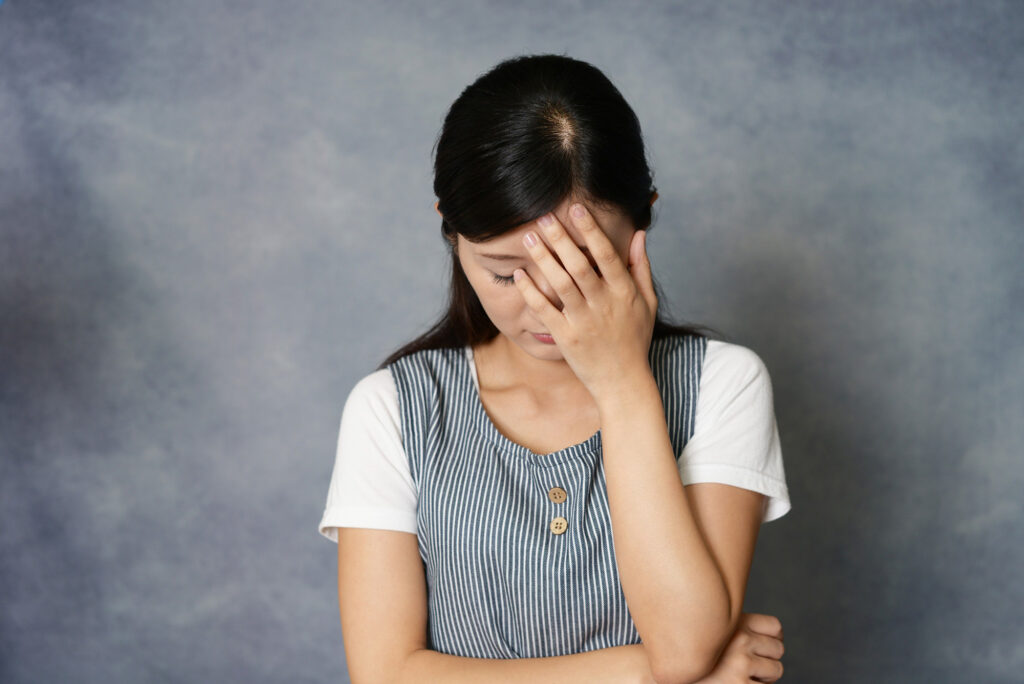
Hair loss is not only about appearance; it can affect confidence, social life and mental wellbeing. Many people with alopecia areata worry about others looking at their scalp and start avoiding gatherings, photographs or certain work situations.
When hair loss is causing clear anxiety, low self-esteem or trouble sleeping, the psychological side deserves attention alongside the scalp and follicles. Assessing alopecia areata means looking at more than the size of the patch.
A note from the dermatology team
Alopecia areata is not caused by poor hygiene and it is not mysterious. It is a dermatological condition connected to immune activity, predisposition, stress and scalp health. Most people who are diagnosed early, treated consistently and adjust daily habits have a reasonable chance of improvement.
If a round patch appears suddenly, or shedding in the shower increases noticeably, it is better not to self-diagnose or wait. Having a dermatology specialist assess the cause first makes it easier to choose a sensible approach.