

What is seborrheic dermatitis, and is it contagious?
Seborrheic dermatitis is a common, easily recurring inflammatory skin problem that favours areas where the sebaceous glands are more active. Typical sites are the scalp, hairline, eyebrows, sides of the nose, behind the ears, the beard area, the chest and the upper back.
It is not caught from anyone and does not spread by contact. Some people mistake it for ordinary dandruff, dry skin or an allergy, but when greasy flaking, redness and recurring itch appear together, seborrheic dermatitis or another skin condition needs to be considered.
Infants, adults after puberty, people whose skin produces more oil, and those under prolonged stress or short on sleep may be more prone to it. Symptoms can also be more pronounced in people who are immunocompromised, have a neurological condition or are taking certain medication, and those situations especially warrant an assessment.
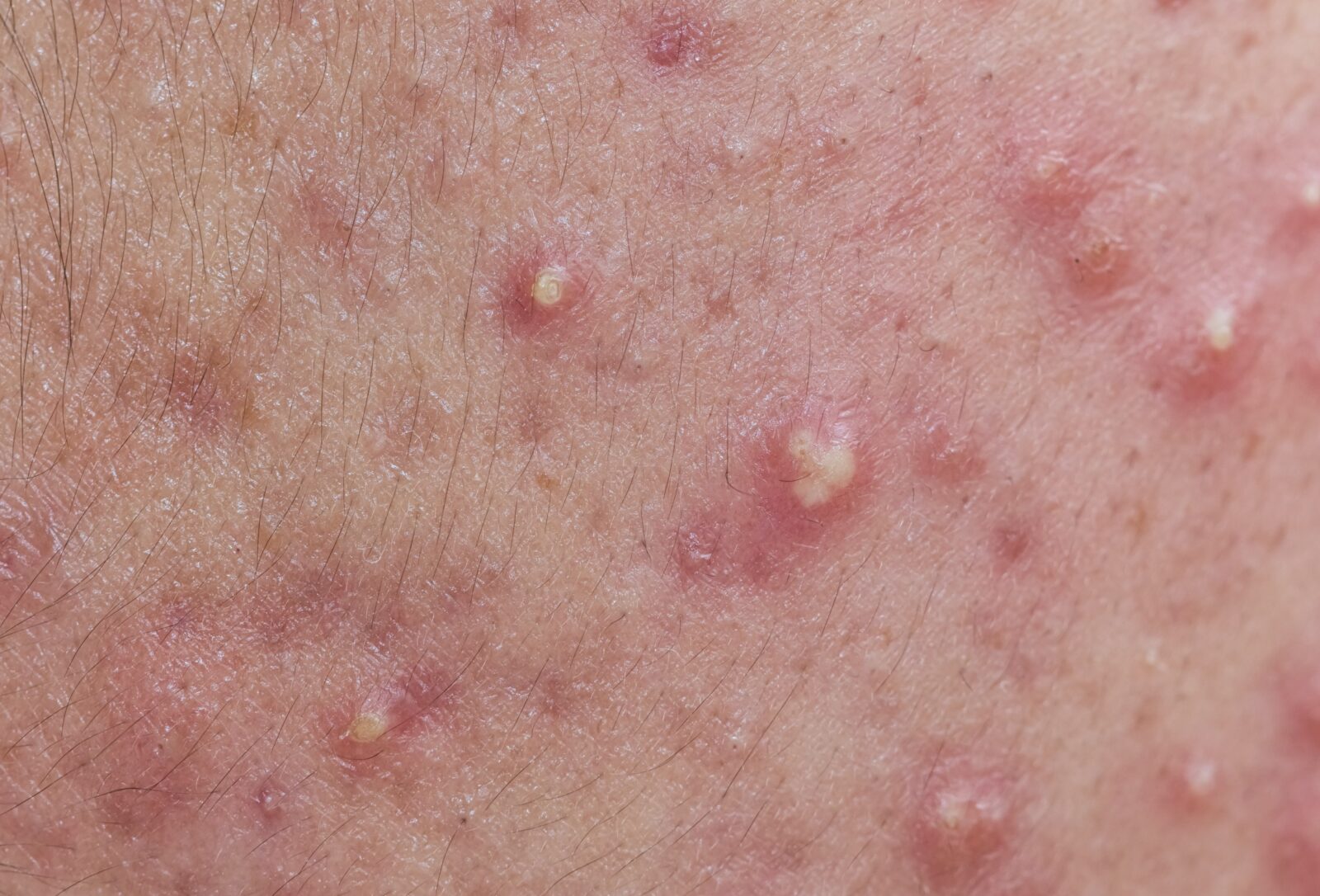
What are the symptoms and how do you recognise them?
Symptoms range from mild dandruff to obvious redness and scaling. The usual clue is that they cluster on oil-prone areas, the flakes look yellow-white and greasy, and there is itch or repeated flushing.
- Scalp: recurring dandruff, itch and redness; thick scale or scratched crusting in more severe cases.
- Face: redness and fine scale between the brows, on the eyebrows, sides of the nose, nasolabial folds and behind the ears.
- Body: greasy scaling and redness on the chest, upper back or skin folds.
- Recurrence: it tends to flare after stress, late nights, weather changes, over-cleansing or harsh products.
Dry flaking alone is not necessarily seborrheic dermatitis. Pain, oozing, pustules, localised hair loss or rapid spread may point to a secondary infection or a different condition, and those are not situations to manage with an over-the-counter shampoo or ointment alone.

What causes it? It is not simply poor washing
The cause is rarely a single factor. Sebum, the skin microbiome, the skin barrier and the immune response all interact. Washing the skin until it feels dry does not necessarily help and can weaken the barrier, making the redness and itch less stable.
Malassezia is a yeast that lives on normal skin and prefers oil-rich environments. Some people react more strongly to Malassezia or its metabolites, so when sebum is high or the microbiome is out of balance, inflammation and scaling can follow.
Late nights, stress, weather changes, over-exfoliation, harsh cleansers and frequent scratching can all weaken the barrier and amplify the redness-itch-flake cycle. Repeatedly using an unidentified ointment can also lead to rosacea-like dermatitis, folliculitis or thinning skin.
Spicy food, alcohol, and high-fat or high-sugar diets do not trigger everyone. If you notice that a particular food, a late night or a stressful period makes things worse, note it down and discuss it. Treatment usually addresses inflammation, the microbiome and daily triggers together rather than banning one food.
How does it differ from psoriasis and atopic dermatitis?
Redness, scaling and itch are not unique to seborrheic dermatitis. Psoriasis, atopic dermatitis, contact dermatitis, fungal infection and rosacea can all look similar. The treatments differ, so getting it wrong can mean more irritation or a delay.
| Possible condition | Usual sites and appearance | Common clues | Treatment focus |
|---|---|---|---|
| Seborrheic dermatitis | Scalp, eyebrows, sides of nose, behind ears, chest; greasy yellow-white scale with redness | Recurring dandruff and itch on oily areas, worse with stress or seasonal change | Assess antifungal and anti-inflammatory options plus cleansing routine |
| Psoriasis | Scalp, elbows, knees, trunk; well-demarcated thick plaques with silvery scale | Thicker scale, may come with nail changes or joint symptoms | Dermatology assessment of severity and a long-term strategy |
| Atopic dermatitis | Inner elbows, behind knees, neck, around eyes; marked dryness and itch | Often an atopic tendency, unstable barrier and repeated scratching | Focus on moisturising, avoiding irritants and controlling inflammation |
| Contact dermatitis | Where skincare, hair dye, a mask or jewellery touches; red, itchy, stinging | Worsens after changing a product or contact with a specific item | Identify the irritant or allergen; patch testing where appropriate |
| Fungal infection or tinea versicolor | Chest, back, folds or localised areas; pigment change or ring-like edges | More obvious after heat and sweating, can be mistaken for dermatitis | May need a skin scraping; treatment differs from steroids |
This table is for orientation only and does not replace a diagnosis. A dermatology specialist weighs distribution, the type of scale, history, medication and any necessary tests together.
How is it confirmed?
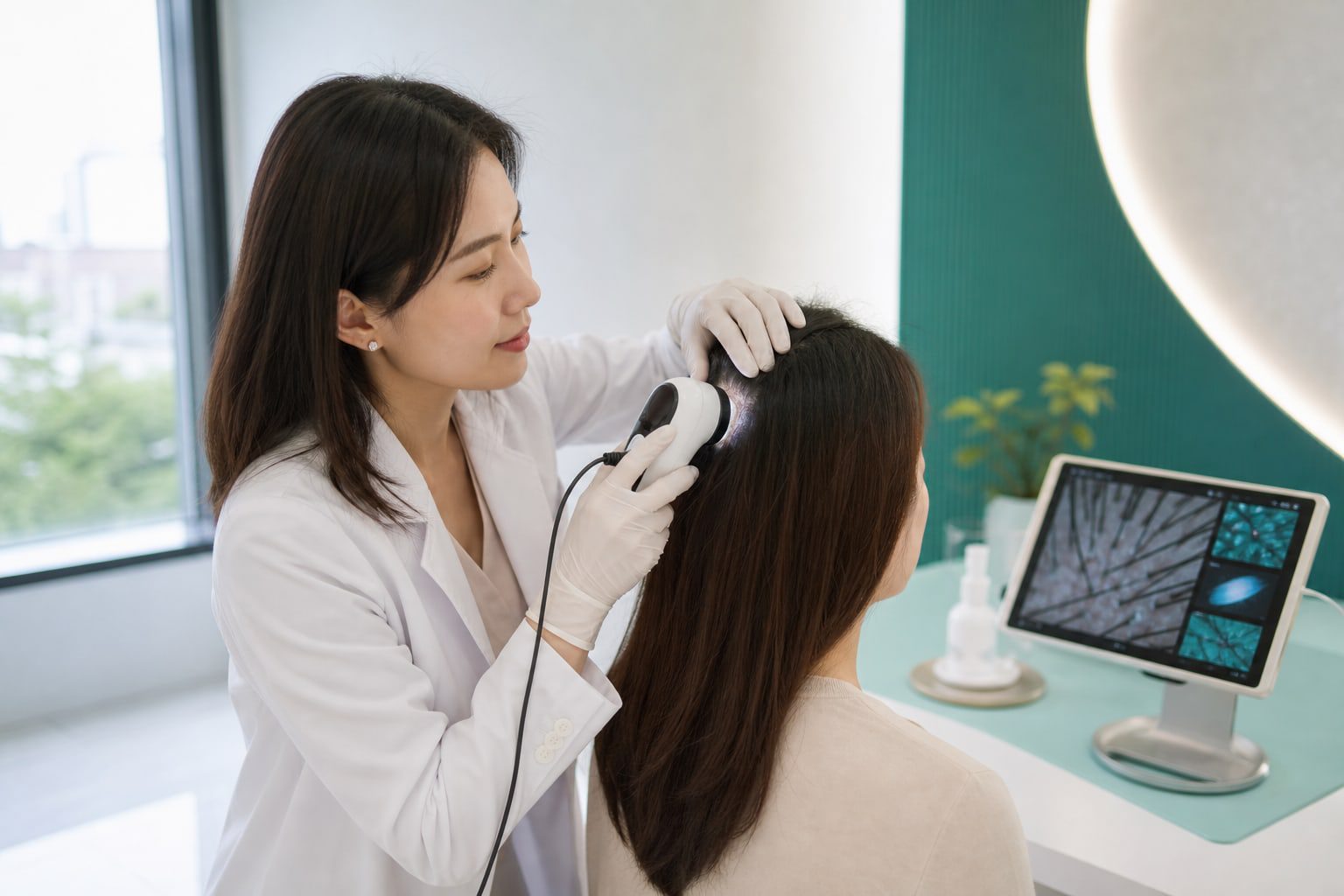
In most cases a dermatology specialist can tell from the distribution of the lesions, the type of scale, the history and current medication. Where the presentation is atypical, widespread or persistent, or a fungal infection is suspected, a skin scraping or other test may be arranged to rule out other conditions.
The easiest mistakes to make on your own are assuming it is just dandruff, or assuming it is an allergy. Those are handled differently, and using the wrong product long term can leave the skin less stable.
How is seborrheic dermatitis treated?
The goal is to reduce inflammation, flaking and itch, and to make flares manageable. In adults it usually needs staged control and maintenance rather than one medication used as a permanent fix.
For the scalp, medicated shampoos containing antifungal, anti-dandruff or keratolytic ingredients are commonly discussed, such as ketoconazole, ciclopirox, zinc pyrithione, selenium sulfide, coal tar or salicylic acid. Which ingredient, how often, and whether to rotate depends on the state of the scalp and your doctor instructions; some medicated shampoos are left on for a few minutes before rinsing.
For redness and scaling on the face, behind the ears or on the chest, a doctor may consider a topical antifungal, a low-potency corticosteroid or a non-steroidal anti-inflammatory, depending on the site. The skin around the eyes, on the sides of the nose and on the face generally is thin, so prolonged self-directed use of a potent steroid is particularly discouraged.
If flares keep coming back despite a consistent routine, it is worth checking whether psoriasis, rosacea, contact dermatitis, folliculitis or a fungal infection is also involved. In the small number of cases that are widespread, markedly inflamed or complicated by immune status, further tests or a change of strategy may be arranged.
Responses vary from person to person. This section is to help you understand the options before your visit and is not a guarantee of results. Medication is decided by a doctor after assessing indications and contraindications.
What does day-to-day care look like?
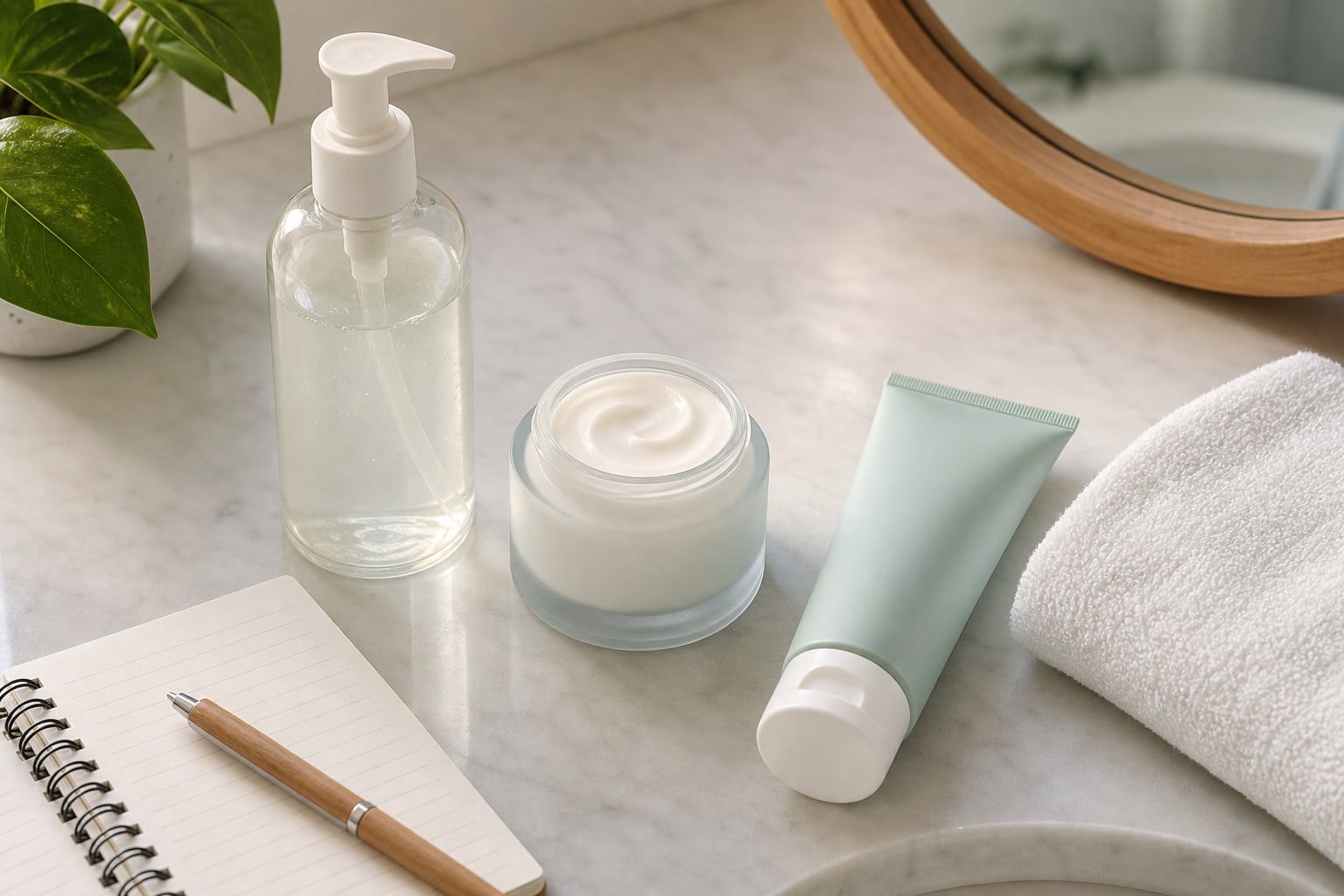
The point is gentle cleansing, less irritation and regular review, not washing the scalp or face until no oil is left. Sebum is a normal part of skin, and over-cleansing with frequent exfoliation usually makes the barrier less stable.
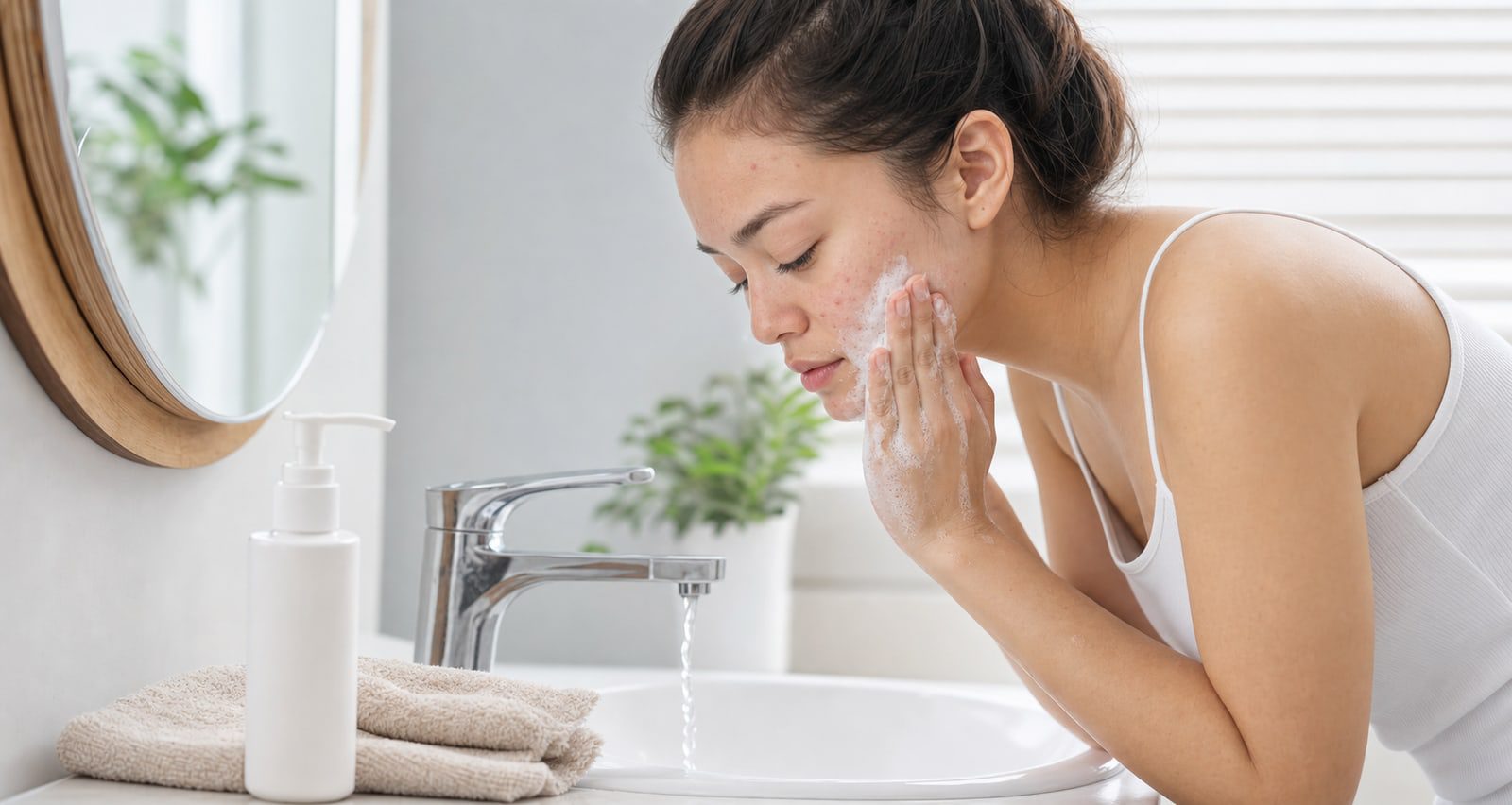
- Use gentle cleansers. Avoid scrubs, brushes, frequent exfoliation and products that feel strongly alcoholic.
- When the scalp is oily and flaking, use medicated shampoo as directed rather than increasing the frequency indefinitely on your own.
- During a facial flare, simplify your routine and avoid heavy balms, hair oils, fragranced essential oils and unidentified ointments.
- Cut down on late nights and prolonged stress, and note the season, diet, stress, product changes and how symptoms track.
- Do not scratch or pick at the scale. Oozing, pain, yellow crust or pus needs assessing for infection.
When should you see a doctor?
The situations below are worth having a dermatology specialist assess rather than continuing to adjust shampoos and ointments on your own.
| Worth seeing a doctor | Why |
|---|---|
| Redness, itch and flaking recurring beyond four to six weeks | The diagnosis or the strength of treatment may need revisiting |
| No improvement despite over-the-counter shampoo and routine changes | Whether it is seborrheic dermatitis, or another condition alongside it, needs confirming |
| Redness and itch spreading quickly on the face or scalp | Infection and other inflammatory skin conditions need ruling out |
| Hair loss, thick crusting, oozing or pus | There may be a secondary infection or a deeper lesion needing treatment |
| An infant whose skin is not clearly improving | The infant and adult forms are managed differently |
| You are immunocompromised or have a chronic condition | Symptoms can be more pronounced and medication needs assessing alongside |
A note from the dermatology team
Seborrheic dermatitis recurs easily and involves sebum, Malassezia, the skin barrier and inflammation interacting. Washing the face until it is squeaky clean, exfoliating frequently or using a potent ointment long term on your own tends to leave the skin more irritated and does not necessarily identify the real trigger.
If dandruff, redness, scaling or itch keeps returning beyond four to six weeks, or comes with oozing, pain, hair loss or recurring facial redness, it is worth being examined in person. The doctor will look at the site and severity, and at whether psoriasis, atopic dermatitis, contact dermatitis or a fungal infection is also present, before setting a cleansing routine, topical treatment and follow-up.