

What causes dry, itchy skin?
Dry, itchy skin is a symptom, not a single disease. Working out the likely direction means looking first at when it started, how widespread it is, what the rash looks like, your daily habits, and whether other bodily symptoms are present.
A dry skin barrier and cleansing irritation: hot showers, long soaks, strongly degreasing washes, frequent exfoliation and alcohol-based products can all strip the skin's lipid film and leave the outer layer less able to hold water. Once the barrier is damaged, tightness, flaking, fine cracks and a scratch-itch cycle usually follow.
Weather, air conditioning and age: cold, dry winters and long hours in air-conditioned or heated rooms increase water loss from the skin. In older adults, reduced oil production and a weaker water-holding capacity make dryness on the lower legs, arms and back more likely.
Skin conditions and infection: eczema, atopic dermatitis, seborrhoeic dermatitis, psoriasis, contact dermatitis, scabies and fungal infection can all present as itch, rash, scaling or scratch marks. Treatment differs greatly between them, so long-term use of a cream of unknown composition is not advisable.
Medication, allergy or internal causes: some medicines, foods and things you come into contact with can set off itching or a rash. If you itch all over with almost no visible rash, or you also have jaundice, darker urine, weight change, fatigue, or frequent urination and thirst, liver, kidney, thyroid, blood-sugar or other internal causes need assessing.
Which symptoms are worth paying attention to?
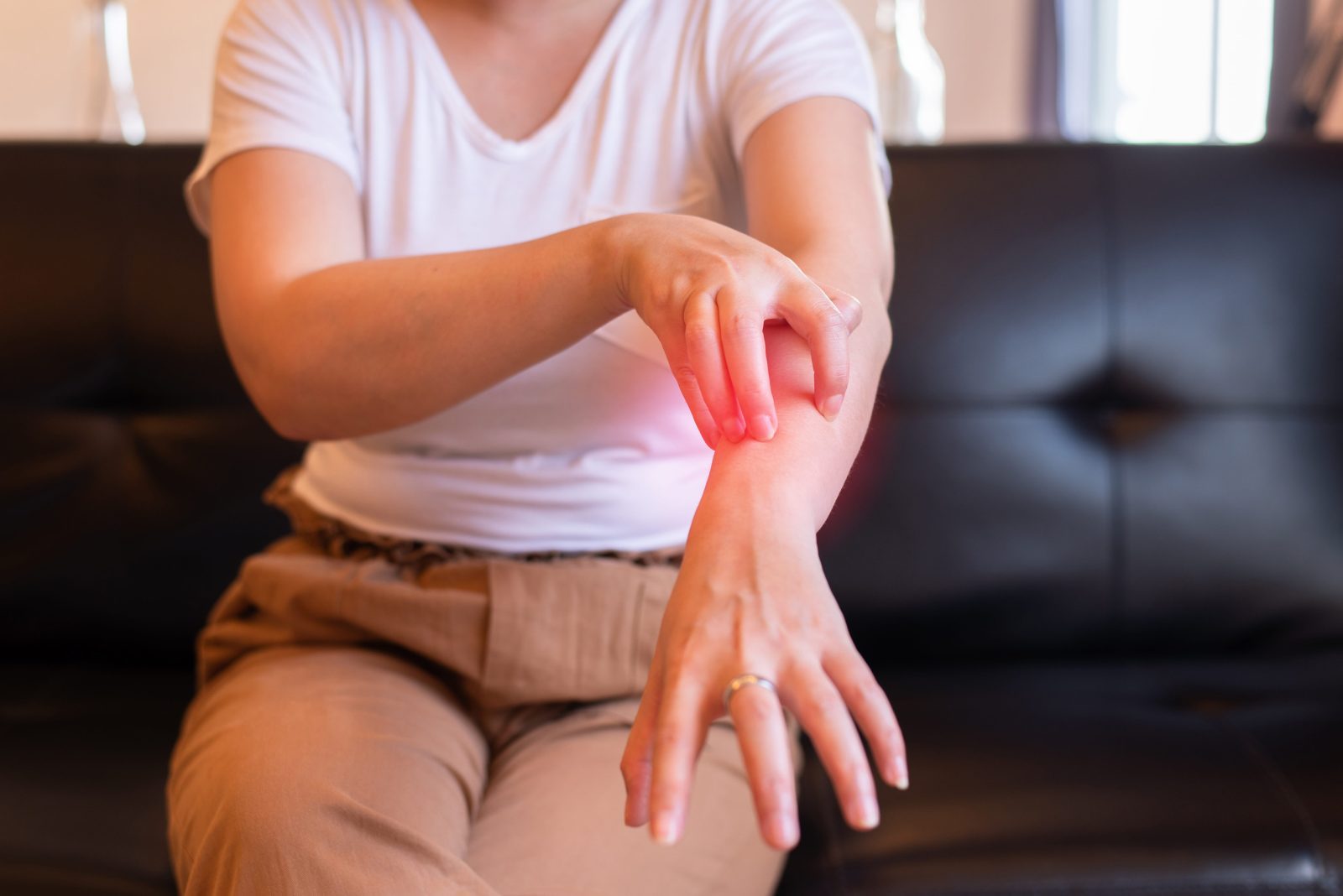
Ordinary dryness may bring only tightness, fine flaking and mild itching. Once the skin is inflamed, though, you often see redness, papules, scaling, weeping, crusting, cracks or pigmentation. Scratching relieves the itch briefly but can break the barrier further, make the inflammation more obvious, and raise the risk of infection.
- The itch has lasted more than two weeks, or it returns as soon as you stop moisturising.
- It wakes you at night and disturbs your sleep, or only constant scratching brings any relief.
- The skin becomes red and swollen, hot and painful, weeping, crusted, cracked or bleeding.
- The affected area is spreading quickly, or family members and people you live with start itching too.
- You itch all over with little visible rash, or there is also fever, weight change, jaundice or fatigue.
None of this necessarily means a serious disease, but it does mean a fuller history and a skin examination are needed. For children, pregnant women, older adults, people with chronic conditions and anyone whose immunity is weakened, an early assessment of medication safety is advisable.

Dryness, eczema or infection? A comparison
Many people put every itch down to dryness, but the causes differ and so does the management. The table below is a starting point for observation, not a substitute for a diagnosis. If the rash is changing quickly, the skin is already broken, or treatment keeps failing, a dermatology specialist should confirm what it is.
| Possible cause | Usual appearance | Common triggers | What to do about it |
|---|---|---|---|
| Simple dryness or asteatotic dermatitis | Tightness, fine flaking, cracking, commonly on the lower legs and arms | Low winter humidity, hot showers, over-washing, increasing age | Adjust bathing and cleansing habits, moisturise thickly and regularly; cracks or inflammation need a doctor |
| Eczema or contact dermatitis | Redness, papules, scaling, sometimes weeping or repeated scratch marks | Detergents, skincare, metals, workplace contacts, sweat and friction | Find and avoid the irritant; the doctor may assess topical treatment and barrier repair |
| Fungal infection, scabies or other infection | Ring-shaped scaling, spreading locally, or intense night itch with others in the household also itching | Damp heat, sharing clothes and bedding, close contact | The type of infection must be confirmed; long-term self-applied steroid can mask the lesion |
| Urticaria or allergic reaction | Raised wheals that move around and often change within hours | Food, medication, infection, stress, temperature change, or no identifiable cause | Record triggers and timing; breathing difficulty or swollen lips and eyelids need immediate care |
| Internal or drug-related itch | Itching all over with little visible rash, sometimes with fatigue or other symptoms | Liver, kidney, thyroid, blood-sugar or blood conditions, or a drug side effect | The doctor arranges the tests the history calls for; suppressing it long-term with anti-itch medication alone is not advisable |
This table is for initial understanding only and does not replace an examination. If the rash looks atypical, keeps returning or comes with whole-body symptoms, it still needs a dermatology specialist to examine it.
How should bathing and cleansing be adjusted?
If symptoms are mild with no obvious redness or weeping, start by adjusting daily care. Cleansing is the part most often overlooked and the easiest to improve: washing too hot, too long and too thoroughly is frequently why the itch never settles.
- Keep the water temperature down: warm rather than hot, keep showers short, and avoid long soaks or repeatedly running hot water over the itch for relief.
- Choose gentle cleansing: avoid strongly degreasing, heavily fragranced, scrubbing or exfoliating products. Dry, itchy areas do not necessarily need a generous amount of body wash every day.
- Whether to shower daily depends on how much you sweat, your working environment and your own habits. What matters is the temperature and the duration, not the count.
- Do not rub yourself dry afterwards; press gently with a towel, so the already fragile outer layer is not put through another round of friction.

How do you moisturise and reduce irritation?
The point is to reduce irritation and restore oil and water so the barrier has a chance to recover. Moisturising is not a once-and-done job: it needs doing at the right moment, in enough quantity, and regularly.
- Moisturise within three to five minutes of washing: apply a cream or ointment while the skin is still slightly damp, and reapply several times a day where the itch is marked.
- Cut down scratching and friction: keep nails short, wear soft breathable clothing, and avoid wool, tight clothes and getting overheated and sweaty.
- Watch for triggers: note any new cleanser, skincare product, medicine, food or workplace contact along with when flares happen, which helps the doctor at your appointment.
- A humidifier can help when the air is very dry, but adjusting cleansing and moisturising still matters more.
If the itch keeps returning despite moisturising, or there was already obvious rash, scaling, cracking or weeping from the start, further diagnosis is usually needed. Mixing anti-itch creams, antibiotic ointments or products of unknown composition on your own can irritate the skin, delay treatment of an infection, or make the picture harder to read.

What diagnosis and treatment does dry, itchy skin need?
A dermatology specialist will ask when it started, where it is, what you come into contact with at home and at work, your medication, allergy history, chronic conditions and whether family members have symptoms too, then look at the rash itself. Where needed, skin scraping, fungal testing, allergy assessment or blood tests can help rule out infection or an internal cause.
Topical treatment and barrier repair: where this is dryness or dermatitis, treatment usually combines barrier repair with a short course of topical anti-inflammatory medication. Topical steroids and other immunomodulating medicines are adjusted by site, age, severity and number of days used, and the face, skin folds, children and anyone pregnant or breastfeeding need particular assessment.
Itch relief, treating infection and managing triggers: for night-time itch, urticaria or allergy-related itching, the doctor may assess an antihistamine or another anti-itch medicine. Where there is a fungal, bacterial or scabies infection, the direction of treatment is entirely different. If medication or an internal condition is suspected, discuss with the doctor whether to adjust medication or investigate further.
| Approach | Worth discussing for | Limits and cautions |
|---|---|---|
| Barrier repair and moisturising | The basis for all dry, itchy skin, whatever the final diagnosis | Needs doing regularly; the occasional application of lotion is usually not enough |
| Short course of topical anti-inflammatory medication | Assessed by a doctor when there is redness, papules or scaling | Adjusted by site, age, severity and duration; face, skin folds, pregnancy and breastfeeding need particular assessment |
| Oral anti-itch medication | Waking at night from the itch, urticaria or allergy-related itching | Sedation and interactions differ by drug; pregnancy, breastfeeding, children, older adults and liver or kidney disease need a doctor to judge |
| Treating infection | A confirmed fungal, bacterial or scabies infection | The type of infection must be confirmed first; misusing a steroid can mask the lesion |
| Assessment for internal causes | Itching all over with little visible rash, or other bodily symptoms | Tests are arranged according to the history; suppressing it long-term with anti-itch medication alone is not advisable |
Responses vary from person to person. This table is to help you understand the options before your visit and is not a guarantee of results. Medication is decided by a doctor after assessing indications and contraindications.

When should you see a doctor or come back?
The situations below are worth having assessed rather than continuing to try over-the-counter creams.
- The itch has lasted more than two weeks, or it returns as soon as you stop moisturising.
- The skin is already scratched open and bleeding, or there is weeping, crusting, pain or heat.
- Symptoms have not improved with treatment, the area is spreading, or it returns quickly once you stop.
- Family members or people you live with are itching too, so a contagious cause needs assessing.
- The person affected is a child, pregnant, breastfeeding, an older adult or has a chronic condition, so medication safety needs assessing first.
- You itch all over with little visible rash, or there is jaundice, darker urine, weight change, fatigue, thirst or frequent urination.
Dry, itchy skin usually needs the barrier, the triggers and the inflammation dealt with together; a single course of medication on its own is rarely enough.
A note from the dermatology team: dryness, inflammation and infection are not the same thing
Dry, itchy skin is very common, but the cause is not always simply dry weather. Hot-water washing, insufficient moisturising, eczema, contact dermatitis, fungal infection, scabies, urticaria and drug reactions can all leave the skin itching repeatedly, and using a cream of unknown composition long-term tends to make the picture harder to read.
If the itch lasts beyond two weeks, wakes you at night, or you keep scratching the skin open, or it comes with redness, scaling, weeping or itching all over, have a dermatology specialist examine the rash, go through your everyday contacts and arrange any tests needed, then discuss barrier repair, topical treatment, anti-itch medication or treating an infection.
- Work out first whether this is simple dryness, dermatitis, infection or an internally driven itch, then decide on the medication.
- Barrier repair and trigger management go alongside medication; relying on a cream alone usually means it keeps returning.
- Children, pregnant women, breastfeeding mothers, older adults and people with chronic conditions should tell the doctor before any medication is chosen.