

What is melasma, and is it related to the liver?
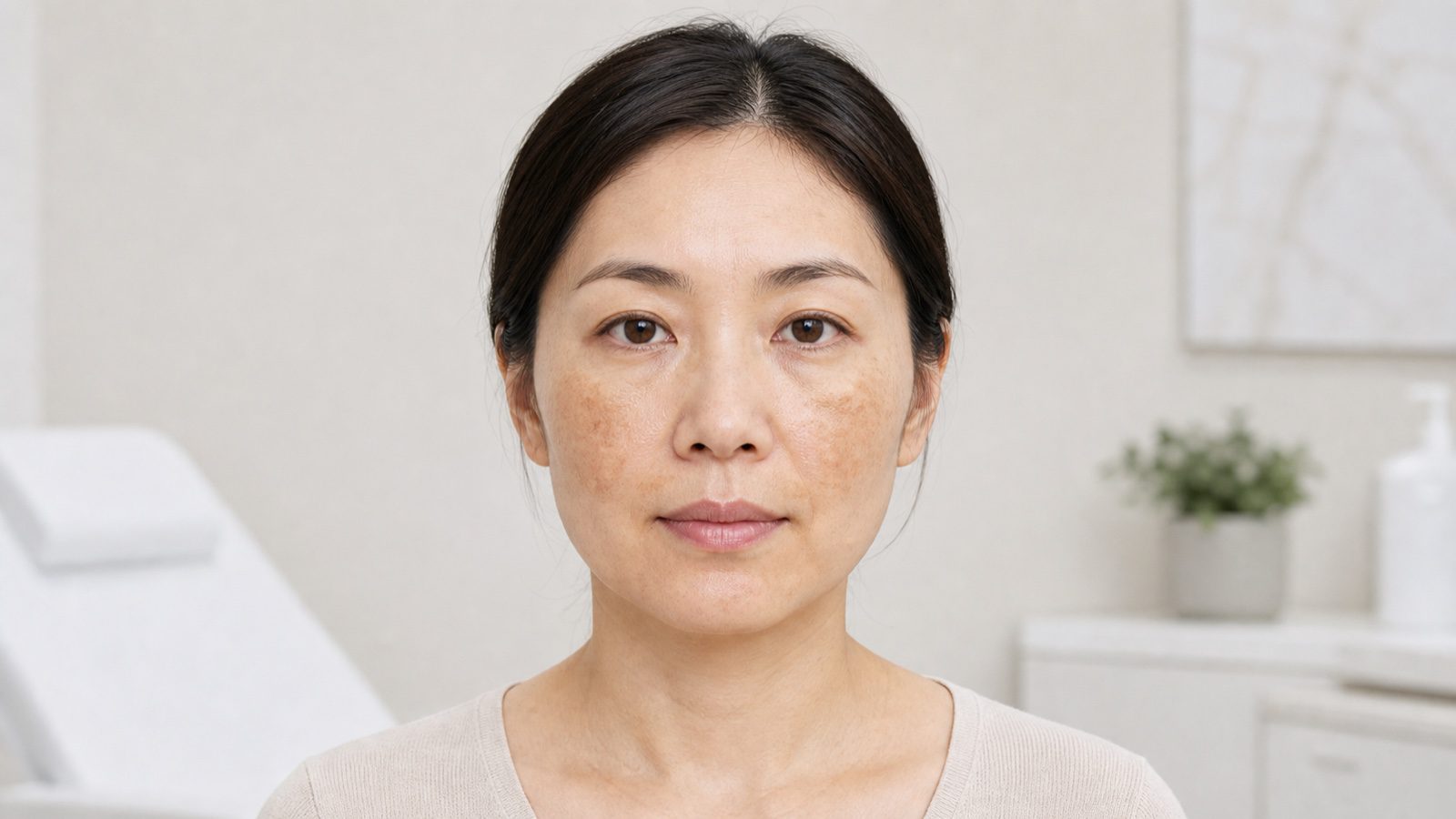
Melasma, also called chloasma or the mask of pregnancy, is pigmentation caused by localised increase of melanin on the face. The Chinese name references the colour rather than the organ, and it does not mean liver disease is present.
Common sites are the cheekbones, forehead, bridge of the nose, upper lip and chin. The colour ranges from light to deep brown, often darkens after sun exposure, and can worsen with pregnancy, the contraceptive pill or hormonal change.
Melasma is usually a fairly symmetrical patch or reticulated pigmentation with edges that are not sharply defined, and the surface is generally flat rather than raised. It does not usually hurt or bleed, and it does not scale the way eczema does. That said, facial pigmentation comes in many forms and is easy to misjudge from a photograph or a description. If a patch grows quickly, varies in shade, has an irregular edge, bleeds or crusts, or stands out on one side, have a doctor examine it first.
What triggers melasma?
Melasma rarely comes from a single cause. Predisposition, light exposure, hormones and the state of the skin barrier all interact. Finding the triggers you can control usually matters more than chasing a quick fade.
Ultraviolet and visible light: UV stimulates melanin production, and visible light and heat can also make some melasma darken repeatedly. That is why it often becomes obvious in summer, after outdoor activity, or when sun protection has slipped.
Hormones and predisposition: pregnancy, the contraceptive pill, hormone therapy and family predisposition can all play a part. If you are trying to conceive, pregnant or breastfeeding, treatment options need a more conservative assessment.
Irritating skincare and skin inflammation: over-exfoliation, frequent acid use, harsh brightening products, or inflammation that was never allowed to settle can all make pigment less stable. Skin with melasma usually needs the barrier looked after first, with treatment added gradually.
| Trigger | Typical situation | What you can manage first |
|---|---|---|
| Sun and visible light | Commuting, outdoor exercise, working by a window, summer exposure | Daily broad-spectrum sunscreen, hats and shade, reapplication as needed |
| Hormonal change | Pregnancy, contraceptive pill, hormone therapy, cycle-related change | Tell your doctor about medication and family plans; do not stop a prescription on your own |
| Skin irritation | Too much acid use, frequent exfoliation, persisting with a product that stings | Pause irritating products and switch to gentle cleansing and moisturising |
| Predisposition and family history | Family members also pigment easily, or your skin darkens readily | Build long-term sun protection and photo tracking rather than repeating high-irritation treatments |
How is melasma diagnosed and told apart from other spots?
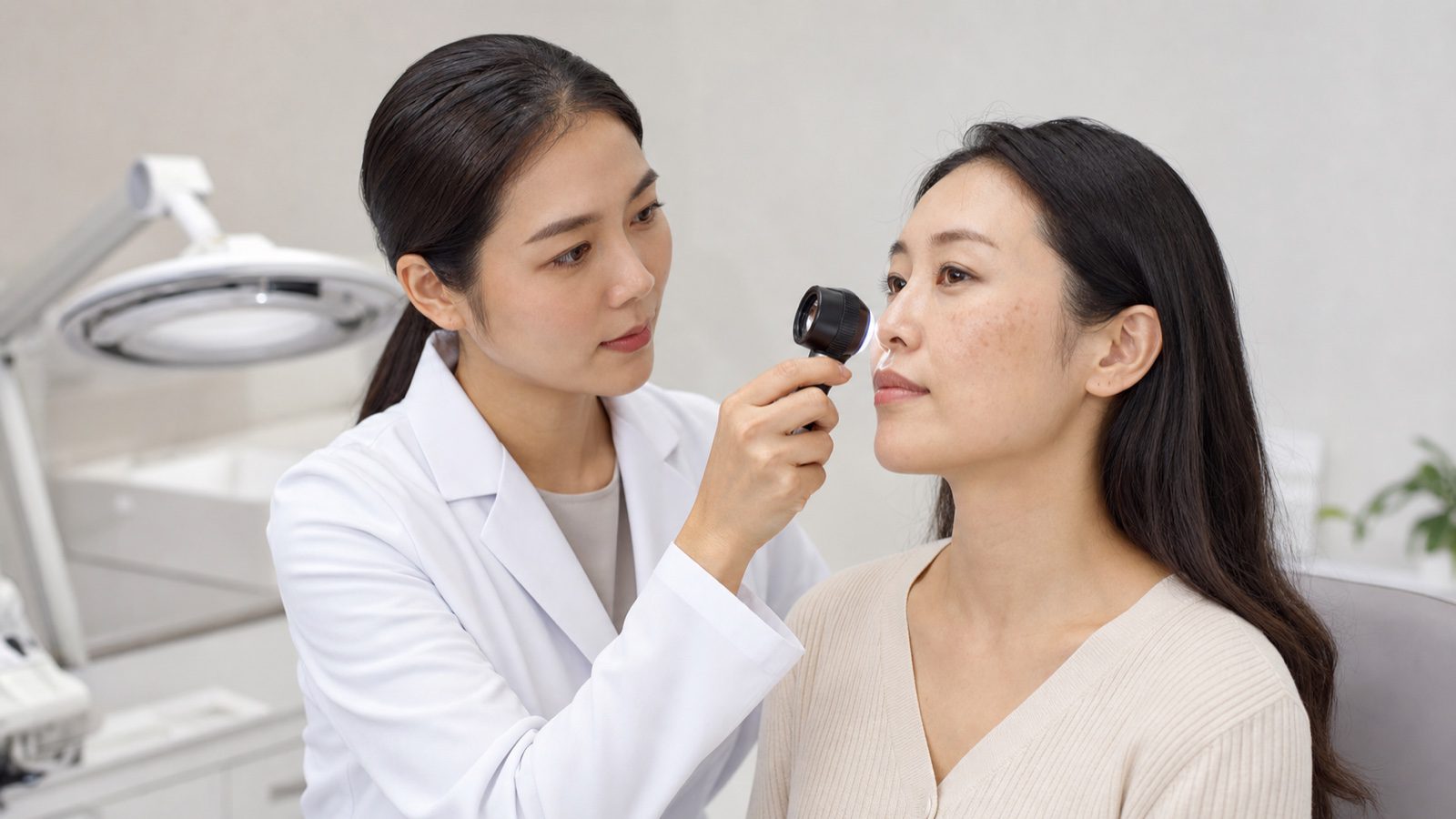
A dermatology specialist looks at the distribution, colour, border and whether the lesion is raised, along with recent sun exposure, pregnancy, medication and skincare irritation. A Wood lamp, dermoscopy or other examination can help judge pigment depth and the nature of the lesion where needed.
The point of the diagnosis is to confirm whether it is melasma before choosing a strategy. Treating sun spots, Hori nevus, post-inflammatory pigmentation or a suspicious lesion as though they were all melasma can delay the treatment that is actually needed.
| Type | Typical appearance | Usual location | What to assess |
|---|---|---|---|
| Melasma | Patchy, softly defined edges, fairly symmetrical | Cheeks, forehead, upper lip, bridge of nose | Whether sun, hormones and skincare irritation make the colour deepen repeatedly |
| Sun spots | Clearly defined brown spots, usually discrete | Cheekbones, temples, backs of hands and other exposed areas | Cumulative sun exposure and other signs of photoageing |
| Post-inflammatory pigmentation | Darkening left after acne, eczema or a wound | Wherever the inflammation or injury was | Whether inflammation, picking, or cleansing and skincare irritation continue |
| Hori nevus | Grey-brown or grey-blue small spots, usually deeper | Around both cheekbones | Often needs assessing alongside coexisting melasma |
| Lesions that need ruling out | Growing quickly, irregular border, mixed colour, bleeding or crusting | Any location | See a doctor first; dermoscopy or biopsy where indicated |
This table is for orientation only and does not replace an examination. A single lesion that has changed noticeably, has mixed colour, or repeatedly breaks down should be confirmed by a doctor.
What are the treatment options, and how long do they take?
Treatment usually rests on sun protection and topical medication, with oral medication, chemical peels, laser or light therapy discussed according to severity, skin tolerance and the risk of recurrence. No single method suits everyone, and mixing several brightening products before a diagnosis is not advisable.
Melasma is tracked in months. Some sources suggest three to twelve months before change becomes visible. Where a patch has been present for years, sun exposure is high, or skin darkens readily, it can take longer.
Topical treatment may include hydroquinone, retinoids, azelaic acid, kojic acid, vitamin C or a compounded prescription, with the strength and frequency adjusted to the skin. If there is marked stinging, redness, peeling or darkening, stop and return to the clinic rather than increasing the amount.
Oral tranexamic acid is sometimes used for stubborn melasma, but the risk of thrombosis, personal history, medication and pregnancy all need assessing. Anyone with a history of thrombosis, a clotting disorder, or on related medication must say so beforehand.
Chemical peels, picosecond laser, Q-switched laser or intense pulsed light can serve as adjuncts, but melasma is sensitive to heat and inflammatory stimuli and poorly judged treatment can darken it or bring it back. Sun protection and topical treatment should be stable first, and the assessment should come from a doctor familiar with skin type and the risk of rebound pigmentation.
| Option | Worth discussing for | Limits and cautions |
|---|---|---|
| Sun protection and skincare adjustment | The baseline for all melasma | Needs doing every day; occasional sun protection is usually not enough |
| Topical brightening medication | Superficial or mild to moderate melasma, early in treatment | Can irritate, peel or darken; adjust as directed |
| Oral tranexamic acid | Stubborn or widespread melasma after assessment | Thrombosis risk, contraindications and drug interactions need assessing |
| Chemical peel | Superficial pigment where skin tolerates it | Can sting, peel or leave pigmentation; sun protection afterwards is essential |
| Laser or light therapy | Where it still troubles you after topical treatment and sun protection are stable | Can darken or recur; not suited to being treated as a one-off fix |
Responses vary from person to person. This table is to help you understand the options before your visit and is not a guarantee of results. Medication and treatment are decided by a doctor after assessing indications and contraindications.
What should daily care and sun protection look like?
Managing melasma comes down to reducing light exposure and inflammatory stimuli. When sun protection is steady, topical treatment and procedures have a baseline to be measured against. When it is not, the colour can deepen again after sun, heat and summer activity.
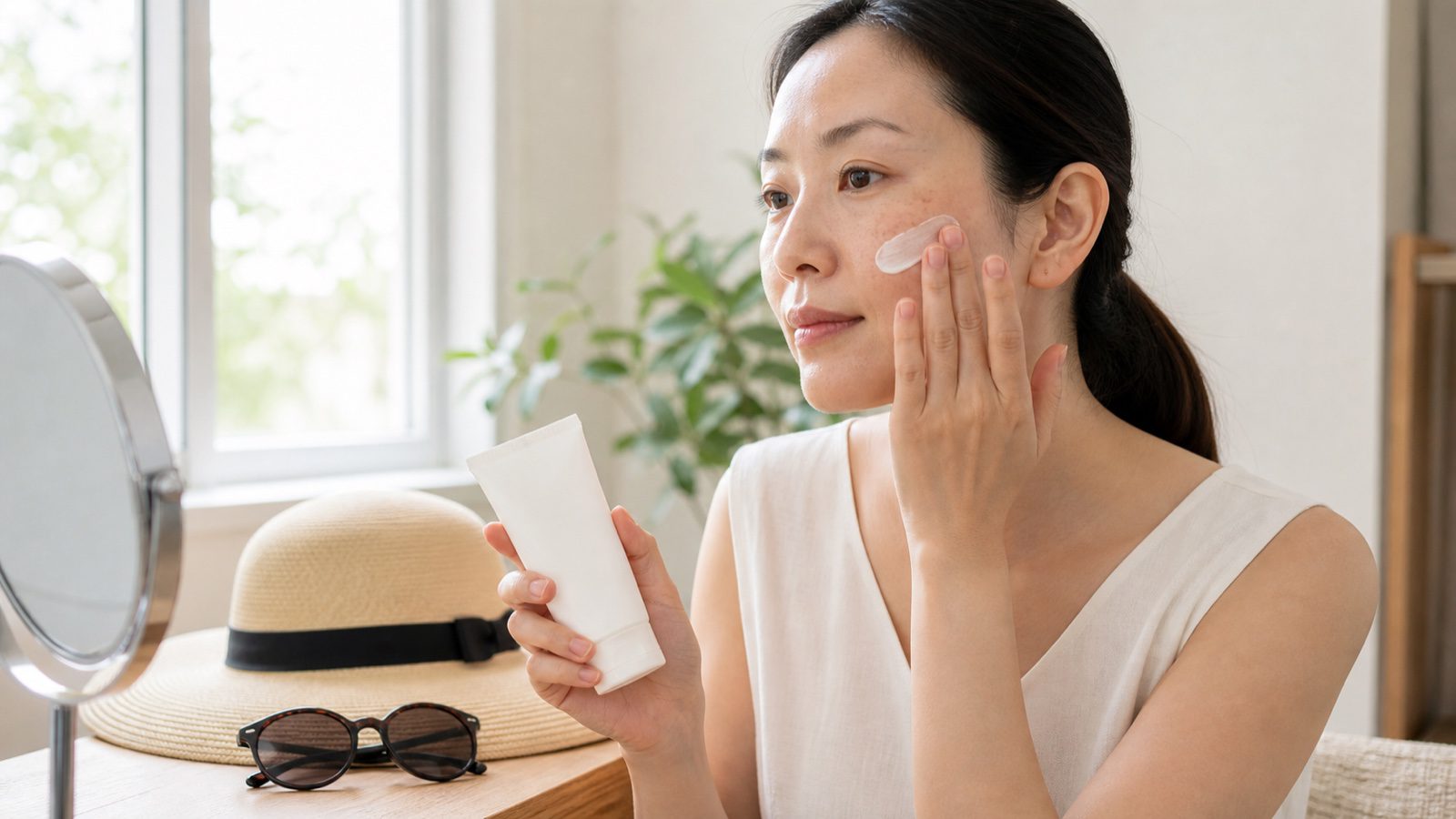
Sun protection is not a once-a-day job: choose a broad-spectrum product, reapply outdoors or when sweating, and combine it with a hat, umbrella, sunglasses and shade. If you pigment easily, ask about a tinted sunscreen containing iron oxides, since visible light can also affect pigment.
Reduce irritation first: cleanse gently so the skin does not feel tight, and choose moisturisers that do not sting and have simple formulations. If you are also using acids, a retinoid, a brightening serum or a prescription, avoid layering too many irritating ingredients at once.
Track with photographs rather than worrying at the mirror daily: take a photo every four to eight weeks in the same light and at the same angle to help the doctor judge direction. The colour of melasma varies day to day with light, sleep, the menstrual cycle and skin condition, so comparing too often leads to misjudgement.
When should you see a dermatologist?
The situations below are worth having assessed rather than continuing to try brightening products on your own.
- A patch has appeared for the first time, or the area is gradually spreading.
- Your skin has become increasingly red, stinging or peeling after using brightening products. Stop the irritating product and get it looked at.
- You are pregnant, trying to conceive, breastfeeding, or using the contraceptive pill or hormone therapy, since some ingredients and oral medications are not suitable.
- You have a history of thrombosis or a clotting disorder and are considering oral medication.
- A patch has suddenly darkened, become irregular in shape, changed border quickly, bled, crusted or become raised on one side. Changes like these should not be treated as ordinary melasma and warrant prompt assessment to rule out other lesions.
A note from the dermatology team
With melasma the point is not only to lighten the colour but first to confirm the type of pigmentation, the triggers and how much the skin can tolerate. If facial pigmentation keeps deepening, the border is unclear, or your own skincare tends to irritate, have a dermatology specialist assess it before choosing between topical, oral, peel or laser approaches.
Melasma usually needs long-term management, and the choice of treatment should weigh the depth of pigment, skin type, how much sun you get and medication risk together. The sooner the diagnosis and daily sun protection are settled, the clearer the baseline for whatever follows.
- Work out first whether this is melasma, sun spots, post-inflammatory pigmentation or something else, rather than applying one routine to different kinds of pigmentation.
- If you are pregnant, trying to conceive, breastfeeding, have a history of thrombosis or take hormone medication, tell the doctor without waiting to be asked.
- Keep sun protection and gentle skincare steady during treatment; if redness, stinging, peeling or darkening appears, return for adjustment.