

Laser Treatment in Taichung
Pigmentation, pores, acne scars and tattoos are treated differently depending on depth, colour and skin type. The doctor identifies the type first, then sets wavelength, energy and intervals.
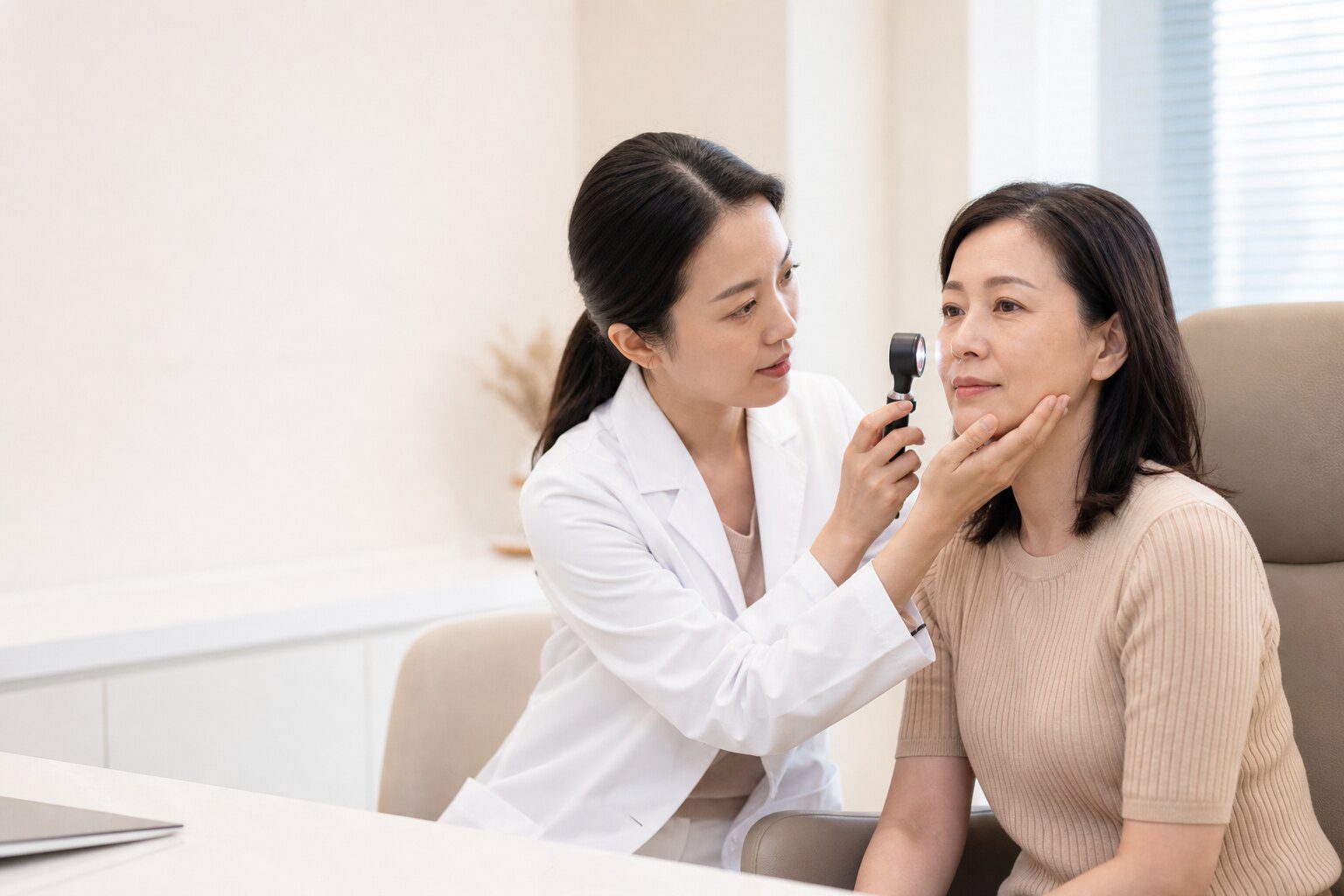
What Laser Treats
Pigmentation that looks the same can differ in depth and type, and that decides the wavelength and device. These six are what we treat most often.
Sun Spots and Superficial Pigment
Surface pigment accumulated from sun exposure, usually with clear borders. Relatively straightforward to treat, but sun protection afterwards decides how soon it returns.
Melasma and Stubborn Deep Pigment
Deeper with blurred borders, and easily affected by hormones and UV, so it recurs. Energy must stay conservative to avoid rebound darkening.
Enlarged Pores
Usually related to sebum, keratin turnover and dermal support. Fractional laser prompting repair in the dermis is the common direction, over several sessions.
Depressed Acne Scars
The device and number of sessions depend on the scar type (ice pick, rolling, boxcar) and depth, so the doctor identifies the type first.
Tattoos and Post-Inflammatory Pigment
Different ink colours absorb different wavelengths, so multicoloured tattoos need several wavelengths and more sessions.
Uneven Tone and Redness
Dullness, uneven tone or facial redness are usually addressed with intense pulsed light, which covers superficial pigment and vascular concerns together.
Worth Thinking About Beforehand
Parameters are set to your skin and the lesion; the same device is not used at the same energy on everyone. Below is what suits a consultation and what should wait.
Worth a Consultation
- You want to address pigmentation or pores but are not sure which type they are
- You have had laser treatment before and want to understand why it fell short
- You can commit to several sessions and to sun protection afterwards
Wait and Deal With These First
- The area has a wound, inflammation or an active infection
- Recent heavy sun exposure or current sunburn
- Photosensitising medication or oral retinoid ingredients in use
- A tendency to keloids or a history of abnormal scarring
- Pregnancy or breastfeeding, or a photosensitivity-related condition
The above is general health information and does not replace an in-person consultation; indications and contraindications require assessment by a qualified doctor.
How the Four Categories Differ
They differ in pulse duration, wavelength and how they act. The doctor chooses based on the depth and colour of the lesion and on your skin.
| Category | Mainly addresses | Afterwards | Points to note |
|---|---|---|---|
| Picosecond laser | Superficial and deep pigment, multicoloured tattoos, uneven tone | Brief redness, mostly settling within a day or a few | Multiple wavelengths cover different inks; melasma needs a conservative energy setting |
| Fractional laser | Depressed acne scars, pores, texture | Redness and crusting, a longer recovery | Working in sections lets surrounding tissue assist repair; several sessions and strict sun protection are needed |
| Intense pulsed light | Superficial pigment, facial redness, vascular concerns | Mild redness, short recovery | Energy is delivered in segments to protect the epidermis; limited effect on deep pigment |
| Resurfacing fractional laser | Scars and texture, treated in sections | Crusting and flaking, needing full aftercare | Micro-spots act in zones; inadequate aftercare easily leads to pigmentation |
Reactions and the number of sessions vary from person to person. This table is only to help you understand the options before your visit and is not a guarantee of results.
Devices Used Here
Chosen for the type of lesion and your skin. Parameters and intervals are explained by the doctor before treatment.
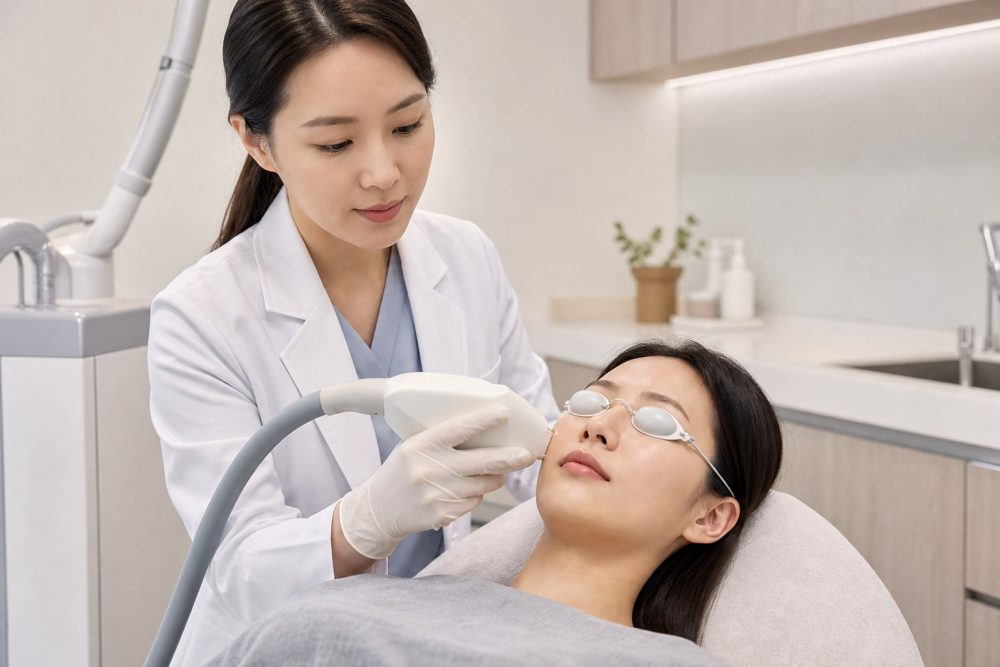
4D Picosecond Laser (PICOPLUS)
Four wavelengths at 1064, 532, 595 and 660 nm, switched according to ink and depth, and usable with a honeycomb focusing lens.
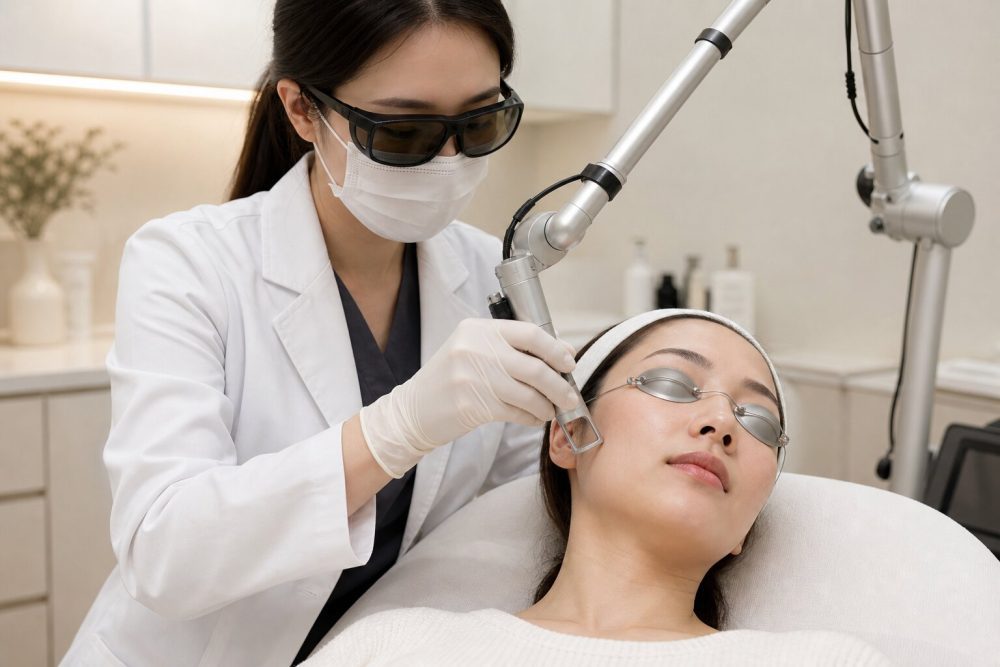
3D Fractional Laser
A dual-mode filter design outputs specific treatment bands to reduce the effect on surrounding tissue, often used for texture and scars.
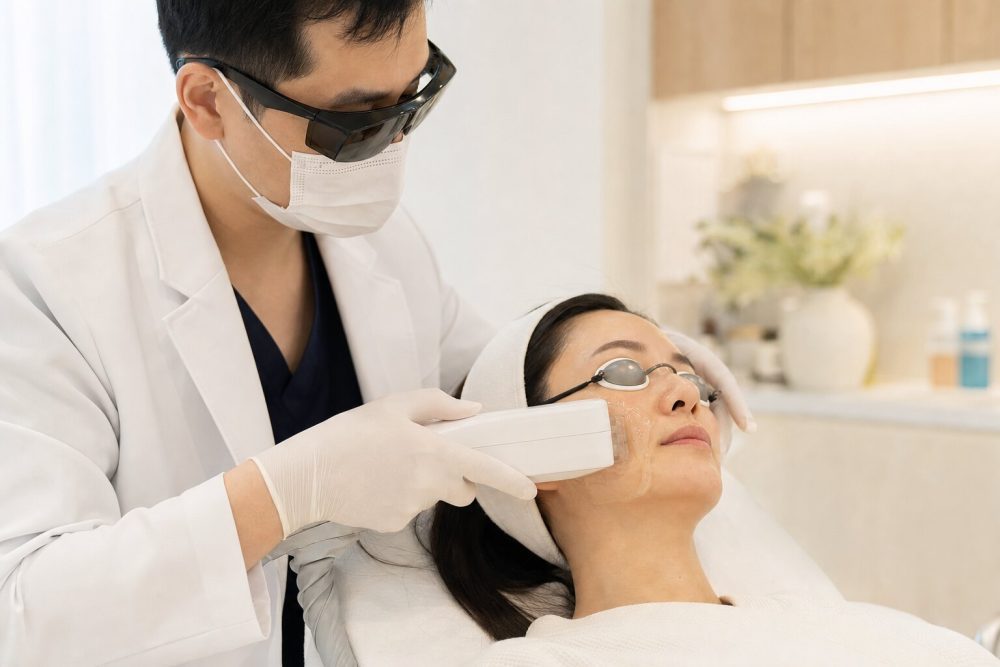
M22 Intense Pulsed Light
Energy can be delivered in multiple segments, treating superficial pigment, vascular concerns and hair-related issues while protecting the epidermis.
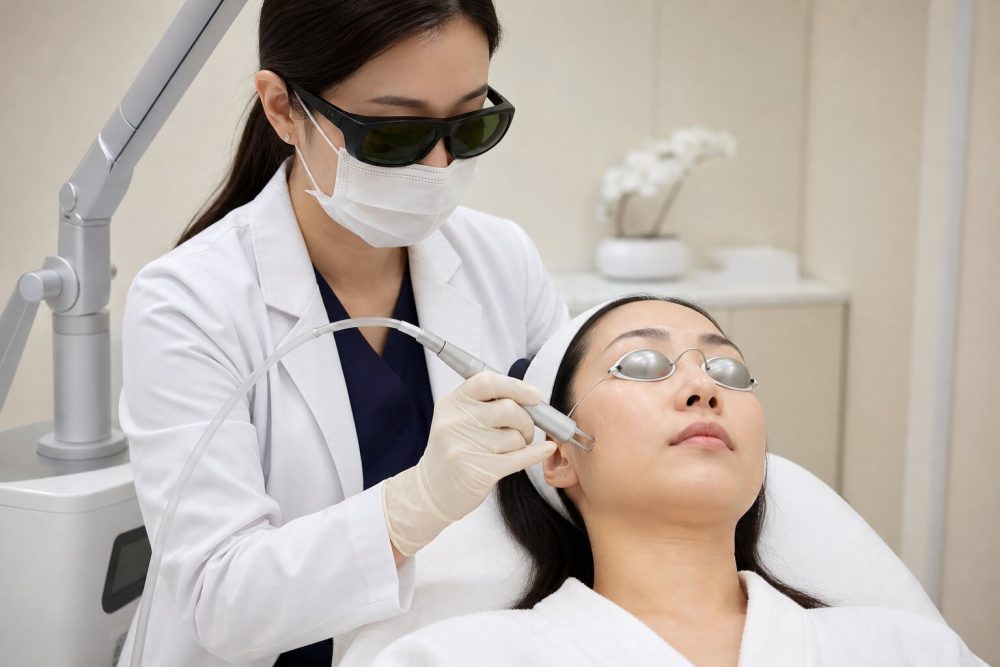
Er:YAG Resurfacing Laser
Evenly distributed micro-spots act in zones so unaffected skin assists repair, improving scars and texture step by step.
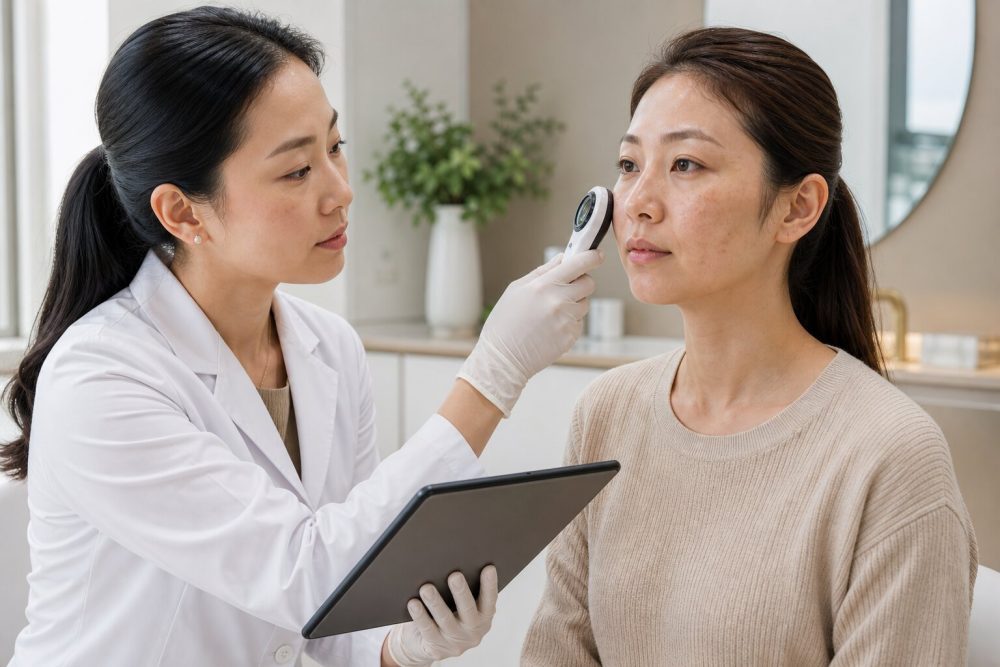
Pre-Treatment Skin Assessment
Judging the depth and type of lesion, skin tone and sensitivity to set wavelength, energy and intervals, and confirming contraindications.
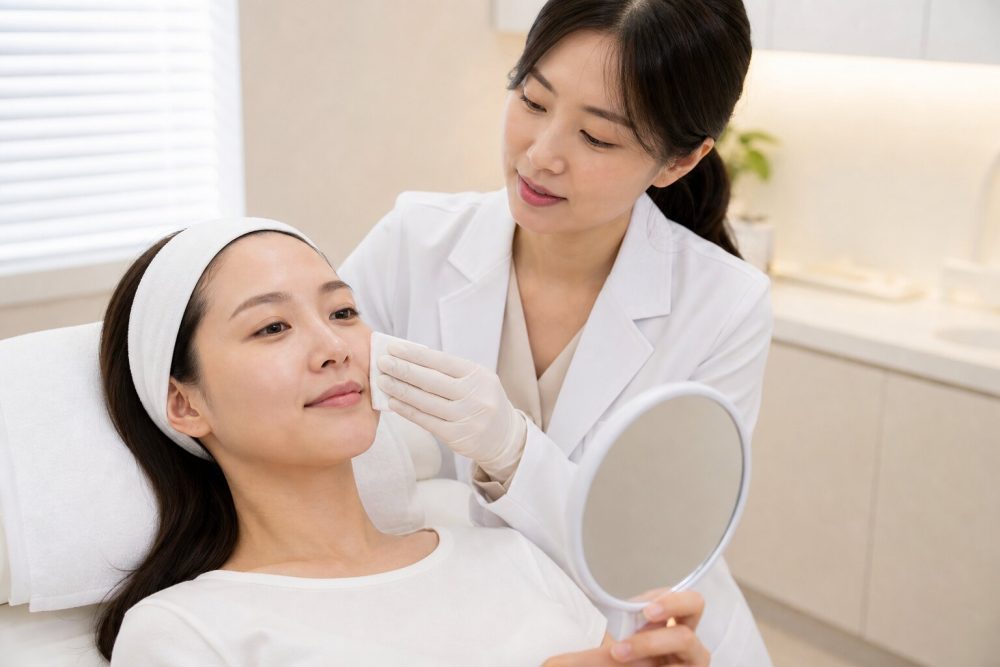
Aftercare
Sun protection, moisturising and soothing after treatment are part of the result. We explain the key points and when to come back.
This article is disease education information. It is not drug advertising and does not recommend or sell any specific medicine.
What a Treatment Looks Like
Consultation and skin assessment
Judging the depth and type of the lesion, skin tone and sensitivity, and checking recent sun exposure and medication.
Choosing device and parameters
Wavelength, energy and intervals are set from the assessment, with the expected reaction and number of sessions explained.
Preparation
Cleansing and removal of makeup, topical anaesthetic where needed, and eye protection.
Treatment
The doctor carries out the treatment, adjusting parameters according to how the skin responds.
Aftercare and review
Sun protection, moisturising and repair are explained, with a review appointment and the interval to the next session.
Our Laser Team
Treatment by doctors with an aesthetic medicine background, adjusting parameters to your skin and the type of lesion.

Dr. Tseng

Dr. Lin

Dr. Lin
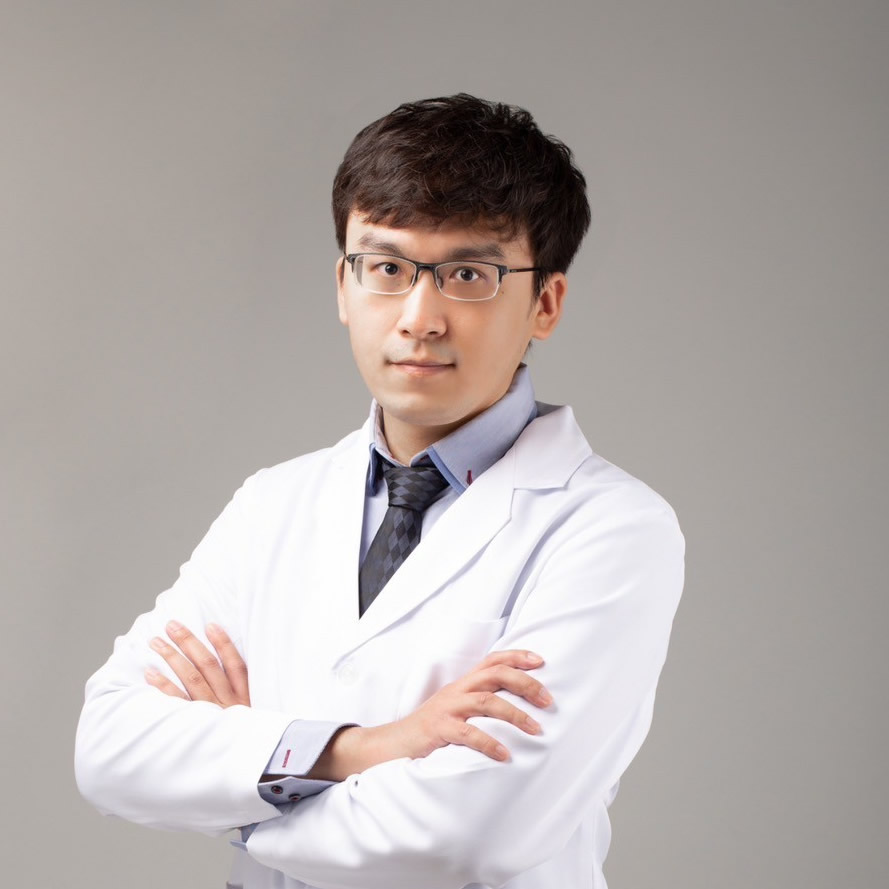
Dr. Li
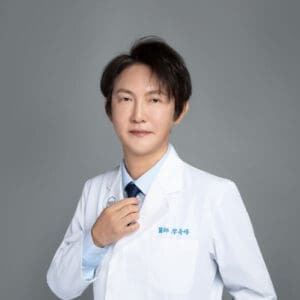
Dr. Liao
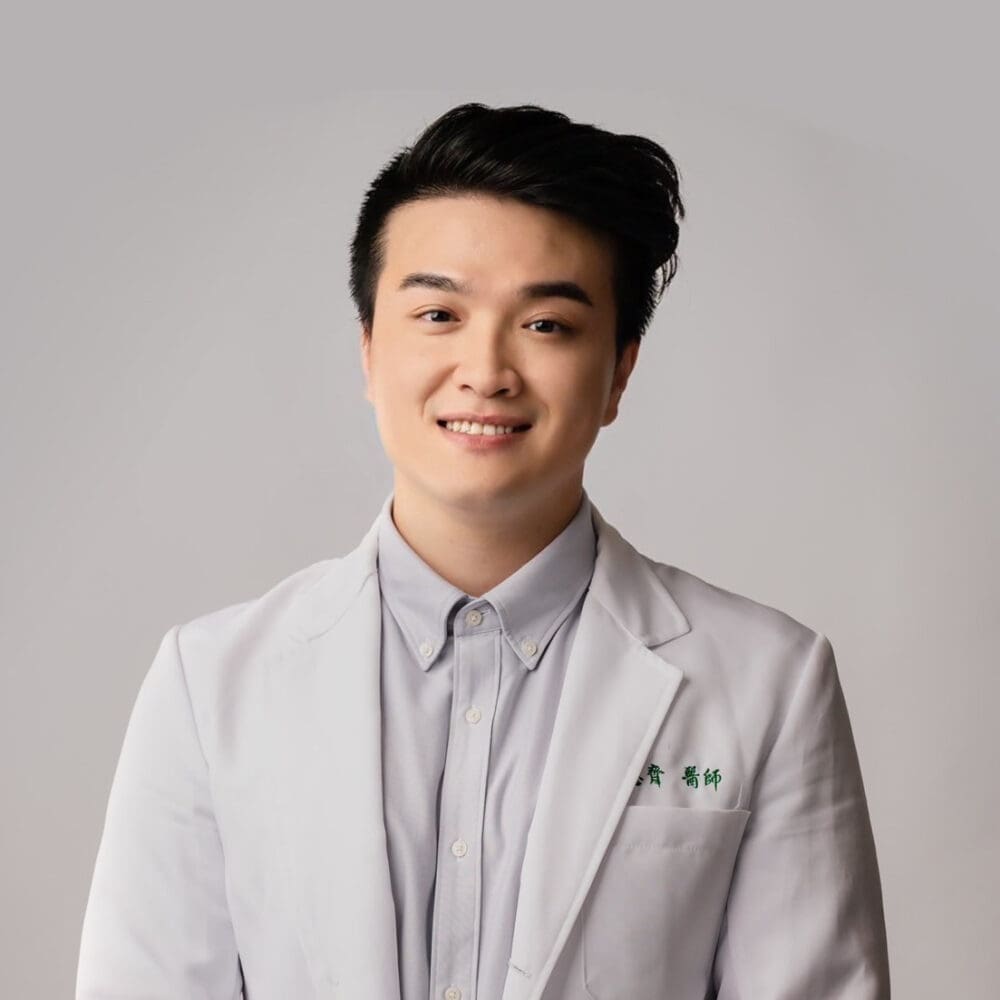
Dr. Huang
Location and Directions
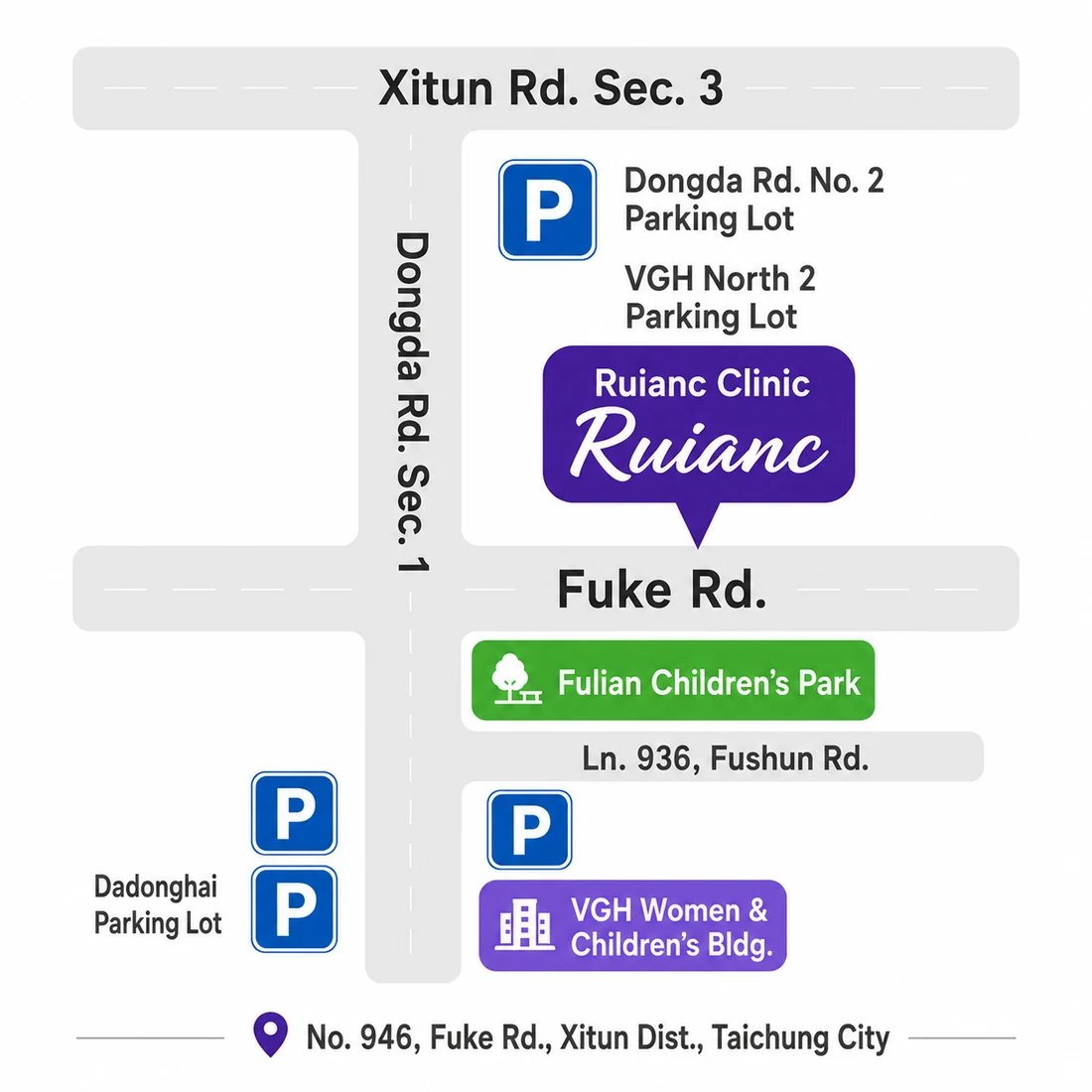
Behind Taichung Veterans General Hospital・Near Central Taiwan Science Park・Ruilian Tiandi Block D
Saturday afternoon 13:15–17:00; closed Sunday. Latest registration 20:45; hours follow the weekly schedule.
Partner employers: AU Optronics・Winbond Electronics・Corning Taiwan・TSMC・ProMOS Technologies
Frequently Asked Questions
QWill laser cause rebound darkening?
It can, particularly with darker skin, melasma or inadequate sun protection afterwards. The doctor sets energy conservatively for your skin and spaces the sessions, but the sun protection and moisturising afterwards matter just as much, and that part is up to you.
QHow many sessions will I need?
It depends on the type and depth. Superficial pigment usually needs fewer; depressed acne scars and tattoos need more. The doctor gives an estimate before treatment and adjusts as you go.
QDoes it hurt?
Most people describe it as being flicked with a rubber band, varying with device and energy. Topical anaesthetic is arranged where needed, and parameters are adjusted to your tolerance.
QHow long is recovery? Can I wear makeup straight away?
It depends on the device. Intense pulsed light has a short recovery, while fractional and resurfacing lasers cause crusting and flaking and need a few days. Whether you can wear makeup is explained after treatment.
QCan melasma be treated with laser?
Yes, but with great care. Melasma is sensitive to heat and irritation, and too much energy can make it worse. Low energy over more sessions is the usual approach, combined with daily sun protection and other treatment.
QDo I need to book in advance?
Booking is recommended. Phone and LINE bookings open 30 days before the clinic day and you can choose the doctor and time slot; walk-ins are also accepted, with the last registration at 20:45.