

If you keep pulling out your hair until the scalp looks thin or patchy, it may be trichotillomania, also called hair-pulling disorder. It is a condition in which a person repeatedly pulls out their own hair and finds it hard to stop, even when they want to. Besides scalp hair, some people pull their eyebrows, eyelashes or hair elsewhere on the body.
Trichotillomania is not simply a bad habit or a lack of willpower. It is often linked to stress, anxiety, boredom or restless hands while concentrating. Patches caused by pulling can look like alopecia areata or tinea capitis (scalp ringworm), but these need different care, so it is advisable to have a dermatologist examine your scalp in person and, when needed, work together with mental health professionals.
Key points: Trichotillomania means repeatedly pulling out your own hair and finding it hard to stop. It often starts around puberty, and the scalp may show irregular patches of broken hairs of different lengths. It may be linked to stress, anxiety or habitual movements while zoning out. Care focuses on behavioural therapy such as habit reversal training, together with tracking triggers and using replacement actions. Hair often has a chance to grow back once pulling stops, but long-term repeated pulling may damage hair follicles. If patches are spreading, you eat pulled hair or have stomach pain, or your mood is affected, a doctor should assess you in person.
What is trichotillomania? Does pulling your hair mean you have it?
Medically, trichotillomania is grouped with obsessive-compulsive and related disorders. Its core features are repeatedly pulling out your own hair, being unable to cut down or stop despite trying, and having visible hair loss or distress that affects daily life.
Occasionally plucking a grey hair or a split end is not the same as trichotillomania. The difference lies in whether it happens repeatedly, feels hard to control and has already caused thinning or patches.
Trichotillomania often begins around the ages of 10 to 13, though it can also appear in preschool children or adults. In childhood it affects both boys and girls, while more women than men seek care as adults. Many people hide it out of shame, which can delay assessment and support.
What are the signs? What do the scalp patches look like?
Trichotillomania looks different from person to person, and the same person may change where and how they pull over time. Common features include:
Where and when pulling happens
The scalp is a common site, especially the crown, the sides of the forehead or above the ears, which the dominant hand reaches easily. Eyebrows, eyelashes, beard or body hair may also be pulled. Some people pull without noticing while watching TV, studying or using their phone; others pull on purpose when tense or anxious, and both patterns often occur together.
How the scalp looks
Pulled areas are often thin or bald patches with irregular shapes and uneven edges, sometimes more on one side of the head. They may feel like short stubble because hairs break at different lengths, and scratches or small red spots are sometimes visible.
Feelings before and after pulling
Many people feel tension or an urge before pulling, brief relief or satisfaction afterwards, and then regret or self-blame. This cycle makes pulling even harder to stop.
Take eating hair seriously
A small number of people chew or swallow the hair they pull. Hair cannot be digested, and over time it may form a hairball in the stomach or intestines, causing stomach pain, nausea, vomiting or bowel blockage. Seek medical care promptly if these occur.
Why is it so hard to stop pulling? What are the possible causes?
The exact cause of trichotillomania is still not fully understood. It is usually not caused by one single factor and may be linked to:
- Stress and emotional regulation: pulling may become a way to cope with stress, anxiety, boredom or frustration.
- Hand movements while focusing or zoning out: it tends to happen when the hands are idle, such as while studying, working, watching shows or before bed.
- How the brain regulates urges and habits: some research suggests a link with the brain systems that handle impulses and reward.
- Family tendency: relatives may have similar experiences, suggesting that constitution or genetics may play a role.
- Hormonal changes in puberty, or life changes such as exams, moving house or relationship issues.
- Co-occurring conditions: anxiety, depression, obsessive-compulsive disorder, or other repetitive behaviours such as nail biting or skin picking.
If you also have heavy work or study stress, poor sleep and clearly more hair falling out when you wash it, stress-related telogen effluvium is worth considering. See can stress cause hair loss? Telogen effluvium explained; the two are handled differently.
How is it different from alopecia areata, tinea capitis and traction alopecia?
A thin patch on the scalp is not always trichotillomania. The table below compares several common conditions, but it cannot replace an in-person examination. A patch that appears suddenly with clear edges and smooth skin is more typical of alopecia areata.
| Feature | Trichotillomania | Alopecia areata | Tinea capitis | Traction alopecia |
|---|---|---|---|---|
| Patch shape | Irregular shape with uneven edges | Round or oval with clearer edges | Round or irregular, often with scaling | Along the hairline, parting or where hair is pulled tight |
| Scalp surface | Usually no obvious inflammation; scratches possible | Smooth, usually not red or itchy | May be red, itchy or scaly, or show black-dot broken hairs | Small red spots or bumps around follicles possible |
| Hair features | Broken hairs of different lengths that feel like stubble | Short hairs that are thicker at the tip and thinner at the base may be seen | Hair breaks easily and looks dull | Gradual thinning where hair is pulled |
| Who it often affects | Children, teenagers and young adults | Any age | More common in children; pet contact possible | People who often wear tight ponytails, braids or hairpieces |
| Key checks | Scalp and dermatoscope exam, history of pulling | Dermatoscope exam; check for related immune conditions | Fungal tests | Hairstyle habits and where tension falls |
| Care direction | Mainly behavioural therapy, with mental health support when needed | Doctor assesses treatment based on extent and course | Doctor assesses antifungal treatment | Reduce pulling, change hairstyle, get assessed early |
How does a dermatologist check it? Do you need mental health care?
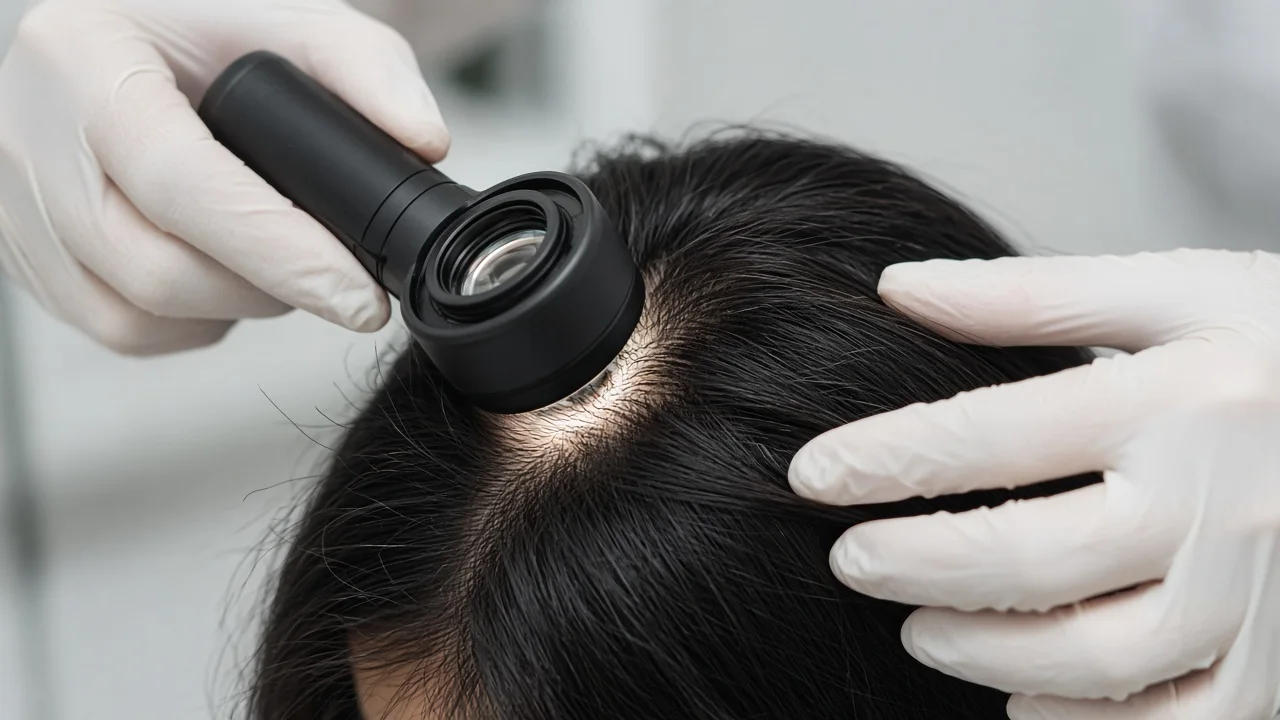
At the visit, the doctor will ask when the hair loss started, how its location has changed and whether you pull, twist or tug your hair. Some people are not aware that they pull, so observations from family members can help. The doctor then examines the scalp and hair pattern, often using a dermatoscope to look at broken hairs, follicle openings and the scalp surface.
If the appearance is not typical, the doctor may arrange a fungal test to rule out tinea capitis, and occasionally a scalp biopsy to tell trichotillomania apart from alopecia areata or other hair-loss conditions. If you eat hair or have stomach discomfort, your digestive system may need further assessment.
Trichotillomania is linked to emotions and behaviour patterns. If pulling affects your mood, studies, work or relationships, or you also have anxiety or depression, the doctor may suggest a referral to a psychiatrist or clinical psychologist so that dermatology and mental health care can work together. This makes care more complete; it does not mean you have done anything wrong.
How can trichotillomania improve? What are the treatment options?
The goals of treatment are to pull less, give hair a chance to grow back and learn to manage the urge to pull. Behavioural therapy is the main approach, adjusted to age, pulling pattern and any co-occurring conditions.
- Habit reversal training: a form of cognitive behavioural therapy that builds awareness of when and where you pull, and practises a replacement action that does not harm the hair when the urge appears.
- Stimulus control: changing the settings that trigger pulling, such as keeping your hands busy while studying and spending less time checking your hair in the mirror.
- Cognitive behavioural therapy and emotion regulation: working on the thoughts, stress and self-blame around pulling.
- Support from family and support groups: encouragement instead of criticism helps you keep practising.
- Medicines: not a routine first choice at present. If you also have anxiety, depression or obsessive-compulsive disorder, a psychiatrist will assess whether medicines may help.
- Scalp care: scratches or inflammation caused by pulling are assessed and treated by a dermatologist.
Hair takes time to grow. After pulling stops, new growth usually takes a few months to become visible, and setbacks along the way are common. Pulling from the same spot over a long time may damage follicles and leave thinning that is hard to reverse, so early care is recommended. Read more about whether hair loss means follicle miniaturisation and the hair growth cycle and judging hair loss.
What can you do at home? 7 practices to pull less

These methods draw on techniques often used in behavioural therapy. Discuss them with your doctor or therapist and choose a combination that suits you; you do not need to do them all at once.
- Keep a pulling diary: note the time, place, what you were doing and how you felt, to find your high-risk situations.
- Keep your hands busy: have a stress ball or something to squeeze, or clench your fists and tense your arm muscles when the urge comes, until it fades.
- Add small barriers: wear a hat or headscarf at home, put tape on your fingertips or cut your hair shorter so pulling feels less easy.
- Adjust your surroundings: put tweezers away, spend less time checking your hair in bright mirrors and change where your hands rest while studying or working.
- Look after stress and routine: exercise regularly, sleep enough and practise deep breathing or relaxation to ease tension.
- Talk about it when you are ready: let a trusted family member or friend know; hiding it for a long time may add to anxiety.
- Be gentle with your scalp: do not scratch hard when washing, and leave wounds or swelling to a doctor.
If pulling is still hard to reduce after trying for a while, it means you need more structured support, not that you are not trying hard enough.
What if your child keeps pulling their hair? How parents can help
In preschool children, hair pulling is sometimes linked to bedtime, thumb sucking or seeking comfort, and some children pull less as they grow. In school-age children and teenagers, pulling is more often linked to stress and anxiety and may last longer.
If you notice your child pulling their hair, avoid scolding, punishing or pointing it out in front of others, as this can add shame and stress. Calmly observe when pulling happens, help your child find replacement actions and watch for any hair eating.
Hair loss in children can also be caused by tinea capitis, alopecia areata or other conditions. See common causes of hair loss in children and warning signs, and have a doctor examine the scalp in person.
What are common myths about trichotillomania?
Myth 1: Hair pulling is just a bad habit, so you only need to hold back?
Trichotillomania often comes with urges that are hard to control, and willpower alone is usually not enough. Learning awareness and replacement actions, and seeking professional help when needed, helps more than blaming yourself.
Myth 2: Pulled-out hair will not grow back?
In most pulled areas the follicles can still grow hair, but long-term repeated pulling may damage them. Cutting down on pulling early usually gives the scalp a better chance to recover.
Myth 3: Hair-growth products can solve trichotillomania?
The core of trichotillomania is the pulling behaviour. If pulling continues, hair-growth products have little chance to work. Whether scalp treatment is needed should be decided after a doctor confirms the cause of hair loss.
When should you see a doctor?
If you only pull a hair or two now and then, with no visible thinning, you can observe and try the practices above first. See a doctor if you notice any of the following:
- Visible thinning or patches on the scalp, eyebrows or eyelashes, or patches that keep spreading.
- You have tried many times to stop pulling but cannot, or pulling takes up a lot of your time.
- You chew or swallow hair, or have stomach pain, nausea, vomiting or poor appetite; seek care promptly in these cases.
- Patches with redness, swelling, scaling, pus or pain, which need checks for tinea capitis or other scalp infections.
- You are not sure whether you pulled the hair yourself or whether a round patch or heavy shedding appeared suddenly.
- Pulling makes you feel ashamed, anxious or low, or affects school, work or relationships.
Hair loss comes in more than one pattern. If you also notice more hair falling out when washing or overall thinning, see warning signs of losing too much hair. To find out what is causing a patch on your scalp, visit the hair-loss clinic at Ruianc Clinic for an in-person assessment by a doctor.
Health Education References
- NHS: Trichotillomania (hair pulling disorder)
- DermNet: Trichotillomania
- MedlinePlus (U.S. National Library of Medicine): Trichotillomania
The course varies from person to person. Pulling that starts in the preschool years sometimes decreases with age, while trichotillomania in teenagers or adults may come and go. With behavioural therapy, tracking triggers and family support, many people pull less; setbacks may still happen, so be patient and keep talking with your doctor.
In most cases, follicles still have a chance to grow new hair after pulling stops, but hair growth takes time and changes usually take a few months to show. If the same area is pulled repeatedly over a long time, follicles may be damaged and recover less easily, so it is advisable to have a dermatologist check your scalp early.
You can start with a dermatologist, who will examine your scalp, rule out other causes such as alopecia areata or tinea capitis and assess the scalp condition. If pulling is clearly linked to stress, anxiety or emotional difficulties, or is affecting your life, the doctor may suggest that a psychiatrist or clinical psychologist also help with behavioural therapy.
Alopecia areata usually appears suddenly as a round patch with clear edges and smooth skin. Patches from trichotillomania are more irregular and often contain broken hairs of different lengths that feel like stubble. The two can look alike and may even occur together, so a doctor should assess them in person, for example with a dermatoscope.
In young children, hair pulling is sometimes linked to self-soothing or bedtime habits and may decrease with age. But if patches are obvious, last more than a few weeks, or your child eats hair or has stomach pain, see a doctor. Avoid scolding; observe when pulling happens and help your child find replacement actions.
Trichotillomania is mainly treated with behavioural therapy, and medicines are not a routine first choice. If anxiety, depression or obsessive-compulsive disorder is also present, a psychiatrist will assess whether medicines may help. Please do not buy or use medicines on your own; the actual treatment should be decided by a doctor based on your situation.
Doctor’s note: confirm the cause of the patch first, then find ways to pull less together
Irregular thinning on the scalp may be trichotillomania, but it may also be alopecia areata, tinea capitis or another hair-loss condition. They can look alike but need different care. At your visit, describe when and where you pull and how long it has been going on; parents can also share what they have noticed, so the doctor can examine the scalp and decide. Trichotillomania is not a lack of willpower, so please do not blame yourself or scold your child. Whether scalp treatment or a referral to mental health care is needed must be assessed in person by a doctor.
This article is health education, not a medicine advertisement, and does not recommend or sell a specific drug. It cannot replace a medical examination; diagnosis, tests and treatment must be assessed in person by a doctor based on your individual situation.
Hair-loss clinic doctors

Dr. Tseng