

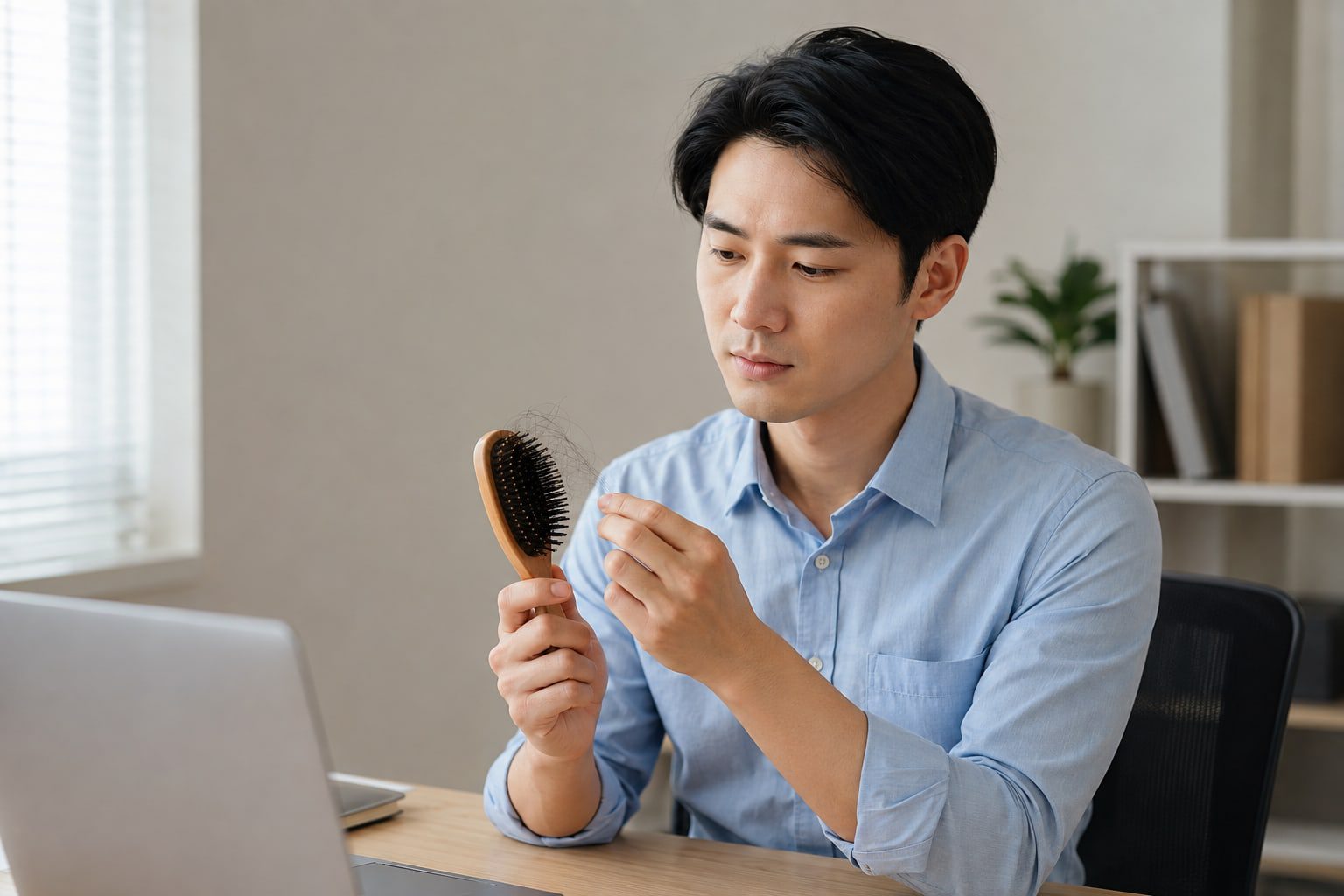
Stress can increase hair shedding, but it usually does not begin the day after a difficult week. Psychological stress, illness, surgery, rapid weight change or nutritional disruption can shift more follicles into a resting phase, with diffuse shedding appearing later.
Do not attribute every change to work or overtime. A receding hairline, persistent crown thinning, a smooth patch, or a red and painful scalp may point to another condition and needs an in-person medical assessment.
Key points: Stress-related telogen effluvium is usually diffuse and may become noticeable about two to four months after a trigger. Review illness, surgery, weight change, diet, sleep and emotional stress over the previous months. Seek dermatology assessment if thinning progresses, follows a fixed pattern, or comes with patches or scalp symptoms.
Why can stress-related shedding appear later?
Hair follicles are not all in the same stage. A major physical or emotional stressor can move more follicles into a resting phase, and those hairs are released later.
This is why shedding is often noticed about two to four months after an event. The review should cover fever, infection, surgery, rapid weight loss, restricted intake, disrupted sleep and other health changes during the preceding months.
A single episode is usually a non-scarring, diffuse process, but recovery varies with the trigger, general health and whether another type of hair loss is also present.
How can you recognise possible telogen effluvium?
Typical clues are a clear increase in hair seen during washing, drying, brushing or on the pillow, with relatively even thinning and no sharply defined bald patch. A trend over several weeks and changes in scalp visibility are more useful than counting one day’s hairs.
Use the same light, angle and parting to photograph the crown and sides every two to four weeks.
For the role of season and life events, read seasonal hair shedding and warning signs.
| Possibility | Typical pattern | Timing clue | Next step |
|---|---|---|---|
| Telogen effluvium | Diffuse increased shedding without a clear patch | Often two to four months after a trigger | Identify triggers and follow the trend; seek care if persistent |
| Pattern hair loss | Hairline, crown or part gradually thins | Slow ongoing progression | Assess distribution and hair diameter |
| Alopecia areata | Sudden round or well-defined patch | May occur without an obvious stressor | Early dermatology assessment |
| Scalp inflammation or infection | Redness, itch, pain, thick scale, pustules or fluid | Often linked to scalp disease or irritation | Identify the scalp condition first |
How is stress shedding different from pattern loss or alopecia areata?
Pattern hair loss usually affects a characteristic area and progresses gradually; telogen effluvium is more often noticed as a sudden diffuse increase. Both can occur together.
A sudden round or sharply defined patch is more suggestive of alopecia areata and requires a different assessment.
For persistent thinning in a male pattern, see early signs and stages of male pattern hair loss; For a sudden patch, review alopecia areata assessment.
What can you do first for stress-related shedding?
Start with a timeline and the health changes in the preceding months, then work on sustainable factors rather than short-term remedies.
- Record when shedding began and review stress, sleep, illness, surgery, weight and diet over previous months
- Restore regular meals and sleep; avoid high-dose single supplements without assessment
- Clean gently according to oil and sweat; reduce scratching, pulling, tight styles and repeated heat
- Use sustainable stress support such as activity, rest and counselling when distress or insomnia affects daily life
After rapid weight change, see telogen effluvium after rapid weight loss.
When does stress-related shedding need medical review?
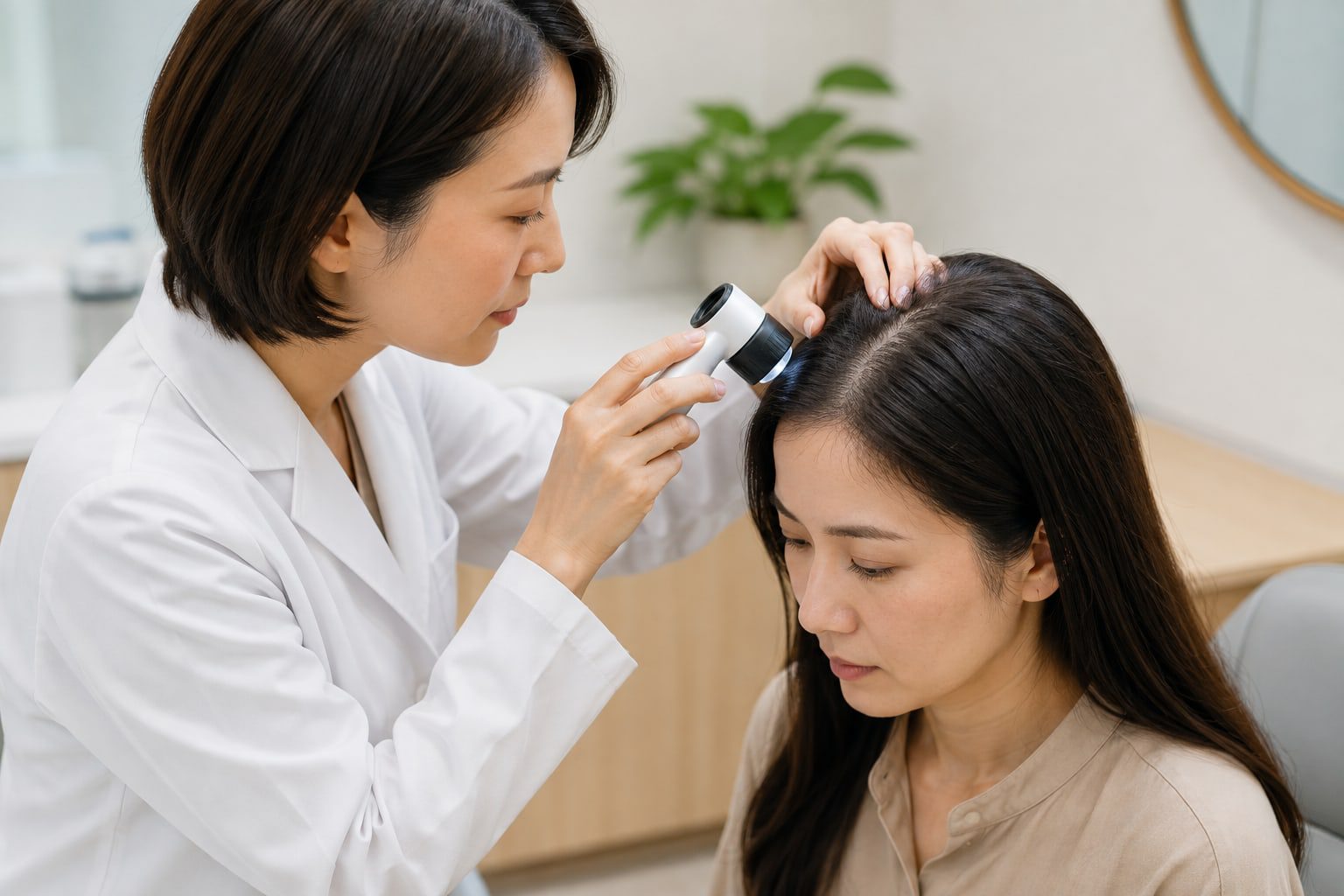
A brief increase can be monitored, but the following changes should not be managed only by switching shampoo or taking supplements.
- Shedding continues for months or scalp visibility clearly increases
- The hairline recedes, crown thins or the part keeps widening
- Round, patchy or asymmetric hair loss appears
- The scalp is red, itchy, painful, heavily scaly, pustular, weeping or crusted
- Fatigue, marked weight change, cold intolerance, palpitations or menstrual changes occur
- Hair loss causes substantial anxiety, insomnia or impaired daily function
A clinic review covers the timeline, distribution, family history, illness, diet and lifestyle, followed by examination of the scalp, hair diameter and follicles. Blood tests or other investigations are selected only when indicated.
view the hair-loss clinic assessment process.
Which sources support this guide?
These are general dermatology sources used for this article. Diagnosis and treatment for an individual still require medical assessment.
- American Academy of Dermatology: Hair loss or excessive hair shedding
- British Association of Dermatologists: Telogen effluvium
- DermNet: Telogen effluvium
It can be one trigger, but illness, surgery, rapid weight loss, inadequate intake and other hair disorders can coexist.
Telogen effluvium may become obvious about two to four months later. Timing and severity vary.
Some acute cases gradually settle after the trigger improves, but hair growth takes time and worsening thinning needs review.
Not necessarily. Washing may reveal hairs already ready to shed; a multi-week trend matters more than one wash.
Do not take high doses without assessment. History and examination should guide whether testing or supplementation is appropriate.
A dermatologist or hair-loss clinic can distinguish telogen effluvium from pattern loss, alopecia areata and scalp disease.
Doctor’s note: distinguish a stress trigger from hair loss that is progressing
There is often a delay between a stressor and shedding. A consultation reviews the preceding months and examines distribution, hair diameter and scalp findings so other conditions are not dismissed as stress.
This article is general health education, not an advertisement or recommendation for any specific medicine. Diagnosis, tests and treatment require an in-person medical assessment.
Hair-loss medical team

Dr. Tseng