

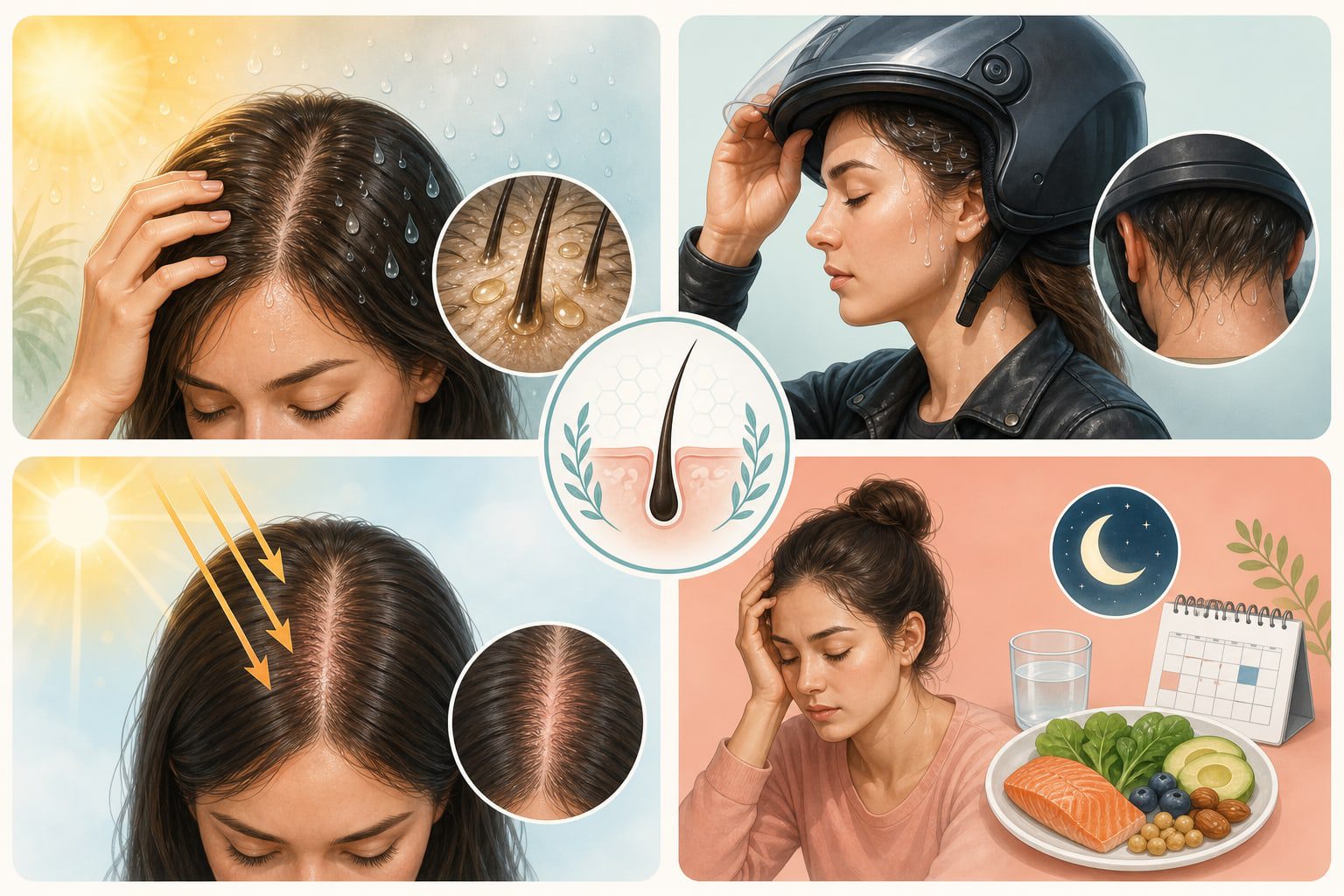
Seeing more hair in the shower during hot weather does not automatically mean permanent follicle damage. Studies suggest that the hair cycle may show seasonal variation in some people, while heat and sweat can also make scalp inflammation, breakage or existing thinning more noticeable.
Look beyond the number of hairs. Distribution, duration, scalp symptoms and health events two to four months earlier—such as fever, surgery, stress, rapid weight change or dietary restriction—provide more useful clues.
Key points: Summer shedding may be a temporary cycle change, but it can also reflect telogen effluvium, pattern hair loss or scalp inflammation. Short-lived diffuse shedding can be recorded while using gentle care; patchy loss, painful or pustular scalp changes, or progressive recession and widening parts need an in-person dermatology assessment.
Does hair really shed more in summer?
Some studies have observed a higher proportion of resting hairs around late summer or early autumn. This does not affect everyone and the month alone cannot establish a diagnosis. Compare the change with your usual shedding and density.
Brief diffuse shedding without a fixed thin area or scalp inflammation can be recorded for several weeks. Continued loss of density should not be dismissed as weather.
Do heat and sweat directly make follicles fall out?
Heat and sweat do not simply destroy follicles. Moisture, sebum and prolonged occlusion may worsen itch, scale or inflammation around follicles, while scratching and unsuitable cleansing can add irritation.
Ultraviolet exposure more often contributes to scalp sunburn and dry, fragile hair shafts. Short pieces in the sink may be breakage rather than hairs released from the root.
If sweating is followed by greasy scale, redness or itch, review the guide to seborrheic dermatitis
How can seasonal shedding, telogen effluvium and pattern loss be distinguished?
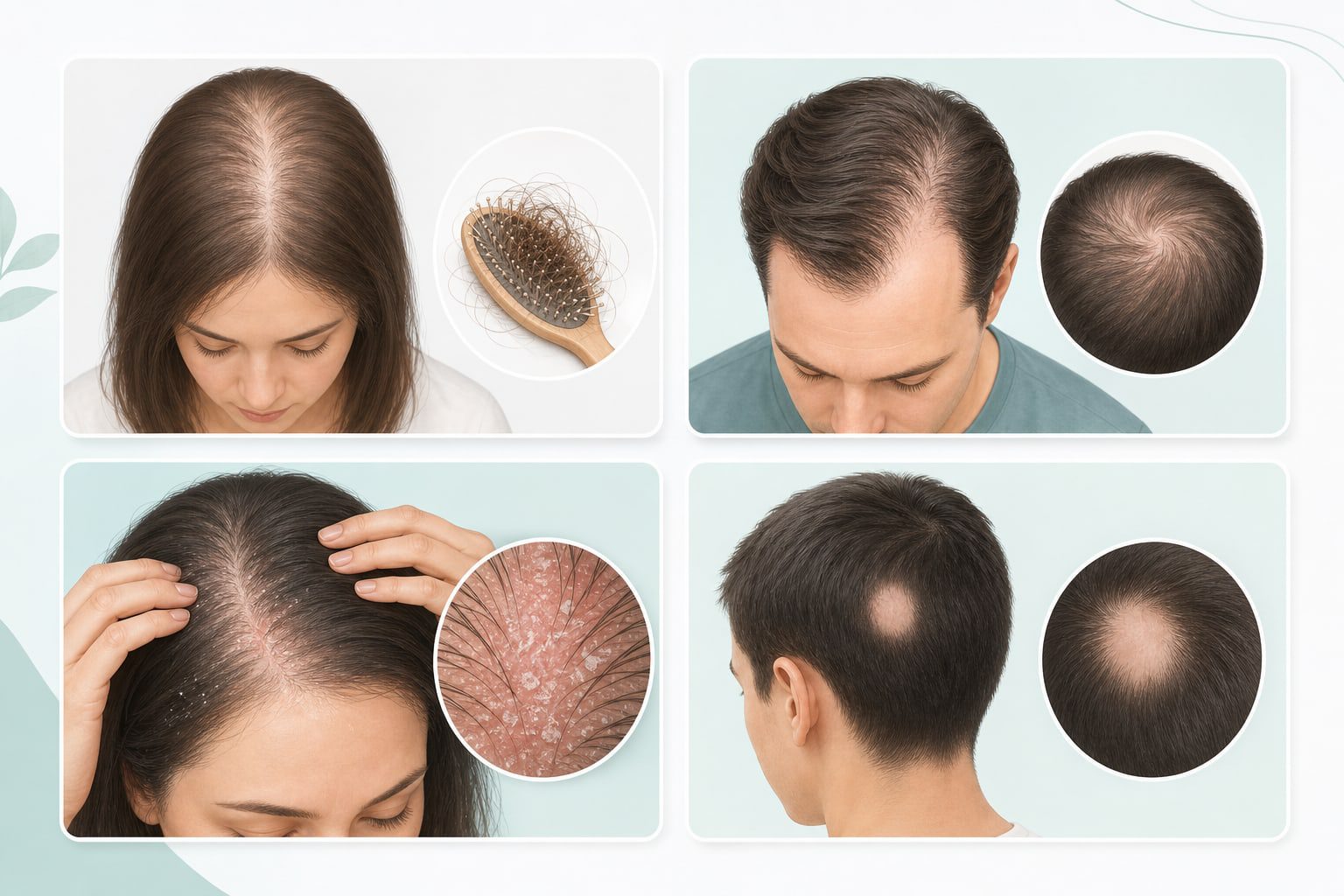
Season is only one timing clue. Telogen effluvium is usually diffuse, while male or female pattern hair loss more often causes progressive thinning in characteristic areas. Alopecia areata and inflammatory scalp disorders have other patterns.
If the hairline or crown keeps thinning, compare the signs and stages of male pattern hair loss
| Possible cause | Typical pattern | Timing clue | Next step |
|---|---|---|---|
| Seasonal shedding | Slight diffuse increase without a fixed bald area | May be more noticeable in late summer or early autumn | Track shedding and density for several weeks |
| Telogen effluvium | Marked diffuse shedding without scarring | Often follows a trigger by two to four months | Review illness, stress, weight change and nutrition |
| Pattern hair loss | Progressive recession, crown thinning or widening part | Continues beyond one season | Assess distribution and shaft diameter with trichoscopy |
| Scalp inflammation | Redness, itch, greasy scale, pain or pustules | May flare with sweat and occlusion | Identify and treat the inflammatory condition |
| Alopecia areata | A well-defined round or patchy area | Can appear suddenly | Prompt dermatology assessment |
Is the hair shedding from the root or breaking?
A naturally shed resting hair often has a pale club-shaped end. Broken shafts vary in length and may look frayed or split. Bleaching, heat styling, ultraviolet exposure and tight hairstyles can increase breakage.
Visual inspection is not always reliable. A widening part, receding hairline, smooth patch or inflamed scalp warrants examination and trichoscopy.
After rapid weight change, also consider the timing of telogen effluvium related to weight loss
How should the scalp be washed and cared for in hot weather?
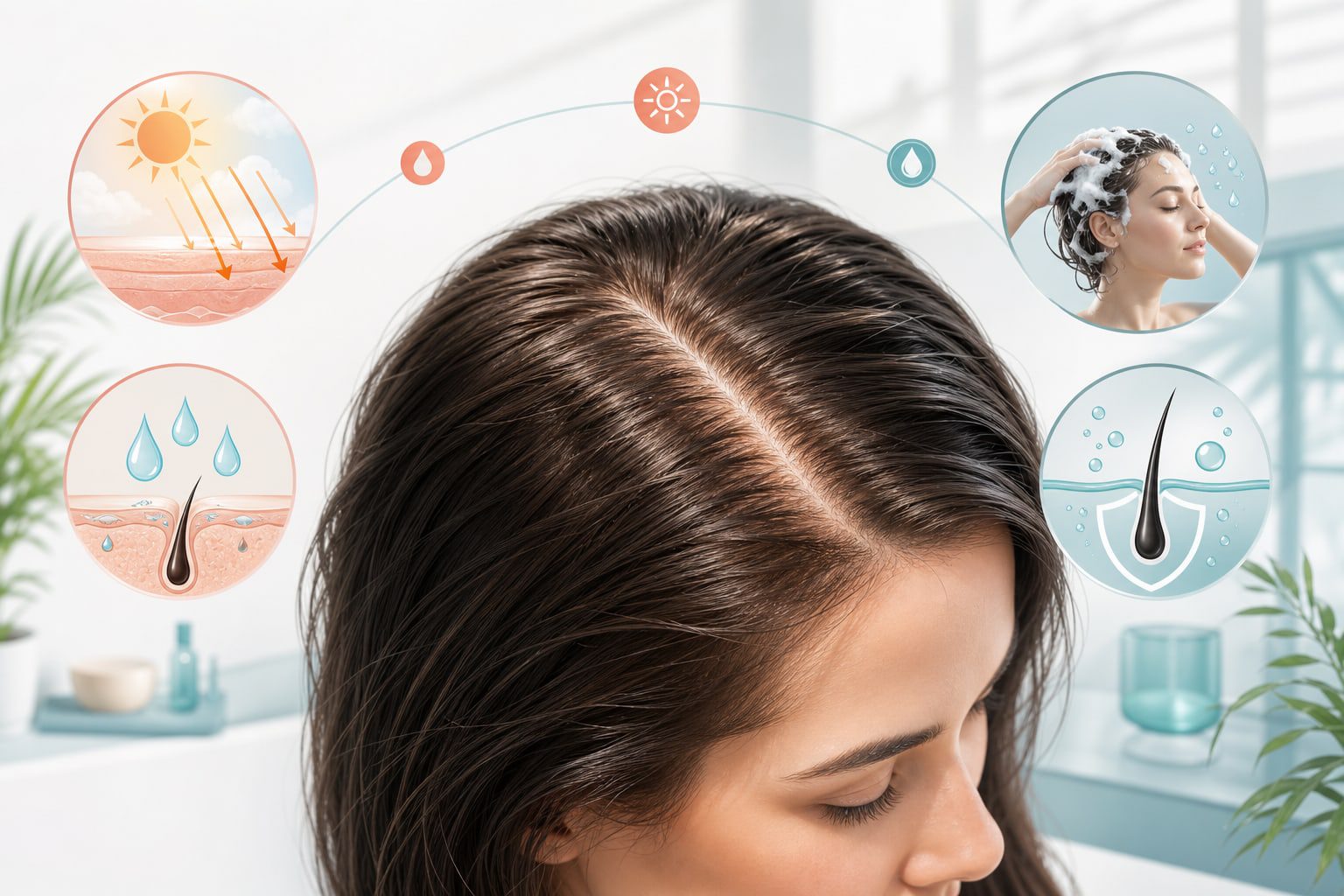
Adjust cleansing to sweating, oil and the scalp condition. There is no need to avoid washing because of shedding or to scrub repeatedly. Clean the scalp gently, rinse thoroughly and dry the roots.
- Blot or dry the roots after heavy sweating and wash when needed
- Use fingertips rather than nails and avoid very hot water
- Choose shampoo for an oily, dry-sensitive or scaly scalp; seek advice for inflammation
- Use a hat or shade outdoors, especially when the crown or part is exposed
- Reduce tight styles, extensions, frequent chemical treatment and high heat
- Maintain adequate protein and overall energy intake during hot weather or weight management
Which changes should not be watched at home alone?
A minor environmental fluctuation usually does not cause persistent focal gaps, marked pain or pustules. Arrange a dermatology or hair-loss visit when the following changes appear.
- A sudden increase persists for weeks and visible density declines
- The hairline recedes, crown thins or part keeps widening
- A round, patchy or asymmetric area develops
- The scalp becomes red, painful, crusted, pustular, weeping or malodorous
- Eyebrows, eyelashes or other body hair are also affected
- There was recent fever, surgery, childbirth, rapid weight loss, a new medicine or major stress
How is summer hair shedding assessed in clinic?
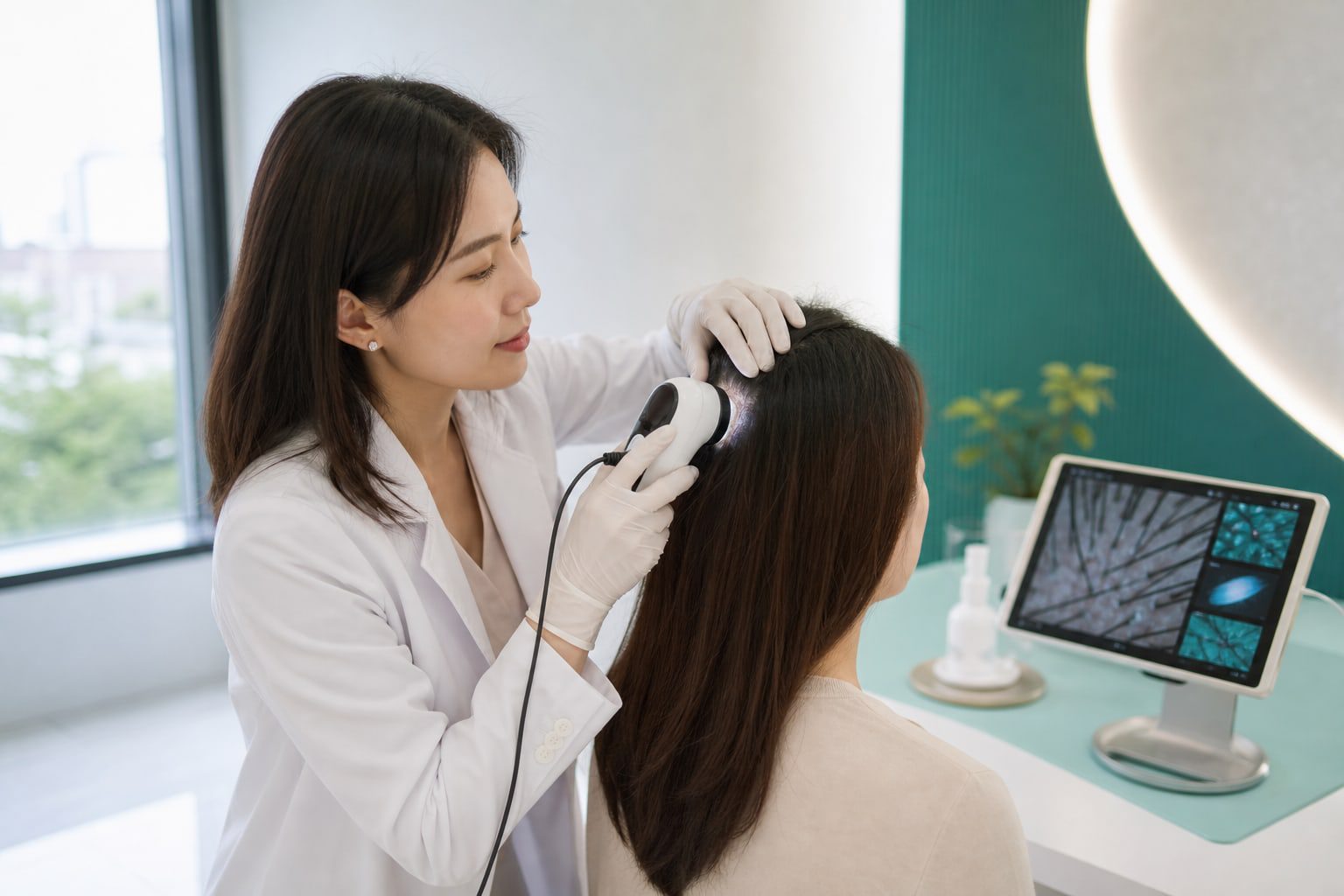
The clinician reviews onset, diffuse versus focal distribution, wash-day changes and illness, fever, surgery, stress, weight change, diet and medicines two to four months earlier. Examination looks for redness, scale, pustules, shaft diameter and the thinning pattern.
A pull test, trichoscopy or selected blood tests may be used when the history supports them. Not everyone needs blood testing, and treatment should follow the diagnosis rather than one product being used for every cause.
Persistent or atypical changes can be assessed through the hair-loss clinic
Where can I read more about summer shedding?
The links below include related clinic education and dermatology references used for this guide. They explain general principles and do not replace an individual assessment.
- Browse more related topics in the Health Library
- American Academy of Dermatology: Hair loss or hair shedding
- DermNet: Telogen effluvium
- PubMed: Periodicity in the growth and shedding of hair
Some people notice a temporary seasonal change, but not every summer shed is normal. Progressive density loss, focal thinning or scalp symptoms need assessment.
Appropriate washing does not usually remove healthy follicles. Clean as needed after sweating, using fingertips, thorough rinsing and no aggressive scratching or very hot water.
No. Oil can relate to weather, skin type or seborrheic dermatitis. Pattern loss is assessed by distribution and miniaturisation; both conditions can occur together.
Broken hairs vary in length and often have frayed ends, while shed resting hairs are more complete. Trichoscopy is more useful than counting hairs when density is changing.
One product cannot address every cause. Telogen effluvium, pattern loss, alopecia areata and inflammation require different strategies, and prescription treatment needs clinical assessment.
There is no single deadline. Seek care when a marked change persists for weeks with density loss, or sooner for patches, pain, pustules or scarring changes.
Doctor’s note: do not blame every summer shed on the weather
Record when it started, the distribution and health changes two to four months earlier. This is more useful than trying to count every hair. Arrange an assessment if density continues to fall or scalp warning signs appear.
Hair-loss medical team

Dr. Tseng

Dr. Lin
This article provides general health education and is not a medicine advertisement or recommendation of a specific product. Diagnosis and treatment require an in-person assessment by a qualified clinician.