

Male hair loss is not always androgenetic alopecia. Receding temples, progressive crown thinning, and finer, shorter hairs in the same area can suggest follicle miniaturisation. The change is often gradual, so the number of hairs shed each day is not enough for diagnosis.
Sudden diffuse shedding, a sharply defined bald patch, or redness, itch and pain can point to another condition. A more reliable assessment combines the history and family pattern with scalp examination and trichoscopy by a dermatologist.
Key points:Androgenetic alopecia often begins with a receding hairline, crown thinning or finer hairs. Online staging cannot confirm the diagnosis; distribution, speed of change and follicle findings matter. Earlier assessment allows a fuller discussion of monitoring and treatment, which must be individualised by a clinician.
Is male hair loss androgenetic alopecia, and what are the early signs?
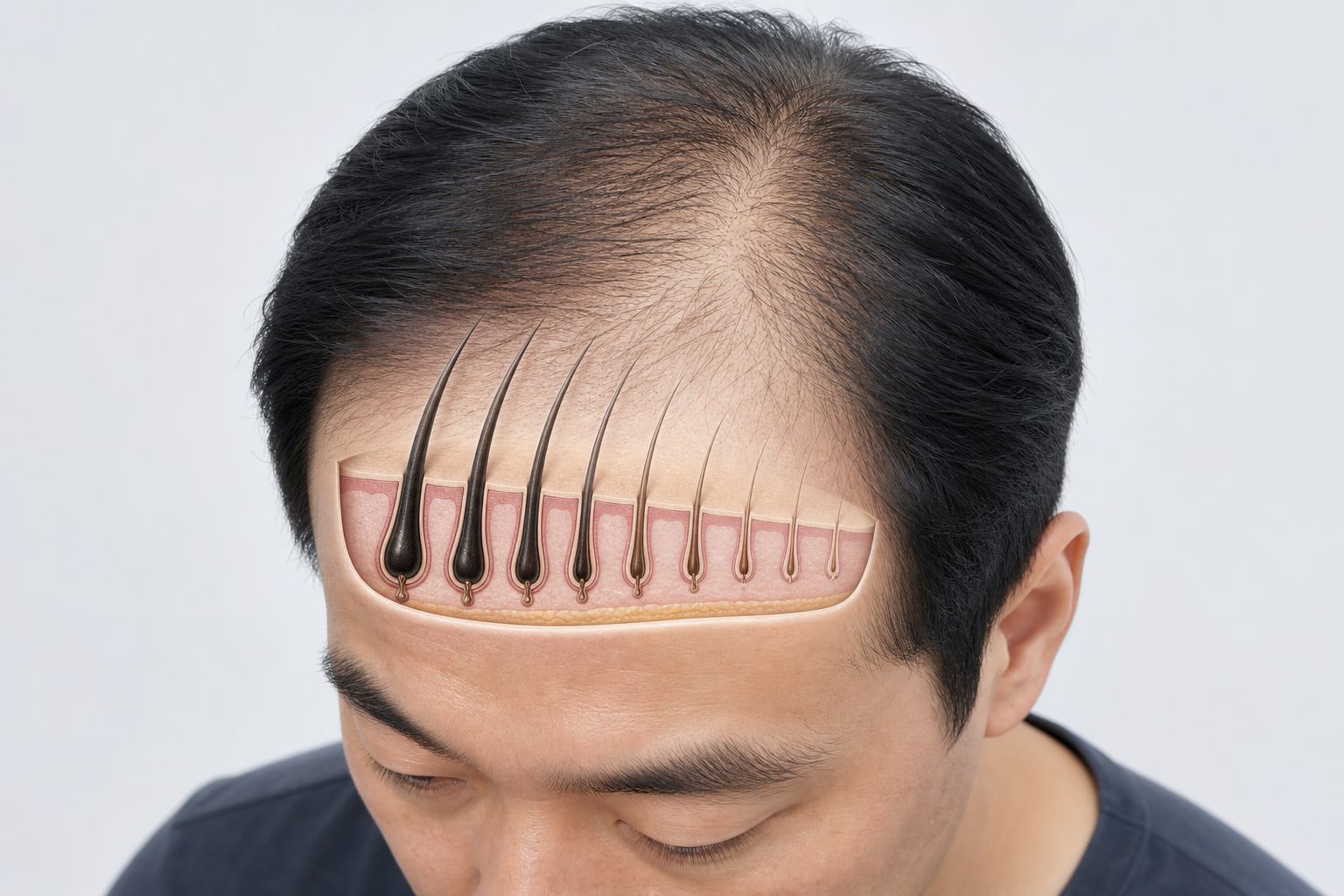
Androgenetic alopecia, or male pattern hair loss, relates to inherited susceptibility and follicle sensitivity to androgens. Common signs include M-shaped temporal recession, lower density around the crown, more fine short hairs, and slow progression over months or years.
How is male pattern hair loss staged?
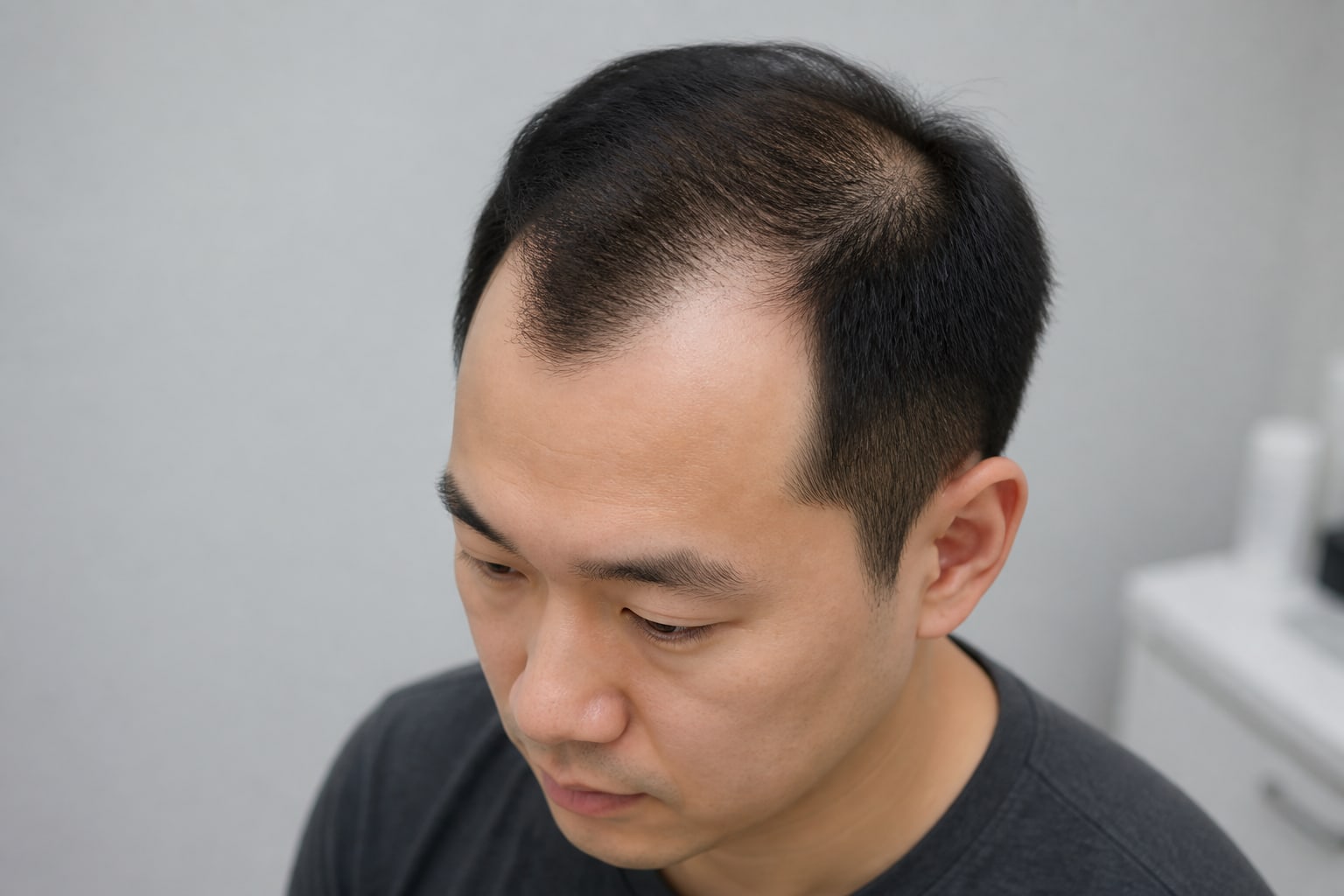
Some men first notice temple recession, others crown thinning, and some develop both. Staging describes visible pattern and helps follow change, but similar appearances can have different density and degrees of miniaturisation or coexist with another disorder.
| Area | Common change | Assessment point |
|---|---|---|
| Temples and hairline | Progressive recession forming an M shape | Compare standardised older photographs |
| Crown | Lower density around the whorl | Check whether bright light or wet hair makes it clearer |
| Hair shafts | More fine, short hairs | Use trichoscopy to assess diameter diversity |
How does androgenetic alopecia differ from other male hair loss?
Men can also develop telogen effluvium, alopecia areata, inflammation-related shedding or traction alopecia. Sudden heavy shedding, a localised patch or scalp symptoms should not automatically be treated as androgenetic alopecia.
| Type | Typical distribution and speed | Next step |
|---|---|---|
| Androgenetic alopecia | Slow thinning at the hairline or crown | Assess miniaturisation with trichoscopy |
| Telogen effluvium | Sudden increase in diffuse shedding | Review illness, weight change, stress and nutrition |
| Alopecia areata | Sharply defined round or patchy loss | Dermatology assessment of extent and activity |
| Inflammatory scalp disease | Redness, itch, pain, scale or pustules | Diagnose and control the scalp condition |
What happens at a male hair-loss consultation?
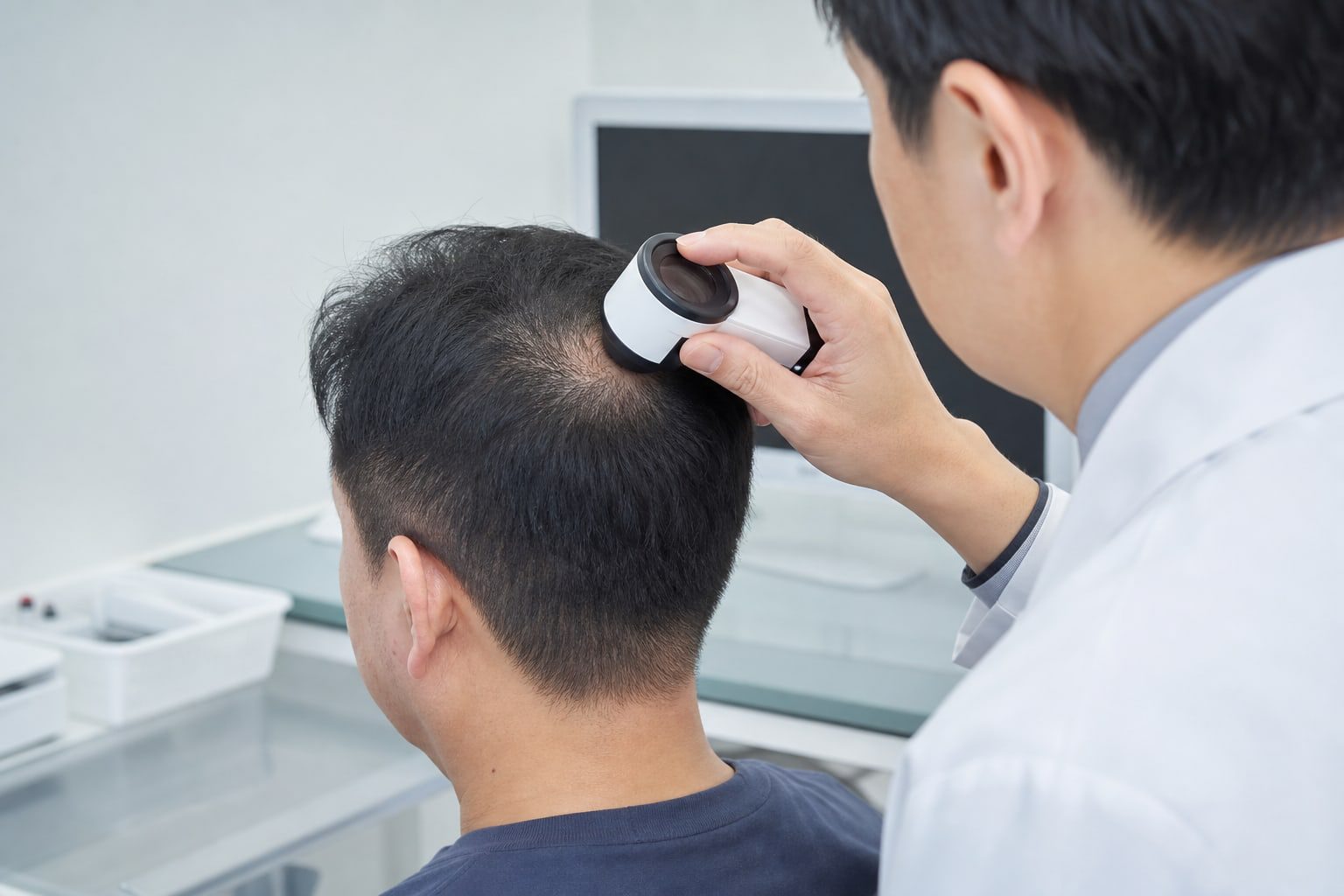
The clinician reviews timing, speed, family history, illness, medicines, diet or weight loss, stress and scalp symptoms. Trichoscopy examines variation in hair diameter, fine short hairs, follicular openings and inflammation. Blood tests are selected only when the history suggests another contributor.
How is androgenetic alopecia treated, and what are the limitations?
The usual goals are to slow continuing miniaturisation, preserve existing density and seek a realistic degree of improvement, not promise a particular amount of regrowth. Options may include topical or oral pharmacologic classes, adjunctive scalp or light procedures, and hair transplantation assessment.
| Option | Main role | Limitations and monitoring |
|---|---|---|
| Topical pharmacologic therapy | Support the follicle cycle when indicated | Monitor skin response and adherence |
| Oral pharmacologic therapy | May suit selected men with pattern loss | Review history, contraindications and adverse effects |
| Scalp or light-based adjuncts | Possible combined option for selected patients | Evidence and suitability vary |
| Hair transplantation | Redistribute follicles from a donor area | Assess donor supply, surgical risk and continuing native-hair loss |
When should a man with hair loss see a doctor?
Arrange an assessment when the hairline or crown continues to thin, hairs become noticeably finer, or the change affects daily life. Sudden diffuse shedding, patches, redness, pain, pustules or systemic symptoms deserve earlier review rather than relying only on shampoo or supplements.
alopecia areata symptoms and care · seborrheic dermatitis assessment
No. Telogen effluvium, alopecia areata, scalp inflammation and traction can also occur. Distribution, speed and trichoscopy require medical interpretation.
It is a common pattern, but natural hairline shape and ageing also matter. Ongoing recession with finer hairs deserves assessment.
It often causes gradual regional thinning rather than sudden heavy shedding. Diffuse shedding over a short period suggests additional causes.
Shampoo cleans the scalp and may help some scalp disorders, but it does not replace diagnosis or indicated treatment.
Hair cycles slowly, so consistent photographs or trichoscopy over time are more useful than a few days of shedding. Timing varies by person and treatment.
No. Donor supply, stability, native hair, surgical risk, expectations and alternatives all need assessment.
Doctor’s note: track the hairline and hair diameter, not shedding alone
Male pattern hair loss may progress even when daily shedding seems modest. Bring standardised photographs from different dates and records of illness, weight change and medicines to support an in-person assessment.
This article provides health education, is not a pharmaceutical advertisement, and does not promote or sell any specific medicine.
Hair-loss medical team

Dr. Tseng