

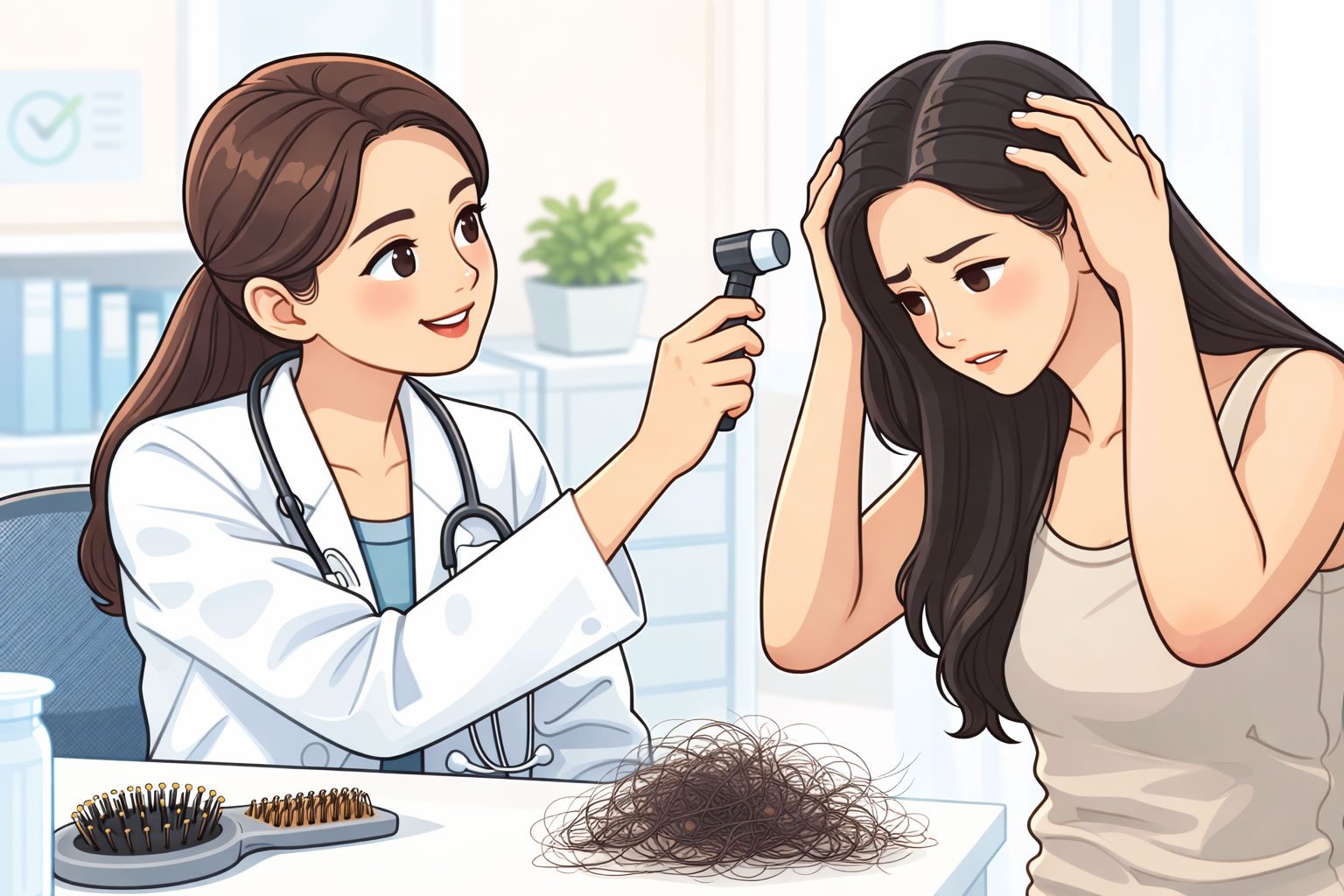
Hair loss after a weight-loss injection does not necessarily mean that the medicine directly damaged the follicles. Rapid weight change, a marked fall in food intake or inadequate nutrition can place stress on the body and shift more follicles into the resting phase.
Iron deficiency, thyroid problems, scalp inflammation or an existing pattern of hair loss may occur at the same time. Do not diagnose the cause by timing alone or stop a prescription without medical advice.
Key points:Key points: sudden diffuse shedding after weight loss may be telogen effluvium. Review weight change and diet, check for nutritional or endocrine problems, and distinguish it from other patterns of hair loss. Prescription changes, blood tests and treatment require an in-person medical assessment.
Why can telogen effluvium occur after weight-loss injections?
Hair cycles through growth, transition and rest. Rapid weight loss, insufficient energy or protein, illness, surgery, poor sleep and major stress can shift many follicles into rest, with shedding appearing later.
weight-management assessment · hair-loss clinic
How is telogen effluvium different from other hair loss?
Telogen effluvium is often diffuse. A widening part, receding hairline, a sharply defined bald patch, or redness, scaling and pain suggests another or an additional cause.
| Clue | Typical telogen effluvium | Consider another cause |
|---|---|---|
| Distribution | Fairly even shedding across the scalp | Receding hairline, widening part or bald patch |
| Timing | Delayed after a physical stressor | Slow progression or repeated episodes |
| Scalp | Usually no local scarring | Redness, itch, scale, pain or pustules |
| Next step | Review trigger, nutrition and weight change | Medical examination, trichoscopy or blood tests |
What can you adjust when hair loss starts?
Do not stop or change the injection yourself. Bring weight, appetite, adverse-effect and food records to the prescribing clinician. Aim for adequate protein from eggs, beans, fish, meat or dairy, plus grains, vegetables, fruit and suitable fats.
rapid weight loss and shedding · causes of female hair loss · basal metabolism and daily energy use
Which nutrients and tests need medical review?
Protein, iron, zinc and vitamins support hair growth, but shedding does not prove a deficiency. A clinician may review diet and symptoms and, when indicated, arrange blood count, iron stores, thyroid or other tests.
Does post-weight-loss hair loss need treatment?
If shedding falls after the trigger improves, observation may be appropriate. Persistent or visibly reduced density, or a coexisting pattern of hair loss, may lead a doctor to discuss topical or oral vasodilator categories or scalp procedures; each has limits and possible adverse effects.
How long can recovery take, and when should you see a doctor?
Hair cycling is slow, so shedding may not stop immediately and visible regrowth takes longer. Seek assessment if shedding continues for months, density clearly falls, the part widens, bald patches appear, the scalp is inflamed, or poor intake and systemic weakness persist.
Not always. Rapid weight loss, reduced intake, illness and stress may trigger telogen effluvium, and other hair-loss patterns can coexist.
Follicles first enter the resting phase and shed later, so review weight, diet, illness and stress over the preceding months.
Do not stop or alter a prescription yourself. Contact the prescribing clinician for an individual assessment.
Dietary correction may help when intake is low, but shedding does not prove iron or another deficiency. Testing and supplements should be individualised.
It may gradually recover after the trigger resolves, but recovery can be incomplete when another hair disorder or an ongoing trigger is present.
Arrange assessment for months of persistent shedding, visible density loss, a widening part, bald patches, scalp inflammation, poor intake or marked weakness.
Doctor’s note: look for the trigger before changing a prescription
Review the pace of weight change, food intake, protein and micronutrients, while excluding pre-existing pattern hair loss and scalp disease. Keep recent weight and food records and seek an in-person assessment; do not change a prescription because of anxiety.
This article provides health education, is not a pharmaceutical advertisement, and does not promote or sell any specific medicine.
Weight-management medical team

Dr. Tseng