

Children can lose hair, but the causes are not identical to those in adults. A sudden patch, broken hairs, diffuse thinning, or hair loss with scale and redness point in different directions and cannot be diagnosed from a photograph or hair count alone.
Most childhood hair loss is non-scarring, but scalp ringworm is contagious, repeated tension can damage follicles, and uncommon inflammatory or scarring disorders need early recognition. Parents can document the pattern, onset, scalp symptoms and recent health events before an in-person assessment.
Key points: First distinguish diffuse shedding, a defined patch and broken hairs. Then look for scale, redness, pustules, pain or itch. Rapid expansion, eyebrow or eyelash loss, marked inflammation, or smooth shiny skin with fewer follicular openings warrants prompt dermatology assessment.
What should parents observe when a child loses hair?
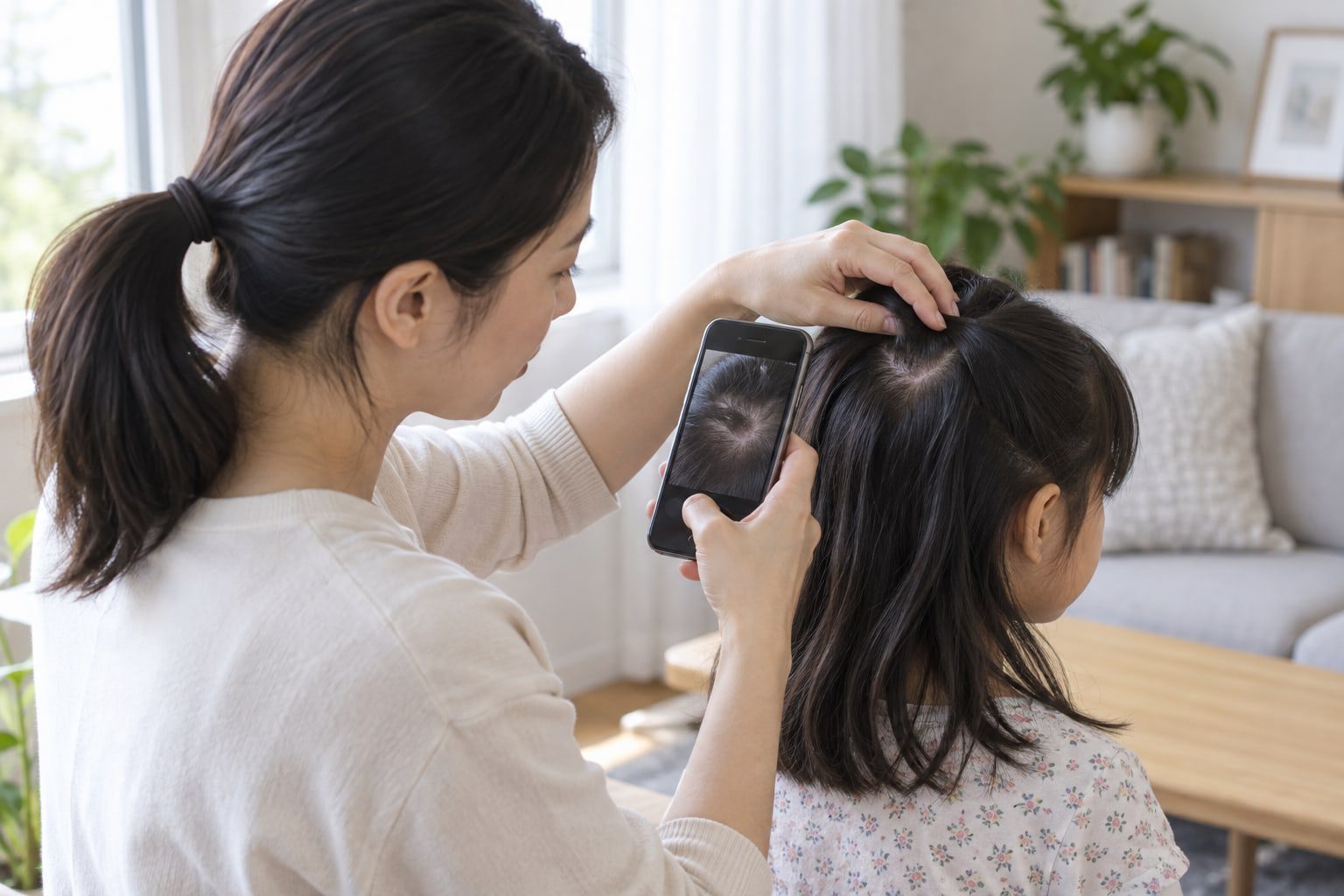
The shape of the hair loss and the condition of the scalp are more useful than counting every shed hair. Photograph the crown, hairline and patch in consistent lighting and from the same angle every few weeks, noting the start date and whether the area is expanding.
- Distribution: diffuse thinning, a single round patch, or an irregular area of breakage.
- Hair shafts: hairs shed from the root or broken hairs of different lengths in one area.
- Scalp: smooth skin or scale, redness, itch, pain, crusts, pustules or drainage.
- Other sites: changes in eyebrows, eyelashes, nails or skin.
- Timeline: fever, illness, surgery, weight or diet change, tight hairstyles or repeated pulling in recent months.
These records help the consultation but do not replace examination. Persistent loss should be assessed in the context of the child’s age, pattern and scalp findings.
What are the common causes of hair loss in children?
Most common causes in children are non-scarring. Yet the same patchy appearance may reflect autoimmunity, fungal infection, external tension or repetitive pulling. Diffuse shedding calls for review of illness, stress, diet and other health clues.
| Possible cause | Typical pattern | Associated clues | Assessment focus |
|---|---|---|---|
| Alopecia areata | Smooth round or oval well-defined patch | Short broken hairs; eyebrow, eyelash or nail changes | Patch margin, nails and autoimmune clues |
| Scalp ringworm | Patchy loss with scale, breakage or black dots | Itch, redness, pustules, crusts or swollen nodes | Trichoscopy, microscopy or culture |
| Hair-pulling behaviour | Irregular area with hairs of varying lengths | Repeated twisting or pulling may not be disclosed | Non-judgemental discussion of stress and behaviour |
| Traction alopecia | Thinning at the hairline or another tension site | Tight ponytails, braids or accessories | Remove tension and assess inflammation or scarring |
| Telogen effluvium | Diffuse increased shedding without a defined border | Delayed after illness, surgery, stress or nutritional change | Timeline, growth and targeted tests |
| Uncommon congenital or scarring disorder | Early sparse hair or smooth shiny skin with fewer openings | Skin, teeth, nails, growth or family-history clues | Dermatology assessment and selected further testing |
Is a sudden bald patch alopecia areata or hair pulling?
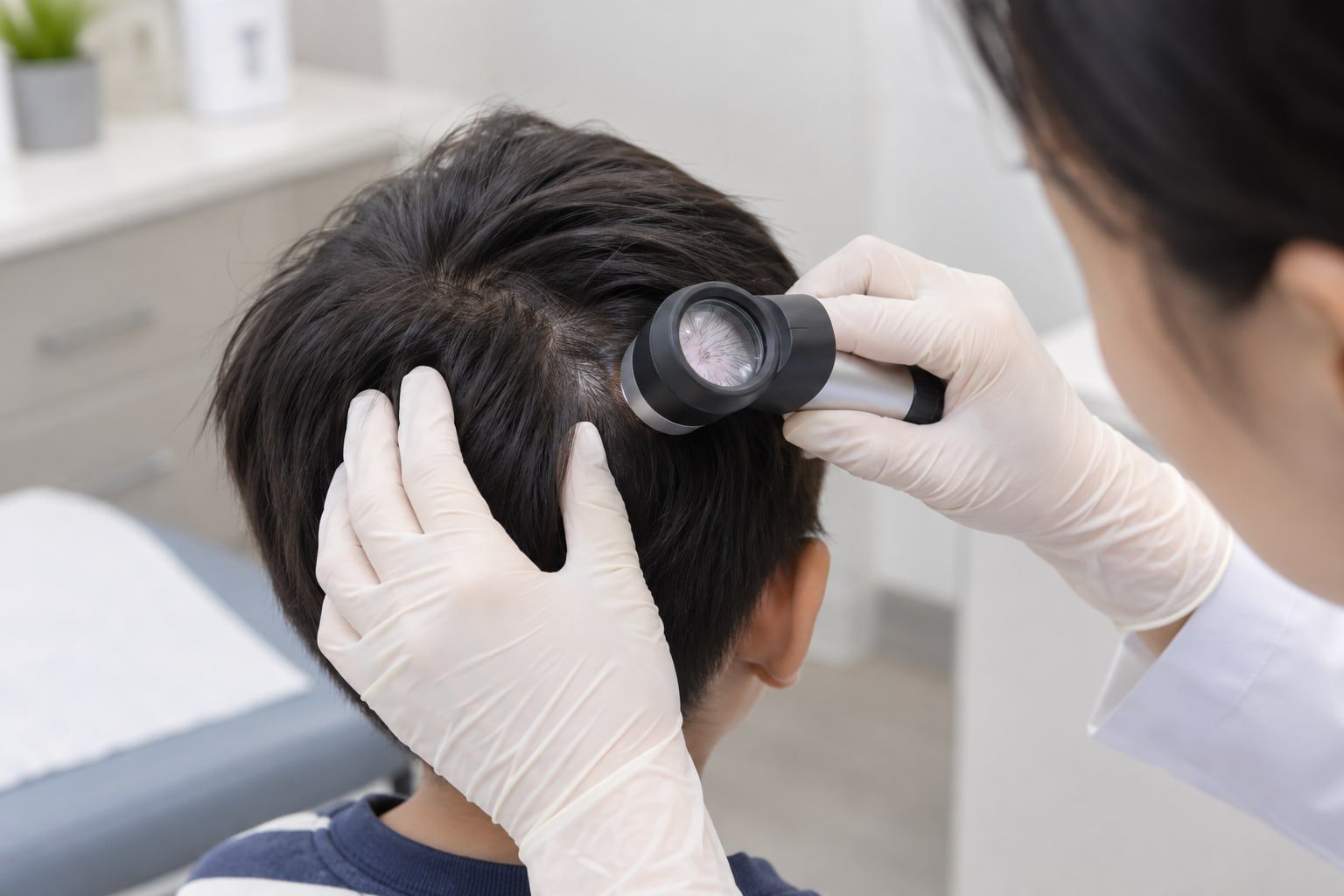
Alopecia areata often produces a round or oval, relatively smooth patch. Hair-pulling behaviour more often causes an irregular area with broken hairs of different lengths. Neither necessarily causes redness, so a single photograph can still be misleading.
A clinician also examines the margin, eyebrows, eyelashes and nails and excludes scalp ringworm when appropriate.
Are hair pulling and traction alopecia the same?
No. Hair pulling results from repeatedly pulling, twisting or plucking; traction alopecia comes from sustained tension caused by hairstyles or accessories. Avoid blame or interrogation. A calm discussion and, when needed, joint dermatology and child mental-health support are more helpful.
Could hair loss with scale, redness or broken hairs be scalp ringworm?
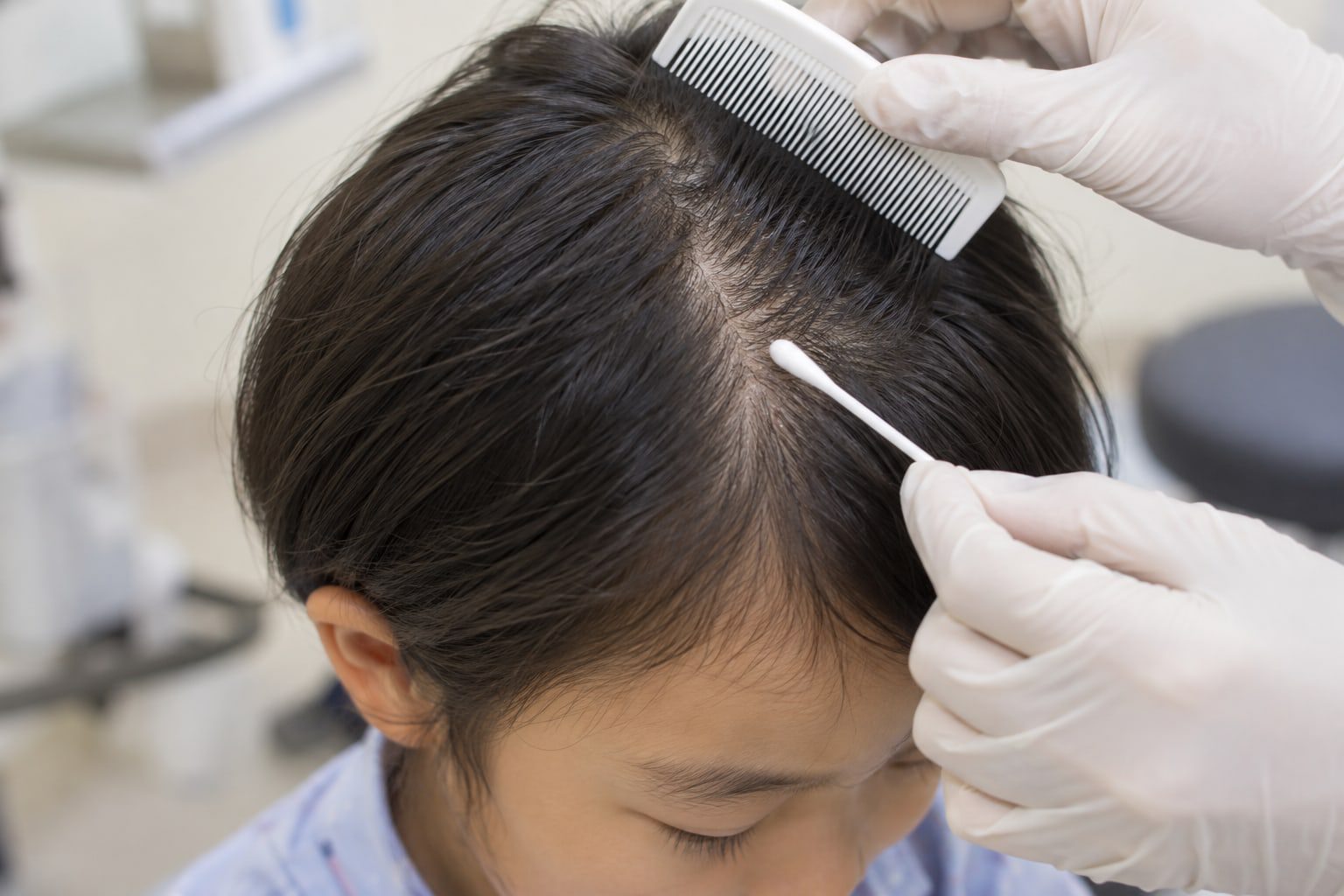
Scalp ringworm is a fungal infection of scalp skin and hair shafts and is more common in children. It may resemble dandruff or cause broken hairs, black dots, itch, redness, pustules, crusts or pain. Marked inflammation can form a raised, soft and tender swelling.
Its appearance can overlap with alopecia areata, hair pulling, seborrhoeic dermatitis or psoriasis. A clinician may sample scales or affected hairs for microscopy or culture. Because infection involves the hair shaft and follicle, ordinary topical products alone are usually insufficient.
Does the family need to take precautions against spread?
When scalp ringworm is suspected or confirmed, do not share combs, hats, towels, pillowcases or helmet liners. Follow medical advice for contact items and close contacts. Prolonged self-treatment with anti-itch or steroid-containing combination products can obscure the appearance and delay diagnosis.
Does diffuse hair shedding in a child always mean nutritional deficiency?
No. Fever, infection, surgery, substantial psychological stress, rapid weight change or inadequate intake can shift more hairs into a resting phase, followed later by diffuse shedding. Growth and nutrition still need child-specific assessment.
Iron, zinc, protein or other deficiencies can contribute, but shedding alone does not prove a deficiency. High-dose single supplements without supporting history or tests may be unhelpful and can create avoidable risk.
To understand why shedding may follow a physical or psychological event after a delay, read the timeline and assessment clues for telogen effluvium.
How do doctors assess hair loss in children?
The consultation reviews onset, pattern, illnesses and medicines, diet and growth, hairstyle tension, pulling behaviour, family history, itch, pain and scale. Examination also includes hair calibre, eyebrows, eyelashes, nails and other skin clues.
- Trichoscopy: magnifies hair shafts, breakage, follicular openings and scalp changes.
- Fungal testing: microscopy or culture of scale or hair when scalp ringworm is suspected.
- Selected blood tests: considered when history, diet, growth or systemic symptoms provide a reason.
- Other tests: biopsy or referral is reserved for unclear, scarring or congenital presentations.
Most children do not need every test at the first visit. Investigations should be selected according to the pattern and overall health.
What can parents do, and which warning signs need prompt care?
Until the cause is clear, support regular meals and sleep, cleanse the scalp gently, avoid tight styles and repeated pulling, and keep standardised photographs. Do not apply adult hair-growth regimens, home remedies or high-dose supplements, and do not scrape an inflamed scalp.
- The patch expands quickly, or eyebrows and eyelashes begin to fall.
- Marked redness, warmth, swelling or pain, with pustules, drainage, thick crust or a raised swelling.
- Smooth shiny scalp, fewer visible follicular openings or progressive scarring.
- Hair loss with fever, pronounced fatigue, weight or growth concerns.
- Pulling, anxiety, bullying or appearance-related distress affects school, sleep or daily life.
- The problem keeps recurring after self-care or does not respond as expected.
For these changes, arrange Ruianc Clinic’s hair-loss assessment. While monitoring, browse the Ruianc Health Library.
Which sources support this childhood hair-loss guide?
- Frontiers in Medicine: A practical approach to childhood and adolescent alopecia
- DermNet: Alopecia areata in children
- Centers for Disease Control and Prevention: Ringworm treatment
Common possibilities include alopecia areata, scalp ringworm, hair pulling, traction and telogen effluvium. Nutritional, congenital and scarring disorders are considered when the pattern or history suggests them.
No. Scalp ringworm, pulling, traction and inflammatory disorders can also cause patches, and their appearances may overlap.
Usually not. Because the infection involves hair shafts and follicles, treatment must be selected by a clinician according to age, weight, extent and health.
No. Record when and how often it occurs without blame, have the broken hairs assessed, and seek child mental-health support if anxiety, stress or impulse control is involved.
Not on the basis of shedding alone. Diet, growth and symptoms should guide whether blood tests or supplements are appropriate.
A defined patch, breakage, scale or inflammation can start with dermatology. Growth concerns, systemic symptoms or chronic illness may require shared assessment with paediatrics.
Doctor’s note: check the pattern and scalp before adding supplements
Childhood hair loss may reflect alopecia areata, scalp ringworm, pulling or traction, telogen effluvium, or an uncommon congenital or scarring disorder. Assessment includes growth, recent illness, daily life and emotional context; non-judgemental support matters when pulling is involved.
This article is general health education, not an advertisement or recommendation for any specific medicine. Diagnosis, investigations and treatment require an in-person assessment by a qualified doctor.
Hair-loss medical team
Dr. Tseng