

If hair loss comes with scalp redness, pain, burning or recurring scale, the number of hairs shed is only part of the picture. Most scalp discomfort is not scarring alopecia, but some inflammatory conditions can damage follicles. Finding the cause early helps a clinician decide whether inflammation needs treatment and follow-up.
Key points: Arrange a dermatology assessment for an enlarging patch of hair loss with persistent redness, itch, pain or scale around follicles, or a smooth area where follicle openings are hard to see. These are clues, not a diagnosis. A clinician may use trichoscopy, serial photographs and, when needed, a biopsy from an active edge.
What is scarring alopecia, and how is it different from ordinary shedding?
Scarring alopecia describes a group of conditions in which follicles may be damaged and gradually replaced by fibrous tissue. It is not one diagnosis. Follicle openings may no longer be visible in an affected area, making the scalp look smooth. Causes, speed and treatment differ. Some follicles may still be preserved early in inflammation, while hair growth is much harder to restore where scarring is established.
Common telogen shedding and pattern hair loss also reduce hair density, but their mechanisms and examination differ. The hair growth cycle explains normal renewal; an individual’s cause still needs clinical assessment.
Which scalp changes should you notice?
Record whether a patch is expanding and whether nearby skin stays red, itchy, tender, tight or burning. Watch for scale around individual hair roots, pustules, crusts and changes at the hairline or eyebrows. Some scarring conditions cause little discomfort early on, so a lack of symptoms does not rule them out.
A shiny, smooth area where openings are difficult to see is one clue. A mirror or phone photo cannot reliably identify follicle openings. Pus, marked swelling or fever calls for faster assessment for infection or another acute problem.
How does it differ from alopecia areata or traction alopecia?
This table helps describe observations; it cannot diagnose a condition. Similar patches can have different causes. Alopecia areata can sometimes feel uncomfortable, and long-standing traction can also damage follicles.
| Possible condition | Common observation | What a clinician assesses |
|---|---|---|
| Scarring alopecia | Patchy thinning, sometimes with redness, perifollicular scale, pain or smooth skin | Follicle openings and active inflammation; biopsy when appropriate |
| Alopecia areata | A more clearly defined patch; appearance and distribution vary | History and trichoscopy, rather than shape alone |
| Traction alopecia | Gradual thinning along the hairline or another area under tension | Hairstyling habits and possible follicle damage |
| Other scalp inflammation or infection | Scale, itch, pustules or crust, sometimes with shedding | The cause through examination and selected tests; redness alone is not scarring alopecia |
How does a dermatologist assess it, and is biopsy always needed?
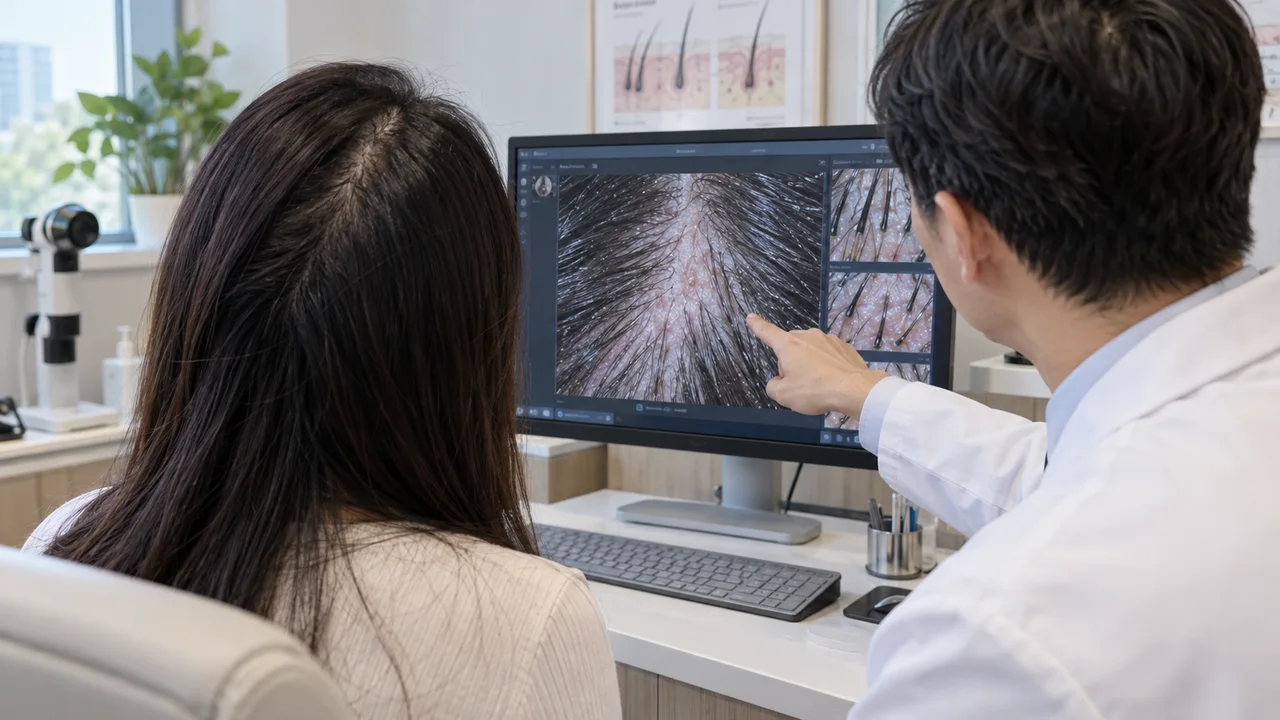
A dermatologist asks when symptoms began, how quickly they changed, whether the scalp hurts or itches, hairstyling habits, health history and scalp products. The scalp, hairline and sometimes other skin areas are examined. Trichoscopy helps inspect follicle openings, redness and scale around follicles, and hair shafts. Photographs taken consistently can help compare change over time.
If findings are unusual or a result could change treatment, the clinician may recommend a scalp biopsy. Sampling often targets an active edge with inflammatory signs rather than only a fully smooth center. Discuss whether it is needed, the sampling site and the possibility of a small scar. Not everyone with hair loss needs a biopsy.
What are the goals of treatment after diagnosis?
The usual goals are to identify the cause, reduce active inflammation, limit further spread where possible, and relieve pain or itch. Depending on diagnosis and health, a clinician may discuss local or systemic anti-inflammatory treatment, care for infection and follow-up. Different causes do not share one prescription.
A follicle replaced by scar tissue should not be expected to regrow through shampoo or general hair-growth products. Whether remaining follicles can be preserved or density can improve depends on the condition and timing; benefits and risks need ongoing review. Avoid long-term use of an unidentified scalp solution or stopping prescribed care without advice.
How can you record and care for the scalp before an appointment?
Take periodic photos using similar light and parting. Note when the patch appeared or grew, symptoms, pustules or scale, recent hairstyles and scalp products. Clean gently, and avoid scratching, picking crusts, repeated chemical styling or pulling an inflamed area. This record helps the visit but is not treatment.
If the hairline is regularly pulled tight, try a looser hairstyle. Not every receding hairline is caused by tension; see the signs of traction alopecia.
When should you seek medical care?
Arrange a dermatology visit if a patch expands quickly, stays red or painful, repeatedly develops pustules or crust, changes the hairline or eyebrows, or looks smooth with few visible openings. Fever, rapidly spreading swelling, severe pain or substantial pus calls for prompt medical attention.
You can use hair-loss warning signs to organize what you have noticed, and read about the hair-loss clinic and health library. Online information cannot replace an in-person examination.
Health Education References
- DermNet: Hair loss
- DermNet: Lichen planopilaris
- DermNet: Trichoscopy of localised cicatricial hair loss
- American Academy of Dermatology: CCCA overview
No. Inflammation, infection and other hair-loss conditions can look similar. A dermatologist should examine the scalp and follicles and decide whether more tests are needed.
Where follicles have been replaced by scar tissue, regrowth is difficult. Whether follicles remain elsewhere and can be preserved depends on the cause, inflammation and timing; a clinician should assess this.
No. It is a clue, but lighting, photos and other conditions can mislead. Trichoscopy helps a clinician examine follicle openings and surrounding skin.
No. A clinician considers it when the diagnosis is unclear or the result may change care, then discusses the site and risks.
Do not rely on shampoo alone. Persistent or spreading pustules, pain or crust need assessment; seek prompt care with fever or rapidly spreading swelling.
Yes, if it keeps expanding or the hairline or eyebrows change. Some scarring conditions are quiet early on.
A clinician’s note: look beyond the number of hairs shed
Redness, pain, scale around follicles or an expanding patch deserves a timely examination for active inflammation. Bring photographs taken in similar conditions and a symptom timeline so the clinician can discuss trichoscopy, biopsy or follow-up.
This article is health education, not a drug advertisement or promotion or sale of a specific medicine.
Hair-loss clinic doctors

Dr. Tseng