

If you keep hair tightly tied for convenience or style and later notice thinner temples or hairline, or short broken hairs where the band sits, it may be traction alopecia. It is patchy hair loss after long, repeated pulling that overloads follicles—often from tight ponytails, braids, extensions, weaves or tight accessories.
Early traction alopecia often has room to improve if tension is reduced soon. If the same area is pulled for a long time, follicles may be damaged and thinning can become harder to reverse. It can look like pattern hair loss or alopecia areata but needs a different approach, so a dermatologist should examine the scalp before the next step.
Key points: Traction alopecia comes from long-term pulling on follicles. It often shows at the hairline, temples, parting or where styles are fixed, with thinning, broken hairs, tightness or small red spots. Higher-risk habits include daily tight ponytails, tying wet hair hard, long-term extensions or weaves, and always using the same spot. Care centres on looser styles, rotating positions and gentle care; if thinning, pain or inflammation is clear, see a doctor in person. Ignoring it for too long can damage follicles and leave a hard-to-recover bare area.
What is traction alopecia? Can tying hair really cause bald spots?
Traction alopecia is hair loss from mechanical pull. When follicles are pulled in one direction for a long time, nearby tissue is stressed again and again, which may lead to inflammation, breakage and disruption of the normal growth cycle. It is not contagious and is not simply “washing too hard”—it is the result of tension building up.
An occasional loose ponytail rarely causes traction alopecia. Watch for daily or near-daily tight styles, the same spot under load for hours, yanking wet hair, or combining colouring, heat and heavy extensions so the same follicles take layered stress.
If tension is reduced early, density often has a chance to settle. If pulling lasts months to years, that patch may enter a stage that is harder to reverse on its own. Whether regrowth is still possible needs a doctor’s assessment of the follicles—not a conclusion from photos alone.
What does it look like? How does the hairline change?
Signs often cluster where pull is strongest; one person may have more than one area. Common features include:
Common sites
Temples and sides, the front hairline, the crown parting, the band of a ponytail or bun, and the edge of a weave net, clip-in piece or tight headscarf. Children with tight braids or elastic bands may also thin in spots.
Hair and scalp look
Thinner density at stressed spots, a hairline that seems to move back, or short broken “stub” hairs. Follicle openings may show tiny red dots or mild flaking; the scalp can feel tight. In tougher cases there may be pain, crusting, or a smoother-looking bare patch.
How it feels
Pain at the temples or scalp right after tying, all-day tightness, or lingering ache after the band comes off are signals of too much pull. Some people first notice more breakage, then thinner temples, so it is easy to mistake for ordinary shedding or a natural receding hairline.
Which styles and habits raise the risk?
Risk comes from pull strength × time × always the same zone. These patterns are often discussed:
- Daily tight high ponytails or buns, or tying until the scalp hurts so it “feels secure”.
- Always the same height and direction so the same ring of follicles bears the load.
- Tying or detangling hard while hair is wet, when shafts are more fragile.
- Long-term tight braids, cornrows, twists, or heavy extensions, weaves and clip-ins.
- Colouring, bleaching or high heat on the same stressed areas.
- Work or performance styles that must stay fixed for hours with few rest days.
If stress and poor sleep also raised overall wash-day shedding, telogen effluvium or other causes may stack on top—see warning signs of losing too much hair. Traction alopecia usually tracks the “pull zone” more than diffuse shedding.
How does it differ from pattern hair loss, alopecia areata and trichotillomania?
A thinner hairline is not always traction alopecia. The table below summarises common differences but cannot replace an in-person exam. If a smooth, well-edged bald patch appears suddenly, think of alopecia areata. If you keep pulling your own hair, see trichotillomania signs and checks.
| Point | Traction alopecia | Pattern / female-pattern hair loss | Alopecia areata | Trichotillomania |
|---|---|---|---|---|
| Usual sites | Hairline, temples, parting, where styles fix | Men: temples and crown; women: widening crown parting | Round or oval patches, variable location | Crown or front sides the dominant hand reaches; brows/lashes possible |
| Look | Thinning, broken hairs, possible red dots or tightness | Hairs gradually finer and softer, often symmetric spread | Smooth scalp, clearer borders | Irregular shape, mixed-length broken stub hairs |
| Common drivers | Long-term tight styles, braids/extensions, weaves, tight accessories | Mainly genetics and hormones; can coexist with pull | Immune-related; often no clear pull history | Repeated pulling of one’s own hair |
| Exam focus | Style habits, pull sites, dermatoscope for breakage and follicles | Pattern, family history, overall density | Dermatoscope; other immune checks if needed | Pulling history, dermatoscope breakage pattern |
| Care direction | Ease tension first, then decide if scalp treatment is needed | Doctor assesses by stage and status | Doctor assesses by extent and course | Behavioural care first; other specialties if needed |
How does a dermatologist check it?
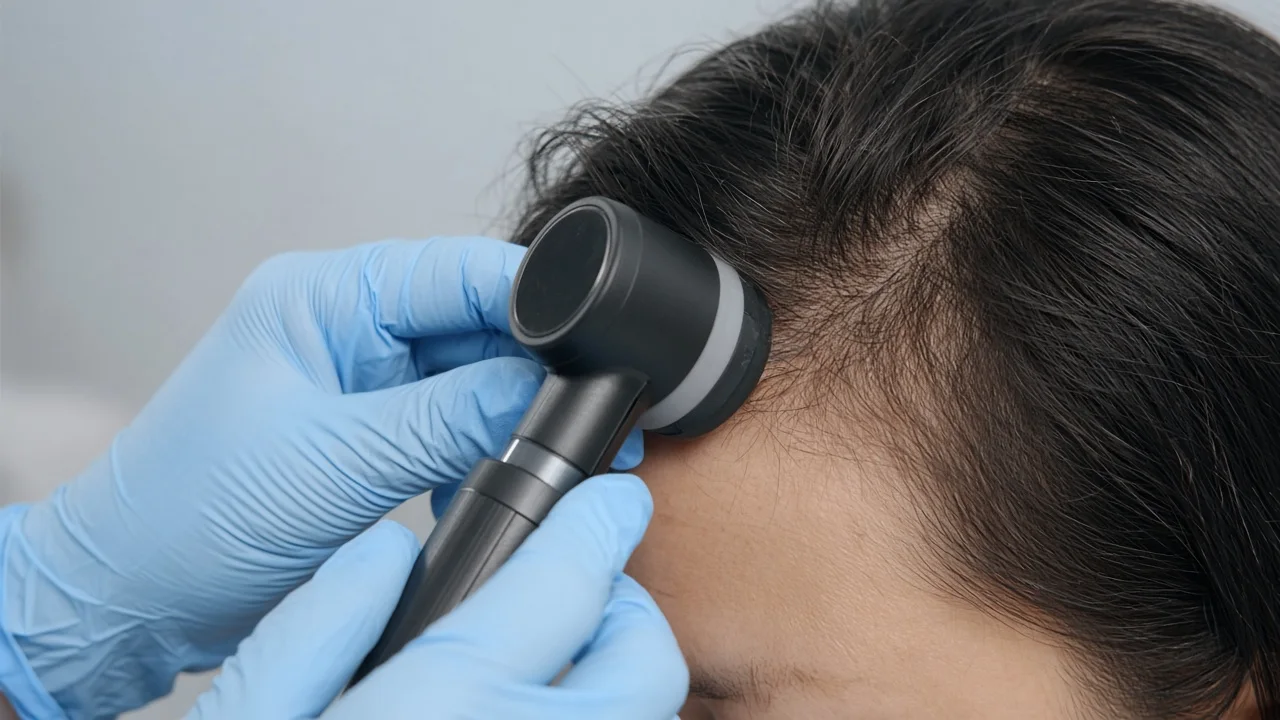
The doctor usually asks how long shedding has been present, which spots stand out, daily tying or extension habits, scalp pain, and whether overall shedding rose too. Recent front and side hairline photos, or notes on how long weaves or braids have been worn, help a lot.
Next comes a scalp and density check, often with a dermatoscope for broken hairs, follicle openings, tiny red dots or scarring cues, and to separate pattern loss, alopecia areata and trichotillomania. If the look is atypical, further tests may rule out infection or other hair-loss conditions.
If one zone has been thin for a long time, the doctor may also judge whether follicles can still regrow—see does hair loss mean follicle miniaturisation and hair growth cycle and shedding.
How can traction alopecia improve? What are the options?
Care almost always starts by reducing or stopping the source of pull. Products alone while daily tight styles continue usually help little. The plan depends on age, how long pulling lasted, and whether inflammation or scarring is present, and must be assessed in person.
- Adjust styles and accessories: looser ties, rotate positions, cut back heavy extensions or tight pieces; sometimes leave hair down for a few weeks.
- Calm inflammation: if there is redness, pain or peri-follicular inflammation, a dermatologist decides whether anti-inflammatory or other scalp care is needed.
- Support regrowth when appropriate: once tension is controlled and follicles still look viable, the doctor may discuss topical growth-promoting drug classes or other suitable scalp procedures; whether and how to use them is individual.
- When scarring or bare patches are clear: if follicles look clearly damaged with little regrowth for a long time, options to restore appearance may be discussed—this is an advanced step, not needed for everyone.
- Other hair loss at the same time: female-pattern loss or telogen effluvium may coexist and should be clarified so care is not aimed at only one cause.
When a woman’s hairline and crown parting thin together, female-pattern hair loss may also be present; the priorities are not identical, so both should be assessed together.
What can you do at home? 8 ways to ease scalp tension

These habits lower risk—pick what fits your life; you need not do them all at once. If thinning or pain is already clear, get checked first.
- Pain means stop: temple or scalp pain after tying means it is too tight—loosen at once.
- Rotate positions: do not fix ponytail height and parting the same way every day.
- Dry before tying: wait until hair is dry when you can, so wet shafts take less force.
- Gentler holds: avoid thin, harsh elastics; prefer wider or smoother ties, and skip sleeping in a tight band.
- Rest days for extensions and weaves: give loaded areas breaks from heavy add-ons and clip-ins.
- Detangle kindly: work from ends upward; do not yank knots.
- Fewer layered insults: while styles stay tight, be cautious with frequent colouring and high heat.
- Check children’s styles: are braids and elastics too tight? Is thinning appearing above the ears or at the hairline?
Local thinning in a child also needs tinea or other causes ruled out—see child hair loss causes and warning signs.
What are common myths about traction alopecia?
Myth 1: Only ponytails cause traction alopecia?
Ponytails are a common example. Braids, twists, extensions, weaves, tight headbands or scarves can all be triggers if pull lasts. What matters is tension and time, not one style name.
Myth 2: A receding hairline is always pattern hair loss, never the style?
Pattern loss often affects the hairline and crown, but traction can also thin the temples. Both can coexist. With a long history of tight styles, do not blame genetics alone—ask a doctor to assess both.
Myth 3: Once thin, changing styles cannot help?
After easing tension early, many people still have a chance to settle gradually. Whether regrowth is still possible depends on follicle status and how long pulling lasted. Earlier changes usually leave more room to discuss options, but no one can promise every person will return to their original density.
When should you see a doctor?
If tight styles are occasional and discomfort fades quickly once loosened, you can adjust and watch. See a doctor if:
- Visible thinning at temples, hairline or parting, or the area slowly grows.
- Repeated pain, redness, crusting or signs of infection where styles fix.
- After weeks to months of looser styles, thinning still shows little change.
- You are unsure whether pull, pattern loss, alopecia areata or self-pulling is the cause.
- A child develops a local bald patch, or has scale, redness or itch-pain.
- Appearance changes affect mood, work or relationships and you need help clarifying the cause.
To confirm why the scalp is thinning, visit the Ruian Clinic hair-loss clinic for an in-person assessment, and read more topics in the health library.
Health Education References
- American Academy of Dermatology (AAD): Traction alopecia
- DermNet: Traction alopecia
- British Association of Dermatologists (BAD): Hair loss patient information
If pulling is reduced or stopped early, many early cases have a chance for scalp and hair to settle gradually; the pace varies and often needs weeks to months of watching. If the same zone was pulled for a long time and follicles look clearly damaged, recovery is harder—a doctor should examine and discuss suitable options.
There is no fixed day count. Risk depends on how tight, whether the same spot is used daily, and whether wet yanking or extensions stack on top. Scalp pain, more breakage or thinner temples mean loosen first and consider a visit—do not wait until the area is fully bare.
Yes. Anyone with long-term tight styles, braids or tight accessories can be affected, regardless of sex. Men who also have pattern-loss tendency may look more marked and need help sorting the main driver.
Most plans start by easing tension and gentle care. Whether anti-inflammatory or other scalp treatment is needed depends on redness, pain, infection signs and follicle status. Only a doctor should decide for your case—do not buy or use unclear products on your own.
Traction alopecia comes from external style or accessory pull; trichotillomania is repeatedly pulling one’s own hair, often with irregular patches and mixed-length broken hairs. Looks can overlap, so history plus dermatoscopy with a doctor helps.
They can. Children’s scalps are thinner; long-term tight braids or harsh elastics may thin above the ears or at the hairline. Prefer looser styles and check regularly; if a bald patch, redness or flaking appears, seek care to rule out other causes.
Doctor’s note: ease scalp tension first, then confirm why the area is thin
A thinner hairline or temples may be traction alopecia, or may coexist with pattern hair loss, alopecia areata or another shedding cause. At your visit, describe daily tying, extensions or weaves and how long pain or breakage has lasted so the doctor can examine the scalp. Please stop repeatedly tightening the same spot; whether scalp treatment or another step is needed must be assessed in person.
This article is health education, not a medicine advertisement, and does not recommend or sell a specific drug. It cannot replace a medical examination; diagnosis, tests and treatment must be assessed in person by a doctor based on your individual situation.
Hair-loss clinic doctors

Dr. Tseng