


Weight loss does not come only from fat. Severe restriction, too little resistance exercise or poor recovery can also reduce lean tissue.
A more useful goal is gradual fat loss while preserving strength, muscle and daily function as much as possible. Food, training, sleep and measurement all need to work together.
Key point: It is difficult to promise zero muscle loss, but a moderate energy deficit, regular resistance training, adequate protein-containing foods and recovery can reduce the risk. Judge progress from waist, strength and multi-week trends—not one body-fat reading.
Can you lose fat without losing any muscle?
Not everyone can lose only fat while muscle stays exactly unchanged. Starting body composition, the size of the energy deficit, training history, sleep, age and health all influence the result.
A realistic goal is a safe, sustainable reduction in fat and waist size while preserving lean tissue, strength and mobility. Rapid scale loss with falling strength, fatigue or an unsustainable diet is not automatically good progress.
How can you tell whether weight loss is fat or muscle?
Scale weight cannot separate fat, muscle and fluid. Record several measures under similar conditions and assess their shared trend over several weeks.
| Measure | What it may show | How to use it |
|---|---|---|
| Weight | Overall mass change | Measure under similar conditions and use weekly trends |
| Waist and clothing | Indirect change around the abdomen | Use the same site and posture |
| Strength | Whether muscle function is broadly maintained | Record the same movements, load and repetitions |
| Body-fat estimate | A composition trend | Use one device at a similar time and hydration |
| Energy and recovery | Whether the plan is too demanding | Persistent dizziness or fatigue needs review |
Are home body-fat scales accurate?
Most home devices estimate body composition from bioelectrical impedance. Hydration, meals, exercise, alcohol and timing can all change the result. They are better for trends than for interpreting a small one-off change.
Use the same device at a similar time and condition, then compare waist, clothing fit and training performance. Clinical decisions should not rely on one percentage alone.
How should food be arranged to support muscle retention?
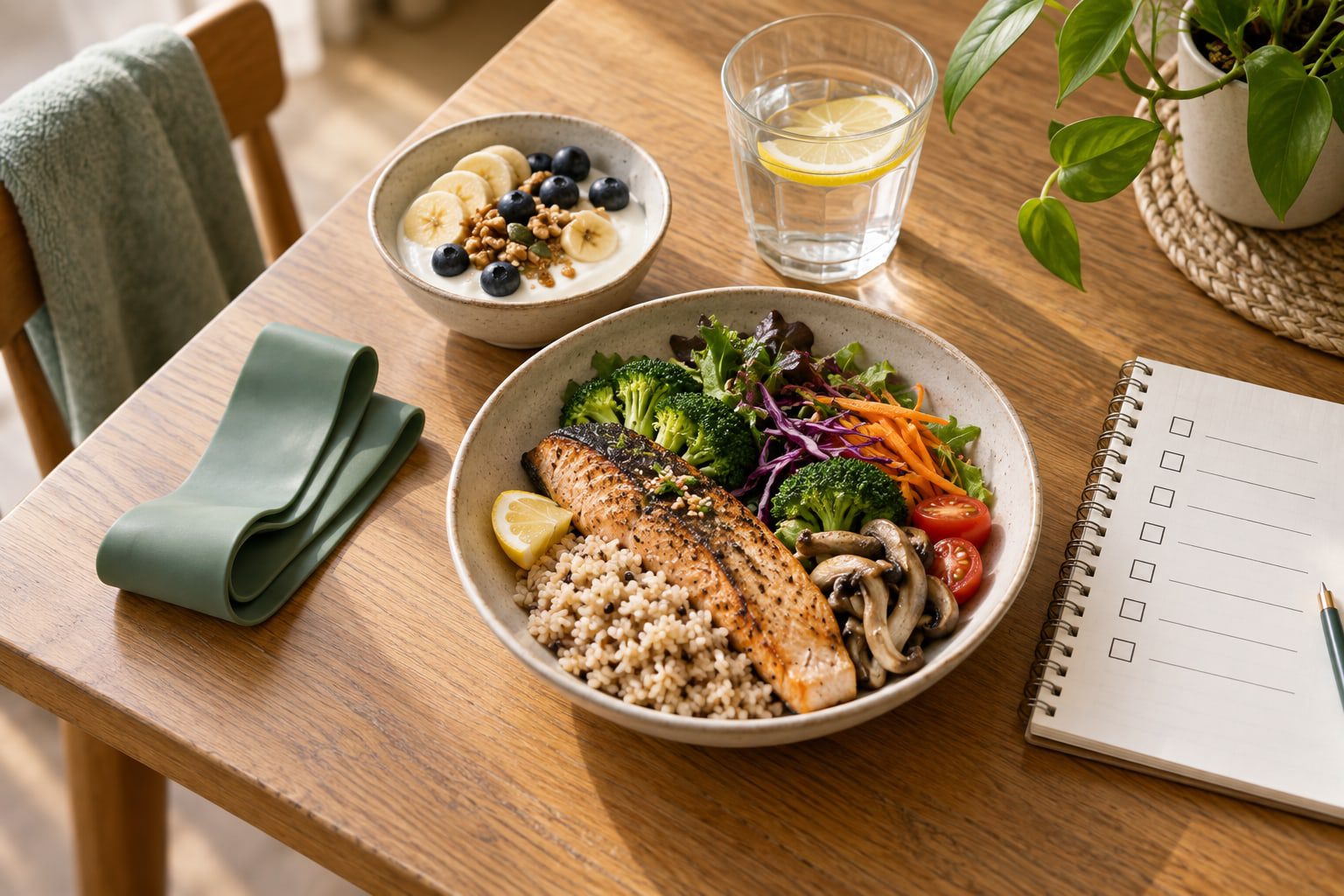
Avoid pushing intake excessively low. Severe restriction can reduce training quality, recovery and nutrient intake. A plan should reflect body size, activity, health and routine.
Include protein-containing foods such as fish, eggs, dairy, beans or minimally processed meat across meals, together with vegetables, whole grains and suitable fats. Needs vary, especially with kidney, liver or other chronic conditions.
Carbohydrate eaten at dinner does not automatically become body fat. Total intake, food quality, activity and long-term adherence matter more.
For an individual plan, see weight-management clinic assessment · TDEE and daily energy expenditure.
Why keep resistance training during fat loss?

Resistance exercise gives muscle a continuing reason to produce force. Free weights, machines, bands and body-weight movements can all work when major muscle groups are trained progressively with recovery.
General adult guidance includes muscle-strengthening activity on at least two days each week, alongside aerobic activity and daily movement. Beginners and people with injury or chronic disease should first confirm an appropriate level.
Aerobic exercise does not inherently burn away muscle. Risk rises when training volume jumps while food intake, protein and sleep are inadequate.
Why do sleep and recovery matter?
Insufficient sleep can make appetite, fatigue and motivation harder to manage and can impair recovery. A sustainable schedule, regular sleep and rest days matter more than training to exhaustion every day.
Persistently falling strength, soreness, poorer mood or disrupted sleep may mean that food intake, training load or recovery needs adjustment.
What should you change first when progress stalls?
First confirm a true plateau rather than a few days of fluid fluctuation. Review multi-week average weight, waist, food records, steps, training and sleep, then change one variable at a time.
Avoid simultaneously cutting food sharply, adding cardio and raising lifting volume. That makes fatigue and performance changes difficult to interpret.
When should you seek medical assessment first?
Lifestyle records are a reasonable starting point for body-composition goals, but the following situations should not be managed with an online meal plan or intense challenge alone.
- Unexplained rapid weight loss with appetite or mental-state changes
- Persistent dizziness, palpitations, weakness, hair shedding or menstrual change
- Diabetes, kidney, liver, cardiovascular or other chronic disease
- Pregnancy, breastfeeding, older age, sarcopenia or fall risk
- Repeated bingeing, purging, extreme fasting or intense food anxiety
- Current medical treatment with plans for a major diet or exercise change
If symptoms, chronic disease or repeated difficulty are present, start with weight-management clinic assessment · weight-management treatment FAQ.
Sources and further reading
- NIDDK: eating and physical activity for weight management
- Taiwan HPA: evidence-based adult obesity guidance
- Obesity Reviews: resistance training and body composition
weight-management treatment FAQ · health library
That cannot be promised. A moderate diet change, resistance training, adequate nutrition and recovery can help preserve lean tissue and function.
Protein-containing foods help, but needs vary with body size, age, activity and health. One high target does not suit everyone.
No. Total intake, food quality, activity and long-term habits matter more than the clock alone.
Cardio alone does not inevitably cause it. Risk may rise with severe restriction, a sudden training increase and inadequate food or sleep.
Hydration, food, exercise and timing alter the estimate. Use the same device under similar conditions and follow several weeks of data.
It may reflect composition or fluid change. A repeated fall in waist with maintained strength is more informative than one measurement.
Doctor’s note: do not follow the scale alone
Review waist, strength, energy, food quality and whether the plan is sustainable. Chronic disease, marked symptoms or disordered eating concerns need an in-person medical assessment.
Weight-management medical team

Dr. Tseng

Dr. Li
This article provides general health education and does not replace individual diagnosis, dietary prescription, exercise assessment or medical advice.