


Improving acne is not about making the skin as dry as possible or squeezing every spot. A steadier approach is to distinguish clogged pores from inflamed lesions, then adjust cleansing, skincare, personal triggers and treatment follow-up together.
Acne can affect teenagers and adults. Blocked follicles, sebum, the skin microbiome and inflammation often interact. Deep, painful, scarring or persistent acne should be assessed in person by a dermatologist.
Key points: Cleanse gently once or twice a day, do not squeeze spots, choose non-comedogenic moisturiser and sunscreen, and change only a few products at a time. Seek dermatology care for deep pain, scarring, widespread inflammation or acne that does not improve after 8–12 weeks.
Why does acne develop? Four core factors
Acne often appears on the face, chest and upper back, where sebaceous glands are more active. It is not simply a sign of poor hygiene.
When dead skin and sebum block a follicle, whiteheads or blackheads can form. A blackhead is dark because material at the pore opening is exposed to air, not because dirt is trapped in the skin.
A blocked follicle may become inflamed and turn into a red papule, pustule or deeper painful nodule. Squeezing increases tissue injury, dark marks and scar risk.
Hormonal changes, heat, friction, heavy makeup and unsuitable skincare can worsen some people’s acne. Sudden severe acne with irregular periods, excess hair growth or major weight change should be discussed with a doctor.
For a fuller overview of how treatment is matched to acne type, read What acne treatments are available?
How to improve acne: 10 everyday rules
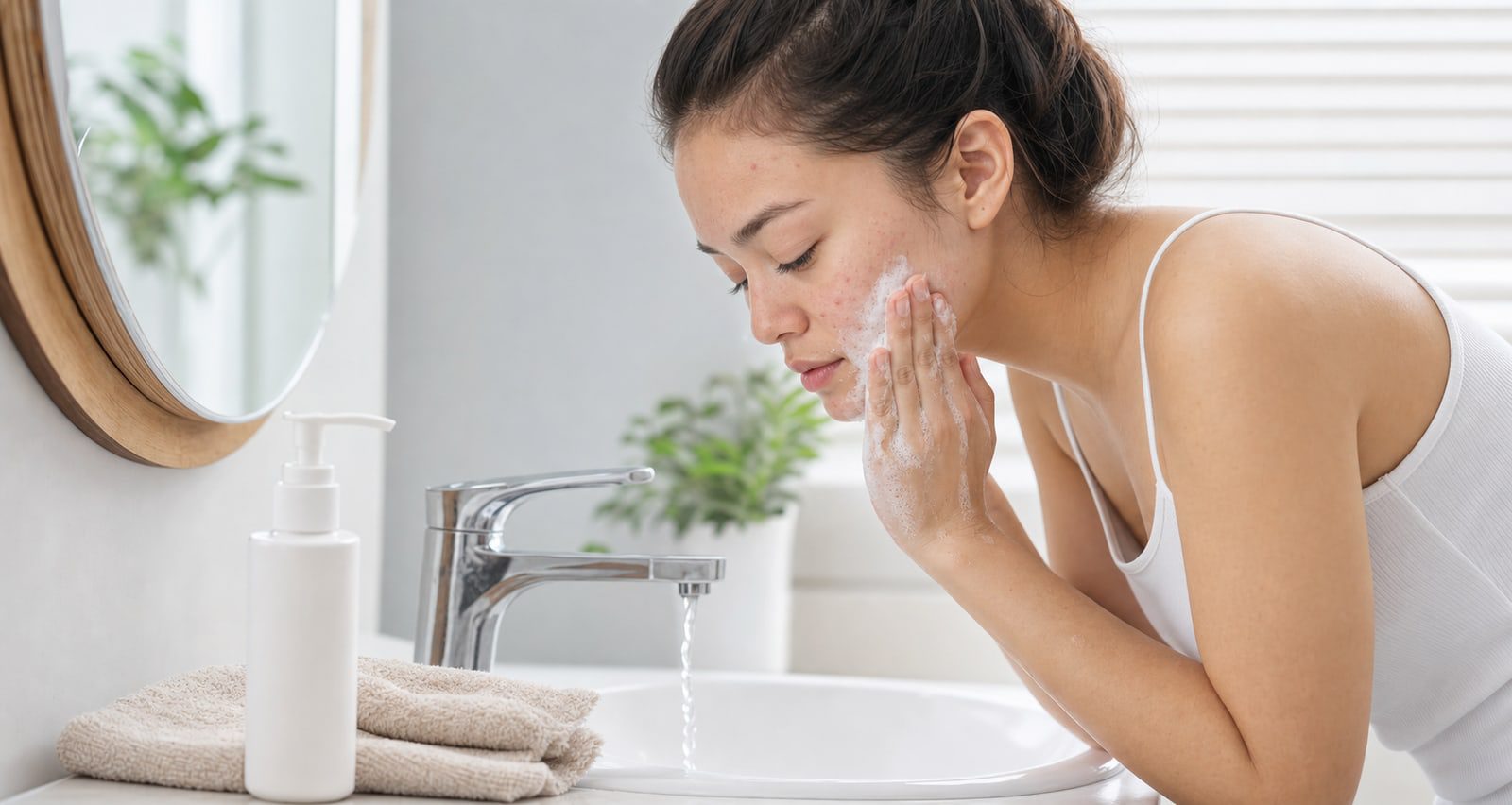
These measures are a useful foundation, but they are not a personal prescription. Skin type, acne pattern and treatment tolerance differ.
- Do not squeeze, pick or press spots. Deep painful lesions are especially likely to become more inflamed or scarred.
- Cleanse gently about once or twice daily. Use fingertips and lukewarm water; avoid scrubs, brushes and repeated rubbing.
- Cleanse gently after heavy sweating. Reduce prolonged contact with sweat, oil and friction.
- Choose non-comedogenic products. Labels such as non-comedogenic or oil-free can help, but watch how your own skin responds.
- Keep moisturiser and sunscreen in the routine. Choose light, low-irritation textures.
- Change only a few products at a time. Layering several exfoliating or acne products can irritate skin and hide the cause.
- Reduce heat and friction. Change pillowcases, clean helmet liners and keep hair products or heavy makeup away from acne-prone areas.
- Track personal triggers. Food, periods, stress and sleep affect people differently; a simple diary can reveal patterns.
- Do not use unidentified medicated creams long term. Briefly reducing redness does not mean a product is appropriate.
- Allow time and attend follow-up. If irritation or acne worsens, do not increase or mix treatments on your own; ask your doctor to adjust the plan.
Blackheads, pustules and nodules: what is the difference?
Appearance and depth affect care and urgency. Folliculitis, rosacea and other conditions can resemble acne, so photographs alone cannot confirm a diagnosis.
| Type | Common appearance or feeling | Care focus | When to seek care |
|---|---|---|---|
| Whiteheads / blackheads | Small and usually not very sore | Gentle cleansing; no squeezing or over-exfoliation | The area keeps expanding or repeatedly returns |
| Red papules / pustules | Red, swollen, sometimes with pus and tenderness | Reduce friction and picking; assess anti-inflammatory or antimicrobial options | Numerous, spreading or repeatedly leaving dark marks |
| Nodules / cyst-like lesions | Deeper, larger, painful and slow to settle | Do not squeeze; arrange an earlier assessment | See a dermatologist early |
| Possibly not acne | Very uniform bumps, itch, burning or scaling | Stop suspected irritants and avoid copying an acne routine | Persistent discomfort or unexpected treatment response |
Four common acne-care myths
Skin must feel tight after washing
No. Over-cleansing can disrupt the skin barrier and increase redness, dryness and flaking.
Oily skin does not need moisturiser
Not always. A light, low-irritation moisturiser can improve comfort when cleansing or treatment causes dryness.
Sun exposure dries acne
Do not use sun exposure as treatment. It can darken acne marks, and some treatments increase sun sensitivity.
Changing products constantly finds a solution faster
Frequent product stacking can irritate skin and makes reactions hard to interpret. Bring your product list to the consultation.
What treatment directions are available, and why does acne type matter?
A doctor considers the balance of clogged pores and inflammation, nodules or scars, affected area, age, pregnancy plans, previous treatment and skin tolerance. Care is usually adjusted in stages rather than relying on one product.
Topical directions may include follicle-unclogging, antimicrobial, anti-inflammatory and acid-based keratin regulation. These can cause dryness, stinging or flaking, so use should follow medical advice alongside gentle cleansing, moisturising and sun protection.
For widespread or moderate-to-severe inflammation, chest or back acne, painful nodules or poor response to topical care, a doctor may assess oral antimicrobial, sebum-regulating or hormone-related treatment. Each has specific indications, cautions and follow-up needs and should not be shared or self-purchased.
Red marks, dark marks and depressed scars are different. Active inflammation is usually stabilised first; later options depend on the scar type and an in-person assessment.
When should acne be seen by a dermatologist? Six reasons not to wait

A few occasional clogged pores may respond to routine changes, but deep inflammation, possible scarring or an uncertain diagnosis should not be managed by endless product trials.
- Acne keeps returning after about 8–12 weeks of self-care or repeatedly inflames in the same area.
- Deep painful nodules or cyst-like lesions appear, or the skin begins to indent after they settle.
- Inflammation covers much of the face, chest or back, or affects sleep, social life or mood.
- A product causes severe redness, swelling, peeling, stinging or burning.
- Severe acne starts suddenly in adulthood, or occurs with irregular periods or excess hair growth.
- You are pregnant, planning pregnancy, breastfeeding, have a chronic condition or take other medicines and need a safety review.
It is not recommended. Pressure can spread inflammation deeper or sideways and increase dark marks and depressed scars, especially with painful nodules.
For most people, gentle cleansing once or twice daily is enough, with another gentle cleanse after heavy sweating. Frequent scrubbing can cause dryness and irritation.
Acne care needs consistent observation rather than changing products after only a few days. Stop a suspected product and seek assessment for marked swelling, burning, peeling or worsening.
No. Triggers differ. Record repeated links between food and breakouts rather than banning everything, and discuss the record with a doctor or dietitian.
Acne often includes a mix of comedones, papules and pustules. Folliculitis may look more uniform and can itch. Overlap is common, so in-person assessment matters when response is unexpected.
Deep painful nodules, cyst-like lesions, repeated squeezing and prolonged inflammation carry a greater scar risk. Seek early assessment if indentations appear or the same area repeatedly inflames.
Doctor’s reminder: acne care should not make skin progressively drier
Clogged pores, papules, pustules, deep nodules and folliculitis need different approaches. Bring your current product list and describe how your skin reacted so the doctor can assess likely irritation and next steps.
This article provides health education only. It is not medicine advertising and does not recommend or sell a specific medicine. It cannot replace an in-person diagnosis or personalised treatment advice.
Dermatology Team

Dr. Tseng