

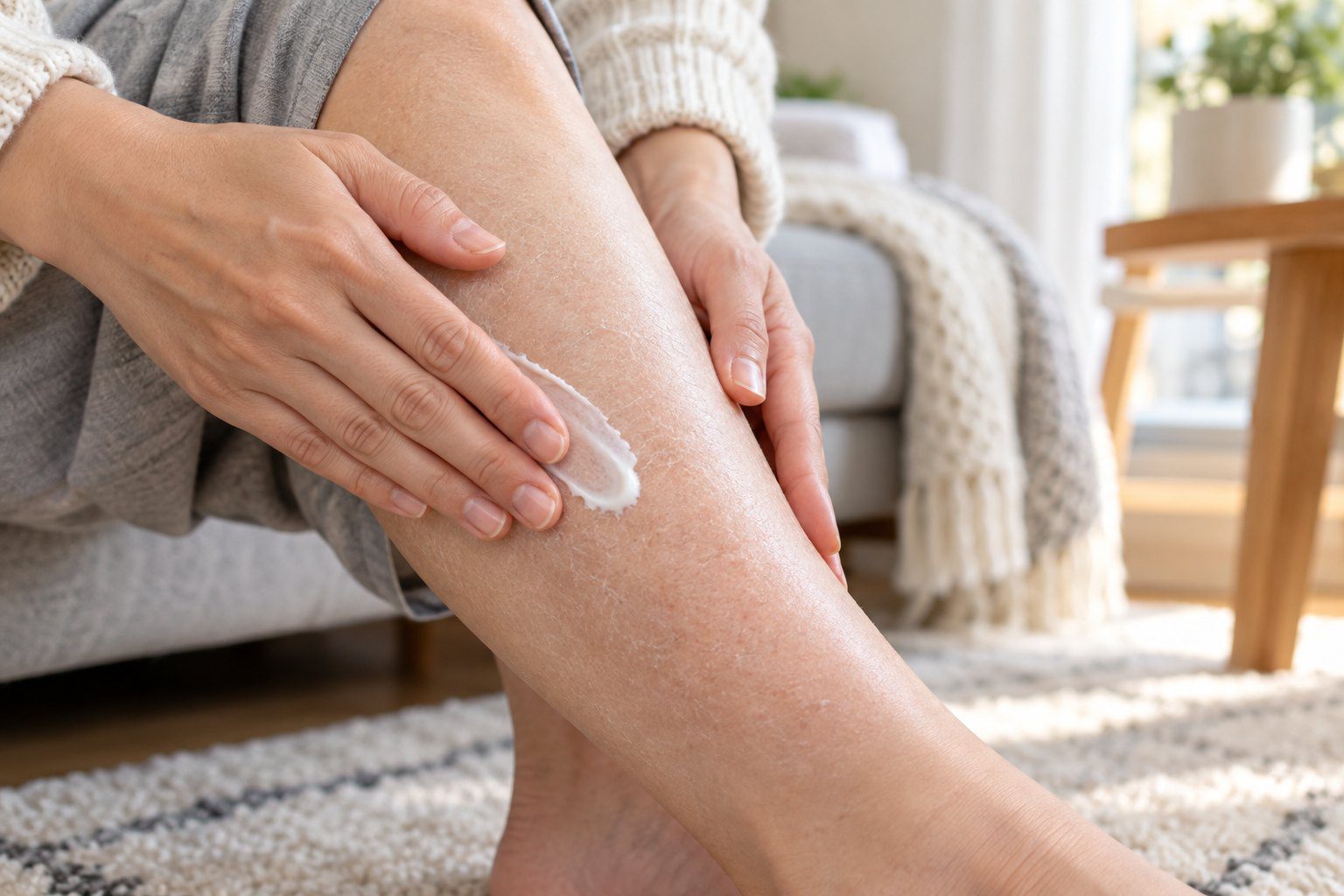
Winter eczema can cause dry, itchy, flaky skin in cold, dry weather, often on the lower legs. Short lukewarm showers and moisturizing right afterward may reduce irritation. Recurrent rash, broken skin or oozing needs an in-person assessment.
Key points: Itching in winter may be related to asteatotic eczema, but the season alone cannot establish a diagnosis. Avoid prolonged hot showers and use a fragrance-free cream or ointment. Seek medical assessment for persistent itch, pain, oozing or yellow crusts.
What does winter eczema look like, and how is it different from dry skin?
Asteatotic eczema may bring itching, red patches, scale and fine cracks as well as dryness; the lower legs are a common site. Ordinary dry skin does not always mean eczema. Rash after a new cleanser, repeated flares or a different pattern may need a clinical examination.
causes of dry, itchy skin and when to seek care
| What to observe | Ordinary dry skin | Possible asteatotic eczema | Other warning signs |
|---|---|---|---|
| Appearance | Roughness and fine scale | Redness, scale or fine cracks | Blisters, ring-shaped edge or oozing |
| Sensation | Tightness or mild itch | More persistent itch | Pain or severe nighttime itch |
| Next step | Adjust cleansing and moisturizing | Continue care and watch changes | Ask a doctor to examine the rash |
Why can skin become itchier in winter?
Low humidity, indoor heating, long hot showers and harsh cleansers can worsen dryness and itch. Older adults and people whose skin is already dry may be more susceptible. A winter rash can also have another cause.
How should you wash and moisturize at home?
Keep showers short and lukewarm
Try a 5–10 minute lukewarm shower. Avoid hot water and scrubbing; choose a gentle fragrance-free cleanser. Bathing frequency can fit your activity and skin condition.
Moisturize while skin is still damp
Pat skin dry and apply a fragrance-free cream or ointment while it is still slightly damp. Reapply when dry. Stop a product that stings and discuss alternatives with a clinician.
Reduce friction and scratching
Choose soft, loose clothing. Avoid direct heater air and repeated scratching. Seek care if itching disrupts sleep.
When should you see a doctor, and how is treatment chosen?
See a dermatologist if itch persists despite gentle care, the rash spreads or returns, or sleep is affected. The clinician may review the rash distribution, exposures and medical history to distinguish other skin disorders or infection. Seek prompt care for heavy oozing, yellow crusts, warmth, swelling, pain or feeling unwell. Anti-inflammatory topical treatment should be chosen for the diagnosis and body site; avoid prolonged self-treatment.
dermatology clinic · clinic hours · health articles
Sources
- DermNet: Asteatotic Eczema
- American Academy of Dermatology: How to treat eczema at home
- NHS: Discoid eczema
Asteatotic eczema itself is usually not contagious. Similar-looking rashes may have other causes, so a clinician should assess an uncertain diagnosis.
Yes, if it suits your needs. Use lukewarm water, keep showers short, avoid over-cleansing and moisturize afterward.
Check that it is fragrance-free and rich enough, and reduce irritants. See a dermatologist if rash persists or sleep is affected.
The type, site and duration of anti-inflammatory treatment depend on the diagnosis. Ask a clinician first if the cause is unclear or infection is possible.
Yes. Heavy oozing, yellow crusts, warmth, pain or feeling unwell may be signs of infection and need prompt assessment.
A doctor’s note: find the cause of recurring itch
Winter itch may reflect a damaged skin barrier, but different skin conditions need different care. If moisturizing does not help, sleep is affected, or skin is broken or oozing, arrange an in-person dermatology assessment.
dermatology clinic · clinic hours

Dr. Tseng