

Hand eczema is a common chronic inflammatory skin condition that often starts with peeling fingertips, dry fissures, and faded fingerprints. It usually develops when repeated exposure to water, detergents, or other irritants damages the skin’s protective lipid barrier, making the hands tight, flaky, and painful even during everyday routines.
Applying hand cream only occasionally rarely resolves flare-ups if daily triggers continue or if an allergy or fungal infection is also involved. This guide focuses on chronic hand eczema caused by barrier damage and daily irritants, how it differs from look-alike conditions, and when to seek dermatology care.
Key Takeaways: Hand eczema is driven by frequent wet work, soaps or detergents, contact allergens, or dry-skin tendency, leading to peeling fingertips, dryness, and painful cracks. Daily care centers on reducing irritants and moisturizing immediately after washing, using cotton liners under waterproof gloves for chores. See a dermatologist if you notice oozing, signs of infection, suspected hand fungus, or no improvement after several weeks of home care.
What Is Hand Eczema and Why Does It Start at the Fingertips?
Hand eczema (hand dermatitis) encompasses several patterns of hand inflammation, including chronic dryness and scaling of the fingertips and palms.
Because palms lack sebaceous (oil) glands and contact objects constantly, they rely heavily on an intact stratum corneum. Repeated washing, surfactants, and friction strip away surface lipids, often causing tightness, peeling, and blurred fingerprints on the dominant thumb, index, and middle fingers before deeper cracks form.
What Causes Hand Eczema and Who Is Most Affected?
Hand eczema rarely has a single cause; instead, external irritants, allergies, and individual skin sensitivity interact over time.
1. Irritant Contact (Most Common)
Frequent handwashing and exposure to dish soap, laundry detergent, bleach, alcohol sanitizers, solvents, soil, or raw food juices gradually break down the skin barrier. Food handlers, hairdressers, healthcare workers, cleaners, new parents, and people doing frequent housework are commonly affected.
2. Allergic Contact
Some people develop a delayed allergic reaction to specific substances such as rubber glove additives, metals (like nickel), fragrances, preservatives, or hair dyes. Even small exposures can trigger recurring redness and itching.
3. Skin Tendency and Seasonal Dryness
A history of atopic dermatitis or dry skin makes the hand barrier naturally more vulnerable. Cold, dry autumn and winter air—especially combined with hot water handwashing—can quickly turn mild fingertip peeling into painful fissures.
How Does Hand Eczema Differ from Dyshidrotic Eczema, Tinea Manuum, and Psoriasis?
Peeling, itchy, or cracked hands are not always simple hand eczema. Dermatologists often differentiate it from dyshidrotic eczema, fungal hand infection (tinea manuum), and palmar psoriasis. The table below summarizes helpful clues, though an in-person exam is needed for diagnosis:
| Feature | Hand Eczema (Chronic) | Dyshidrotic Eczema | Tinea Manuum (Fungal) | Palmar Psoriasis |
|---|---|---|---|---|
| Typical Look | Dryness, scaling, faded fingerprints, thickened skin, and fissures on fingertips/palms | Deep-seated tiny blisters along finger sides or palms that later peel | Well-defined ring or patchy scaling, occasional blisters | Sharply demarcated thick red plaques with heavy scale and deep cracks |
| Symmetry | Often both hands, usually worse on the dominant hand | Usually symmetric on both hands | Often starts on one hand ("two feet–one hand" pattern) | Usually symmetric; may involve elbows, knees, or nails |
| Itch / Pain | Stinging pain when cracked; itchy during flares | Intense itching during the blister stage | Mild to moderate itch; painful if fissured | Itchy or painful from thick fissured plaques |
| Common Triggers | Frequent water, detergents, dryness, friction | Seasonal shifts, stress, sweaty palms, allergens | Fungal infection (often with athlete’s foot or nail fungus) | Immune/genetic factors, friction, stress |
How to Care for Hand Eczema: 6 Daily Habits to Protect Your Skin
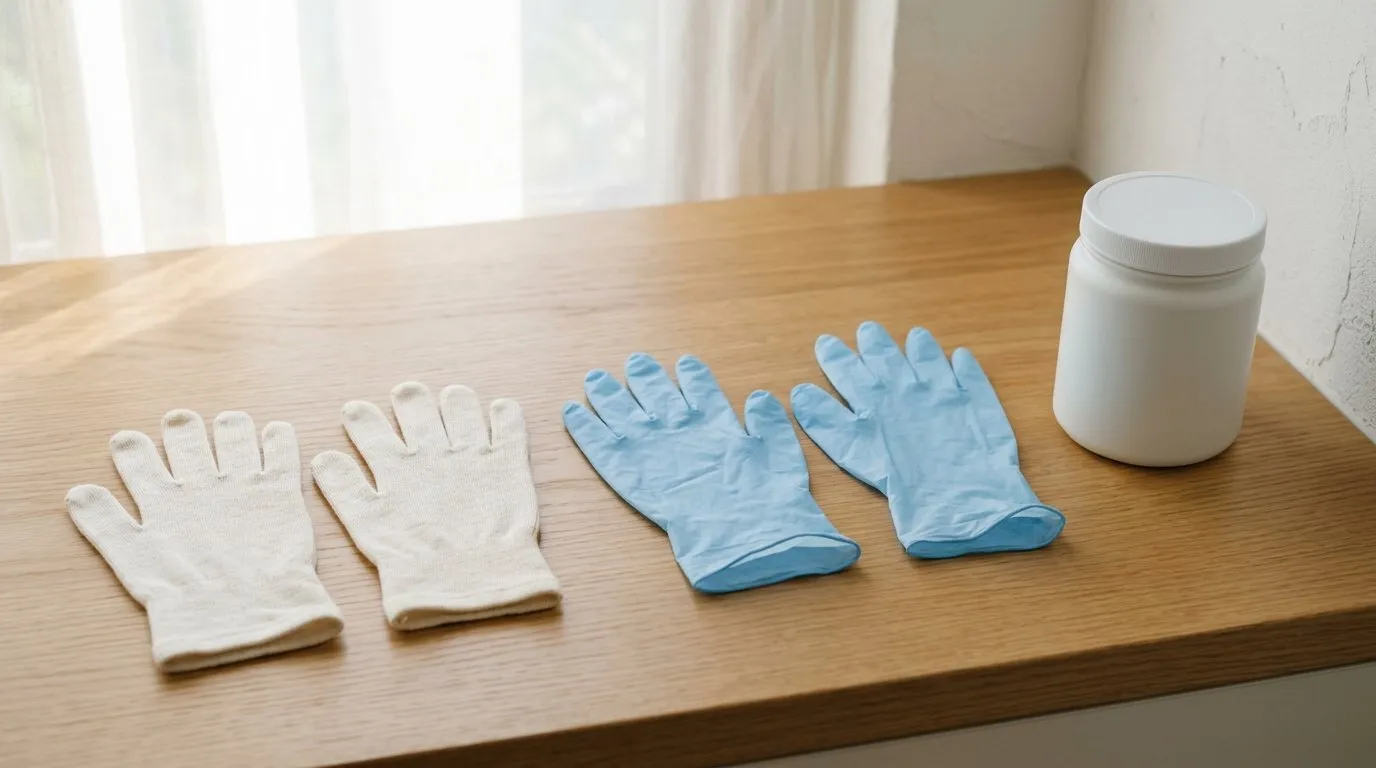
For most people with hand eczema, daily barrier protection is just as important as medical treatment. Without reducing triggers, flare-ups tend to return quickly.
- Wash with cool or lukewarm water: Hot water strips natural lipids faster. Gently pat hands dry with a clean towel rather than rubbing.
- Simplify washing and choose gentle cleansers: Avoid harsh degreasing soaps or heavily fragranced hand washes, and avoid unnecessary overwashing.
- Use double-layer gloves for chores: Wear breathable cotton gloves underneath powder-free waterproof (such as nitrile) gloves to reduce rubber irritation and trapped sweat, and keep wear sessions brief.
- Moisturize immediately after drying: While skin is still slightly damp, apply a fragrance-free cream or ointment. Reapply frequently during the day and consider applying a thicker layer under cotton gloves overnight.
- Limit direct contact with raw foods, citrus, and alcohol: Wear gloves when handling onions, garlic, chili, citrus, or raw meats. Alcohol sanitizers can worsen stinging and cracks; always moisturize afterward.
- Do not pick peeling skin or pop blisters: Pulling loose skin creates micro-tears that hurt more and raise the risk of bacterial infection.
How Do Dermatologists Diagnose and Treat Hand Eczema?
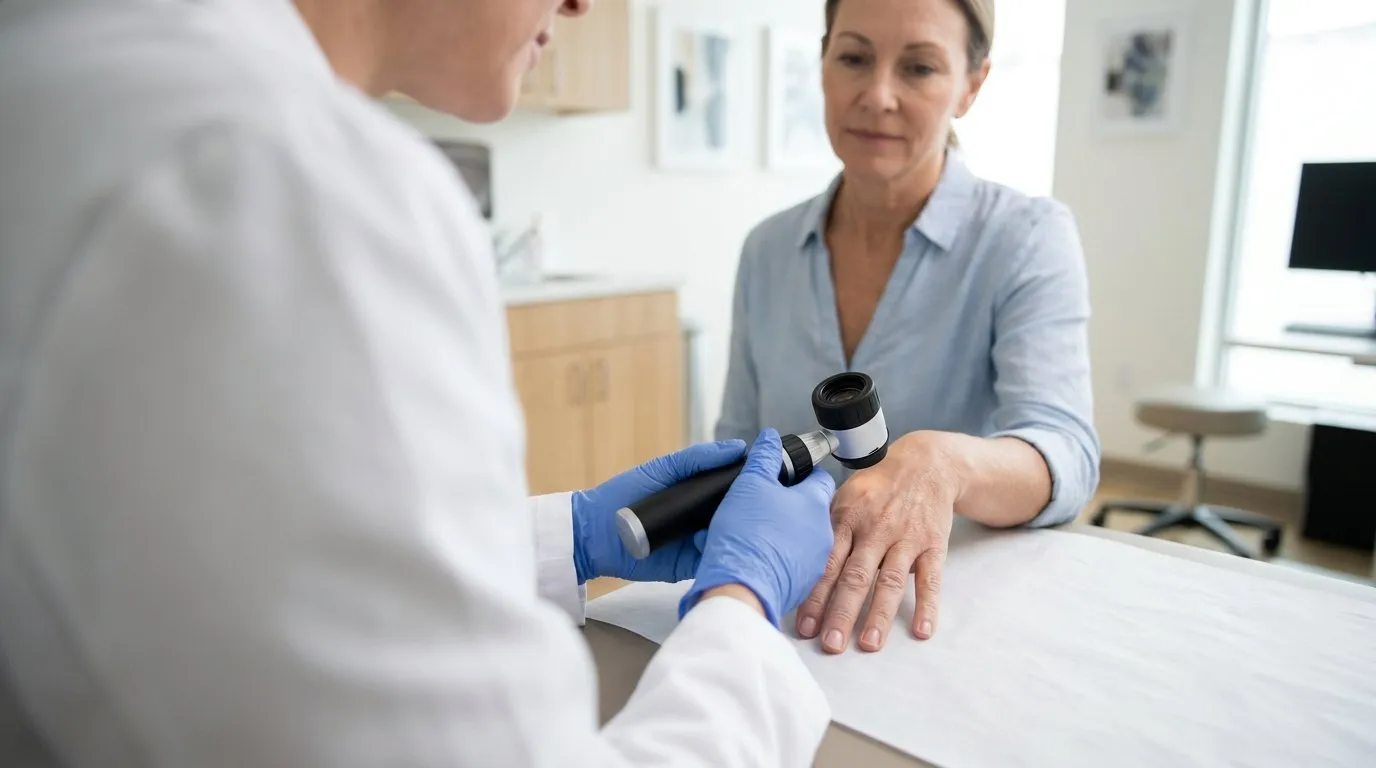
During a visit, a dermatologist reviews your occupation, washing habits, glove materials, and allergy history, and examines your hands, nails, and feet.
If a fungal infection is suspected, a painless skin scraping may be checked under a microscope. For persistent or recurrent cases, patch testing may be discussed to identify specific contact allergens.
Importantly, applying topical steroids to an unrecognized fungal infection (tinea manuum) may temporarily reduce redness while allowing the fungus to spread. Treatment plans are individualized based on severity, thickness, and fissures:
- Topical anti-inflammatory therapy: Topical corticosteroids are commonly used during active flare-ups; for chronic or recurrent cases, non-steroidal topical immunomodulators (such as calcineurin inhibitors) may also be considered.
- Barrier repair moisturizers: Rich fragrance-free creams or ointments help restore damaged outer skin layers.
- Treating secondary infection: Yellow crusting, pus, or spreading warmth and swelling may require antibacterial care; confirmed tinea manuum requires antifungal therapy instead.
- Advanced options: For moderate-to-severe chronic hand eczema with limited response to standard topicals, phototherapy or systemic oral therapies may be discussed.
Medication choice, strength, and duration vary by individual and should always be guided by a dermatologist rather than self-medicating with leftover creams.
What Are Common Myths About Hand Eczema?
Myth 1: Hand eczema peels because hands are not washed cleanly enough
The opposite is true. Peeling and cracking come from a damaged skin barrier, not dirt. Overwashing, hot water, or exfoliating scrubs usually worsen inflammation and fissures.
Myth 2: Hand cream alone will always clear hand eczema
Very mild dryness may settle with irritant avoidance and frequent moisturizing, but active redness, intense itching, oozing, or deep cracks usually require a dermatologist to evaluate short-term anti-inflammatory treatment.
Myth 3: Hand eczema is contagious
Plain hand eczema is a non-contagious inflammatory condition and does not spread through shaking hands or sharing utensils. However, tinea manuum or secondary bacterial infection can spread, so an exam is wise when unsure.
When Should You See a Dermatologist for Hand Eczema?
Schedule a dermatology evaluation promptly if you notice any of the following, or explore more skin guides in our health library:
- Cracks that keep bleeding, oozing fluid, or interfering with daily tasks and sleep.
- Yellow crusting, pus, spreading redness, warmth, swelling, or fever suggesting bacterial infection.
- Peeling mainly on one hand with clear borders, or concurrent athlete’s foot or nail fungus.
- Symptoms that persist or worsen despite 2–4 weeks of consistent glove use and moisturizing.
- Ongoing workplace exposure to chemicals, detergents, or metals where contact allergy is suspected.
Hand Eczema FAQ
Is hand eczema contagious?
No. Simple hand eczema is an inflammatory barrier condition and cannot spread to family members. However, fungal hand infection (tinea manuum) can look similar and is contagious, so see a dermatologist if peeling is mainly on one hand or accompanied by athlete’s foot.
Does hand eczema go away on its own, or does it keep coming back?
Very mild dryness may settle if you strictly reduce water/detergent exposure and moisturize consistently, but established redness or deep fissures rarely clear on their own. Because triggers are part of daily life, a single course of care cannot promise permanent freedom from flares, yet most people achieve steady comfort with trigger control and dermatology follow-up.
Can I use alcohol hand sanitizer with hand eczema?
Try to minimize alcohol sanitizers during flare-ups, as alcohol evaporates moisture and stings open cracks. When sanitizer is unavoidable, apply a fragrance-free moisturizer right after your hands dry.
Which is better for hand eczema: lotion, cream, or ointment?
Watery lotions evaporate quickly and offer weaker protection. For hand eczema or cracks, fragrance-free thicker creams or ointments (such as petroleum jelly) applied while skin is slightly damp usually lock in moisture better. Ask your dermatologist what suits your skin best.
Can I stop prescription cream as soon as my hands look better?
Even after redness fades, the deeper skin barrier still needs time to rebuild. Follow your dermatologist’s plan for tapering and keep up glove protection and moisturizing rather than stopping abruptly or using prescription creams indefinitely without review.
Why do my hands itch more when wearing rubber gloves?
Two common reasons are trapped sweat irritating damaged skin and allergy to latex or rubber chemicals. Switching to cotton inner gloves beneath powder-free nitrile or vinyl gloves—and keeping wear times short—often helps.
Health Education References
- American Academy of Dermatology (AAD) – Hand eczema
- DermNet NZ – Hand dermatitis
- NHS – Contact dermatitis
Doctor’s Note: Managing Hand Eczema Starts with Reducing Irritants, Moisturizing, and Confirming the Diagnosis
Recurring dry, peeling hands are not always simple dryness—contact allergies or fungal infections can look very similar. If symptoms persist despite careful hand care or if painful cracks and oozing appear, visit a dermatologist for an accurate evaluation and tailored plan.
This article is for health education only, is not a pharmaceutical advertisement, and does not promote or sell specific medications. Individual diagnosis and treatment require an in-person evaluation by a qualified physician.
Dermatology Medical Team

Dr. Tseng