

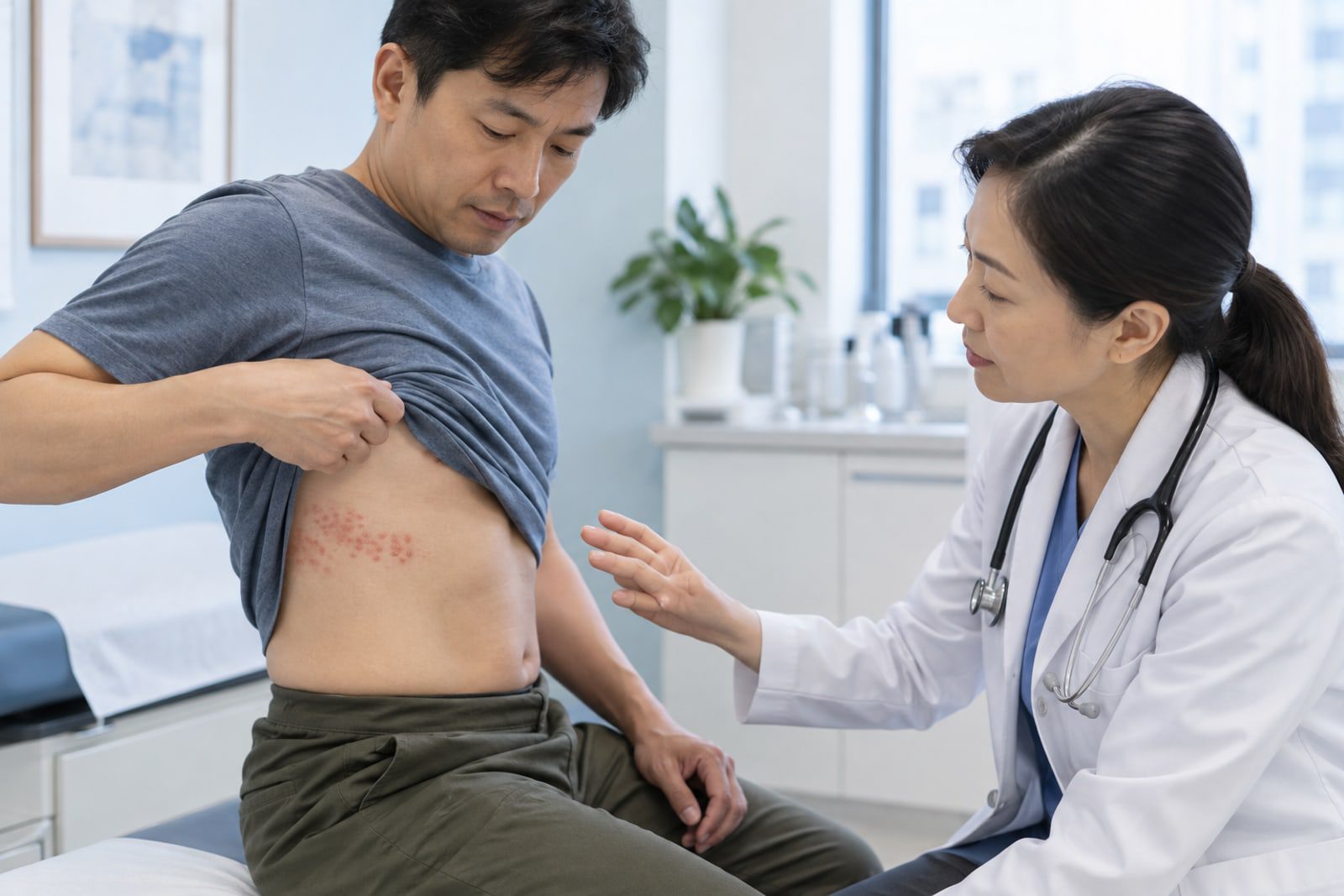
Shingles often starts with tingling, burning, itching or unusual sensitivity on one side of the body or face, followed by grouped blisters along a nerve distribution. Not every painful blistering rash is shingles, and symptoms near the eye or ear need prompt medical assessment.
It is caused by reactivation of the varicella-zoster virus that remains in sensory nerves after chickenpox. Risk and complications increase with age or altered immunity, although younger adults can also develop shingles.
Key points: One-sided band-like pain or burning followed by grouped blisters is an important clue. Assessment is most useful early, with the first 72 hours after rash onset often an important window for discussing antiviral treatment. Seek urgent care for eye, nose or ear involvement, rapid spread, vision or hearing changes, facial weakness, fever or reduced immunity.
What is shingles and why does it occur?
After chickenpox, varicella-zoster virus can remain dormant in sensory nerve ganglia. If it reactivates and travels along a nerve to the skin, shingles can develop.
An episode does not mean poor hygiene and cannot be explained only by tiredness. Older adults and people whose immunity is affected by illness or treatment require particular attention to atypical or widespread disease.
What are the early and typical symptoms of shingles?
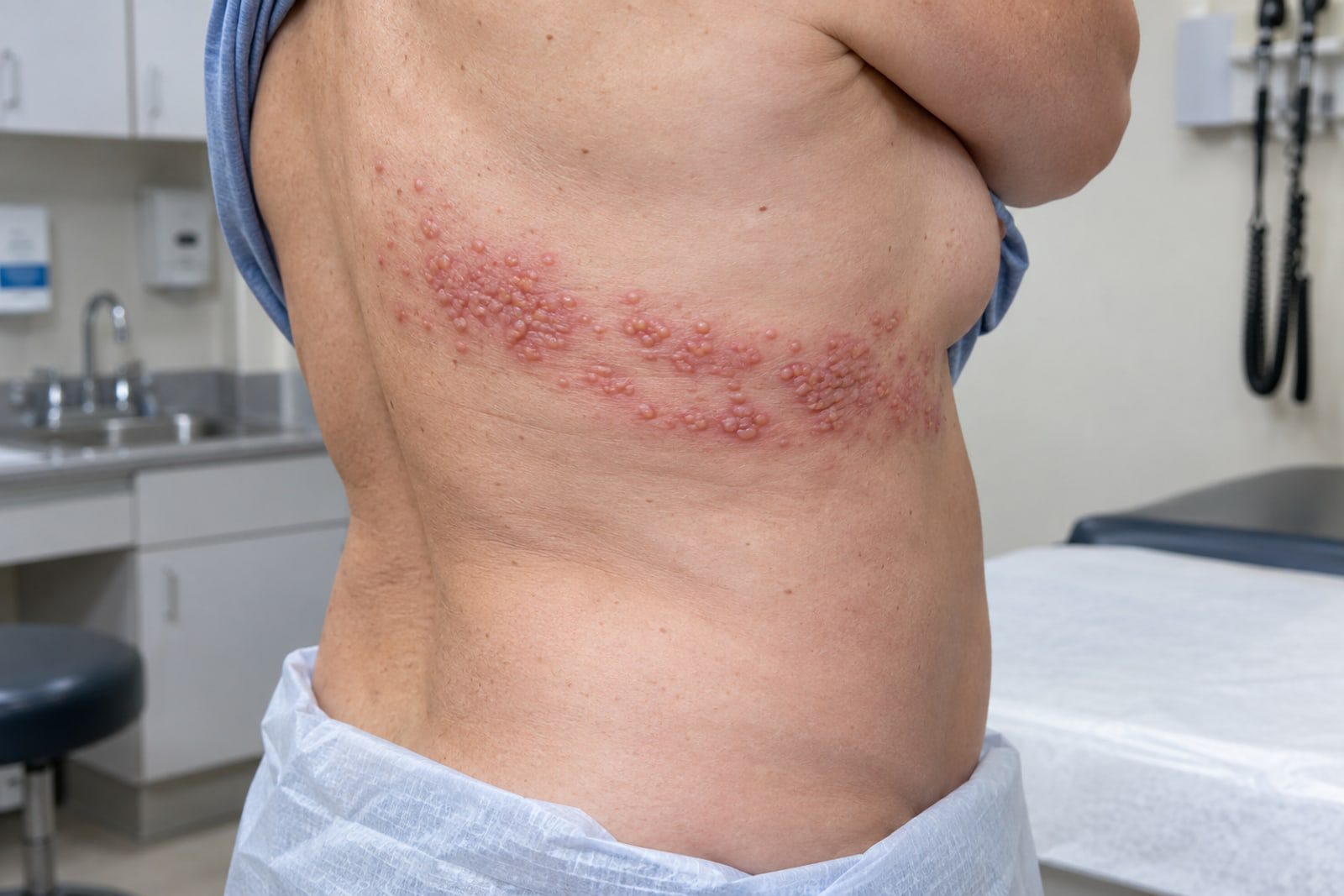
Some people notice tingling, burning, numbness, itching or marked touch sensitivity several days before a visible rash. Clothing may feel painful, and fatigue, headache or mild illness can occur.
The rash usually affects one or two neighboring dermatomes on one side of the chest, abdomen, back or face and usually does not cross the midline. Grouped blisters then appear and gradually dry and crust.
- A one-sided band or patch rather than an evenly widespread rash
- Pain, burning or touch sensitivity that may be more prominent than itch
- Clusters of similarly sized blisters on reddened skin
- Pain or tingling that may continue after the skin clears
How is shingles distinguished from other blisters or rashes?
Distribution, type of pain, sequence of symptoms and exposure history help the clinician decide. A photograph alone cannot always confirm the diagnosis, especially before blisters appear or when the rash is widespread or atypical.
| Possible condition | Common distribution and sensation | Useful distinction |
|---|---|---|
| Shingles | One side of the body or face; burning or pain followed by grouped blisters | Usually dermatomal and does not cross the midline; nerve pain may persist |
| Herpes simplex | Recurrent clusters near the lips or another specific site | Often recurs in a similar location and is not necessarily band-shaped |
| Contact dermatitis | Itchy redness and blisters where a substance contacted skin | Itch may dominate; can be bilateral or match the contact pattern |
| Dyshidrotic eczema | Deep small blisters on finger sides, palms or soles | Usually very itchy and does not follow a one-sided trunk nerve |
| Bacterial infection | Redness, swelling, drainage, pus or crust | Rapid spread, fever or marked tenderness needs prompt assessment |
What tests may be needed for suspected shingles?
A typical one-sided dermatomal blistering rash can often be diagnosed from history and examination. The clinician asks when pain began, whether new lesions are forming, whether the eye or ear is involved, and about immune status.
When the appearance is unclear, blisters are absent, disease is widespread or another viral eruption is possible, a sample from blister fluid, the lesion base or a crust may be tested by PCR. Blood tests are not routinely required for everyone.
Why should shingles be assessed early?
Management depends on rash timing, location, pain, age, immune status and complication risk. Antiviral treatment is generally most useful when considered early; 72 hours is an important reference point, but ongoing new lesions, eye or ear involvement, severe pain or reduced immunity still warrant assessment later.
The clinician also considers acute pain, sleep and wound care. Do not combine medicines on your own, apply unidentified products to blisters, or stop prescribed treatment early because pain has improved.
For these warning signs, review Ruianc Clinic dermatology services.
Is shingles contagious and how can a household reduce risk?
Contact with a person who has shingles does not directly give someone shingles. A person without immunity to chickenpox can acquire chickenpox after contact with blister fluid.
Until every blister has dried and crusted, cover the rash, avoid scratching, wash hands and do not share items that touch the lesions. Avoid close contact with susceptible pregnant people, premature or low-birth-weight infants and people with reduced immunity.
For more skin-health information, visit the Ruianc Health Library.
How should the rash and pain be cared for at home?
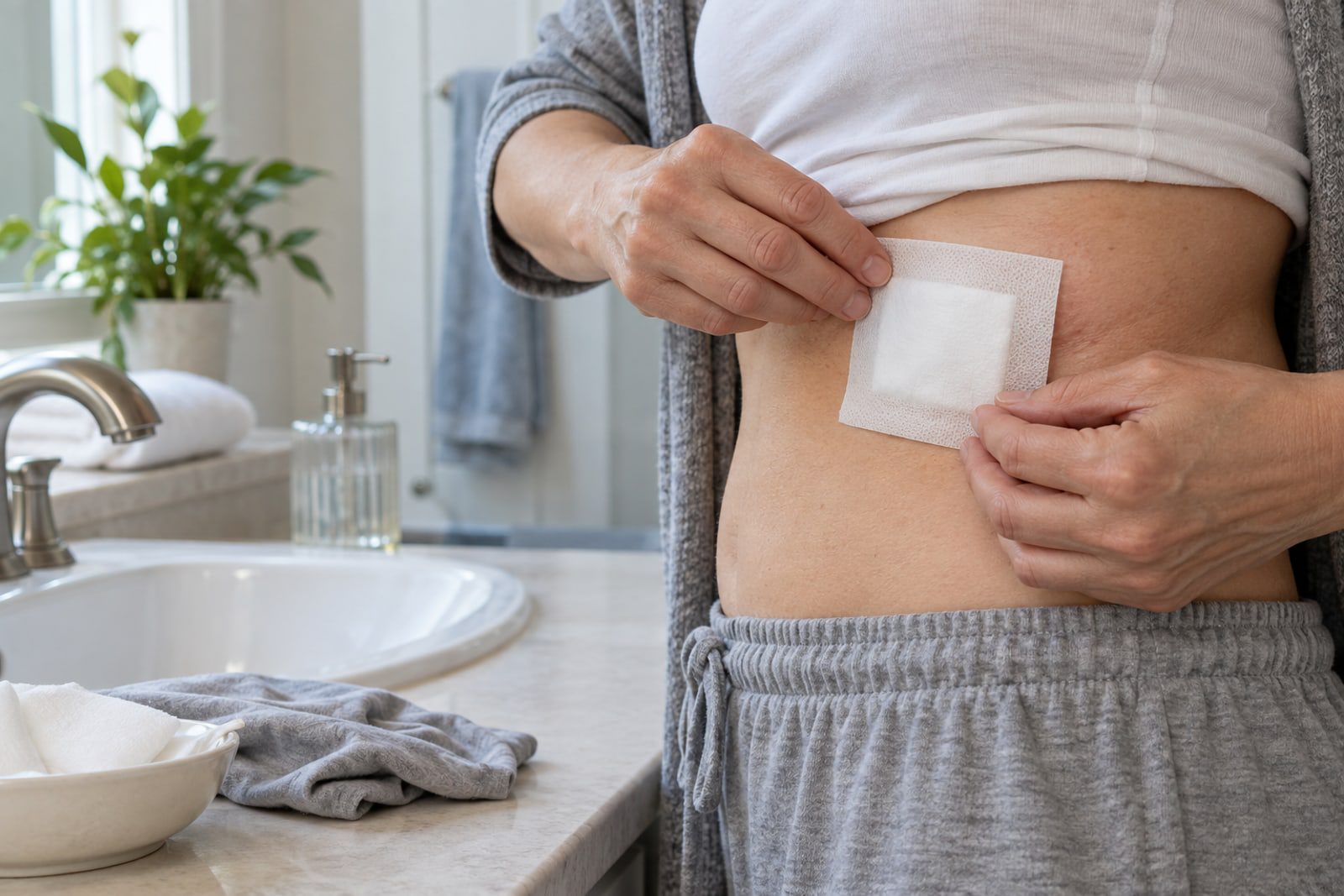
Keep lesions clean and dry and reduce rubbing or scratching. Wear soft, loose clothing and use a clean, breathable, non-stick dressing when needed.
Do not deliberately pop blisters or repeatedly use harsh disinfectants, home remedies or unidentified creams. Pus, odor, spreading redness or fever requires reassessment for secondary infection.
- Clean gently and pat dry without scrubbing
- Follow the pain plan and record sleep, pain distribution and new lesions
- Use a clean cool compress briefly; do not place ice directly on skin
- Maintain rest and regular meals; supplements do not replace necessary treatment
Which warning signs need prompt medical care?
Rash near the eye, forehead, tip of the nose or ear can affect vision, hearing or facial nerves. Widespread lesions in a person with reduced immunity also need prompt assessment.
- Rash around the eye, forehead or nose tip with red eye, eye pain, light sensitivity or vision change
- Blisters in or around the ear with hearing change, vertigo or one-sided facial weakness
- Rapid spread across several areas or many blisters throughout the body
- High fever, confusion, severe headache, stiff neck or limb weakness
- Reduced immunity, pregnancy or treatment that affects immune function
- Pus, spreading redness or pain that severely disrupts sleep and daily activity
Can pain continue after the rash heals?
Burning, stabbing, numbness or pain from light touch can continue after crusts have healed. Pain lasting about 90 days from rash onset may be considered postherpetic neuralgia.
Persistent pain should not simply be endured. Record its location, severity and effect on sleep and activity for follow-up; after recovery, discuss prevention according to age, health and history.
Sources for this shingles guide
- U.S. CDC: Clinical Features of Shingles
- U.S. CDC: About Shingles
- American Academy of Dermatology: Shingles self-care
- Taiwan CDC: Varicella and herpes zoster transmission
Yes. One-sided tingling or burning can precede the rash by several days, but nerve, muscle and internal conditions can cause similar pain, so symptoms alone are not diagnostic.
No. Contact with blister fluid can cause chickenpox in someone without immunity to it, not immediate shingles.
Gentle washing is usually reasonable. Avoid prolonged hot water, scrubbing and breaking blisters; ask a clinician about care if lesions are extensive or draining.
No. This can increase drainage, bacterial infection and contact with infectious fluid. Large or persistently draining blisters should be assessed.
For many people it gradually improves, but it may persist for weeks or months. Pain affecting sleep or daily life needs follow-up.
Yes. A recurrent blistering eruption should still be reassessed because other conditions can recur in the same area. Discuss prevention after recovery.
Doctor’s note: assess one-sided pain with blisters early
Early shingles may cause pain before a rash and can resemble other skin or nerve conditions. Eye or ear involvement, rapid spread, reduced immunity or significant pain should be assessed promptly in person.
This article provides general health education and is not an advertisement or an individual diagnosis. Examination, treatment and prevention require a clinician’s direct assessment.
Dermatology team

Dr. Tseng