

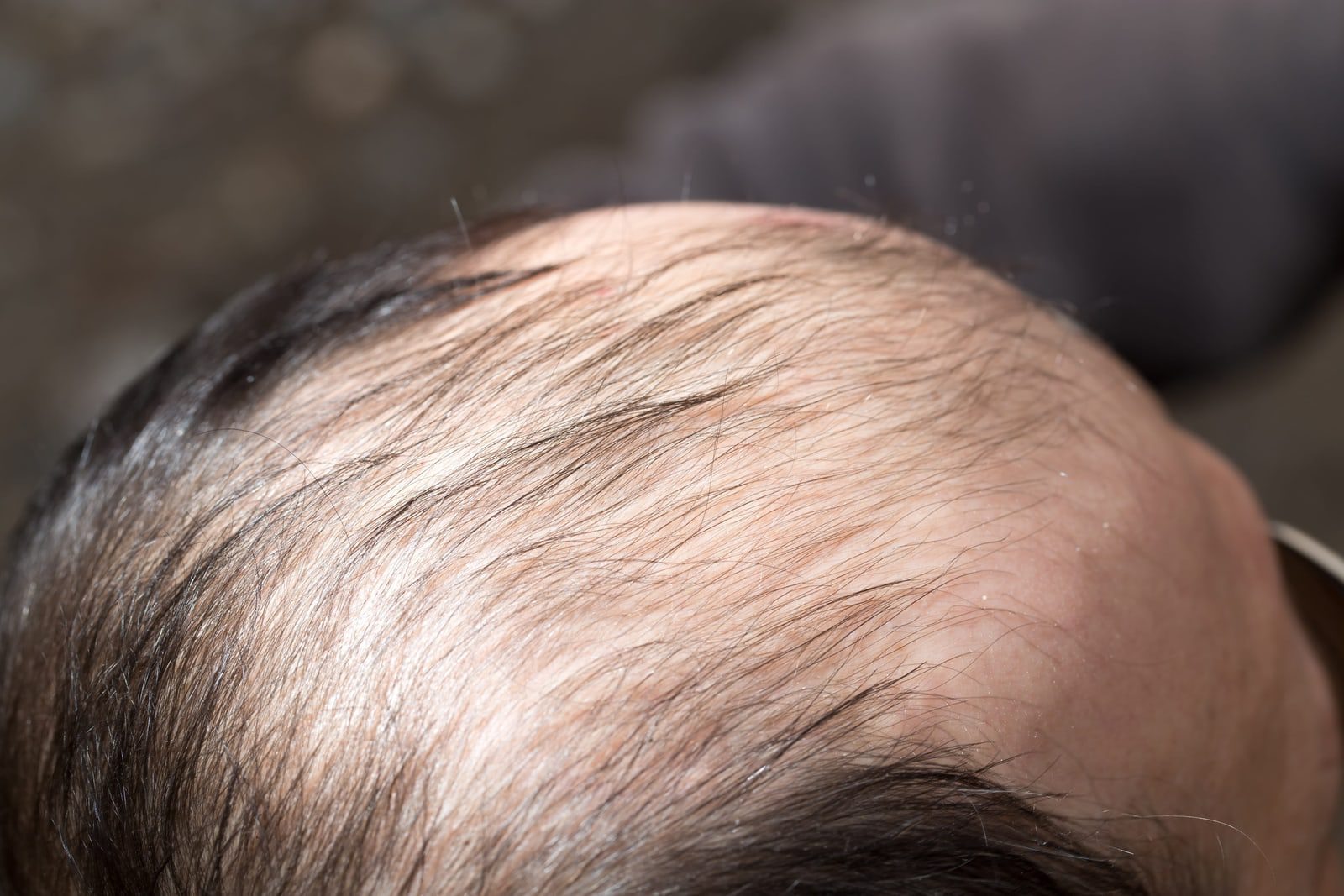
Topical 5α-reductase inhibitor therapy applies the same pharmacologic class directly to the scalp. Its main differences from oral therapy are the route, systemic exposure, scalp tolerability and daily routine; topical use is not automatically better and does not mean zero absorption.
Male pattern hair loss first needs confirmation that recession or crown thinning reflects follicle miniaturisation. Alopecia areata, telogen effluvium, scalp inflammation and other causes require different care, so prescription treatment should not be selected from appearance alone.
Key points: Oral and topical 5α-reductase inhibitor therapies address the same hormonal pathway, but their administration, possible adverse effects and practical requirements differ. Local delivery does not mean zero absorption. Do not increase or combine treatment without an in-person assessment of the diagnosis, scalp and individual safety factors.
Why are DHT and follicle miniaturisation linked to male pattern hair loss?
Male pattern hair loss is associated with inherited susceptibility and follicle sensitivity to androgens. Testosterone can be converted by 5α-reductase into DHT, and susceptible follicles may gradually miniaturise.
Miniaturisation produces progressively finer and shorter hairs, often with temple recession, an M-shaped hairline or crown thinning. Review early signs and stages of male pattern hair loss.
- Slow recession at both temples, forming an M-shaped hairline.
- Increasing visibility of the scalp around the crown whorl.
- Mixed shaft diameters with more fine, short hairs in the same area.
- Progression over months or years rather than sudden heavy shedding everywhere.
What is topical 5α-reductase inhibitor therapy?
Topical therapy places a prescription 5α-reductase inhibitor class on the affected scalp. The aim remains to reduce the effect of the DHT pathway on follicle miniaturisation; it is a different delivery route, not a separate hair-growth mechanism.
One design goal of local delivery is to concentrate treatment at the scalp and reduce systemic exposure, but skin can still absorb medication. Formulation, vehicle and treatment area vary, so research findings should not be applied to compounded or unverified products.
How do oral and topical 5α-reductase inhibitor therapies differ?
The pharmacologic target is similar, but the routes are not interchangeable. A clinician considers convenience, scalp condition, general health, previous response and the ability to use and monitor treatment consistently.
| Feature | Oral therapy | Topical therapy |
|---|---|---|
| Route | Absorbed orally into systemic circulation | Applied directly to a defined scalp area |
| Target | Inhibits 5α-reductase and reduces DHT-pathway effects | Targets the same 5α-reductase and DHT pathway |
| Systemic exposure | Systemic administration | Designed to reduce exposure, but not zero absorption |
| Use | Regular prescription use and follow-up | Monitor dryness, inflammation, treated area and contact transfer |
| Common considerations | Health conditions, interactions and possible adverse effects | Scalp tolerance, consistent technique and local irritation |
| Medical assessment | Required | Required |
Why does topical use not mean no systemic effects?
The scalp can absorb topical prescriptions into the circulation. Exposure depends on the formulation, skin barrier, treated area, injury or inflammation and technique, so the word topical does not prove that treatment is risk-free.
Persistent redness, itch, burning, scaling or a new concerning systemic symptom should prompt medical contact rather than self-adjustment. Pregnancy exposure within the household, children, scalp wounds or inflammation also require attention to handling, cleansing and storage instructions.
Is topical 5α-reductase inhibition the same as other scalp treatments?
Not necessarily. Treatments may all be placed on the scalp yet act through different mechanisms. This class addresses the 5α-reductase and DHT pathway, while other topical therapies may target the hair cycle or other processes.
The useful question is not simply which product is stronger. The diagnosis comes first, followed by a comparison of targets, limitations and monitoring.
Who can discuss local scalp therapy with a doctor?
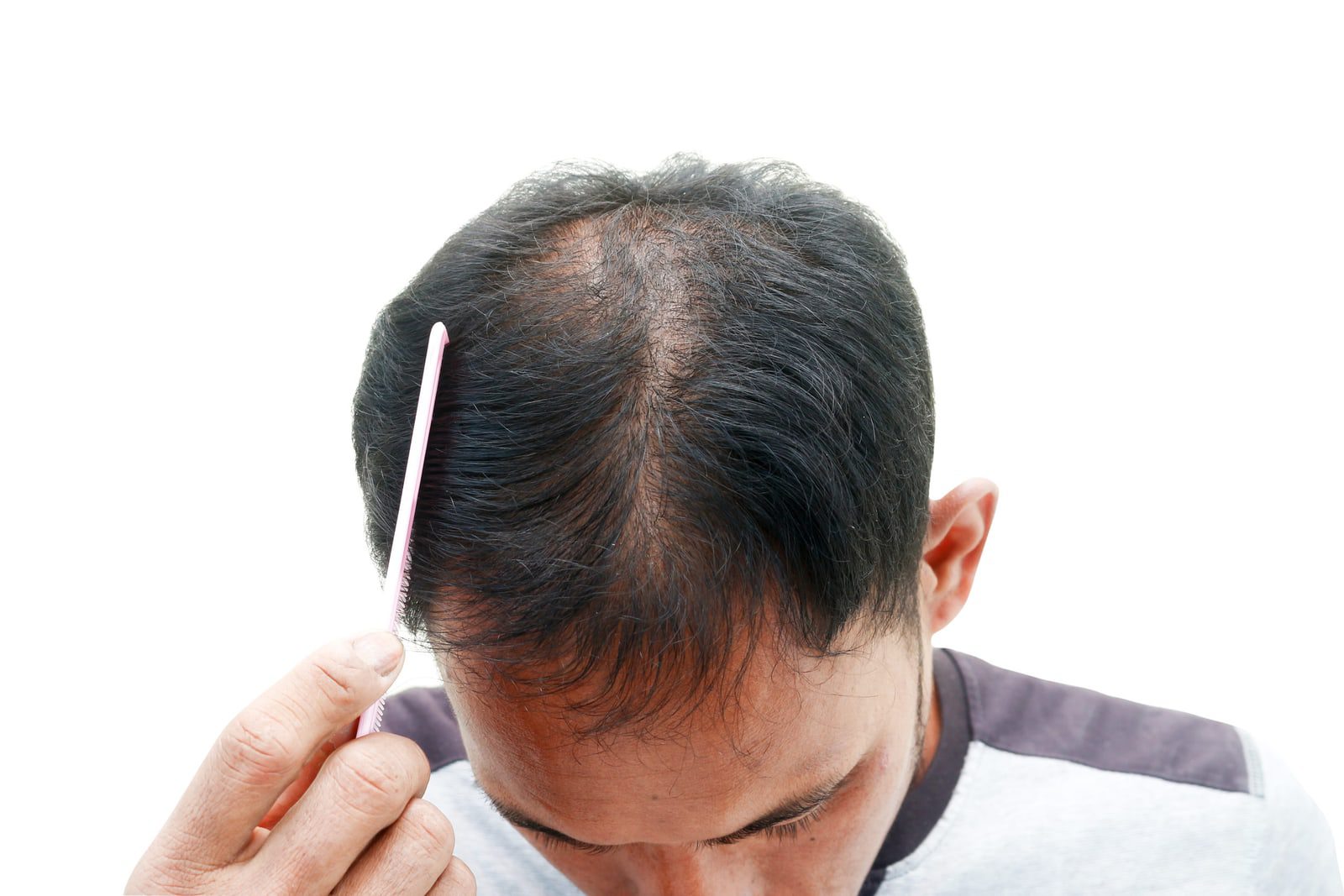
Men with medically confirmed pattern hair loss who want to compare oral and local delivery can discuss their concerns and routine at a consultation. This does not mean every M-shaped hairline or thin crown is suitable.
- Gradual hairline or crown thinning that may reflect miniaturisation.
- Previous hair-loss treatment that needs a fresh review of method and goals.
- Concerns about oral therapy and a wish to understand local limitations.
- Ability to apply consistently to the specified scalp area and watch tolerance.
- Willingness to follow up and avoid unverified products, extra doses or self-combination.
Sudden diffuse shedding, a sharply defined bald patch, marked redness, pain, discharge or scale should be assessed for another condition first.
How are oral and topical options chosen at a hair-loss consultation?
No route suits everyone. The clinician examines the hairline, crown density, shaft-diameter diversity and scalp, and reviews the course, family history, health, current treatment, previous response and the adverse effects that matter most to the patient.
Monitoring may use standardised photographs, distribution and trichoscopy instead of judging only shower shedding. See the hair-loss clinic assessment process.
For more health education in the same language, visit the Health Library.
Not necessarily. Scalp application does not make mechanisms identical. This prescription class targets the 5α-reductase and DHT pathway and requires diagnosis first.
No. Local delivery aims to reduce systemic exposure, but the scalp can absorb medication and the degree varies with formulation, area and skin condition.
No. Diagnosis, severity, scalp condition, health, previous response and the ability to apply consistently all need review.
Do not combine them independently. Their pharmacologic direction overlaps, so necessity, exposure and risk require individual medical assessment.
No. Telogen effluvium, inflammation and other disorders can look similar or coexist, so examination and trichoscopy may be needed.
If redness, itch, burning, scaling or irritation persists, do not add more or mix products. Record the timing and area and contact the clinic.
Doctor’s note: confirm the hair-loss pattern before comparing routes
Topical does not mean zero absorption, and oral therapy is not automatically unsuitable. The consultation weighs miniaturisation, extent, scalp condition, previous response, health factors and daily routine before discussing a treatment class and monitoring plan.
This article provides health education, is not a pharmaceutical advertisement, and does not promote or sell a specific medicine. Prescribing must follow the latest approved label and an in-person medical assessment.
Hair-loss medical team

Dr. Tseng