

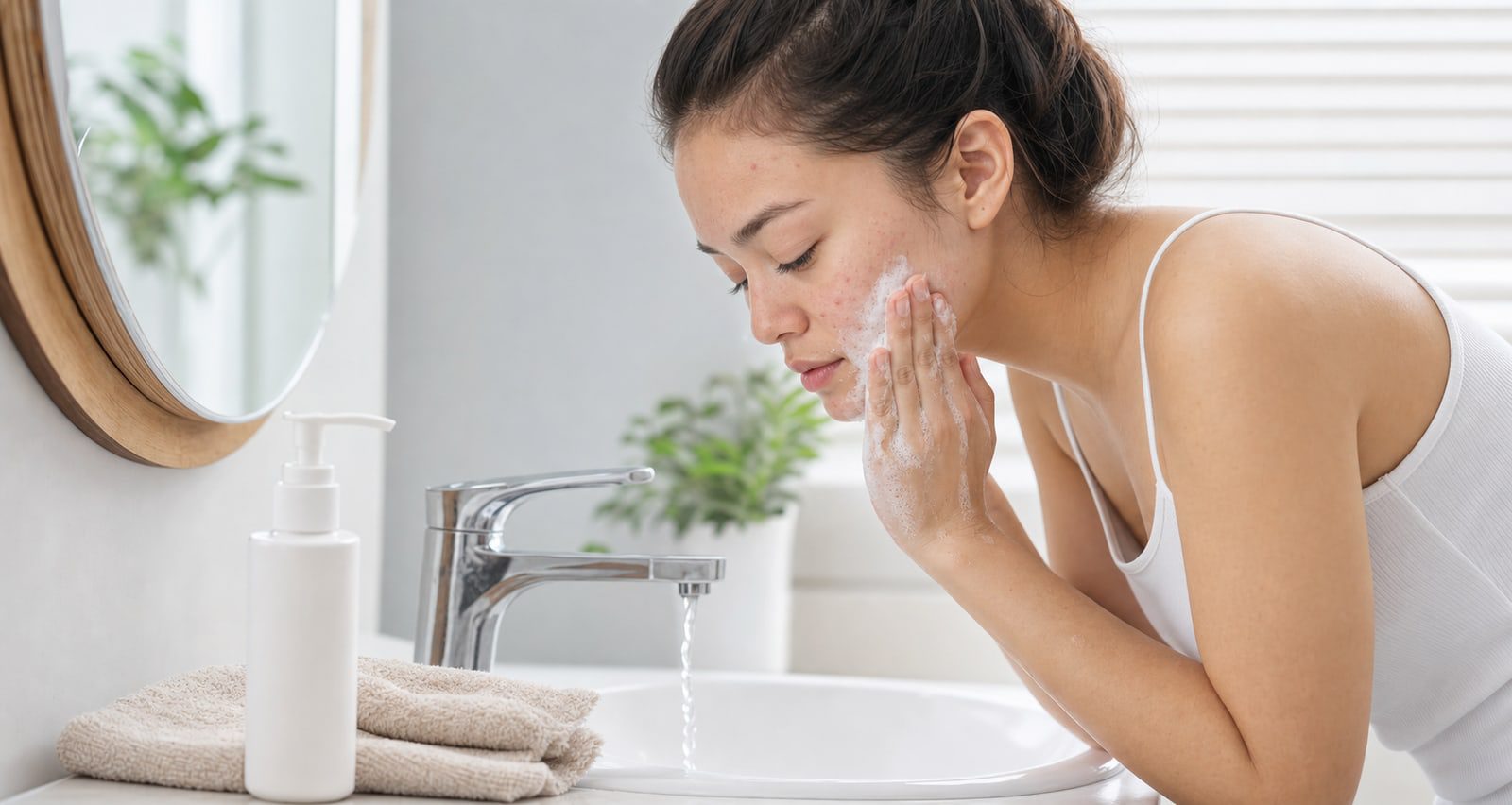
Acne that keeps returning usually has more than one cause and does not mean the skin is dirty. Increased sebum, blockage at the follicle opening, changes in the skin microbiome and inflammation can interact; hormones, family tendency, stress, sleep, friction and products may change how acne behaves over time.
Separating the underlying process from possible triggers is more useful than stopping every product or scrubbing harder. Note where lesions appear, what they look and feel like, when they started and what recently changed. Recurrent pain, scarring or persistent dark marks need an in-person dermatology assessment.
Key points: Acne develops through the interaction of sebum, follicular blockage, skin microbes and inflammation. Stress, sleep, menstrual cycles, friction and products may worsen existing acne, but patterns vary. Seek assessment for pain, scarring or sudden worsening.
How does acne form? Four processes work together
Acne begins in the pilosebaceous unit. When more sebum mixes with skin cells that are not shed normally, the follicle opening can become blocked, forming a microcomedone before visible whiteheads, blackheads or inflamed lesions appear.
This sequence involves several interacting processes, so acne should not be blamed on bacteria or cleansing alone.
| Process | What may happen | Common appearance |
|---|---|---|
| More sebum | Oil mixes with cells inside the follicle | Oiliness and closed comedones |
| Abnormal follicular shedding | The follicle opening becomes blocked | Whiteheads and blackheads |
| Microbiome change | The blocked environment alters microbial balance | Comedones may become red |
| Inflammation | Local redness, swelling, warmth or pain develops | Papules, pustules or deep nodules |
Who is more likely to develop acne? Do hormones, age and family history matter?
Hormonal changes during puberty can increase sebaceous gland activity, which is why acne often begins in adolescence. Adults can also have recurring acne related to menstrual cycles, stress, sleep changes or other hormonal influences.
A family history of marked or deep acne may raise personal susceptibility, but it does not mean acne is inevitable. Sudden adult-onset acne with irregular periods, hair changes or other symptoms should be assessed rather than self-diagnosed as a hormone problem.
Can stress, poor sleep or menstrual cycles make acne worse?
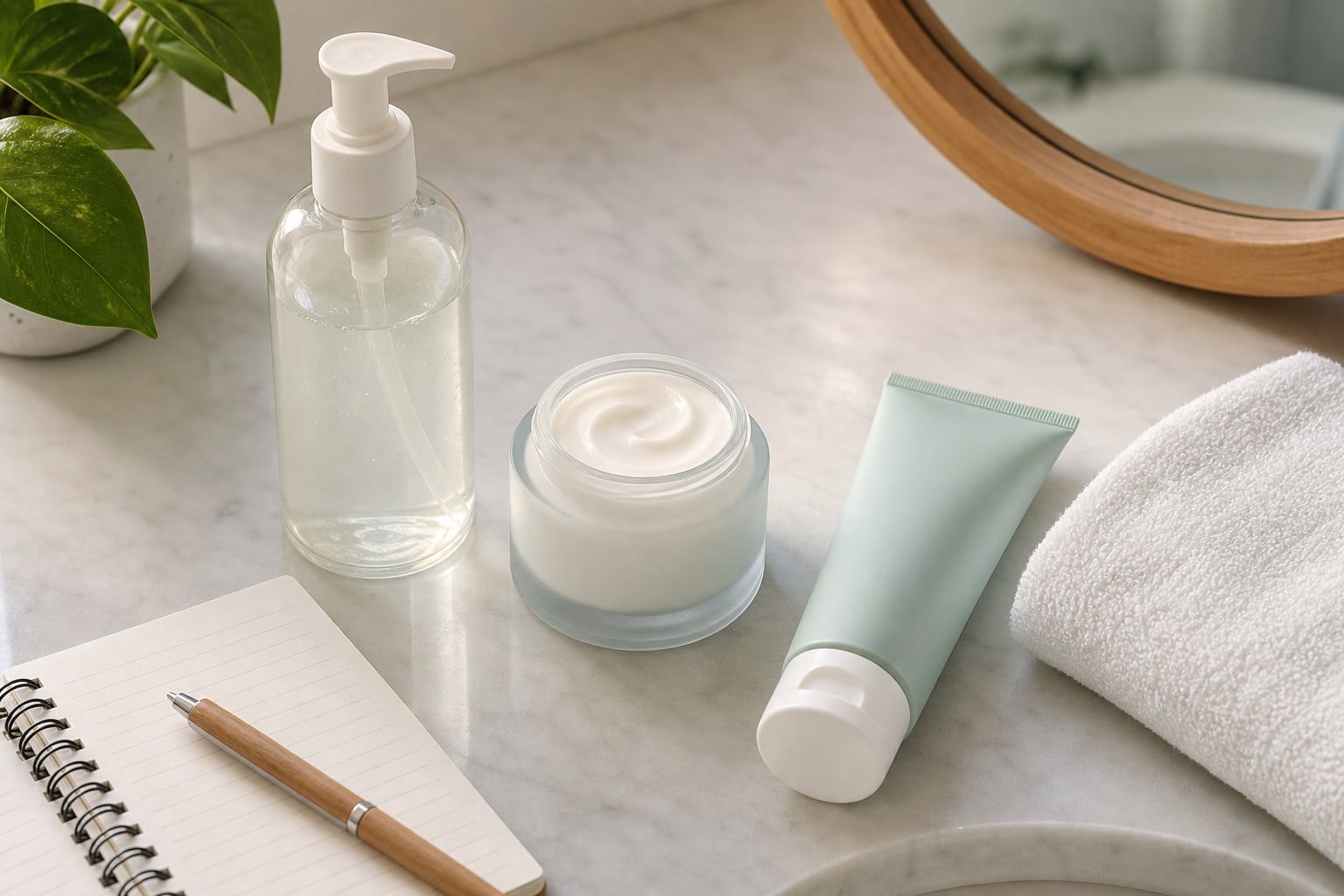
They can, but their impact varies. Stress does not necessarily create acne by itself, yet it may destabilise existing acne. Poor sleep may also occur alongside changes in routine, diet or skincare, while menstrual hormone shifts can affect some people’s chin and jawline acne.
Track lesion location, menstrual timing, sleep, stress, sweating, mask or helmet friction and new products for two to four weeks. Change one or two things at a time so any repeated association is easier to recognise.
| Possible trigger | What to observe | Gentle adjustment |
|---|---|---|
| Stress and sleep | Flares during busy or late-night periods | Keep a steadier routine and avoid touching lesions |
| Menstrual cycle | Similar areas flare before or during periods | Record the pattern for the next appointment |
| Heat and friction | Mask, helmet or hair-contact areas worsen | Clean contact items and reduce repeated rubbing |
| New skincare or hair products | Lesions cluster where a new product touches | Pause recent additions and reintroduce separately |
Do fried foods, chocolate or milk always cause acne?
No single food causes acne in everyone, and evidence does not support one specific acne diet for every patient. Overall eating patterns, individual metabolism and other habits may matter, but one breakout is not a reason to remove several food groups long term.
If a food seems related, record when it was eaten and how the skin changed while keeping meals balanced. Extreme restriction should not replace medical assessment; discuss any long-term exclusion with a doctor or nutrition professional.
Is acne caused by dirty skin? Four common myths
- Myth 1: washing harder prevents acne. Scrubbing, frequent exfoliation and harsh cleansers may damage the skin barrier.
- Myth 2: blackheads are dirt trapped in pores. Their dark colour mainly develops when material in the follicle is exposed to air.
- Myth 3: very dry skin means acne is improving. Dryness and peeling do not prove improvement; moisturiser and sunscreen still need to suit the skin.
- Myth 4: squeezing makes a spot heal faster. Picking can increase inflammation, dark marks and scar risk, especially with deep painful lesions.
For cleansing, moisturising, sun protection and product choices, read 10 practical acne-care rules.
When should acne be assessed by a dermatologist?
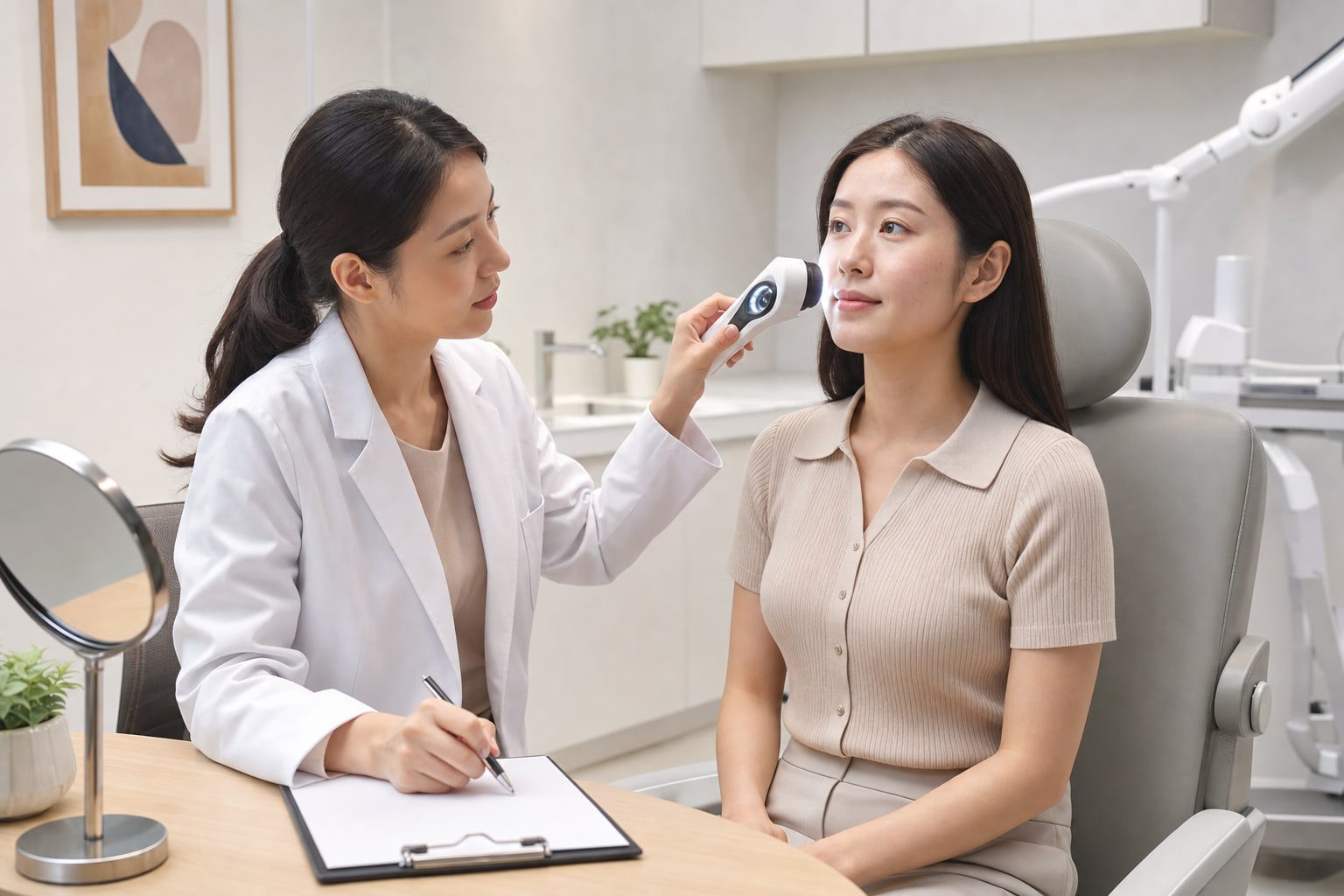
Occasional mild comedones can first be observed with gentle cleansing and no picking. Seek assessment when deep painful nodules persist, acne spreads to the chest or back, depressed or raised scars develop, dark marks remain, or the condition affects confidence, mood or social life.
Some acne-like bumps are other follicular or facial skin conditions. A dermatologist considers lesion type, distribution, duration, products and general health before discussing care and treatment.
| What you notice | Suggested next step |
|---|---|
| Repeated deep, painful or pus-filled lesions | Arrange dermatology assessment and avoid squeezing |
| New depressed or raised scars, or persistent dark marks | Discuss inflammation control and scar risk early |
| Sudden adult worsening with other body changes | Provide a full history so the need for tests can be assessed |
| Acne affects confidence, mood or daily life | Tell the clinician; it is not merely a cosmetic concern |
After understanding the causes, what should you do next?
To organise information before an appointment, see preparing for an acne appointment and follow-up; For an overview of medical approaches, read acne treatment options and assessment.
More related information: Dermatology · Health library. Whether treatment is needed and which approach fits must still be assessed in person by a qualified doctor.
No. Sebum, follicular blockage, the skin microbiome and inflammation all contribute. Excessive washing or scrubbing may irritate the skin; gentle cleansing is usually more appropriate.
Not always. Poor sleep can occur with stress and routine changes that may worsen existing acne. Track sleep and lesions to see whether the pattern repeats.
Some people develop recurring chin or jawline acne around menstrual hormone changes. Seek assessment if it is severe, changes suddenly or occurs with irregular periods or other symptoms.
No single food causes acne in everyone. A food and symptom diary may help identify a personal pattern, but long-term extreme restriction is not recommended without professional advice.
Not everyone needs testing. The decision depends on onset, distribution, menstrual history and other body changes. Explain associated symptoms to a doctor for an individual assessment.
Arrange dermatology assessment for repeated deep pain, pus-filled lesions, depressed or raised scars, or persistent dark marks. Seek support as well when acne affects mood or daily life.
Doctor’s note: identifying triggers is not the same as blaming your lifestyle
Acne usually involves sebum, follicular blockage, the skin microbiome and inflammation together. Recurrent inflammation, pain or early scarring should be assessed in person so care and follow-up can be matched to the skin condition.
This article provides health education about a medical condition. It is not a medicine advertisement and does not promote or sell a specific medicine. It cannot replace an in-person examination; diagnosis and treatment require assessment by a qualified doctor.
Dermatology team

Dr. Tseng