


Atopic dermatitis is a common, chronic, and relapsing inflammatory skin disease closely linked to skin barrier defects, immune dysregulation, and genetic predisposition. People living with atopic dermatitis often struggle with intense itching, dry peeling skin, and recurrent red rashes. Excessive scratching easily triggers an ‘itch-scratch cycle’ that further damages the epidermal barrier.
Key Takeaways: The core principle of atopic dermatitis management is ‘controlling inflammation during flare-ups and restoring the skin barrier during maintenance.’ Practice short, lukewarm baths and apply fragrance-free emollient immediately after drying. Avoid rough fabrics, sweat, and dust mites. During flare-ups, follow a stepwise medical treatment plan prescribed by a dermatologist. Seek prompt medical care if you notice yellow crusts, weeping fluid, or severe sleep-disrupting itch.
What are the common symptoms of atopic dermatitis, and how do they differ by age?
The hallmark of atopic dermatitis is persistent, intense itching that frequently worsens at night, during temperature changes, or after sweating. Chronic rubbing and scratching cause skin redness, abrasions, serous exudation, and eventual skin thickening with accentuated markings known as lichenification.
The typical distribution and appearance of rashes evolve across different stages of life:
- Infancy (around 2 months to 2 years): Commonly affects the cheeks, forehead, scalp, and outer extensor surfaces of arms and legs, often presenting with erythema, papules, tiny blisters, weeping, and crusting.
- Childhood (around 2 years to puberty): Lesions shift toward flexural folds, such as the antecubital fossae (inner elbows), popliteal fossae (behind the knees), neck, wrists, and ankles, presenting with dry, scaly, thickened, and lichenified skin.
- Adolescents and Adults: Primarily affects flexural creases, the face, periorbital area, neck, hands, and upper chest. Chronic inflammation results in pronounced skin thickening, hyperpigmentation, and persistent hand eczema.
How does atopic dermatitis differ from winter eczema and dry skin? Key differentials
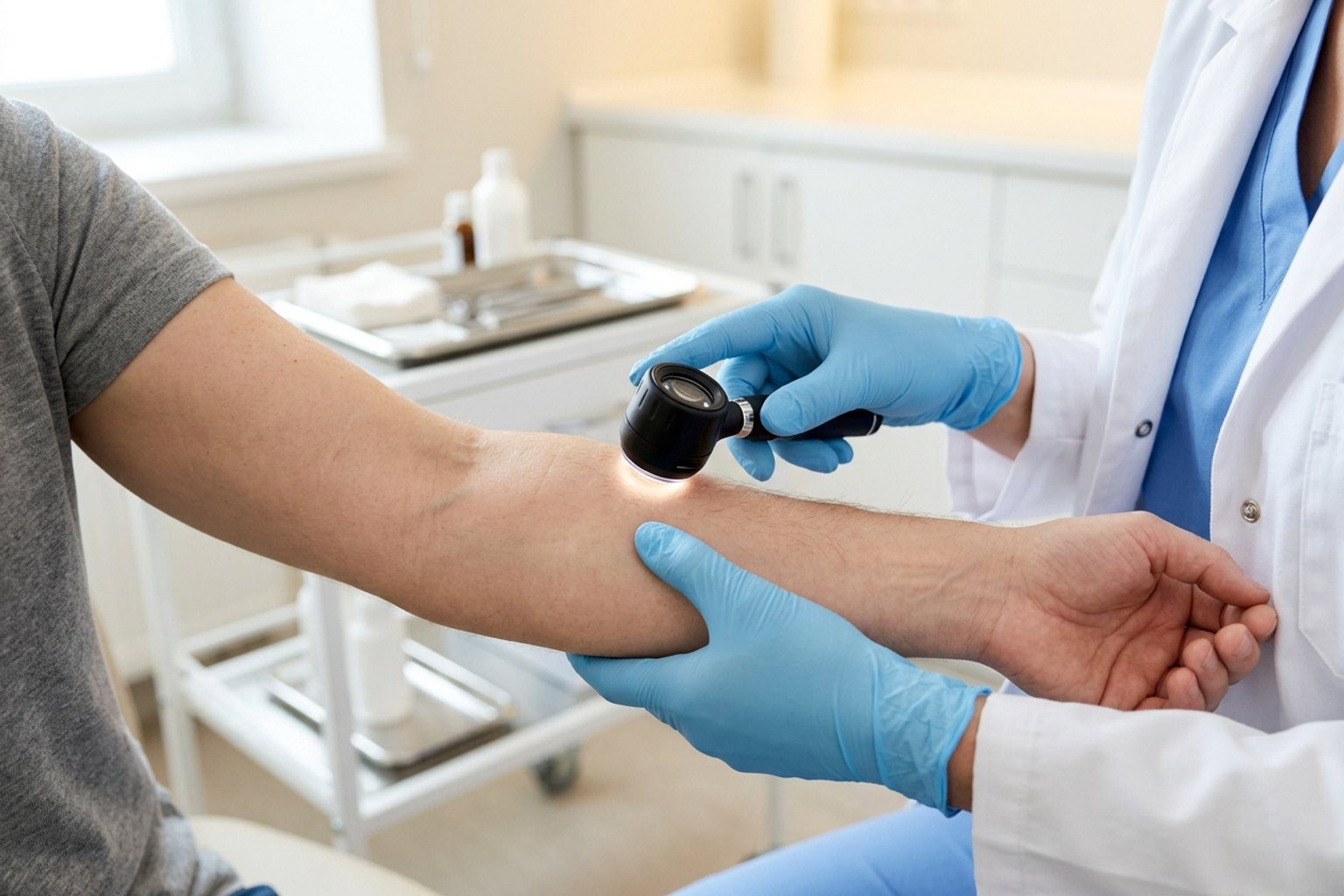
Many individuals visit dermatology clinics due to persistent dryness and itching, but not all itchy rashes represent atopic dermatitis. Different forms of eczema and inflammatory dermatoses have distinct causes, patterns, and care requirements that require professional clinical evaluation.
For instance, superficial flaking and fine fissures on the shins during cold dry months typically indicate winter eczema (asteatotic eczema); widespread tightness across changing seasons may be general dry and itchy skin. Clustered, deep-seated, intensely itchy blisters on the fingers require evaluation for dyshidrotic eczema, while greasy flaking redness around the eyebrows and nasolabial folds points toward seborrheic dermatitis or facial rosacea.
| Feature | Atopic Dermatitis | Winter Eczema (Asteatotic) | Contact Dermatitis |
|---|---|---|---|
| Primary Cause | Genetic barrier defect and immune dysregulation | Cold dry air, lipid loss, and hot water bathing | External irritants or specific contact allergens |
| Typical Areas | Elbow creases, behind knees, face, neck, wrists | Shins, outer arms, flanks, abdomen | Well-demarcated area of contact (hands, neck, belt) |
| Clinical Course | Chronic, relapsing over years, atopic family history | Seasonal, improves with warmer weather and hydration | Resolves once the triggering contactant is removed |
| Core Care | Long-term barrier repair, trigger avoidance, stepwise therapy | Gentle cleansing, thick emollients, avoid hot water | Identify and discontinue contact allergen, topical care |
What causes atopic dermatitis? Common triggers and underlying mechanisms
The pathogenesis of atopic dermatitis is multifaceted, driven primarily by an interplay between epidermal barrier disruption and immune system overactivity. When the stratum corneum is compromised, external irritants penetrate easily and incite persistent inflammation.
- Epidermal Barrier Dysfunction: Mutations in structural genes such as filaggrin lead to a deficiency in intercellular lipids (ceramides), accelerating transepidermal water loss and leaving the skin vulnerable.
- Immune System Dysregulation: A hyperactive type 2 helper T-cell (Th2) immune response releases inflammatory mediators that provoke intense pruritus and tissue swelling.
- Physical & Climate Triggers: Dry cold weather, low indoor humidity, sweat retention after exercise, hot shower water, and coarse wool or synthetic fabrics.
- Chemical Irritants: Alkaline soaps, harsh surfactants, synthetic fragrances, and aggressive household detergents that strip the skin’s acid mantle.
- Environmental Allergens: House dust mites, pet dander, mold spores, and airborne pollens that can exacerbate cutaneous inflammation.
- Emotional Stress & Sleep Deprivation: Psychological tension and poor sleep alter neuroimmune pathways, heightening itch sensitivity.
Daily at-home care guidelines: Bathing, moisturizing, and environment
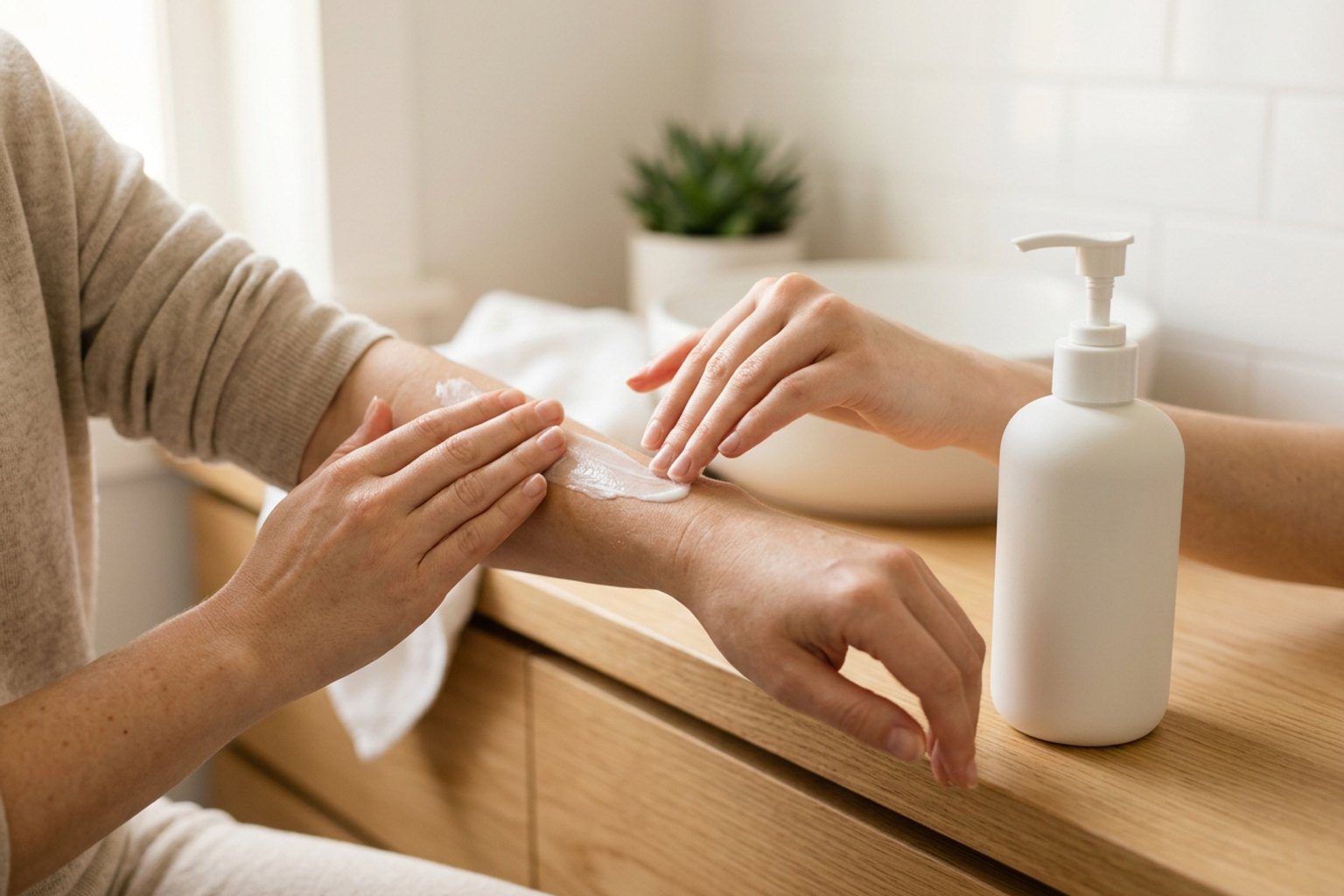
Diligent daily skin care forms the cornerstone of managing atopic dermatitis. Consistent cleansing and hydration habits significantly reduce the frequency and severity of acute flares:
Lukewarm cleansing and time control
Keep bath water comfortably lukewarm (32–37°C / 90–98°F) and limit bathing to 5–10 minutes. Avoid hot water, which strips protective lipids and worsens rebound itching. Use gentle, soap-free, fragrance-free syndet cleansers focused on sweaty areas like underarms and groin; avoid scrubbing inflamed dry skin.
Lock in moisture within the 3-minute golden window
Gently pat the skin dry with a soft towel without rubbing. Within 3 minutes after stepping out of the shower—while the skin is still slightly damp—apply a generous layer of fragrance-free, hypoallergenic emollient cream or ointment across the entire body to seal in hydration.
Choose breathable, soft cotton clothing
Wear soft, loose-fitting, pure cotton garments. Avoid rough wool, unbreathable polyester, or scratchy lace that rub against sensitive skin. Wash new clothing before wearing, snip off stiff inner tags, and promptly wipe off sweat with a clean damp cloth.
Maintain indoor humidity and reduce dust mites
Keep indoor relative humidity between 50% and 60% using a humidifier in dry months. Wash bed sheets weekly in warm water, use dust mite protective covers, and vacuum regularly to minimize allergen exposure.
Clinical treatment approaches: Stepwise medical management
Atopic dermatitis management follows a stepwise clinical approach tailored to individual severity. Treatment aims to calm acute flare-ups, relieve severe pruritus, restore barrier integrity, and maintain long-term stability:
- Baseline Care (Barrier Restoration): Daily liberal application of hypoallergenic emollients and gentle cleansing form the essential foundation in both active flare and clear maintenance phases.
- Topical Anti-Inflammatory Therapy: During active flares with erythema and papules, dermatologists prescribe appropriate-potency topical anti-inflammatory ointments or topical calcineurin inhibitors to interrupt inflammatory cascades, followed by gradual tapering.
- Systemic Supportive Adjuncts: When nighttime itching disrupts sleep, oral antihistamines may be considered for symptomatic relief; severe widespread flares may warrant closely supervised systemic treatments.
- Advanced Interventions (Phototherapy & Biologics): For moderate-to-severe, recalcitrant disease failing conventional topical therapy, dermatologists may recommend narrow-band UVB (NB-UVB) phototherapy, targeted biologic injections, or oral small-molecule inhibitors.
For a comprehensive skin barrier assessment and an individualized treatment plan, schedule a consultation at our dermatology clinic.
Common myths and misconceptions about atopic dermatitis
Myth 1: Will children with atopic dermatitis always outgrow it completely?
While many children experience significant improvement or long-term remission as their skin matures, a notable proportion continues to have sensitive, eczema-prone skin into adolescence and adulthood, or experience relapses during periods of stress. Maintaining proper moisturizing habits remains beneficial throughout life.
Myth 2: Must all eggs, dairy, and seafood be eliminated from the diet?
Blindly restricting major food groups rarely resolves atopic dermatitis and can lead to childhood nutritional deficiencies and growth delay. Medical guidelines advise against broad dietary elimination unless specific food allergies are clinically confirmed by a medical specialist.
Myth 3: Should you avoid bathing completely during acute skin flare-ups?
Bathing is essential even during flare-ups. Sweat, environmental grime, and Staphylococcus aureus bacteria accumulate on the skin surface and increase the risk of secondary infections if unwashed. The key is using lukewarm water, keeping showers brief, and immediately applying emollients.
When should you see a doctor immediately? Red flag signs
If you notice any of the following warning signs during home management, inflammation may be intensifying or complicated by secondary infection. Seek professional dermatological evaluation promptly:
- Localized weeping, pus, or honey-colored crusting: Strongly suggests secondary bacterial infection (such as Staphylococcus aureus), requiring in-person diagnosis and targeted topical or oral antimicrobial therapy.
- Clustered, painful blisters with fever or tingling: Warrants immediate exclusion of eczema herpeticum (HSV infection), a medical emergency requiring rapid intervention.
- Severe itching that prevents restful sleep or disrupts daily activities: Indicates that topical moisturizers alone are insufficient to control neuroinflammatory signaling.
- Widespread rash with hot, red skin, chills, or fever: May indicate erythroderma or systemic involvement requiring urgent medical care.
- Lack of improvement after weeks of self-medication, or thinning skin: Requires reassessment by a dermatologist to refine the diagnosis and adjust therapy safely.
Medical references and clinical guidelines
- American Academy of Dermatology (AAD): Atopic Dermatitis Overview and Guidelines
- DermNet NZ: Atopic Dermatitis (Eczema) Clinical Resource
- National Institute of Arthritis and Musculoskeletal and Skin Diseases (NIAMS): Atopic Dermatitis
- Taiwan Dermatological Association: Consensus Guidelines for Atopic Dermatitis Management
No. Atopic dermatitis is an inflammatory skin disease caused by genetic susceptibility, immune dysregulation, and skin barrier impairment. It is completely non-contagious and cannot be transmitted through casual contact, touch, shared clothes, or swimming pools.
Swimming is generally acceptable when skin is clear and free of open abrasions; however, pool chlorine can dry the skin, so rinse immediately with lukewarm water and moisturize thoroughly. Hot springs, due to high temperatures and harsh mineral acidity/alkalinity, should be avoided during acute flare-ups.
Yes. Even when visible rash subsides, subclinical inflammation and structural barrier weakness persist. Continuing daily emollient application twice daily maintains stratum corneum hydration and dramatically reduces the risk of future flare-ups.
When prescribed by a qualified dermatologist and used in appropriate strengths and durations according to body site, topical anti-inflammatory creams are safe, highly effective first-line treatments. Avoid self-prescribing potent over-the-counter creams or using them continuously on delicate facial skin without supervision.
Weeping and yellow crusting usually indicate that the skin barrier is severely compromised or secondarily infected. Avoid thick commercial lotions that may sting or trap bacteria, and consult a dermatologist promptly for customized antimicrobial and soothing care.
Doctor’s Note: Stepwise care is key—moisturize in remission, control in flare-ups
Atopic dermatitis is a chronic, relapsing condition characterized by a compromised epidermal barrier. During acute redness, oozing, and itching, prompt professional assessment and targeted anti-inflammatory therapy are essential. In clear maintenance phases, daily gentle cleansing and fragrance-free emollient use reinforce barrier defense and minimize future flares. Avoid unverified over-the-counter steroid creams; if rashes spread, disrupt sleep, or develop crusting and oozing, consult our dermatology team for personalized guidance.
This article is disease education information. It is not drug advertising and does not recommend or sell any specific medicine.
Dermatology Medical Team

Dr. Tseng