


Treatment for male pattern hair loss is not limited to tablets; scalp-applied options are also available. The choice is not simply about which is newer or better. Diagnosis, severity, scalp condition, general health and daily routine all matter.
This guide focuses on choosing a route of administration. Scalp products can have very different purposes and risks, so products that are applied in the same way should not automatically be considered equivalent treatments.
Key points: Oral treatment may be easy to fit into a routine but requires review of general health and possible adverse effects. Topical treatment targets a defined scalp area, yet absorption can still occur and consistent application and scalp tolerance matter. Confirm the diagnosis first, then make a shared decision with a clinician based on risk, preference and sustainability.
Why is male pattern hair loss treatment about more than regrowth?
Male pattern hair loss usually involves gradual follicle miniaturisation. Hairs become finer and shorter, often first at the temples, hairline or crown. Treatment therefore aims not only to support growth but also to slow continuing loss and preserve existing hair.
If you are not sure whether the pattern fits male pattern loss, read early signs and stages of male pattern hair loss. Sudden heavy shedding, a sharply defined patch or marked scalp inflammation may require a different approach.
How do oral and topical scalp treatments differ?
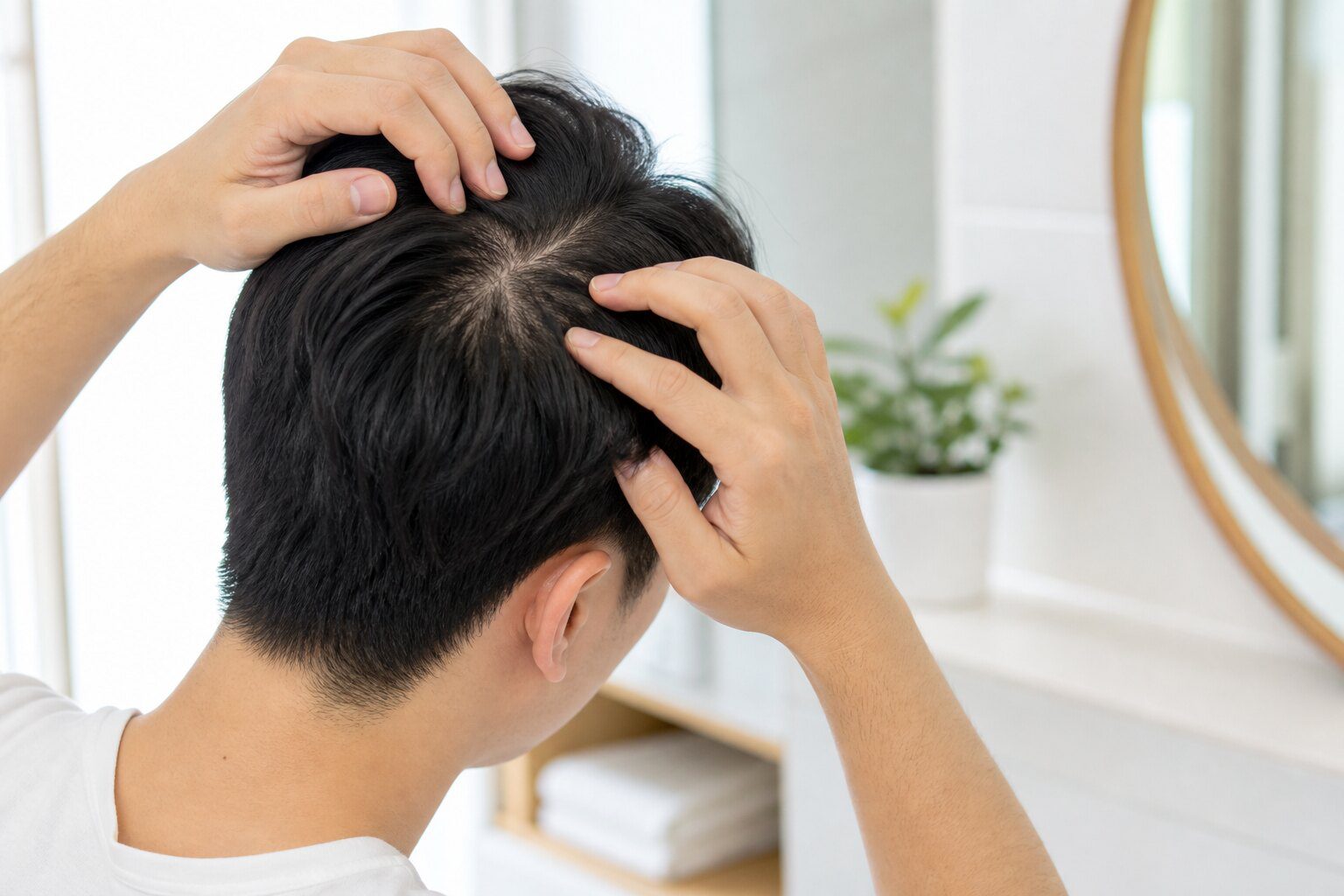
The main difference is the route. Oral treatment is absorbed through the digestive tract into the systemic circulation. Topical treatment is applied to a defined scalp area, but skin absorption can still occur and does not mean zero systemic exposure.
Pharmacologic classes differ in target, suitability and precautions. The table compares practical routes and assessment points; it does not imply that every oral or topical option has the same benefit or risk.
| Comparison | Oral treatment | Topical scalp treatment |
|---|---|---|
| Route | Absorbed after swallowing | Applied to a defined scalp area |
| Main assessment | General health, interactions and adverse effects | Scalp condition, area, irritation and contact transfer |
| Daily use | Take regularly as prescribed | Apply to the specified area as prescribed |
| Long-term use | Assess whether daily use is sustainable | Consider application and drying time and scalp tolerance |
| Systemic exposure | Systemic administration | May be lower, but is not zero |
| Medical assessment | Required | Required |
Why confirm the type of hair loss before choosing treatment?
Receding temples and crown thinning are common in male pattern loss, but telogen shedding, alopecia areata, scalp inflammation, nutrition and other medical factors can also cause loss. More than one cause can coexist.
A consultation reviews onset, speed, family history, health and previous treatment, then examines distribution, scalp findings and hair-diameter variation so that treatment is not chosen from appearance alone.
What factors affect the choice between oral and topical treatment?
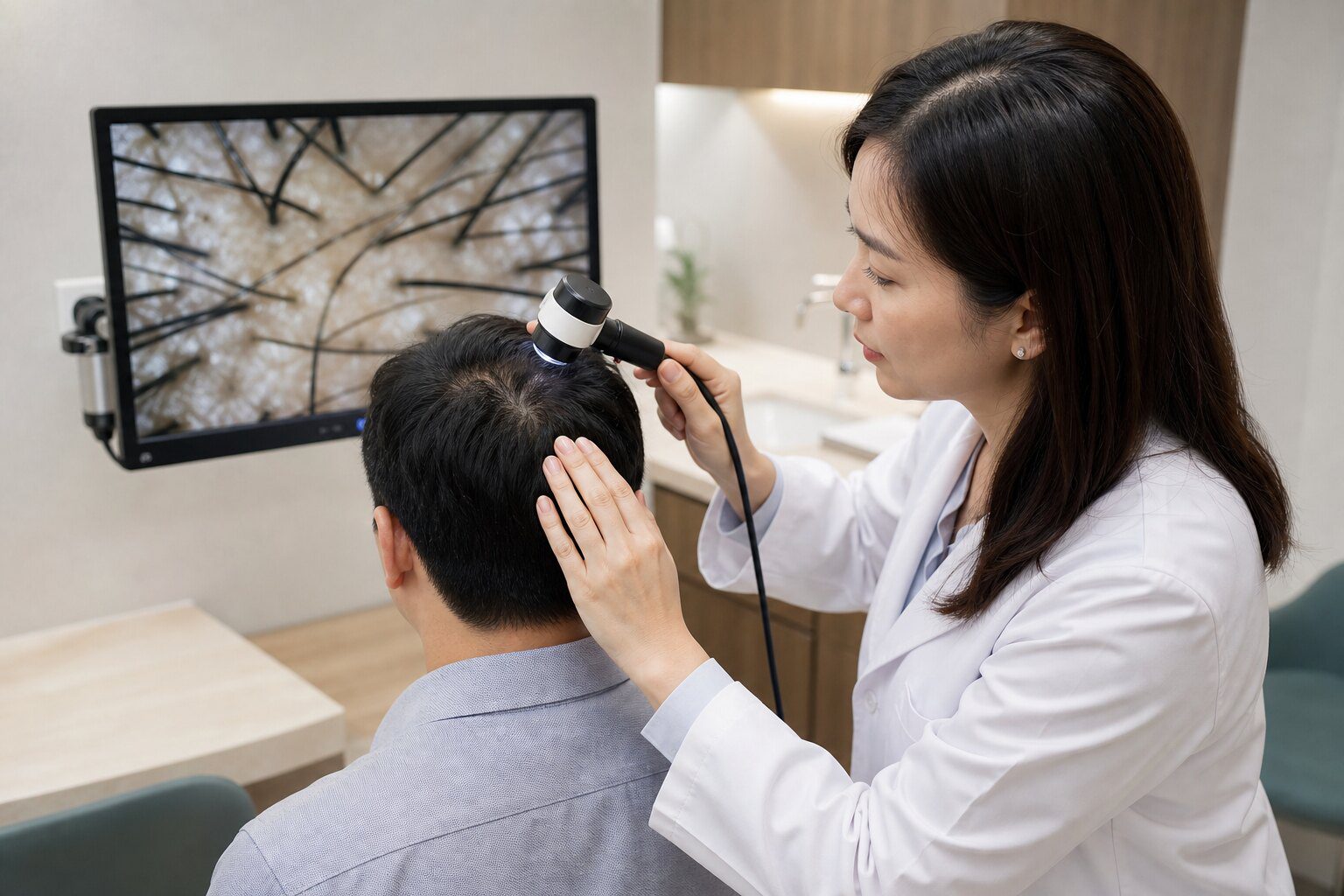
A clinician considers safety, expectations, ability to apply treatment and follow-up conditions, not age or photographs alone. Being suitable to discuss a topical route does not automatically make an oral route unsuitable, or vice versa.
Pattern and severity
Temple recession, crown density, shaft diameter and speed affect goals and monitoring.
Health and current medicines
Chronic conditions, previous reactions, current medicines and household contact can affect prescribing.
Scalp tolerance
Redness, itch, scale, broken skin or inflammation needs assessment; irritation and transfer also matter.
Ability to be consistent
Following instructions and attending review is usually more practical than pursuing the newest route.
Is topical scalp treatment always safer than oral treatment?
No. Local application can concentrate treatment in one area, but absorption varies with the formulation, treated area, scalp barrier and technique. Every treatment has its own precautions.
For the oral and topical differences within a specific 5α-reductase-inhibiting class, see guide to topical 5α-reductase inhibition.
Do not independently increase the amount or frequency, switch products or combine routes. Record persistent symptoms and timing, then contact the clinic.
How should treatment be monitored and adjusted?
Hair cycles are slow, so a few days of shedding cannot show whether treatment is working. More consistent monitoring uses photographs with the same angle, distance and lighting, together with the hairline, density, shaft diameter and scalp condition.
- Attend planned reviews and do not stop or increase treatment because of short-term changes.
- Record missed applications, scalp irritation and other symptoms.
- Compare standardised photographs rather than only the hair seen during washing.
- If the routine is difficult, discuss an alternative route instead of switching to an unknown product.
When should male hair loss be assessed in clinic?
Arrange an assessment if the hairline keeps receding, the crown becomes easier to see or hairs in one area continue to become finer. Sudden diffuse loss, patches, pain, discharge or marked inflammation deserves earlier review.
Ruianc Clinic hair-loss service. More related guidance is available in the health education library.
Not necessarily. Cosmetic products and medical treatments can differ in mechanism, intended users and risks even when both are applied to the scalp.
No direct conclusion can be made. Topical treatment can still be absorbed or irritate the scalp, while oral treatment requires review of systemic health. Both require individual assessment.
You can discuss this with a clinician, but diagnosis, severity, scalp condition, health and ability to apply it consistently must first be reviewed.
If the recession is confirmed as male pattern loss, a clinician can assess options. Duration, follicle status and other causes affect the plan.
It usually cannot be judged in days or weeks. Timing varies by treatment, severity and response, so standard photographs, shaft diameter and scalp findings should be followed.
No. Effects may overlap, and the need, exposure and risk of combining routes require individual assessment. Do not increase amount or frequency yourself.
Doctor’s note: assess the route together with diagnosis, risk and daily routine
Oral and topical treatments are not simply old and new choices, and there is no single answer for everyone. We first confirm the type of loss, then discuss scalp condition, health, previous response, convenience and follow-up capacity.
This article is health education, not a pharmaceutical advertisement, and does not promote or sell a specific medicine. Treatment class, route and monitoring must follow current approvals and an in-person medical assessment.
Hair-loss medical team

Dr. Tseng