

After switching laundry detergent, wearing new earrings, dyeing your hair, or doing chores in gloves for hours, the skin you touched turns red, itchy and flaky—sometimes with small blisters. This may well be contact dermatitis: an inflammatory reaction after skin touches a particular substance. It is very common in dermatology clinics and can affect office workers, hairdressers and cleaners, older adults and children alike.
Contact dermatitis is broadly divided into irritant and allergic types, with different causes and care priorities. Finding and avoiding the trigger is at the heart of improvement and preventing relapse. If the itchy rash spreads, keeps coming back, or affects work and sleep, a dermatologist should assess it in person and may arrange patch testing to look for possible allergens.
Key points: Contact dermatitis is skin inflammation after contact with a specific substance. Common symptoms are redness, itch, stinging, peeling, cracking or small blisters, usually where the contact happened. Irritant contact dermatitis is mostly linked to frequent wet work, detergents and solvents; allergic contact dermatitis is an immune reaction to metals, fragrances, hair-dye ingredients, preservatives or rubber. The keys are finding and avoiding the trigger and repairing the skin barrier; whether medicine or patch testing is needed should be decided by a doctor in person.
What is contact dermatitis? Why does touching things make skin red and itchy?
The outer layer of skin and its natural oils act like a protective wall against outside substances. When skin touches an irritating substance, or an allergen the body has already “learned” to react to, the contact area can become inflamed—red, itchy, peeling or blistered. This is contact dermatitis.
Contact dermatitis is a form of eczema/dermatitis. Unlike atopic dermatitis, which is linked to constitution, it has a clear external trigger. As long as contact continues, symptoms may keep returning; once the substance is found and avoided, most people’s skin has a chance to recover gradually.
The trigger is not always obvious, though—it may hide in skincare fragrance, shampoo preservatives or glove rubber—and symptoms can appear a day or two after contact, making the link hard to spot. That is why a doctor’s help is often needed.
What are the symptoms? Where does it usually appear?
Symptoms vary with the substance, the length of contact and your skin’s condition. Common signs include:
Acute stage
Redness, swelling, marked itch or burning at the contact site; in severe cases, clusters of small blisters, oozing or crusts. Allergic reactions often appear some time after contact and may spread slightly beyond the contact area.
Chronic stage
With repeated contact over time, skin becomes dry, rough, thickened and scaly, sometimes with painful cracks. This is especially common on the hands and is often dismissed as “housewife’s hands” or winter dryness.
Common sites and clues
Hands (detergents, gloves, wet work), earlobes and neck (earrings, necklaces), around the navel (metal trouser buttons), wrists (watch straps), scalp, hairline, forehead and behind the ears (hair dye, hair products), face and eyelids (skincare, make-up, nail polish), and tops of the feet (shoe materials). A rash shaped exactly like a watch strap, button or glove is an important clue.
What are the types and common triggers?
Contact dermatitis falls into two main types, which sometimes occur together:
- Irritant contact dermatitis: the substance directly damages the skin barrier. No allergy is needed—anyone can develop it with enough contact. Common with frequent hand washing, wet work, detergents, disinfectants, solvents and machine oil; it often affects healthcare, food, hairdressing, cleaning and household workers.
- Allergic contact dermatitis: once the immune system becomes “sensitised” to an ingredient, even small amounts trigger a reaction on later contact. It is a delayed-type allergy, often clearer a day or two after contact.
- Common allergens: metals such as nickel (jewellery, belt buckles, jeans buttons), fragrances, dyes in hair colour, preservatives in skincare and toiletries, rubber-glove additives, some adhesives and nail products, and certain plants.
- Light-related reactions: a few substances only cause a rash after sun exposure, often on the face, neck and backs of the hands.
- Topical products themselves: self-applied creams, essential oils or home remedies can become new irritants or allergens and complicate the original dermatitis.
People with a weaker skin barrier or a tendency to atopic dermatitis react to irritants more easily, which can make symptoms harder to sort out.
How is it different from eczema, hives and fungal infection?
Not every red, itchy, peeling rash is contact dermatitis. The table summarises common differences for reference only and cannot replace an in-person exam. If the main problem is sudden raised welts that move around, see hives symptoms and assessment.
| Point | Contact dermatitis | Atopic dermatitis / dry eczema | Hives (urticaria) | Fungal skin infection |
|---|---|---|---|---|
| Main trigger | Contact with a specific substance (irritant or allergic) | Constitution, weak barrier, dryness | Many internal and external factors, not always found | Fungal infection |
| Distribution | Often limited to the contact area, with shape clues | Symmetrical, often elbow and knee creases or dry areas | Anywhere on the body, moves around | Often feet, groin, skin folds |
| Look | Red patches, peeling, blisters; thick and cracked when chronic | Dry, scaly, thickened after repeated scratching | Raised welts that fade within hours | Ring-shaped red patches with clearer edges, may scale |
| Course | Appears after contact, can improve once avoided | Long-term and recurring, affected by seasons | Comes and goes quickly | Keeps spreading, rarely clears on its own |
| Care direction | Find and avoid the trigger; doctor assesses | Moisturise, repair and see a doctor | Look for triggers and see a doctor | Confirm, then follow doctor’s assessment |
How does a dermatologist check contact dermatitis?
The doctor usually asks when symptoms started, where they appear, whether you have recently changed skincare, cleansers, jewellery, hair dye or nail treatments, what you touch at work and home, whether it improves on holidays, and what medicines or home remedies you have used. Photos of ingredient labels, or bringing the suspect products, are very helpful.
Next, the doctor looks at the distribution, shape and pattern of the rash and distinguishes it from atopic dermatitis, seborrhoeic dermatitis, psoriasis, fungal infection and others; skin scrapings may be checked for fungus if needed.
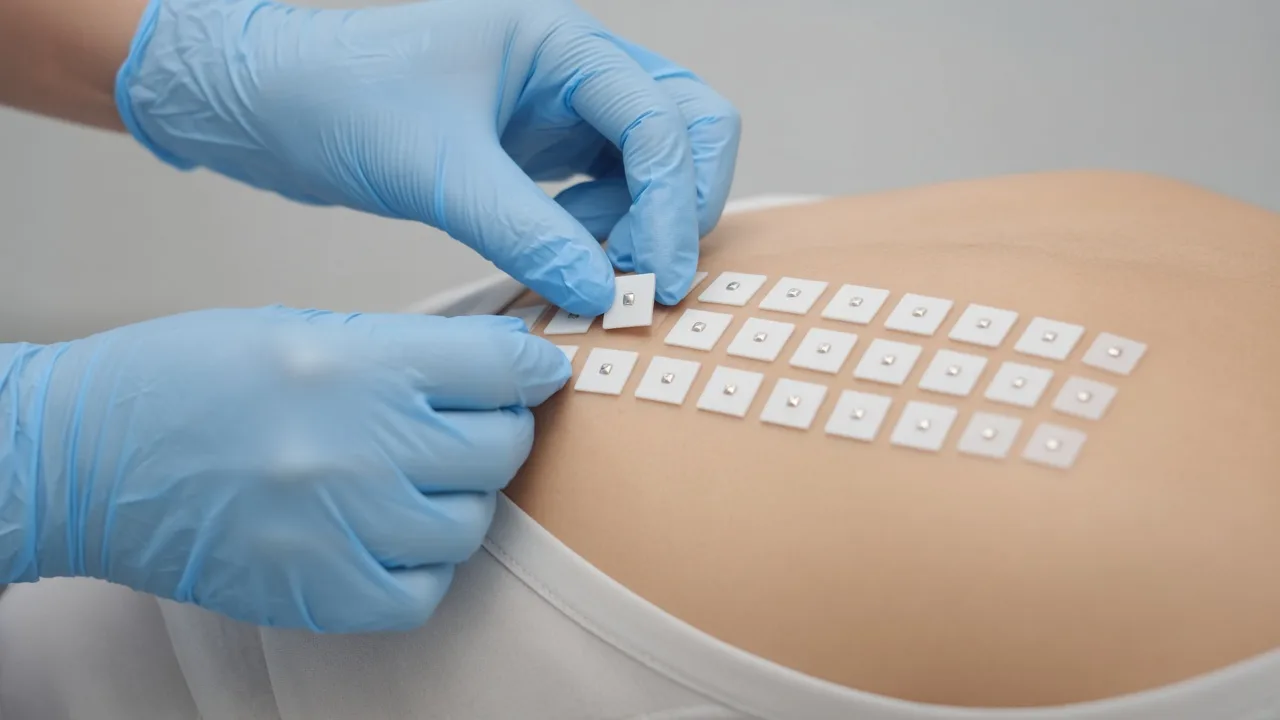
If allergic contact dermatitis is suspected, it keeps recurring, or no cause is found, the doctor may arrange a patch test: common allergens are applied to the skin of the back and the reactions are read after a set time to help identify possible allergens. Testing is done when the dermatitis is calmer, and some medicines may need adjusting beforehand as the doctor advises; whether it suits you is a medical decision.
How is contact dermatitis treated? What are the options?
Treatment depends on the type, extent, severity and site, and must be decided after an in-person assessment. Common directions include:
- Find and avoid the trigger: the foundation of all treatment. With ongoing contact, medicine can usually only ease symptoms temporarily.
- Repair the skin barrier: use gentle cleansers and moisturisers as your doctor advises to prevent further damage.
- Anti-inflammatory topicals: depending on site and severity, the doctor may prescribe steroid-class or non-steroid-class anti-inflammatory topical medicines; thin skin such as the face and eyelids needs special assessment.
- Itch relief and oral medicines: if itch clearly disturbs sleep, the doctor may consider antihistamine-class medicines; only widespread or severe cases are assessed for short-term oral anti-inflammatory medicine.
- If infection develops: if scratched skin shows pus or crusting, the doctor will assess whether additional treatment is needed.
- Work and lifestyle changes: when work-related, discuss protection, glove materials or substitute products with your doctor, and adjust work routines if needed.
Medicines differ greatly in strength and suitable sites. Buying or long-term use of unknown creams can thin the skin or make the problem harder to judge; whether, how and for how long to use any medicine should follow your doctor’s advice.
What can you do at home? 8 tips for care and prevention

These habits help reduce irritation and relapses—adapt them to your lifestyle. If symptoms are marked or keep coming back, see a doctor first to confirm the cause.
- Keep a log of suspects: note products you changed and things you did in the days before a flare to help the doctor.
- Pause new products: while skin is inflamed, stop newly bought skincare, make-up and fragranced products.
- Cleanse gently: use lukewarm water and a mild cleanser; avoid hot water and hard scrubbing.
- Moisturise right after washing: pat dry and apply moisturiser while skin is slightly damp to reduce cracking.
- Wear gloves for chores: for detergents or long wet work, wear cotton gloves inside waterproof ones; if rubber is a problem, ask your doctor about other materials.
- Watch metal contact: choose jewellery in low-allergy materials and cover metal jeans buttons with fabric.
- Patch-try new products: test a small area behind the ear or inside the arm for a few days; before dyeing hair, ask your hairdresser or doctor whether a test is advisable.
- Don’t scratch or use home remedies: scratching damages skin further, and remedies or essential oils may add new irritants.
If your skin tends to be dry and itchy, especially in winter, see winter eczema moisturising care to look after your skin barrier as well.
What are common myths about contact dermatitis?
Myth 1: I’ve used this product for years, so I can’t suddenly be allergic?
Not necessarily. Allergic contact dermatitis can develop after long, repeated exposure, so jewellery, hair dye or skincare you used without trouble for years can one day start causing an itchy rash. If your face suddenly turns red and itchy, pause new products and see a doctor.
Myth 2: Natural or organic ingredients can’t cause allergies?
Natural ingredients can also irritate or act as allergens—for example, fragrance compounds in some plant extracts and essential oils. “Natural” does not mean suitable for everyone; judge by how your own skin reacts.
Myth 3: Once the cream clears it, I can keep using the same things?
Medicine mostly eases inflammation. If the real trigger is not avoided, symptoms are likely to return on re-exposure and may worsen. Finding the cause and changing contact habits is what lowers the risk of relapse.
When should you see a doctor?
A mild, small rash with a known cause can be watched for a few days while avoiding the trigger and moisturising gently. See a doctor if:
- There is no improvement, or it spreads, after a week or two of avoiding suspects and caring for your skin.
- It keeps coming back without a clear cause, or you suspect your work environment.
- You have widespread redness and swelling, clusters of blisters, oozing, or itch that disrupts sleep and work.
- It affects sensitive areas such as the face, eyelids, lips or genitals.
- There are signs of infection such as pus, yellow crusts or fever.
- It worsened after self-treatment, or you need long-term creams to keep it down.
To find out what is causing red, itchy, peeling skin, visit Ruian Clinic dermatology for an in-person assessment, and read more skin topics in the health library.
Health Education References
- American Academy of Dermatology (AAD): Contact dermatitis
- DermNet: Contact dermatitis
- NHS: Contact dermatitis
No. It is an inflammatory reaction to a substance, not an infection, so it does not spread to others by touch. If scratched skin becomes infected with bacteria, however, a doctor should assess it separately.
If the trigger is found and avoided and you moisturise gently, mild contact dermatitis may gradually improve over time. If contact continues, symptoms recur or the rash spreads, a doctor should assess the cause and decide whether treatment is needed.
It may be contact dermatitis from hair-dye ingredients, often on the scalp, hairline, forehead, behind the ears and neck. If there is marked swelling, blisters or facial swelling, stop dyeing and see a doctor promptly; whether you can dye again or need testing first should be discussed with your doctor.
A patch test applies common allergens to the skin of the back and reads the reactions after a set time to help identify possible allergens. Not everyone needs one—it is usually considered when allergic contact dermatitis is suspected, it keeps recurring or no cause is found, and a doctor decides whether it suits you.
It may be an allergy to metals such as nickel. Stop wearing them or keep metal off your skin, for example by choosing low-allergy jewellery or covering buckles with fabric. If the rash persists or recurs, see a doctor to confirm and assess whether treatment is needed.
Long-term self-treatment is not recommended. Anti-inflammatory creams vary widely in strength and suitable sites; the wrong one can thin the skin or delay finding the real cause, and some topical products can themselves cause allergy. Whether medicine is needed, and which class, should be decided by a doctor in person.
Doctor’s note: finding the trigger matters more than endless creams
Red, itchy, peeling skin may be contact dermatitis, or it may be atopic dermatitis, a fungal infection or another skin problem. Contact dermatitis itself has irritant and allergic types with different care priorities. At your visit, mention where it appears, when it started, any recently changed products or jewellery, your work environment and medicines you have used—bring ingredient labels if you can—so the doctor can examine and decide. Please avoid long-term self-treatment or home remedies; whether medicine or patch testing is needed must be assessed in person by a doctor.
This article is health education, not a medicine advertisement, and does not recommend or sell a specific drug. It cannot replace a medical examination; diagnosis, tests and treatment must be assessed in person by a doctor based on your individual situation.
Dermatology clinic doctors

Dr. Tseng