

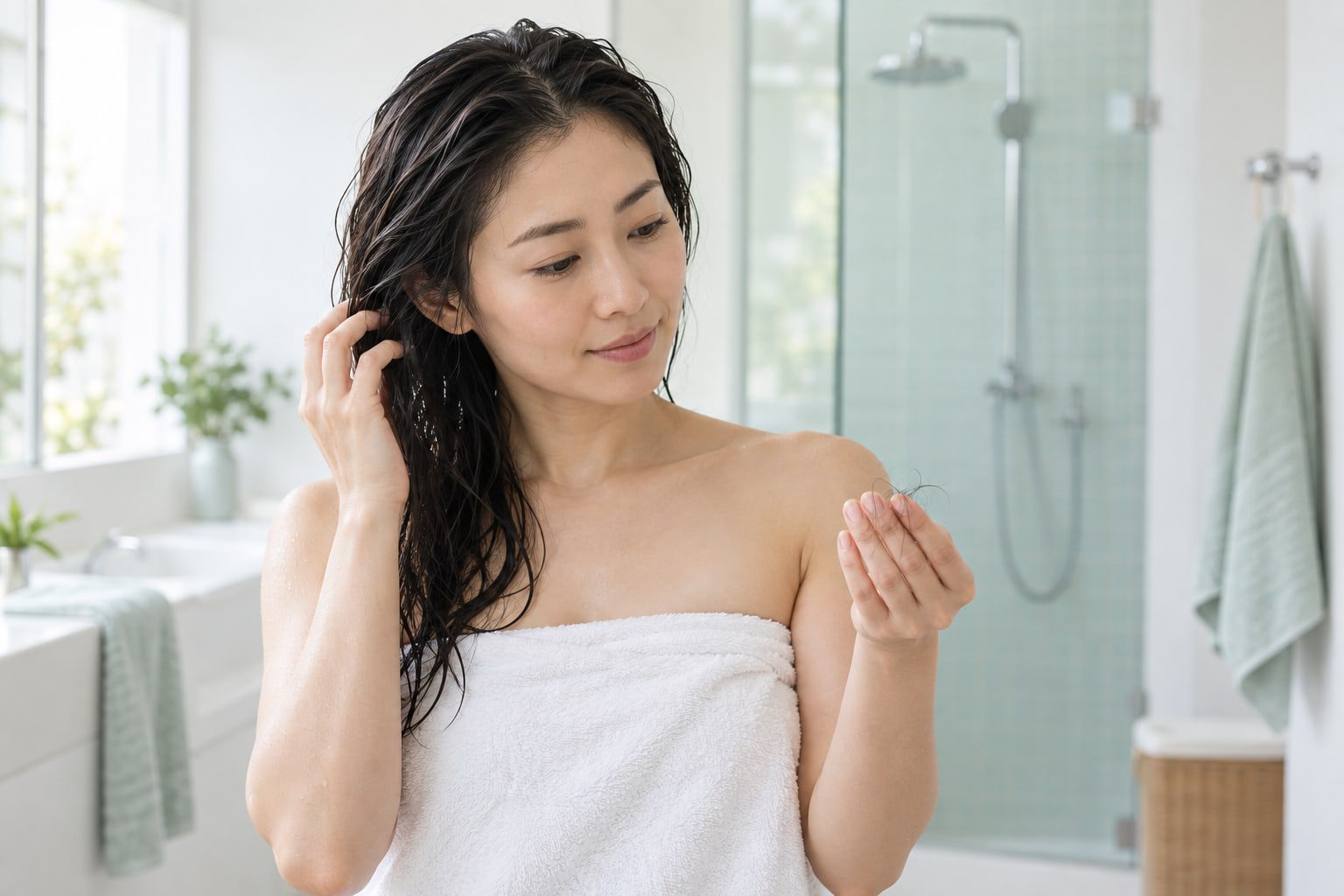
Hair collected in the drain, on your fingers or on a towel after shampooing can make it seem as though washing caused the loss. In many cases, water and hand movement simply release hairs that had already entered the resting phase and were ready to shed. A longer gap between washes can make one wash look heavier.
The useful question is not how many hairs appeared on one occasion, but whether shedding remains above your usual pattern, density is declining, or breakage, patches or scalp inflammation are present. These clues point to different causes, so changing shampoo alone cannot establish a diagnosis.
Key points: More long hairs on wash day with stable density may reflect the interval between washes and the hair cycle. Increasing short fragments suggests friction, heat or chemical damage. Persistent shedding with a widening part, a defined patch, redness, pain or scale warrants an in-person dermatology assessment.
Does heavy shedding during shampooing mean I am going bald?
Not necessarily. Scalp follicles do not cycle in synchrony, so some hairs naturally finish their cycle each day. Water, finger movement and rinsing release hairs that were already loose and caught among neighbouring strands, making them more visible at once.
Longer intervals, longer hair and less frequent brushing can make the collected bundle look larger. Delaying scalp cleansing because of fear does not keep resting hairs attached and may allow oil, scale and styling residue to accumulate.
To understand why a shed hair does not automatically mean a destroyed follicle, read hair shedding and follicle function.
Why can shedding look heavier on wash day?
Interval between washing and brushing
Naturally shed hairs from several days may be released in one wash. When comparing wash days, account for frequency, pre-wash brushing and styling-product use.
Visual effect of length, curl and volume
The same number of long or curly hairs forms a larger-looking bundle than short hair. The volume in a drain does not directly measure severity.
Telogen shedding has a delay
Several months after fever, illness, surgery, childbirth, rapid weight change, nutritional disruption or major stress, diffuse shedding may rise. The shower is simply where the change is easiest to notice.
If recent stress, sleep disruption or illness may be relevant, see the timeline of stress-related telogen shedding.
How do shedding, breakage and scalp inflammation differ?
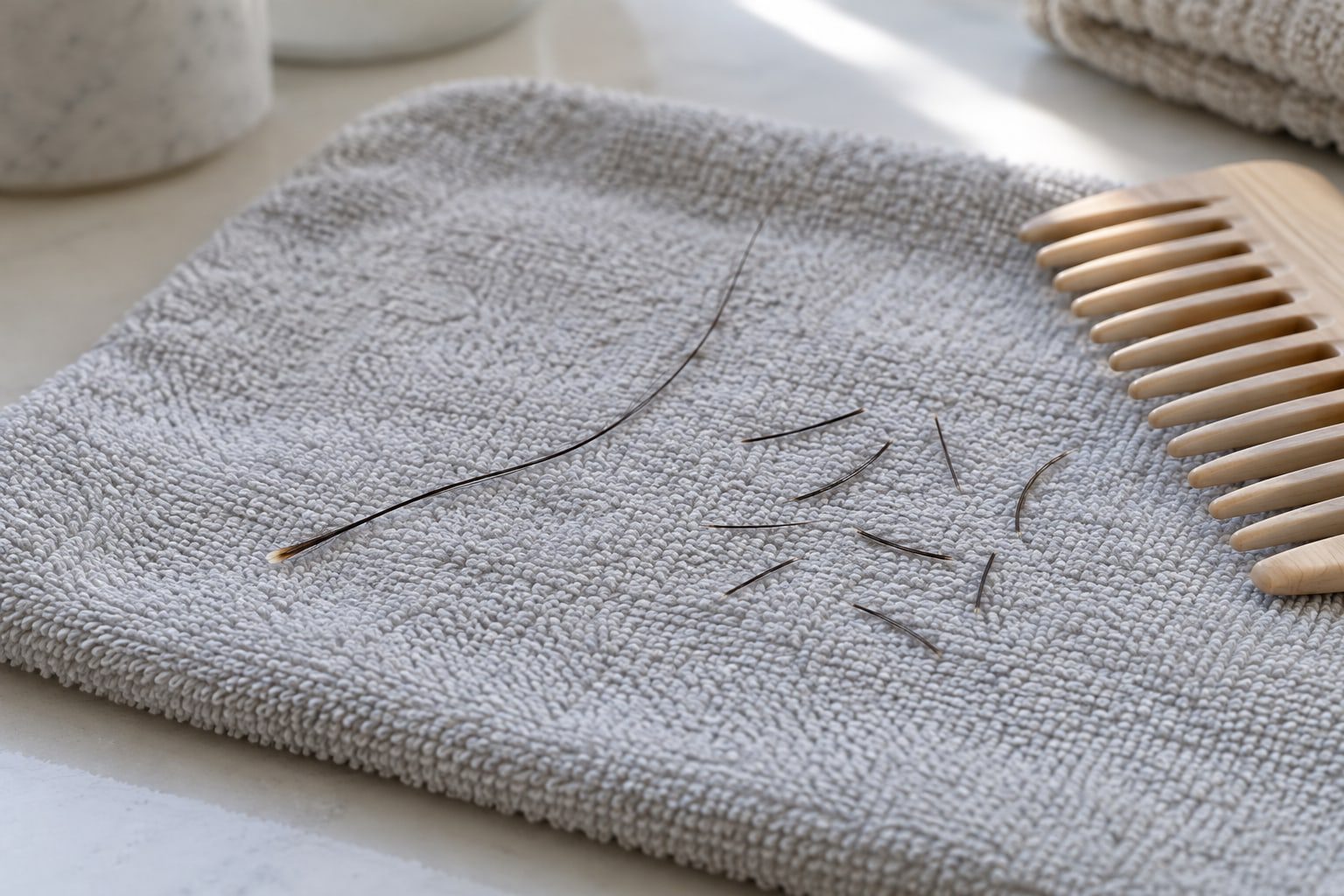
Not every strand in the drain was shed intact from a follicle. Bleaching, colouring, perming, high heat, tension and friction on wet hair can break the shaft. Scalp disease may instead cause redness, itch, pain, thick scale, pustules or crust together with loss.
A resting hair may have a small pale club-shaped keratinised end; this is not the entire follicle. Broken hairs tend to be shorter and uneven. Visual inspection at home is imperfect, so these features organise clues rather than diagnose the cause.
| What to observe | Hair shed from the follicle | Hair-shaft breakage | Scalp disease |
|---|---|---|---|
| Appearance | Often close to the original full length | Short fragments of unequal length | Shedding and breakage may coexist |
| End of strand | May have a small pale club-shaped end | Broken end may be rough, split or lack a club | A strand alone is usually insufficient |
| Scalp symptoms | May have no redness, itch or pain | Scalp may be quiet while shafts feel brittle | Redness, itch, pain, scale, pustules or crust are common clues |
| Typical context | Normal cycle, telogen or pattern shedding | Friction, tight styles, heat or chemicals | Dermatitis, infection or other inflammation |
| Next step | Track density, distribution and time | Reduce damage and review care | Dermatology examination of scalp and follicles |
What is more useful than counting every hair at home?
Daily shedding varies with washing and grooming, and counts become unreliable when collection methods change. Track trends under comparable conditions:
- Standardised photos: every few weeks, photograph the hairline, crown, sides and back in the same light, distance and hairstyle.
- Distribution: note diffuse thinning versus change at the temples, crown, part or a defined patch.
- Shaft diameter: look for increasing fine short hairs in one area or a rise in short broken fragments.
- Timeline: review fever, illness, surgery, childbirth, rapid weight or diet change, and major stress in preceding months.
- Scalp symptoms: record redness, itch, pain, burning, thick scale, pustules and crust.
Avoid repeatedly performing a forceful hair-pull test on yourself. A clinical pull test controls location, technique and timing relative to washing and is interpreted with other findings; a home count alone cannot diagnose hair loss.
Can correct shampooing reduce hair loss?
Gentle care can reduce friction and shaft breakage and remove oil, scale and residue, but it cannot treat every follicular cause. Match wash frequency to oiliness, exercise, product use and hair type rather than postponing washing because hair is visible in the drain.
- Wet the scalp and roots thoroughly; apply shampoo mainly to cleanse the scalp.
- Move the fingertips gently rather than scratching with nails or vigorously rubbing the lengths.
- After rinsing, use conditioner through mid-lengths and ends as appropriate to reduce tangling and traction.
- Press water out gently with a towel instead of rubbing wet hair back and forth.
- If blow-drying, use a temperature that does not feel hot on the scalp, keep a suitable distance and keep the dryer moving; complete air-drying is not mandatory.
Common myths about shampoo, anti-hair-loss products and blow-drying
Will an anti-hair-loss shampoo treat a follicle disorder?
Shampoo mainly cleanses. Pattern hair loss, alopecia areata, telogen shedding and scarring disorders have different mechanisms, so a product label cannot predict treatment value.
Does daily washing loosen follicles?
Normal washing does not wash healthy follicles out of the skin. An oily scalp or daily exercise may require more frequent cleansing, while dry, curly or chemically processed hair may need an adjusted routine.
Is blow-drying always worse than air-drying?
Excessive heat or holding a dryer in one spot can damage shafts, but wet hair is also vulnerable to friction and pulling. Gentle towel drying, moderate heat, distance and movement matter.
Is the white dot a follicle pulled out by the root?
The pale club on a resting hair is usually keratinised material, not the whole follicle. Follicles remain within the skin and are assessed through density, shaft variation and scalp examination.
Which causes of hair loss are often noticed in the shower?
Telogen shedding
Diffuse shedding may rise several months after a physical or psychological trigger.
Male- or female-pattern hair loss
Change is usually gradual, with progressive thinning and finer hairs in a consistent distribution.
Alopecia areata and other patchy loss
A sudden round or defined patch requires assessment for immune-related and other local causes.
Scalp disease and shaft damage
Inflammation, infection, prolonged traction, heat and chemical damage can cause shedding, breakage or both.
Men with progressive temple or crown thinning can review early signs of male-pattern hair loss.
When should I see a dermatologist and what will be examined?
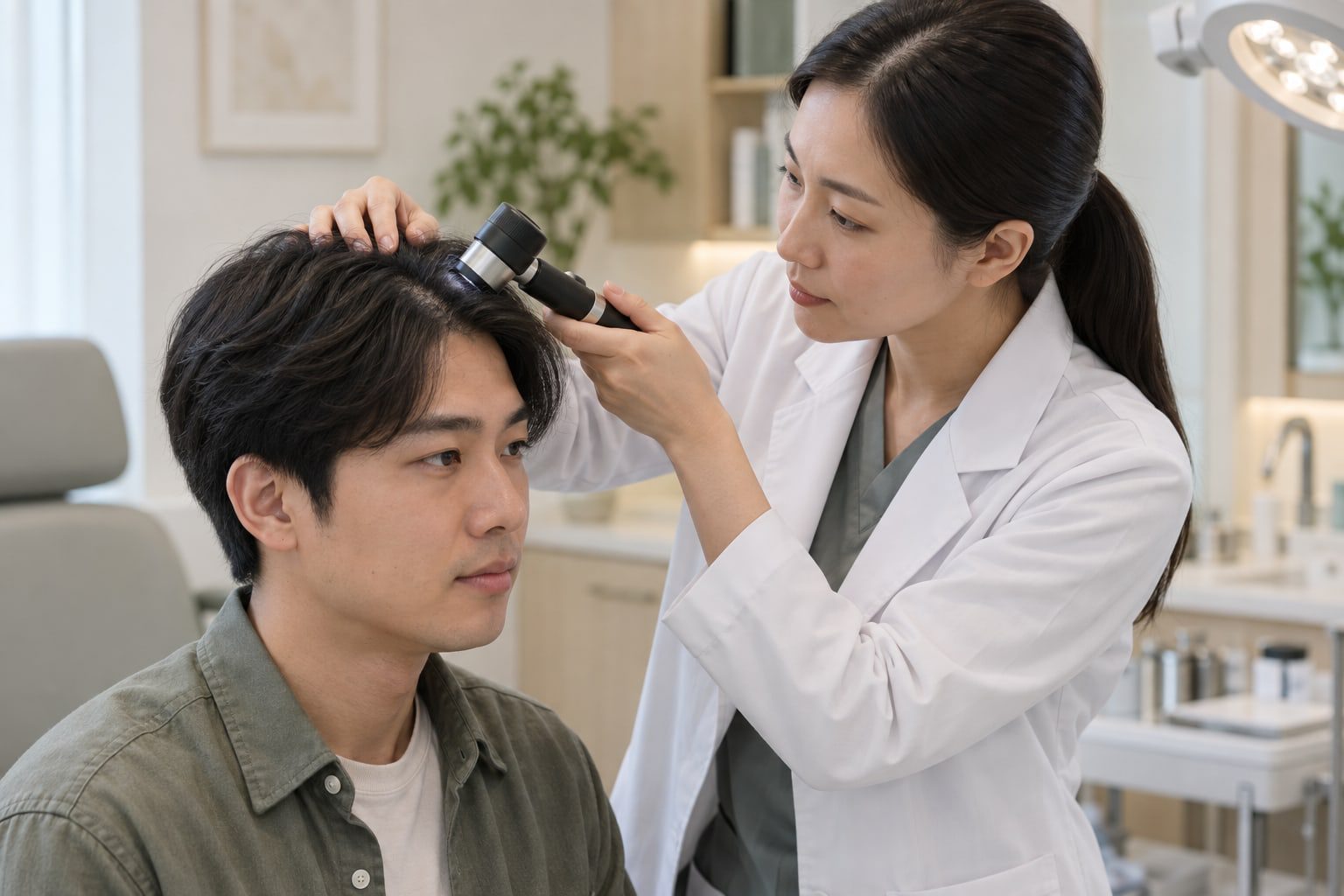
An occasional heavier wash with stable density and no other symptoms can be photographed and observed. Arrange a dermatology or hair-loss visit if any of the following occurs:
- Shedding remains above your baseline or total volume or ponytail thickness clearly declines.
- The hairline recedes, the crown thins or the part progressively widens.
- A round, defined or asymmetric patch appears suddenly.
- Short broken hairs increase markedly, or eyebrows, eyelashes or body hair are affected.
- The scalp becomes red, itchy, painful or burning, with thick scale, pustules, discharge or crust.
- Hair loss occurs with fatigue, cold intolerance, palpitations, or marked weight or menstrual change.
The clinician reviews onset, pattern, recent illness and life events, diet and previous care, then examines the scalp and shafts. Trichoscopy can magnify density, variation in shaft diameter, broken hairs and perifollicular changes. Blood tests or other investigations are selected only when the history or examination provides a reason.
Ruianc Clinic hair-loss assessment. For more guidance, visit Ruianc Health Library.
Which sources support this guide?
- American Academy of Dermatology: Hair shedding and hair loss
- American Academy of Dermatology: Hair-loss care tips
- DermNet: Hair shedding
- British Association of Dermatologists: Telogen effluvium
Not always. Washing releases hairs that were already loose, and the interval and length change the visual amount. Persistent increase or thinning in a fixed area is more informative.
Usually not solely because of shedding. Match frequency to the scalp and hair type, and cleanse gently without scratching, rubbing or pulling wet hair.
There is no single wash-day threshold for everyone. Compare your own density, distribution and trend over weeks to months instead of relying on a daily count.
A shed hair is often near full length; broken pieces are shorter and uneven. Home inspection is imperfect, so persistent fragments or thinning should be examined.
Excessive heat and close, fixed drying can increase shaft dryness and breakage, which is different from every form of follicular loss. Use moderate heat and keep it moving.
Seek assessment for persistent excess shedding with lower density, a defined patch, hairline or part change, or redness, pain, thick scale, pustules or crust.
Doctor’s note: shampooing mainly reveals hairs that were already loose
The amount in one wash depends on the interval, length and grooming routine. More useful clues are a sustained change from your baseline, declining density, a defined patch, scalp symptoms or extensive breakage.
This article provides general health education and is not an advertisement or recommendation for a specific medicine. Diagnosis, testing and treatment require an in-person medical assessment.
Hair-loss medical team

Dr. Tseng