

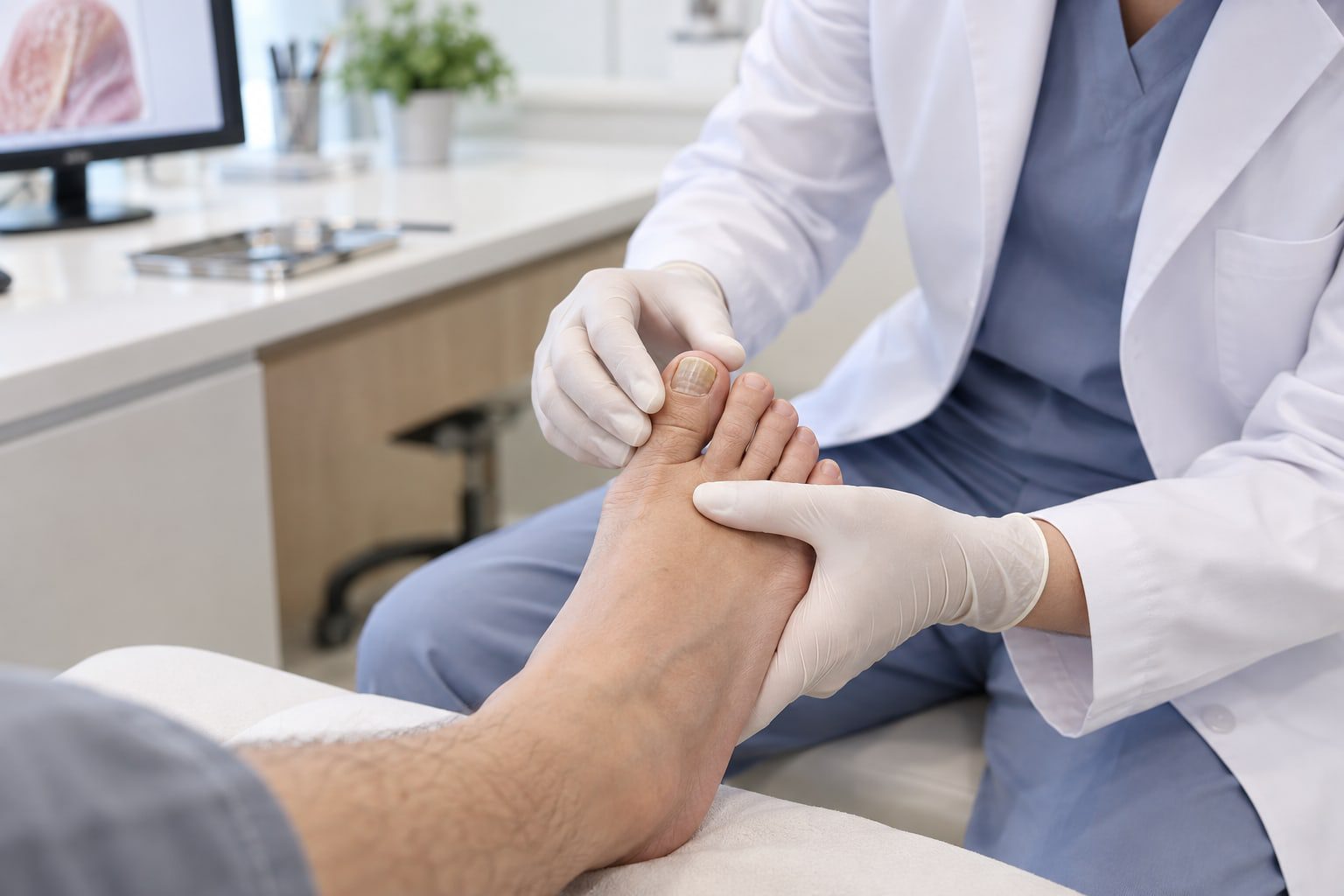
Yellow, thickened or crumbling nails are often called nail fungus. The medical term onychomycosis usually means a fungal infection of the nail, but trauma, psoriasis, eczema and other nail disorders can look similar. A photograph alone may not establish the cause.
Treatment takes time because damaged nail must grow out before the appearance improves. The useful first step is to confirm the diagnosis, extent and any coexisting athlete’s foot, then choose an approach with a clinician.
Key point: Discolouration or thickening does not automatically mean fungal infection. Nail sampling may prevent a look-alike disorder from being treated as fungus, while moisture, athlete’s foot and shared tools should also be addressed.
What is onychomycosis?
Onychomycosis occurs when fungi affect the nail plate, nail bed or nearby structures. Toenails are affected more often and changes may begin at the tip or side, with discolouration, thickening, debris or separation from the nail bed.
Which signs can suggest nail fungus?
Nail fungus has several appearances, so colour alone is not enough. Note where the change began, how many nails are involved and whether surrounding skin is red, swollen or scaly.
| Feature | Clues that may fit fungus | Other causes to consider |
|---|---|---|
| Colour | White, yellow, brown or cloudy | Trauma, staining, skin disease or bacteria |
| Thickness and texture | Progressive thickening, brittleness and debris | Friction, psoriasis or ageing |
| Attachment | Separation from the tip or side | Trauma, irritation or another nail-bed disorder |
| Distribution | Spreads from one nail and may accompany athlete’s foot | Persistent change in one nail needs local causes excluded |
| Nearby skin | Scaling or itch between toes or on the sole | Marked redness, pain or pus needs paronychia assessment |
Does every yellow or thick nail mean fungus?
No. Tight footwear, repeated trauma, psoriasis, dermatitis, bacterial infection and some nail tumours can cause discolouration or distortion. A new dark streak, pigment extending to nearby skin, bleeding, a non-healing area or rapid change needs prompt assessment.
Why might a nail sample be needed?
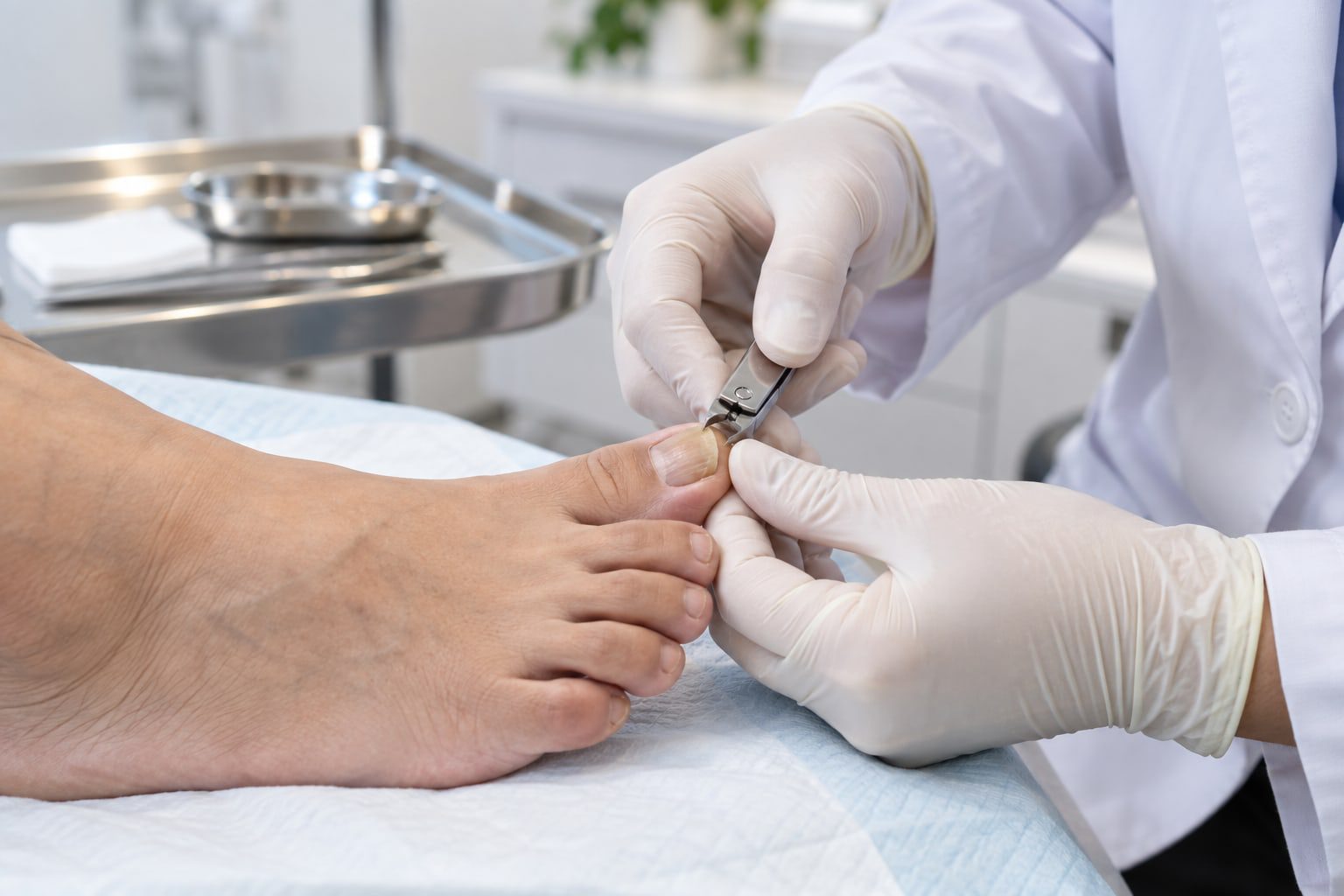
When the appearance is atypical, prolonged treatment is being considered or earlier treatment did not work as expected, a clinician may clip or scrape the affected nail for microscopy, culture, pathology or another selected test.
How is nail fungus treated?
Treatment is individualised according to the extent, thickness, number of nails, likely organism, health and ability to follow the plan. Limited disease may be assessed for topical antifungal treatment; broader or multiple-nail disease may lead to discussion of systemic antifungal treatment.
Systemic treatment is not suitable for everyone. Other conditions, pregnancy potential, current treatments and interaction risks should be reviewed. Even after infection control, the damaged nail has to grow out gradually.
Why should athlete’s foot be treated too?
Fungal infection between the toes or on the sole can contribute to repeated nail infection. Treating the nail while ignoring itchy, scaling foot skin may increase recurrence. athlete’s foot symptoms and care.
A consultation can examine the toe webs, soles, other nails and footwear habits together. Household members with symptoms should seek their own assessment and should not share nail tools.
How can you care for nails and reduce recurrence?
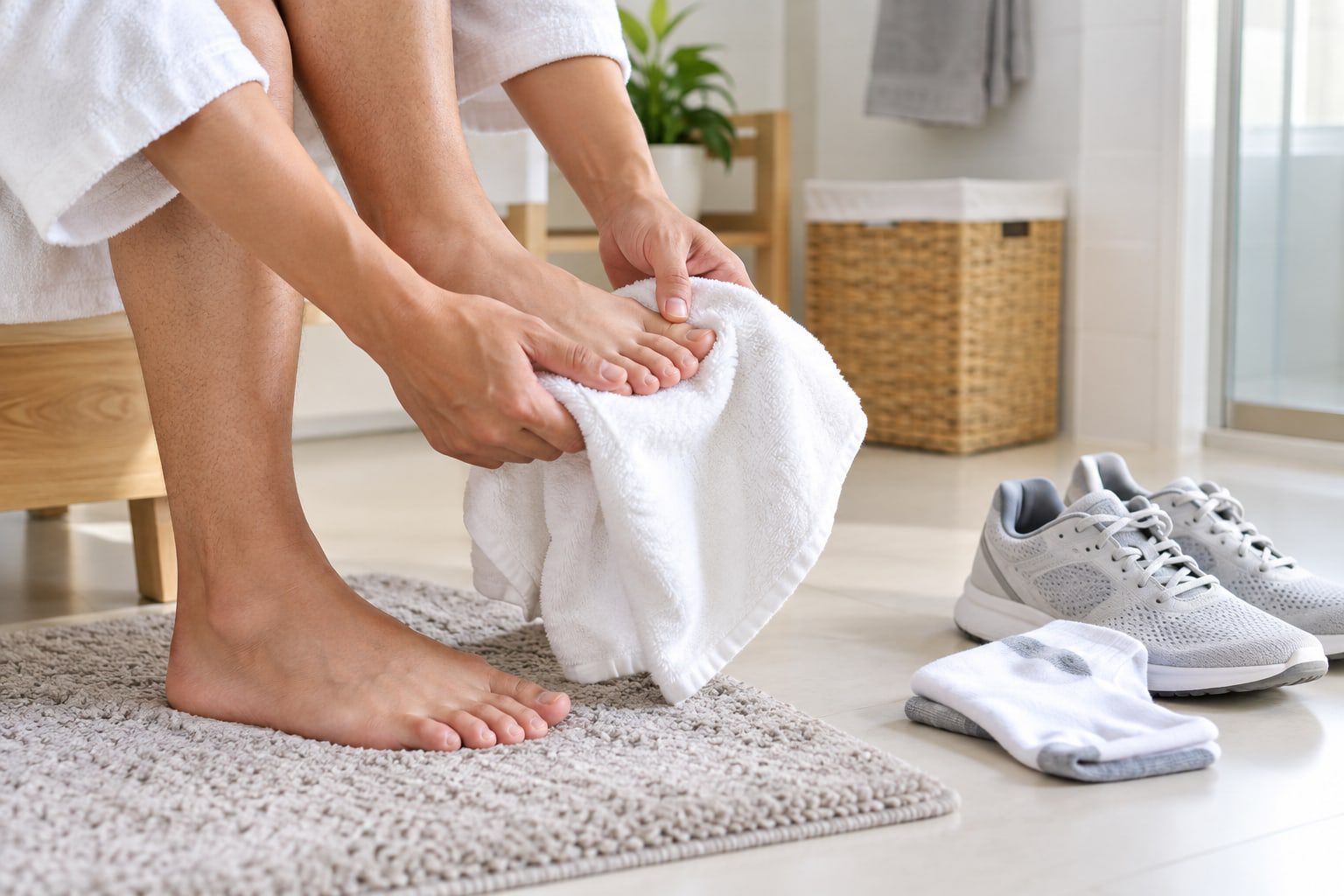
- Dry carefully between the toes and change damp socks promptly
- Rotate and dry footwear; choose well-fitting breathable shoes and socks
- Trim nails straight across without cutting too short or digging underneath
- Do not share clippers, files, slippers, socks or shoes
- Wear personal sandals around communal showers, changing rooms and pools
- Have athlete’s foot, paronychia or foot wounds assessed as indicated
When should you see a dermatologist promptly?
The following situations should not be managed only with an over-the-counter trial.
- Diabetes, poor peripheral circulation or impaired immunity
- Marked redness, swelling, warmth, pain, pus or fever
- A new dark streak, bleeding, ulceration or rapid distortion
- Several nails involved, pain limiting walking or repeated worsening
- Pregnancy, planning pregnancy, chronic disease or other ongoing treatment
dermatology assessment · more skin-health guides
Which dermatology sources support this guide?
- American Academy of Dermatology: Nail fungus diagnosis and treatment
- US CDC: Clinical overview of ringworm
- DermNet: Fungal nail infections
No. Trauma, staining, psoriasis, dermatitis and other nail disorders can look similar. Testing may be appropriate.
A skin treatment should not automatically be used as a nail treatment. The nail plate changes penetration and the diagnosis should be confirmed.
Loose edges may be trimmed gently, but do not injure the nail bed. Very thick or painful nails need safe clinical assessment.
Damaged nail must grow out. The rate varies with the nail, age, circulation and health.
Fungi can spread through shared tools, footwear and damp environments, although exposure does not always cause infection.
Seek assessment first with diabetes, circulation or immune problems, pus, a dark streak, wounds or rapid change in several nails.
Doctor’s note: confirm onychomycosis before choosing treatment
Yellow, thick or brittle nails are not always fungal. A consultation can combine appearance and history with sampling when needed, then consider extent and health before discussing treatment.
This is general health education and cannot replace an examination. Diagnosis, testing and treatment require individual clinical assessment.
Dermatology medical team

Dr. Tseng