

A cold sore often starts with tingling, burning or itching on or near the lip. Small grouped blisters may then break, crust and heal. It is linked to the herpes simplex virus. From the first warning sensation until the sore has fully healed, avoid close oral contact and sharing items that touch the mouth. A clinician should assess lesions near the eye, spreading lesions or sores that do not improve.
Key points: Tingling followed by grouped blisters at the lip is a clue, but a photo alone cannot confirm a cold sore. From the first warning sign until complete healing, avoid kissing and sharing lip products; wash your hands after touching the area. A first episode, repeated outbreaks, symptoms near the eye or possible contact with a newborn call for medical assessment.
What is a cold sore, and why can it recur?
Cold sores are infections around the mouth caused by the herpes simplex virus, usually at the edge of the lip or nearby skin. After an initial infection, the virus may remain dormant and later reactivate. Some people have one episode; others have recurrences. An outbreak does not mean poor hygiene.
Illness, sunlight, stress and hormonal changes may be associated with recurrences in some people, but no single factor explains every episode. If sores recur in a similar place, record their timing and possible triggers for a medical review.
How does a cold sore change from tingling to crusting?
A localized tingling, burning, tight or itchy sensation may come first. Grouped small blisters can then open into shallow sores before drying and crusting. The length of each stage varies. Crusting alone does not establish that transmission risk has ended.
A first episode may be more uncomfortable and can include mouth pain or swollen gums. Seek an assessment if a lesion is large, makes eating difficult, worsens, or has not begun to heal after about ten days.
Is every lip blister a cold sore? How is it different from a mouth ulcer?
No. Location, preceding tingling, grouped blisters versus a single ulcer, yellow-brown crusts and recurrence in a similar place are useful clues. This table is for observation only; similar lesions need an in-person assessment.
If pain and blisters follow a one-sided distribution on the face, especially near the eye, nose or ear, read about shingles symptoms and warning signs. Shingles involves a different virus and a different assessment.
| Possible condition | Typical site and appearance | Useful distinction |
|---|---|---|
| Cold sore | Grouped blisters at or around the lip after tingling | May break and crust; recurrences often affect a similar site |
| Mouth ulcer | One or several shallow ulcers inside the lip or mouth | Often no grouped blisters outside the lip; causes differ |
| Impetigo or another bacterial infection | Red lesions, ooze or a yellow-brown crust around mouth or nose | May spread and needs clinical assessment |
| Angular cheilitis or irritant dermatitis | Cracking, redness or scale at the mouth corner | Often linked to local moisture or irritation |
| Shingles | One-sided facial pain followed by blisters | May follow a nerve area; eye, nose or ear involvement needs prompt review |
When is a cold sore contagious, and how can you protect others?
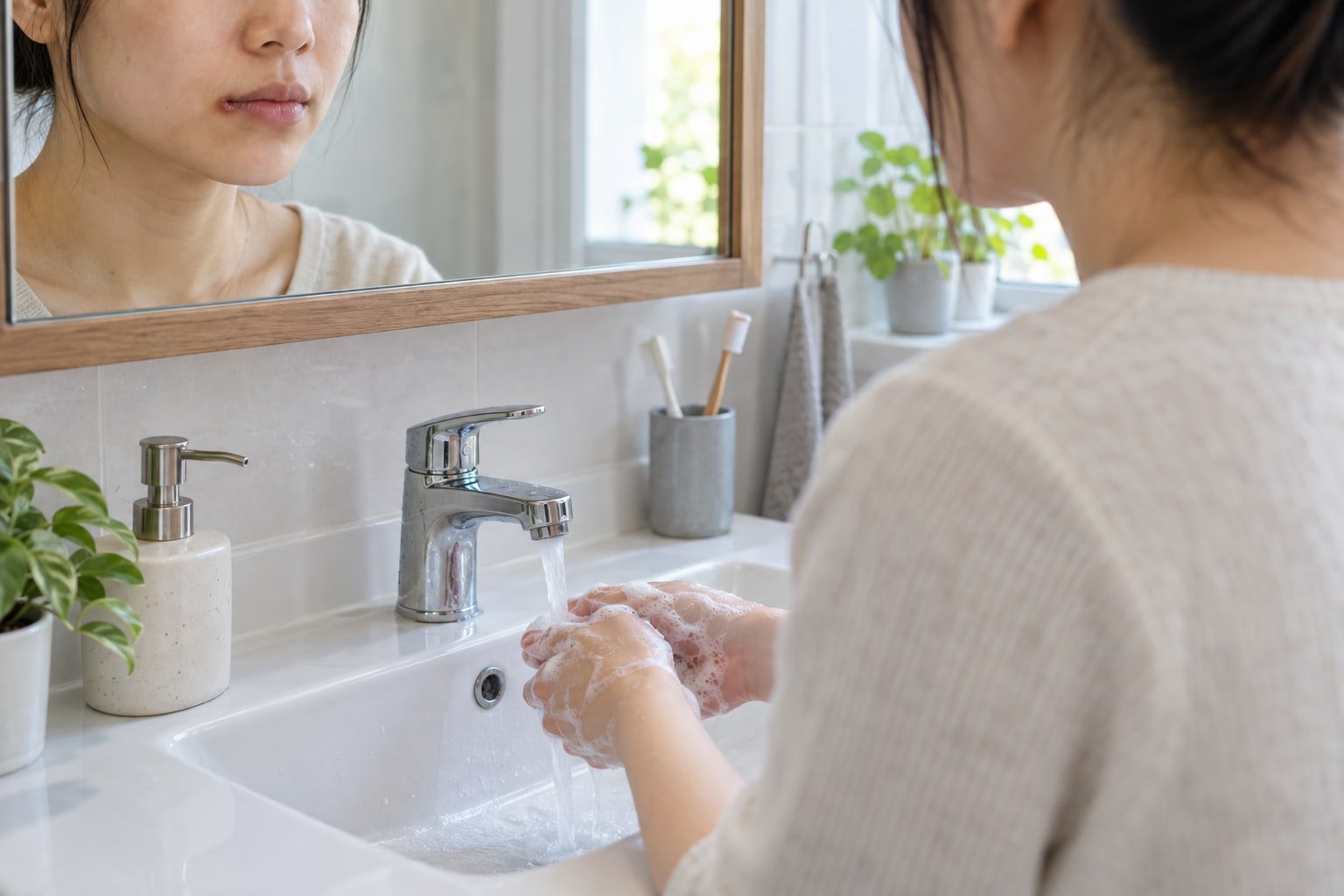
Start contact precautions when tingling or other warning signs begin. Until the sore has fully healed, avoid kissing, oral intimate contact and sharing lip balm, cups, cutlery or towels. The virus can sometimes be shed without a visible sore, so precautions lower risk but cannot guarantee zero transmission.
Do not pick blisters or remove crusts. Wash hands with soap and water after touching or caring for the sore, and avoid touching your eyes. Take particular care around newborns, people with weakened immunity and children with eczema; avoid direct contact with the lesion.
How can you care for a cold sore at home, and is treatment needed?
In otherwise healthy adults, lesions often heal gradually. Keep the area clean and avoid friction or picking. Choose foods that are comfortable to eat and drink enough fluid; avoid acidic or salty foods if they sting. Sun exposure triggers some recurrences, so lip sun protection may help according to individual circumstances.
Whether topical or oral antiviral treatment is appropriate depends on timing, severity, recurrence and overall health. Some options are more useful when discussed early. A clinician should assess this; do not put an unidentified cream on the blisters or assume every lip crack is a cold sore.
Which cold sore symptoms need prompt medical attention?
Seek prompt care for a sore near the eye or eyelid, eye pain, light sensitivity or changes in vision. Rapid spread, severe pain, marked swelling or pus, fever, or trouble drinking also needs assessment.
A newborn with possible exposure followed by blisters, fever or reduced activity needs immediate medical attention. People with weakened immunity, widespread eczema, pregnancy, a first episode, repeated outbreaks or a sore not starting to heal after about ten days should not rely on self-observation alone.
If you are unsure what caused a lip lesion, arrange an assessment with dermatology services. You can also read other skin-health articles in the health library, but online information cannot replace an examination.
How does a clinician confirm a cold sore?
A clinician asks about warning sensations, how the lesion developed, prior outbreaks and contact history, then examines the skin and mouth. A typical sore can sometimes be diagnosed clinically. A fresh blister swab for viral testing may be considered if the appearance is unusual, illness is more serious or the result would change care.
A positive blood antibody test does not necessarily show that the current lip lesion is a cold sore. The need for testing depends on symptoms and clinical judgment.
Health Education References
- American Academy of Dermatology: Cold sores overview
- American Academy of Dermatology: Herpes simplex diagnosis and treatment
- NHS: Cold sores
- DermNet: Herpes simplex
It often heals gradually in a healthy adult, but timing varies. Seek an assessment if it has not started healing after about ten days, continues to spread or is very painful.
Crusting alone is not enough to judge. From the first tingling until complete healing, avoid kissing or sharing items that touch the lips and wash hands after contact; viral shedding may also occur without a visible sore.
No. A sore inside the lip or mouth can be a mouth ulcer or another condition. Location and appearance are clues, not a diagnosis; a clinician can assess uncertain or recurrent sores.
Avoid kissing a newborn when you have tingling or an active sore, and keep the lesion away from the baby’s skin. If an exposed newborn develops blisters, fever or reduced activity, seek immediate care.
Record the frequency and site of outbreaks and possible triggers. A clinician can discuss whether antiviral treatment is appropriate; do not use medication long term on your own.
Seek prompt medical care for a lesion near the eye or eyelid, especially with eye pain, light sensitivity or vision changes, to assess for eye infection.
A clinician’s note: confirm the cause of lip blisters
Grouped blisters after tingling may be a cold sore, but mouth ulcers and other skin conditions can look similar. A first episode, recurrence, spread or a lesion near the eye deserves an in-person dermatology assessment.
This article provides health education, not a drug advertisement or a recommendation or sale of a specific medicine.
Dermatology team

Dr. Tseng