

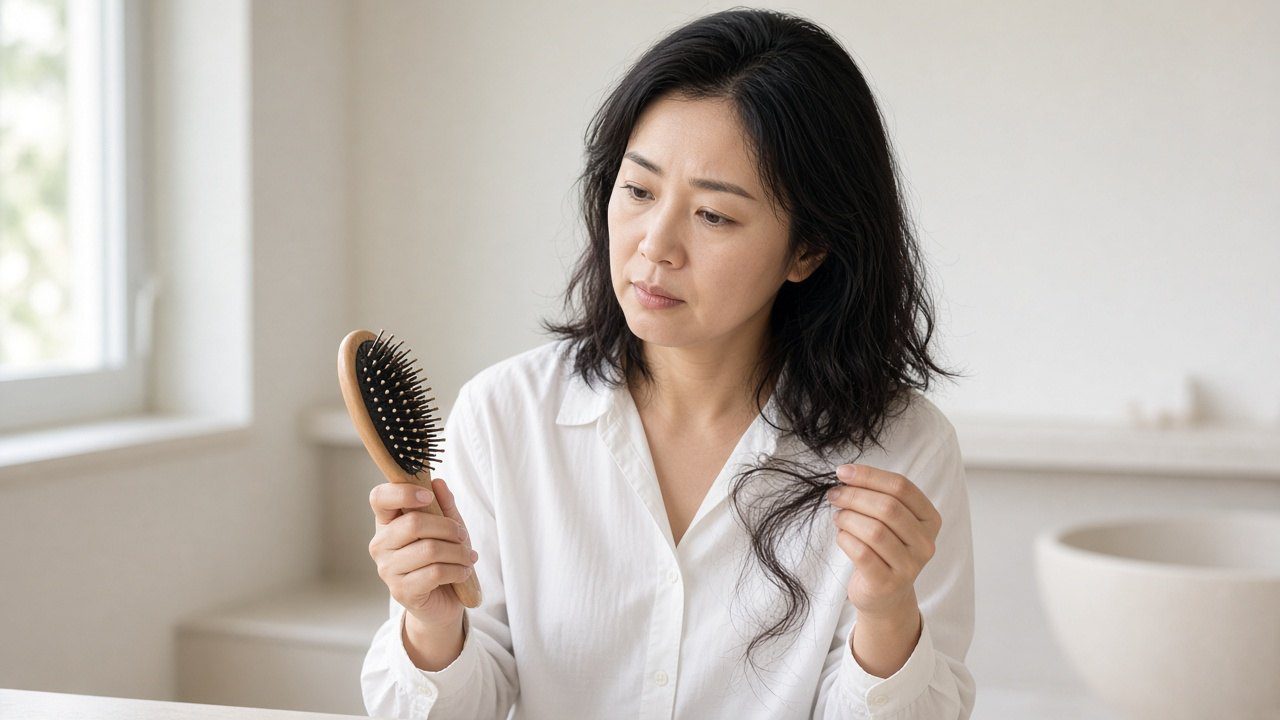
Shedding some hair each day is usually part of the follicle cycle and does not mean balding is starting at once. What matters more is a clear rise above your own baseline for several weeks, or hairline recession, fixed crown thinning, a round patch, or a red, itchy or painful scalp.
A single count from a comb or drain is easy to misread. Wash interval, length, grooming and whether broken pieces are included can make the number swing. Tracking density, distribution and trend is more useful than chasing a fixed threshold, and an in-person dermatology assessment is needed when the pattern is unclear.
Key points: Many adults may shed several dozen hairs a day. That range is a reference, not a diagnostic cut-off. Separate wash-day release, shaft breakage and true follicular shedding. If shedding keeps rising for weeks, thinning is localised, or the scalp is symptomatic, see a dermatologist in person. A home pull test cannot confirm the cause.
How much daily shedding is considered usual?
Some sources note that many adults may shed about fifty to one hundred hairs a day. This is a common population range, not a personal diagnostic line, and one day’s number cannot decide whether a disease is present.
Hairs are not growing in lockstep. At any time most follicles are in the growth phase, while a smaller share enter the resting phase, shed, then are replaced. Seeing some intact shed hairs each day usually means the cycle is underway, not that follicles have been destroyed.
To understand whether a follicle is resting, gradually miniaturising, or possibly scarred, see hair shedding and follicle function.
Why is a single-day count easy to misread?
Wash day can release hairs that were already loose
Resting hairs often loosen first and catch among neighbouring strands. After a longer gap, with longer hair, or with less daily combing, the drain can look fuller without a sudden same-day surge.
If a wash looks heavy, first separate intact shedding, shaft breakage and scalp problems in how to judge heavy shedding in the shower.
Collection method and length change the visual amount
Dark clothes, a pale pillow, long hair and a fine-tooth comb make shed hairs more obvious. Counts from different methods on the same day can differ, so one tally should not be treated as a severity score.
Broken pieces are often counted as shed hairs
Colouring, heat, traction and friction on wet hair can snap the shaft. Short fragments may look like many hairs without the follicle pushing the hair out. Check whether length is close to your usual hair and whether the scalp is thinning.
How do shedding counts, breakage and patchy thinning differ?
A higher count, finer shafts and a local bald patch do not always point to the same problem. Mapping distribution and hair quality is closer to a clinic assessment than asking only how many hairs fell today.
| What to observe | More like | Clues worth recording |
|---|---|---|
| A sudden overall rise without a fixed bald patch | Telogen shedding | Illness, surgery, stress, rapid weight loss or a major routine change in the previous two to four months |
| Many short, uneven pieces on the comb | Shaft breakage | Recent colouring, heat, tight styles or forceful combing of wet hair |
| Hairline recession or gradual thinning in a fixed crown area | Male- or female-pattern hair loss | Whether shafts are getting finer and the part keeps widening |
| A sudden round or sharply bordered patch | Alopecia areata or other local loss | Patch edges, scalp smoothness, and redness, itch or pain |
What home checks are more useful than counting every hair?
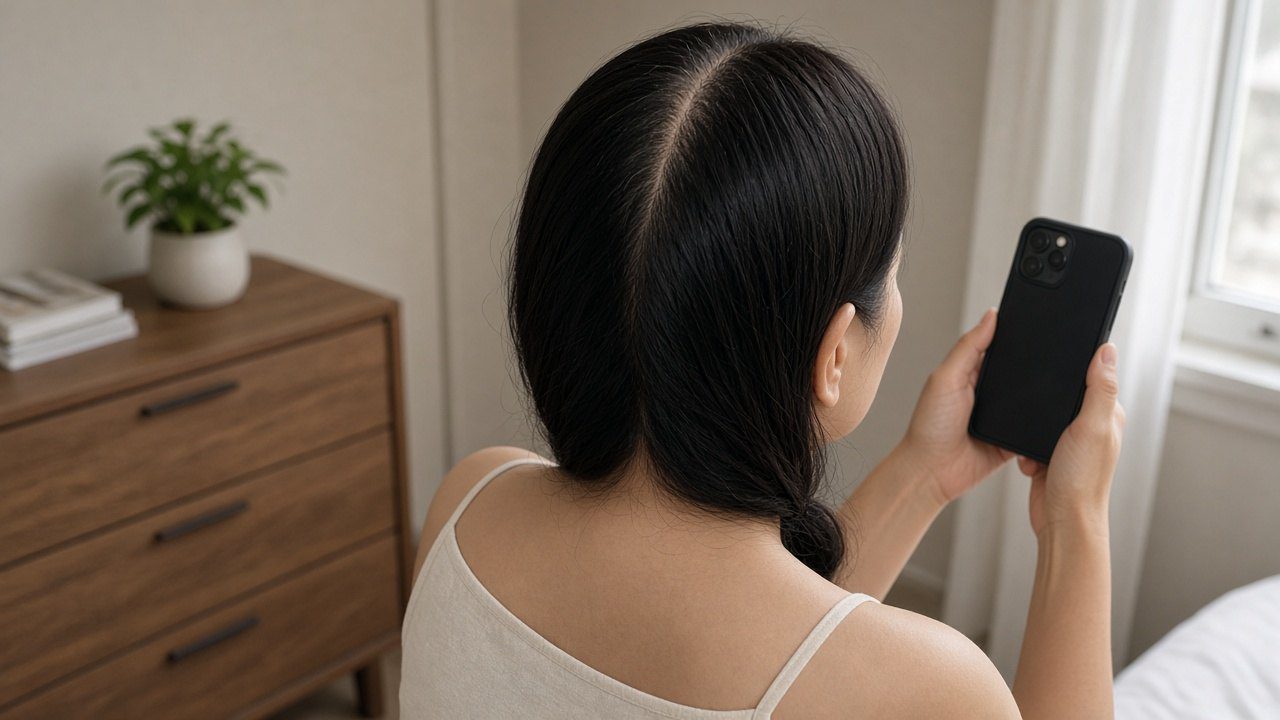
Daily counting is time-consuming and easily skewed by wash day. A steadier approach is to record under fixed conditions and review the two- to four-week trend.
- Photograph the crown, hairline and sides every two to four weeks in similar light, angle and part.
- Note wash interval, recent colouring or heat, stress, illness, weight change and sleep.
- Check whether pillow, collar and comb amounts are occasional or higher than usual for several weeks.
- Watch for a more visible local scalp, finer hair, or a sharply bordered patch.
If shedding appears after a delay following stress, infection or a life change, also see the time lag of stress-related telogen shedding.
Can I do a hair-pull test myself?
A hair-pull test helps a clinic judge whether shedding is active now. It is not a home diagnostic tool. The clinician usually takes a small bundle near the scalp, applies steady gentle traction, then interprets the result with distribution, scalp findings and other tests.
Older advice often suggested skipping washes for three to five days, then grading by three or five hairs. Unwashed hair lets already-loose strands accumulate, so the number can look high. A fixed count also cannot separate telogen shedding, pattern hair loss, alopecia areata or scalp disease.
At home, avoid forceful pulling or repeatedly testing an area that already looks thinner, which can add breakage or anxiety. If you only want a first look, watching overall trend and density is usually safer than pulling hair yourself.
Which shedding changes need a doctor?
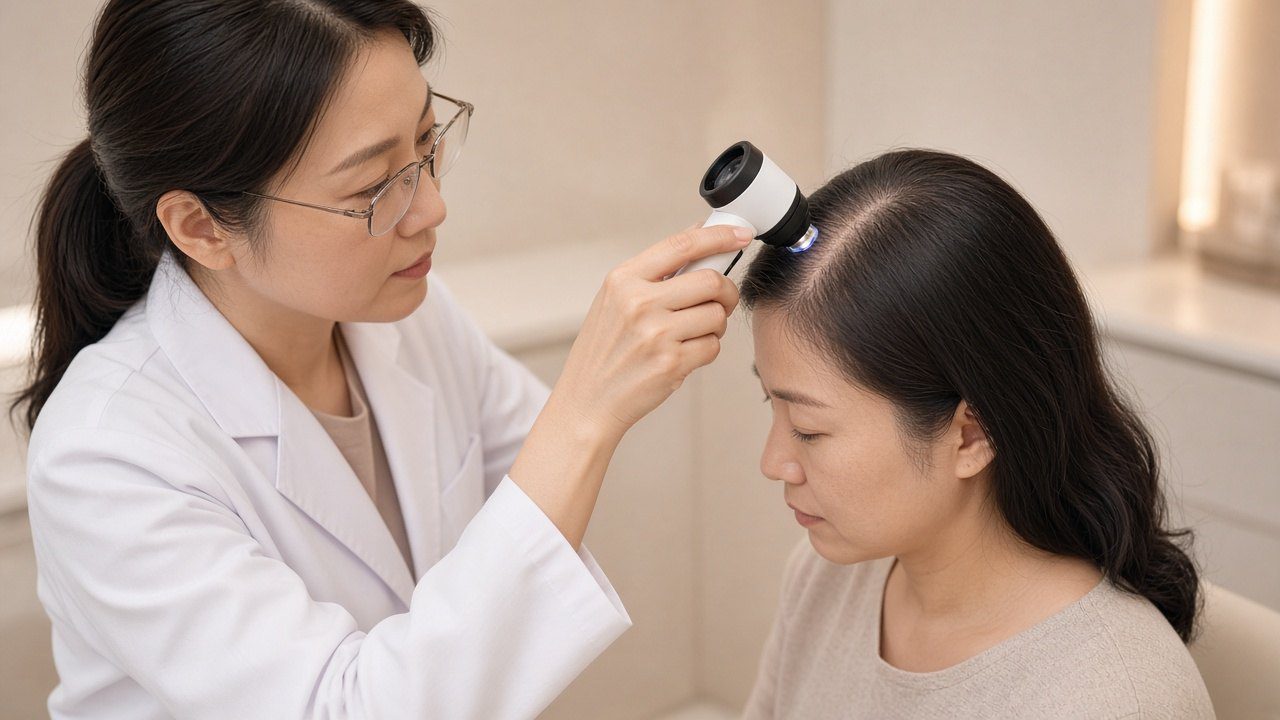
A short-term rise above usual can be observed under fixed conditions. Do not only change shampoo or add supplements on your own if any of the following occurs:
- Shedding stays clearly above your own baseline for several weeks.
- The crown, hairline or part keeps widening and the scalp becomes more visible.
- A round or sharply bordered patch appears suddenly.
- Redness, itch, pain, thick scale, pustules or crust occur together with shedding.
- Eyebrows, eyelashes or hair elsewhere also decrease clearly.
- Shedding continues after childbirth, surgery, marked weight loss, chronic illness or a new medicine.
A visit may review the timeline, distribution, family history and life changes, with trichoscopy when needed. If change is concentrated at the hairline or crown, compare early signs and stages of male-pattern hair loss. For an overall assessment, start with Ruianc Clinic hair-loss assessment. or read related articles in the Ruianc Health Library.
Which sources support this guide?
- American Academy of Dermatology: Hair shedding and hair loss
- American Academy of Dermatology: Hair-loss care tips
- DermNet: Hair shedding
- DermNet: Alopecia areata and active shedding
- British Association of Dermatologists: Telogen effluvium
Not necessarily. Some sources treat about fifty to one hundred hairs a day as a common range, but volume, length, wash interval and collection method change the number you see. A sustained rise above your baseline, or local thinning, is more informative.
Not necessarily. Washing often releases resting hairs that were already loose and caught in the hair, especially after a longer gap. If only wash days look heavy and density is stable, watch the trend first. Fixed thinning or a patch should be assessed.
Usually no. A daily count is easily skewed by washing, combing and breakage. Fixed-light photos, a brief life-event log, and two to four weeks of density and distribution tracking are more useful for deciding whether to seek care.
No. A clinic pull test is done and interpreted by a clinician with other findings. Skipping washes for days and then pulling can inflate the number, and three or five hairs cannot identify the type. Do not diagnose by repeated self-pulling.
Occasional hairs on a pillow or collar can still be everyday shedding. If the amount stays clearly higher for several weeks, or the scalp is more visible, a round patch appears, or there is redness, itch or pain, arrange a dermatology visit.
Not necessarily. Nutrient gaps can play a role, but pattern hair loss, telogen shedding, alopecia areata and scalp disease need different approaches. Do not treat supplements as a general fix before the cause is assessed in person.
Doctor’s note: a one-day count cannot diagnose hair loss on its own
Some daily shedding can be part of the follicle cycle. More useful clues are a sustained rise above your baseline, declining density, a defined patch, scalp symptoms, or extensive breakage.
This article provides general health education and is not an advertisement or recommendation for a specific medicine. Diagnosis, testing and treatment require an in-person medical assessment.
Hair-loss medical team

Dr. Tseng