

Small red bumps centred on hair follicles on your back, chest, thighs, buttocks or scalp—sometimes with a white pus head, stinging or itchy—are often mistaken for acne, but they may be folliculitis. Folliculitis is inflammation of the hair follicle caused by bacteria, yeast or other microbes, or by friction, shaving and trapped heat. It is one of the most common problems seen in dermatology clinics.
Most mild folliculitis can gradually settle once irritation is reduced and the skin is kept clean. But there is more than one cause—bacterial, yeast-related, shaving-related and other follicle problems—and each needs a different approach. If it keeps coming back, spreads, or forms painful lumps, a dermatologist should examine it in person before deciding on treatment.
Key points: Folliculitis is inflammation of the hair follicles, common on the scalp, back, chest, buttocks, thighs and shaved areas. It looks like red bumps or small pustules centred on pores and may itch or sting. Common triggers include heat and sweat, tight clothing, shaving or hair removal, long hours of sitting, lowered immunity and a weakened skin barrier. Bacterial and yeast folliculitis look alike but are treated differently, so do not squeeze spots or use random creams. If it recurs, becomes painful with pus, or comes with fever, see a doctor in person.
What is folliculitis? Why do red bumps keep appearing?
Hair follicles are tiny channels that grow hair and are found almost everywhere except the palms and soles. When the follicle opening is rubbed, blocked, or invaded by bacteria or yeast, it can become inflamed and form small red bumps or pustules centred on the pore—this is folliculitis.
Folliculitis can be a superficial rash, or it can go deeper into larger, painful lumps. Superficial forms usually cover a small area and settle faster; deeper infection may form a boil (furuncle) or a cluster of boils (carbuncle), which needs more active medical care.
Folliculitis itself is usually not serious, but it tends to recur and is often mistaken for acne, heat rash or allergy. Identifying the right type and trigger is key to improving it and preventing relapse.
What are the symptoms? Where does it usually appear?
The look and feel vary with the type and depth. Common features include:
What it looks like
Small red bumps centred on pores, some with a white or yellow pus head and surrounding redness; a hair may be seen in the middle. Bumps often appear in groups of similar size, rather than the mix of blackheads, papules and cysts typical of acne.
How it feels
It may itch, sting or hurt when touched. Yeast folliculitis is mainly itchy; bacterial or deeper forms more often feel tender. Marked swelling, warmth or a growing lump suggests deeper inflammation.
Common sites
The scalp (especially the back of the head and hairline), back, chest, buttocks, inner thighs, armpits, beard area, and legs or bikini line after shaving or hair removal. Areas under tight clothes, long sitting or frequent sweat flare up more often.
What are the common causes and types?
Folliculitis is not a single disease but a group of follicle inflammations. Common types and causes:
- Bacterial folliculitis: common skin bacteria enter through the follicle opening; one of the most common types, with pustules and tenderness.
- Yeast (fungal) folliculitis: yeast normally on the skin overgrows in hot, humid conditions, often on the back, chest and shoulders; mainly itchy, uniform bumps easily mistaken for acne.
- Shaving-related inflammation: after shaving or hair removal, curled hairs grow back into the skin (ingrown hairs) or blades cause tiny cuts, leading to bumps in the beard area, armpits or bikini line.
- Hot tub folliculitis: after soaking in poorly disinfected hot springs, hot tubs or spas, bacteria in the water infect follicles, often a day or two later under swimwear.
- Friction and blockage: tight clothing, backpack straps, long sitting, or heavy, greasy skincare and sunscreen press on and block follicle openings.
- Other factors: people with diabetes, lowered immunity, long-term use of certain topical or oral medicines, or a weakened skin barrier (such as atopic dermatitis) may be more prone to it or to relapses.
Red bumps and pustules on the scalp may also be seborrhoeic dermatitis or another scalp condition, so it is worth having a doctor sort out the cause.
How is it different from acne, heat rash and rosacea?
Folliculitis is often mistaken for other skin problems. The table below summarises common differences for reference only and cannot replace an in-person exam. If facial redness is the main issue, see rosacea symptoms and triggers.
| Point | Folliculitis | Acne | Heat rash (miliaria) | Rosacea |
|---|---|---|---|---|
| Usual sites | Scalp, back, chest, buttocks, thighs, shaved areas | Face, chest, upper back and other oily areas | Hot, sweaty areas such as the neck, skin folds, back | Cheeks, nose, chin, centre of the forehead |
| Look | Red bumps or pustules centred on pores, similar in size | Mix of blackheads, papules, pustules and cysts | Dense tiny red spots or clear tiny blisters | Persistent redness, visible vessels, may have papules |
| Symptoms | Itch or sting; tender when deeper | May hurt; usually not very itchy | Prickly itch, burning | Burning, stinging, easy flushing |
| Common triggers | Infection, friction, shaving, heat, hot tubs | Oil production, pore keratin, hormones | High heat, sweating, poor ventilation | Temperature changes, sun, spicy food, alcohol |
| Care direction | Doctor assesses by type (bacterial, yeast, etc.) | Doctor assesses by severity and pattern | Cool down, keep dry and ventilated | Avoid triggers and see a doctor |
How does a dermatologist check folliculitis?
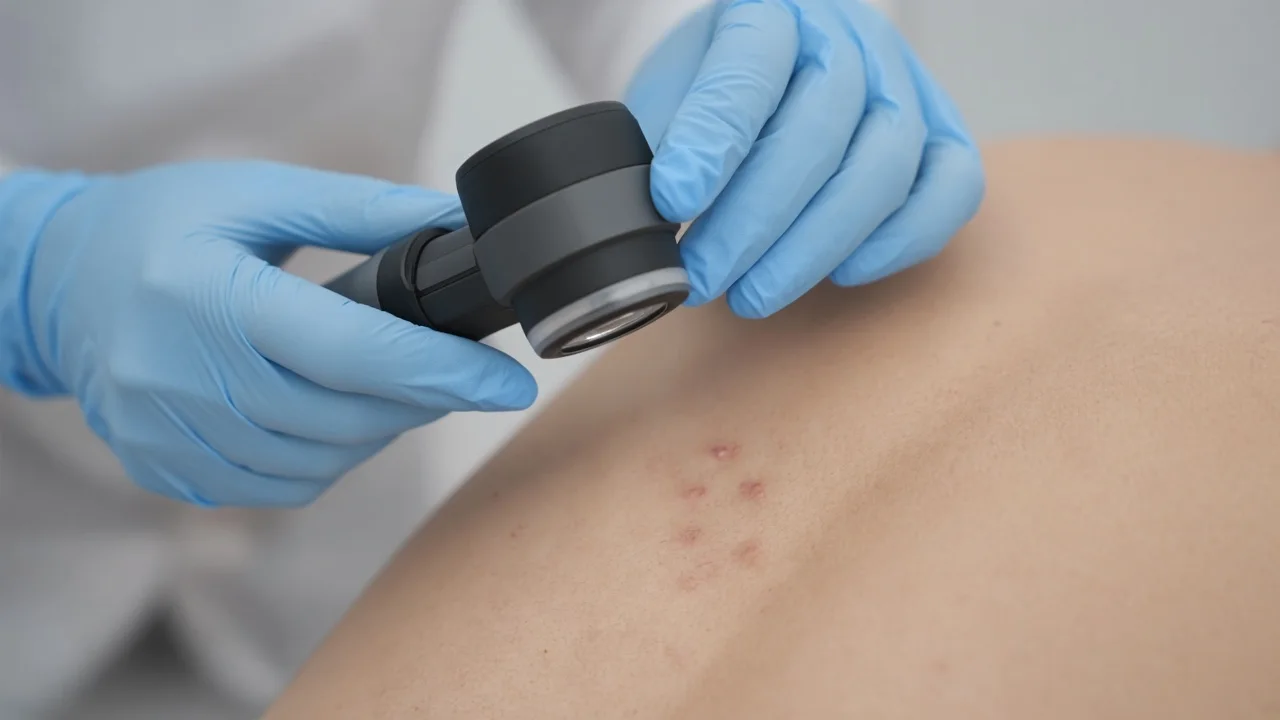
The doctor usually asks how long the bumps have been there, whether they recur, where they are, whether they itch or hurt, and about recent shaving, hot springs or hot tubs, exercise and sweat, clothing, diabetes and current medicines. Photos taken when it looked worst, and the names of creams or medicines you have used, are helpful.
Next, the doctor looks at the distribution, size and pattern, sometimes with a dermatoscope, to judge whether bumps centre on pores and to tell them apart from acne, heat rash, eczema or other skin conditions.
If it keeps recurring, responds poorly or looks atypical, tests such as a bacterial culture of pus or a microscopic yeast check may confirm the cause; occasionally further checks for underlying conditions are considered.
How is folliculitis treated? What are the options?
Treatment depends on the type, extent and depth, and must be decided after an in-person assessment. Common directions include:
- Remove triggers: reducing friction, heat and shaving irritation and adjusting clothing and cleansing habits is the base for every type.
- Bacterial folliculitis: for small areas, the doctor may prescribe a topical antibiotic-class medicine; oral antibiotic-class medicine is considered only for larger, deeper or recurrent cases.
- Yeast folliculitis: usually managed with topical or oral antifungal-class medicines plus less heat and sweat; ordinary acne or antibiotic creams often help little.
- Shaving-related inflammation: change the hair-removal method and pause shaving to let skin rest; the doctor may assess whether an anti-inflammatory topical is needed or discuss other hair-removal options.
- Larger painful lumps or abscesses: may need in-clinic drainage. Do not squeeze them or pierce them with a needle.
- Recurrent cases: the doctor may check for bacterial carriage, diabetes or other underlying factors and discuss long-term prevention.
Different medicine classes cannot replace one another. Buying or using unknown creams can make the problem harder to judge or even worse; whether, how and for how long to use any medicine should follow your doctor’s advice.
What can you do at home? 8 tips for care and prevention

These habits help reduce irritation and relapses—adapt them to your lifestyle. If symptoms are marked or keep recurring, see a doctor first to confirm the type.
- Don’t squeeze or pick: squeezing can push inflammation deeper or leave dark marks and scars.
- Shower and change soon after sweating: after exercise or heavy sweating, rinse off and change into dry clothes as soon as you can.
- Choose loose, breathable clothing: cut down on tight trousers, synthetic fabrics and long rubbing from backpack straps.
- Avoid long, hot sitting: if you sit for long periods, stand up and move regularly so the buttocks and thighs can breathe.
- Cleanse gently: use lukewarm water and a mild cleanser; avoid harsh scrubbing or gritty exfoliants.
- Shave correctly: shave in the direction of hair growth with a clean blade and shaving foam, and keep the area clean afterwards; pause shaving if it keeps flaring.
- Don’t share towels or razors: wash and replace personal items regularly and let towels dry fully.
- Pick lightweight skincare: on the back and chest, avoid heavy, greasy creams or sunscreens and choose products labelled non-comedogenic.
If your skin barrier is weak and prone to dryness and itch, moisturising and avoiding scratching also matter—see atopic dermatitis care tips.
What are common myths about folliculitis?
Myth 1: Folliculitis is just acne, so acne cream will fix it?
Folliculitis and acne have different causes; yeast folliculitis treated like ordinary acne often gets worse. When they look alike, let a doctor confirm the type first; for facial acne care, see how to improve acne.
Myth 2: Folliculitis means poor hygiene?
Not necessarily. Heat and sweat, friction, shaving, constitution and immune status all play a part, and many people who shower often still get it; over-scrubbing and exfoliating may even damage the skin barrier.
Myth 3: Squeezing out the pus makes it heal faster?
Squeezing can push bacteria deeper, spreading inflammation, forming lumps or leaving scars and dark marks. If a pustule is large or clearly painful, a doctor should assess whether it needs treatment.
When should you see a doctor?
A few scattered, painless bumps can be watched for a while once irritation is reduced and the skin is kept dry. See a doctor if:
- The bumps have not improved after a week or two, or keep spreading.
- They keep coming back in the same area.
- You have clearly painful red, swollen lumps, abscesses, or several pus heads grouped together.
- You have a fever, feel generally unwell, or redness spreads quickly.
- Scalp folliculitis comes with hair loss, crusting or scarring.
- You have diabetes or lowered immunity, or it got worse after self-treatment.
To confirm the cause of red bumps or pustules, visit Ruian Clinic dermatology for an in-person assessment, and read more skin topics in the health library.
Health Education References
Ordinary folliculitis usually does not spread easily through everyday contact, but bacterial infection can pass via shared towels, razors or clothing. Don’t share personal items and wash them regularly; if several people at home keep getting it, see a doctor to check for other causes.
Mild, small, superficial folliculitis may settle over time once friction and heat are reduced and the skin is kept clean. If it persists, recurs, hurts or spreads, a doctor should identify the type and decide whether treatment is needed.
They can look similar. Folliculitis is often uniform red bumps or pustules centred on pores, and yeast types are mainly itchy; acne usually mixes blackheads, papules and cysts. Photos alone are hard to judge, so a dermatologist should examine it.
Pause shaving for a few days to let the skin rest and keep it clean and dry; then shave with the grain using a clean blade and shaving foam. If bumps recur, form pus or hurt, see a doctor to check whether treatment or another hair-removal method is needed.
Superficial scalp folliculitis usually does not leave lasting hair loss, but deeper, recurrent inflammation with crusting or scarring can affect follicles. If pustules keep returning on the scalp or come with hair loss, have a doctor check early.
It is not recommended. Folliculitis may be caused by bacteria, yeast or irritation, and different medicine classes cannot replace one another; the wrong one can delay improvement or make it worse. Whether medicine is needed, and which class, should be decided by a doctor in person.
Doctor’s note: don’t squeeze—confirm which type of folliculitis it is first
Red bumps and small pustules may be folliculitis, or they may be acne, heat rash or another skin problem. Folliculitis itself has bacterial, yeast and shaving-related types that need different care. At your visit, mention where it appears, how long it has lasted, any shaving or hot-spring use, and any medicines you have used, so the doctor can examine and decide. Please avoid squeezing or applying random creams; whether medicine or another step is needed must be assessed in person by a doctor.
This article is health education, not a medicine advertisement, and does not recommend or sell a specific drug. It cannot replace a medical examination; diagnosis, tests and treatment must be assessed in person by a doctor based on your individual situation.
Dermatology clinic doctors

Dr. Tseng