

A coin-sized oval red patch with a slightly scaly edge appears on the chest, back or side of the waist. A few days to a week or two later, many smaller pink patches spread across the trunk and upper arms, sometimes itchy. Many people assume it is a fungal infection or an allergy, but it may be pityriasis rosea—a common rash seen in dermatology clinics, most often in teenagers and young adults and more common around seasonal changes.
Pityriasis rosea usually settles on its own over time and normally does not scar, but it is easily confused with fungal infection, eczema, psoriasis or other conditions that do need treatment. If the rash spreads, the itch affects daily life, or you are pregnant, a dermatologist should confirm it in person before deciding whether anything needs to be done.
Key points: Pityriasis rosea is a common rash that usually resolves on its own. Typically a larger oval “herald patch” appears first, followed by smaller pink patches on the trunk and upper limbs that line up along skin creases; some people itch. It is thought to be linked to viral reactivation and generally does not spread easily through everyday contact. Because it can look like fungal infection, psoriasis or eczema, avoid self-treating with antifungal creams or home remedies; if itch is marked, the rash is widespread, it lasts longer than expected, or you are pregnant, see a doctor in person.
What is pityriasis rosea? Why does a rash suddenly appear on the body?
Pityriasis rosea is an acute inflammatory skin rash. Its name comes from the pale rose-coloured patches and fine, bran-like scale. It is not an allergy or a fungal infection, but a skin condition with a characteristic course.
Typically, one larger oval patch appears on the trunk first, called the “herald patch” or “mother patch”. Over the next days to weeks, many smaller patches appear on the chest, back, abdomen, upper arms and thighs, like “daughter” patches springing from the first one.
For most people the rash gradually fades over time and does not scar, although some people with darker skin may be left with temporary darker or lighter marks. Because it looks like other skin conditions, confirming the diagnosis matters more than rushing to apply cream.
What are the symptoms? What is the typical course?
Pityriasis rosea tends to follow a sequence. Common features include:
Herald patch (mother patch)
Usually the earliest lesion: a larger pink-to-salmon oval patch, often with a fine ring of scale just inside the edge, mostly on the chest, back or side of the waist. Some people don’t notice it or mistake it for an insect bite or fungal infection.
Secondary smaller patches
Days to weeks later, multiple smaller oval patches appear on the trunk and upper limbs, their long axes often following skin lines—on the back they can look like the branches of a “Christmas tree”. The face, palms and soles are less often affected.
Other symptoms and course
Some people have mild to marked itch, which may worsen after sweating, hot showers or strenuous exercise; a few have cold-like tiredness, sore throat or a mild fever before the rash. The rash usually fades over weeks to months and may come and go, with wide individual variation.
What might cause pityriasis rosea? Is it contagious?
The exact cause is not yet fully understood. Key medical observations include:
- Virus-related: research suggests it may be linked to reactivation of certain human herpesviruses (types 6 and 7) in the body. This is not the same as ordinary cold sores or genital herpes, and it is not a sexually transmitted infection.
- Low contagiousness: most studies suggest it does not spread easily to family or colleagues through everyday contact, so isolation or time off school or work is usually not needed.
- Who gets it: more common in teenagers and young adults, though children and older adults can also be affected; cases tend to cluster around seasonal changes.
- Body condition: some people develop it after a cold, fatigue or stress, but a clear trigger is not always found.
- Drug-related look-alike rashes: a few medicines can cause a “pityriasis rosea-like” rash, so telling your doctor about any recently started medicines is important for judging whether they are related.
Most people have pityriasis rosea only once in their life, though a few may have it again; if similar rashes keep recurring, a doctor should check whether another condition is involved.
How is it different from fungal infection, psoriasis and eczema?
Pityriasis rosea is often mistaken for a fungal infection (tinea corporis). The table summarises common differences for reference only and cannot replace an in-person exam; for fungal problems with peeling, itchy feet, see athlete’s foot (tinea pedis) checks and care.
| Point | Pityriasis rosea | Tinea corporis (fungal infection) | Psoriasis | Eczema / contact dermatitis |
|---|---|---|---|---|
| How it starts | Often one larger herald patch first | Spreads slowly outward from one spot | Appears gradually, often recurs | After contact or dryness |
| Distribution | Trunk and upper limbs, along skin lines | Anywhere, often asymmetrical | Elbows, knees, scalp, lower back and buttocks | Contact sites, dry areas or skin folds |
| Look | Pink oval patches, fine scale inside the edge | Ring-shaped patches with a redder, clearer edge | Well-defined red plaques with thick silvery scale | Redness, scale, small blisters, less defined edges |
| Course | Usually fades on its own over weeks to months | Usually keeps spreading without treatment | Chronic, recurring | Can improve once triggers are avoided |
| Care direction | Confirm diagnosis, itch care, doctor assesses | Confirm fungus, then follow doctor’s assessment | Long-term follow-up with a doctor | Find triggers, moisturise, doctor assesses |
How does a dermatologist check pityriasis rosea?
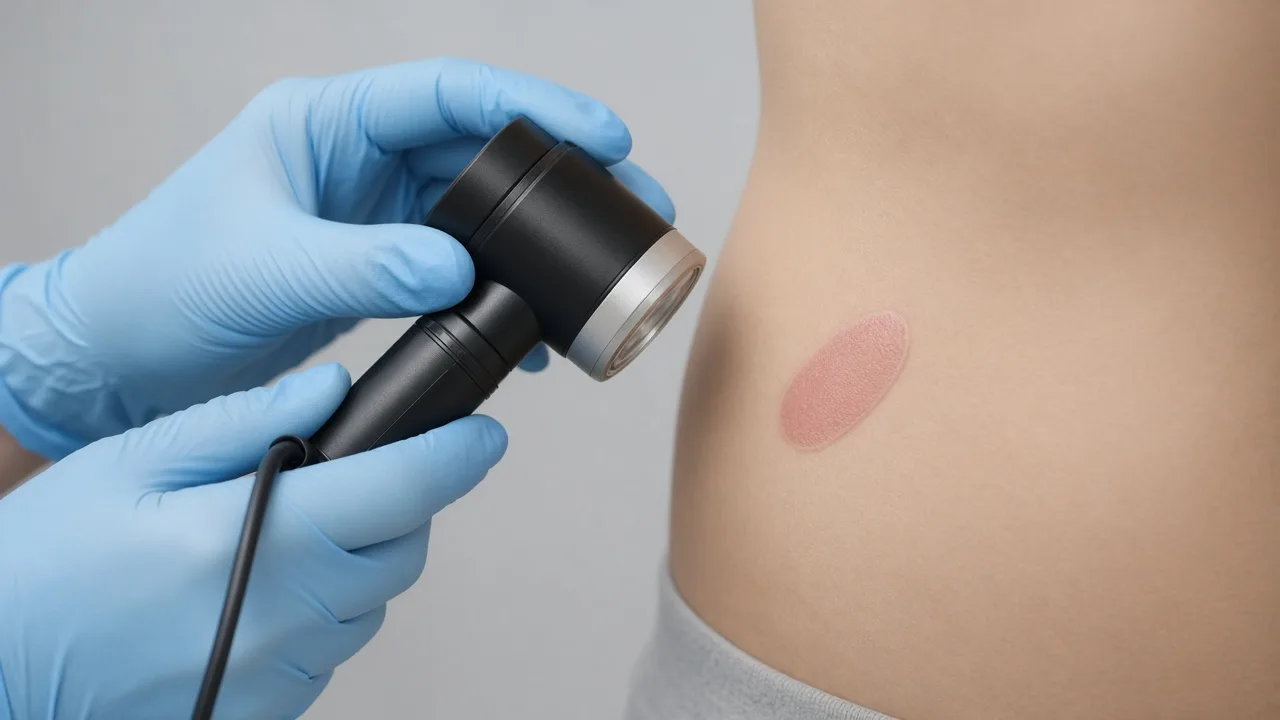
The doctor usually asks when and where the earliest spot appeared, how it spread, whether it itches, whether you had cold symptoms beforehand, whether you recently started any new medicine, and whether you are pregnant. A photo of that early patch can be very helpful.
Next, the doctor looks at the distribution, size, orientation and position of scale, sometimes with a dermatoscope. The typical pattern can often be recognised clinically, but it still needs to be told apart from other skin conditions.
If it looks atypical, the doctor may take skin scrapings for a fungal check to rule out tinea; if spots appear on the palms or soles, or other conditions need to be excluded, a blood test may be suggested; if it lasts unusually long or looks unusual, a skin biopsy is occasionally considered. Whether any of these tests is needed is decided case by case.
How is pityriasis rosea treated? Do you need cream?
Most pityriasis rosea settles on its own, so treatment focuses on confirming the diagnosis, easing discomfort and avoiding irritation, decided after an in-person assessment. Common directions include:
- Watch and explain: if symptoms are mild and not very itchy, the doctor may suggest gentle care and regular observation while the rash runs its course.
- Itch relief and moisturising: use gentle moisturisers as your doctor advises to reduce dryness and irritation from scratching.
- Anti-inflammatory topicals: if itch is more marked, the doctor may prescribe a short course of an anti-inflammatory-class topical medicine depending on site and extent.
- Oral itch relief: if itch disturbs sleep, the doctor may consider antihistamine-class medicines.
- Other options: for widespread, marked or prolonged cases, the doctor may discuss light therapy or other approaches; suitability is assessed individually.
- During pregnancy: if a possible pityriasis rosea rash appears during pregnancy, tell both your dermatologist and obstetrician so they can assess and follow up together.
Pityriasis rosea is not a fungal infection, so self-bought antifungal creams usually help little, and some topical products or home remedies may irritate the skin. Whether, which class and for how long to use any medicine should follow your doctor’s advice.
What can you do at home? 8 care tips
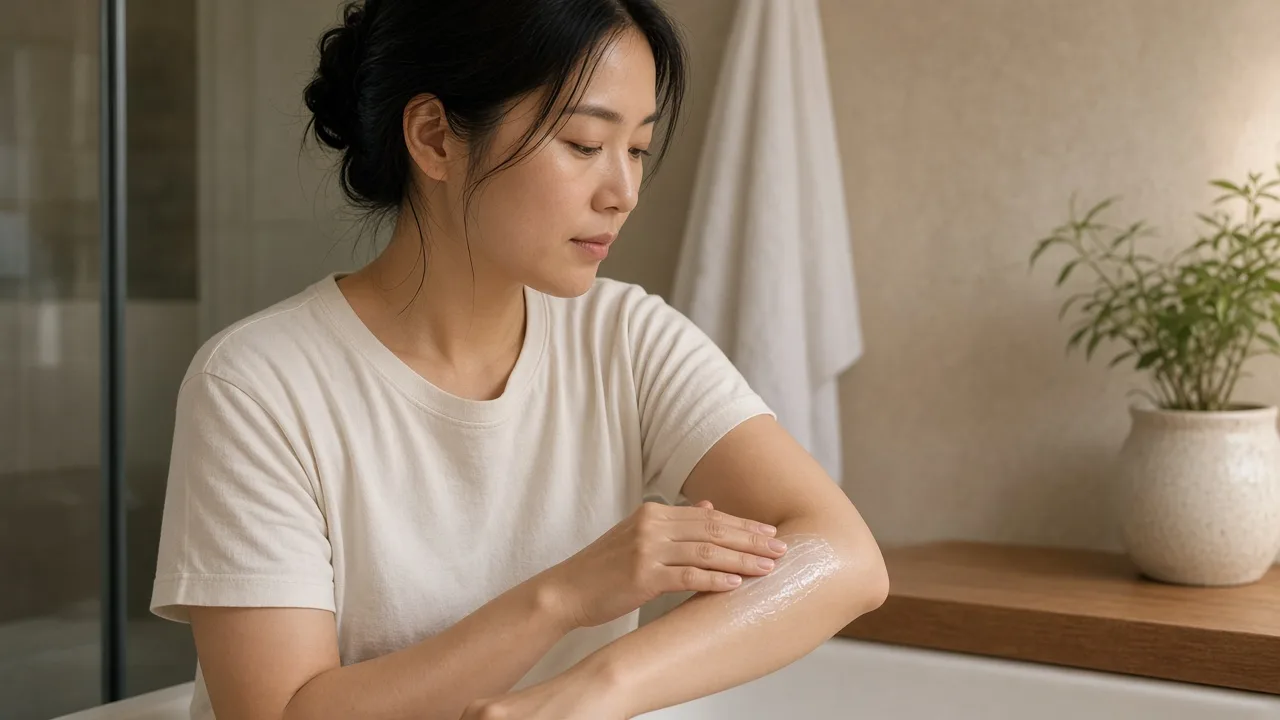
These habits help reduce irritation and keep skin more comfortable—adapt them to your situation. If the rash looks atypical or itch is marked, see a doctor first to confirm.
- Lukewarm, shorter showers: avoid very hot water and long baths, which can worsen itch.
- Choose mild cleansers: avoid heavily fragranced or strongly degreasing body washes, and don’t scrub the rash.
- Moisturise right after showering: pat dry and apply moisturiser while skin is slightly damp to reduce dryness and scale.
- Wear loose, breathable clothing: choose soft cotton to reduce friction and heat.
- Avoid heavy sweating: while itch is marked, cut back on intense exercise or long stays in hot, stuffy places for a while.
- Don’t scratch or pick: keep nails short and use cool compresses when itchy to avoid infection or dark marks.
- Skip home remedies and harsh products: essential oils, alcohol and irritating creams can make skin more uncomfortable.
- Take photos to track changes: photograph the rash every few days so your doctor can compare at follow-up.
If your skin barrier is naturally weak and prone to dryness and itch, see atopic dermatitis care tips for everyday moisturising.
What are common myths about pityriasis rosea?
Myth 1: Ring-shaped red patches on the body mean fungus?
Not necessarily. The herald patch of pityriasis rosea is often mistaken for fungal infection; antifungal cream may not help and can make it harder for the doctor to judge. If you see ring-shaped or oval patches, have a doctor check them first.
Myth 2: It’s contagious, so I must avoid my family?
Pityriasis rosea is generally considered to have low contagiousness, so isolation or time off school or work is usually unnecessary. However, if several people at home develop similar rashes at the same time, see a doctor to rule out other contagious skin conditions.
Myth 3: It goes away on its own, so there’s no need to see a doctor?
Although most cases settle by themselves, it looks similar to fungal infection, psoriasis and drug rashes, so confirming the diagnosis tells you whether anything needs treating. If you suspect redness and itch after contact with skincare or cleaning products, see contact dermatitis causes and care.
When should you see a doctor?
When oval red patches or a widespread rash of small spots first appear, have a dermatologist confirm the diagnosis. After pityriasis rosea is confirmed, also return for review if:
- Itch is marked and affects sleep, work or school.
- The rash keeps spreading or appears in atypical places such as the face, palms or soles.
- It lasts longer than your doctor expected, or comes back after fading.
- You also have fever, feel generally unwell, or have mouth ulcers or joint pain.
- You are pregnant or planning pregnancy.
- The rash appeared after starting a new medicine, or it worsened after self-treatment.
To find out what is causing a body rash, visit Ruian Clinic dermatology for an in-person assessment, and read more skin topics in the health library.
Health Education References
- American Academy of Dermatology (AAD): Pityriasis rosea
- DermNet: Pityriasis rosea
- NHS: Pityriasis rosea
It is generally considered to have low contagiousness and usually does not spread easily to family or colleagues through everyday contact, so isolation or time off is mostly unnecessary. If several people at home get similar rashes at once, see a doctor to check for other skin conditions.
For most people the rash gradually fades over weeks to months and may come and go in between; the course varies widely. If it lasts longer than your doctor expected, spreads or keeps returning, go back for a review.
Both can cause ring-shaped or oval patches. Pityriasis rosea often starts with a herald patch, followed by smaller patches on the trunk along skin lines; fungal infection usually spreads slowly outward from one spot with a redder edge. Photos alone are hard to judge, and the doctor may take skin scrapings to confirm.
Not always. If symptoms are mild, the doctor may suggest gentle care and observation; if itch is marked, an anti-inflammatory-class topical or antihistamine-class medicine may be considered. Whether medicine is needed, and which class, should be decided by a doctor in person.
If a possible pityriasis rosea rash appears during pregnancy, see a doctor soon and tell both your dermatologist and obstetrician so they can confirm the diagnosis and arrange suitable follow-up. Self-medication is not recommended.
Pityriasis rosea usually does not scar. Some people have temporary darker or lighter marks after it fades, which mostly lighten over time. Most people have it only once, though a few may have it again; if similar rashes keep recurring, a doctor should check for another condition.
Doctor’s note: confirm it is pityriasis rosea before deciding on any cream
Oval red patches and many small spots on the body may be pityriasis rosea, or they may be a fungal infection, psoriasis, eczema or a drug-related rash, which are handled differently. At your visit, mention when and where the earliest spot appeared, how it spread, how itchy it is, any recently started medicines and whether you are pregnant, and bring early photos if you have them so the doctor can examine and decide. Please avoid self-treating with antifungal creams or home remedies; whether medicine or another step is needed must be assessed in person by a doctor.
This article is health education, not a medicine advertisement, and does not recommend or sell a specific drug. It cannot replace a medical examination; diagnosis, tests and treatment must be assessed in person by a doctor based on your individual situation.
Dermatology clinic doctors

Dr. Tseng