

On a cold-snap morning your fingers feel fine, but by evening your knuckles or toes have turned reddish-purple and swollen, and they itch and sting as soon as you come near a heater or hot water. Many people assume it is an allergy or insect bites, but it may be chilblains (also called pernio).
Chilblains do not only happen where it snows. Taiwan’s winters are damp and cold with big temperature swings, and moving between cold outdoors and warm indoors can make the small blood vessels in the hands and feet react poorly and cause inflammation. Most chilblains slowly improve as the weather warms, but if they keep coming back, blister or break the skin, or similar changes appear outside cold seasons, it is recommended to have a dermatologist assess you in person to find the cause and plan suitable care.
Key points: Chilblains are inflammation caused by an abnormal reaction of small blood vessels in the skin to damp cold that is not freezing. They often affect the fingers, toes, ears and nose, appearing as reddish-purple swelling with itching, burning or stinging, and in more severe cases blisters or broken skin. Unlike frostbite, the tissue does not freeze. Care focuses on keeping warm, keeping dry and avoiding rapid heating with hot water or heaters. Most improve within weeks, but if they recur, break down and become infected, or appear outside cold seasons, see a doctor to check for related conditions. Diagnosis and treatment should be assessed in person by a dermatologist.
What are chilblains? Are they the same as frostbite?
Chilblains are a cold-related skin inflammation. When the skin is exposed to low temperatures and damp conditions, the small blood vessels at the extremities constrict; when you return to a warm place, if they widen too quickly or do not regulate well, blood may leak into the surrounding tissue, causing local inflammation, swelling and discomfort.
Chilblains are often confused with <strong>frostbite</strong>, but they are different. Frostbite usually happens near or below freezing: the tissue itself freezes and is damaged, which can cause numbness, pallor and even tissue death, and needs urgent care. Chilblains usually occur in damp cold that is not freezing; they mainly involve the blood vessels and inflammation, and the tissue does not freeze.
Most chilblains are “primary,” simply related to the weather. In a small number of people, chilblain-like changes may be linked to autoimmune diseases, blood or circulation problems, which is called “secondary” and needs further assessment by a doctor.
What are the symptoms of chilblains, and where do they appear?
Chilblains usually appear a few hours to about a day after cold exposure. The features below are for understanding only and cannot replace a doctor’s diagnosis:
Changes in appearance
Red, reddish-purple or bluish-purple swollen patches or small bumps appear, sometimes with unclear edges, often on both sides symmetrically. The swollen area may feel cool to the touch.
Itching, burning and stinging
Chilblains are often very itchy or cause burning and stinging, especially after coming from the cold into a warm room or after soaking in hot water. Some people scratch the skin open because of the itch.
Blisters, broken skin and ulcers
In more severe cases, blisters may form on the swollen area; when they break, erosions or small ulcers can follow. If not cared for properly, broken skin may become infected with bacteria, with pus, increasing pain or spreading redness.
Common locations
Fingers and toes are most often noticed; the ears, tip of the nose, heels, outer lower legs, and even thighs and buttocks that are exposed to cold for long periods or thinly covered may also be affected.
What causes chilblains, and who is more likely to get them?
Chilblains are closely linked to “cold + damp + rapid temperature changes,” but why some people get them more easily varies. Common related factors include:
- Damp, cold environments: low temperature and high humidity, or hands and feet staying wet for long (such as wet shoes and socks).
- Rapid warming after cold: rinsing hands in hot water right after coming in, or warming feet in front of a heater.
- Poor circulation in the extremities: people whose hands and feet are often cold.
- Low body weight: less fat under the skin means less insulation.
- Smoking: affects constriction of small blood vessels and circulation.
- Insufficient warm clothing or cold workplaces: long hours in cold storage, washing work or outdoors.
- Related conditions: some autoimmune diseases (such as lupus) or circulation-related diseases may come with chilblain-like lesions; a doctor will assess this when needed.
Chilblains are more often noticed in women, teenagers and older adults, but they can occur at any age. Chilblains are not contagious.
How does a dermatologist diagnose chilblains?
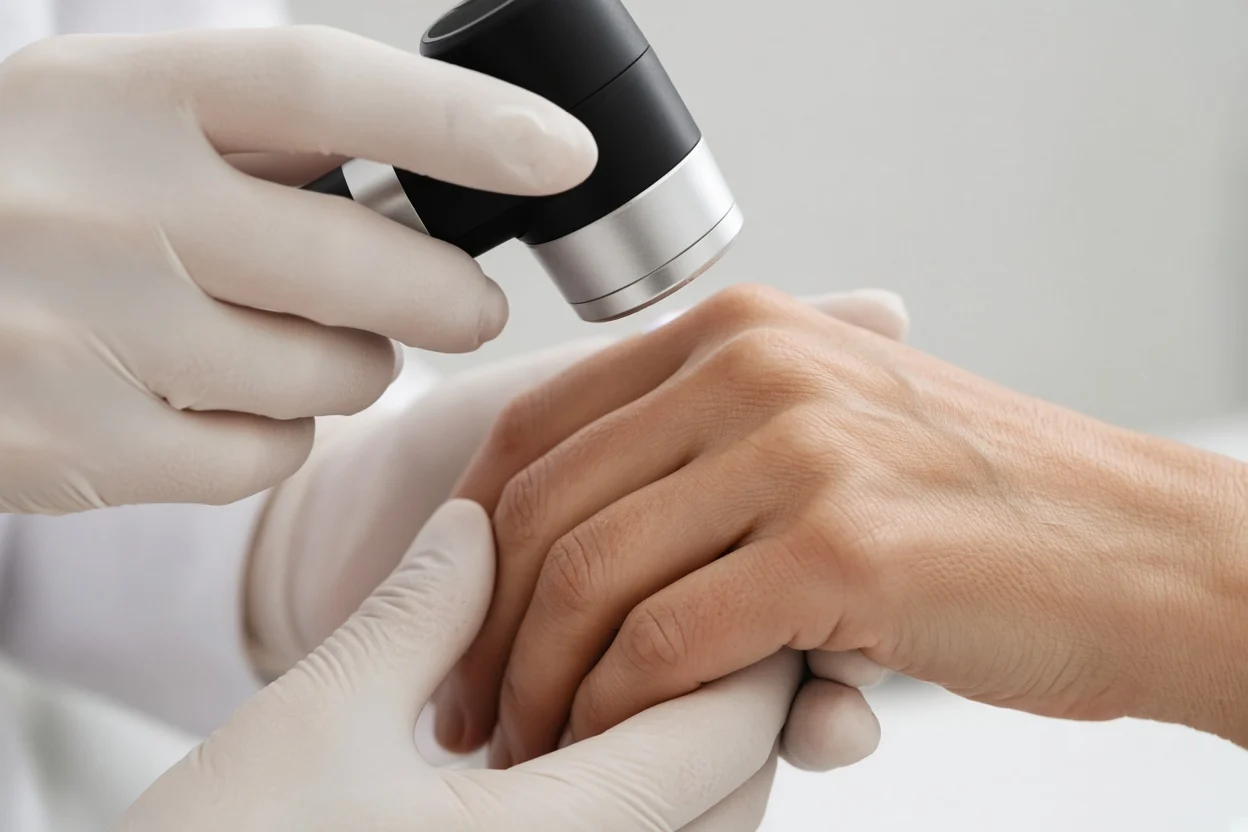
Most chilblains can be diagnosed clinically by a dermatologist from their appearance, location and a history of appearing after cold exposure. The doctor often asks when and in which season they appear, whether they recur, whether your hands and feet are often cold or change color, your work and living environment, whether you smoke, and whether you have joint pain, mouth ulcers, sun sensitivity, unexplained fever or other whole-body symptoms.
If chilblains recur severely, persist after the weather warms, appear outside cold seasons, or come with other suspicious symptoms, the doctor may assess blood tests and, if necessary, a skin biopsy to check whether they are linked to autoimmune or other diseases. Typical, simple chilblains do not always need extra tests.
Before your visit, you can note when and where they appear, the weather at the time, and take photos to help the doctor understand the course. Please avoid applying home remedies or creams of unknown origin, which may irritate the skin and affect the assessment.
Chilblains, frostbite, winter eczema and Raynaud’s: what is the difference?
Red, discolored or itchy hands and feet in winter can have more than one cause. The table below summarizes common differences for understanding only. For common winter itch problems, see winter eczema and dry, itchy skin; diagnosis should still be made by a doctor.
| Item | Chilblains | Frostbite | Winter eczema | Raynaud’s phenomenon |
|---|---|---|---|---|
| Main mechanism | Small-vessel inflammation from damp cold and rapid temperature changes | Tissue freezing and damage near freezing point | Dry, damaged skin barrier with inflammation | Episodic narrowing of small vessels triggered by cold or stress |
| Typical setting | Damp cold, not freezing | Extreme cold, ice and snow | Dry cold, low humidity, over-washing | Cold, stress |
| Appearance | Reddish-purple swollen patches, possibly blisters | Pale, numb, hard; dark in severe cases | Dry scaling, red rash, cracks | Fingers turn white → purple → red on rewarming, changing over minutes to hours |
| Sensation | Itching, burning, stinging | Numbness, then pain | Dry itch | Numbness, cold, tingling |
| Duration | Days to weeks | Depends on damage; may need long-term care | Recurs in dry seasons | Episodic; recovers on rewarming |
| Management | Keep warm, avoid rapid heating, care as assessed by a doctor | Seek care promptly, rewarm under guidance | More moisturizing, less irritation | Keep warm, assess for related conditions |
Do chilblains go away? Course and common changes
Most primary chilblains gradually fade within weeks once you avoid ongoing cold, and swelling and itching slowly ease. But if the weather stays damp and cold, or you do not keep warm enough, new lesions may keep appearing, making it feel as though they never heal all winter.
Chilblains tend to come back in the same season each year; for some people they become less frequent with age or lifestyle changes. After they fade, temporary darker marks may remain and usually lighten over time, though how long this takes varies.
If chilblains persist after the weather warms, repeatedly break down into ulcers, or similar lesions appear outside cold seasons, it is not recommended to treat them simply as “cold weather” — see a doctor to check for related conditions.
What are the management options for chilblains?
Management aims to relieve symptoms, help lesions fade, prevent broken skin and infection, and reduce recurrence. Common approaches include:
- Keeping warm and adjusting the environment: this is the foundation. Keeping the area warm and dry and avoiding further cold lets most chilblains gradually improve.
- Local anti-inflammatory and anti-itch care: when swelling and itching are marked, the doctor may assess short-term topical anti-inflammatory medicines (such as topical corticosteroids) or oral antihistamines for itch; suitability, where to apply and for how long should be decided by a doctor.
- Medicines that improve blood flow to the extremities: when chilblains recur severely and affect daily life, the doctor may assess vasodilator medicines and explain possible side effects and precautions; these are not suitable to buy and use on your own.
- Managing broken skin and infection: when blisters break or ulcers form, the doctor will assess wound care; if there is a bacterial infection, antibiotics may be assessed.
- Looking for an underlying cause: if an autoimmune or other disease is suspected, the doctor may arrange tests and, if needed, refer you to a related specialty.
For pregnancy, children, older adults, or people with cardiovascular disease or taking other medicines, medicine choices may differ, so please have a doctor assess you in person. To learn about the dermatology assessment process, see Ruian Clinic Dermatology.
How to care for chilblains at home: 7 key points
Chilblain care is based on “keep warm, keep dry, rewarm gently.” Adjust the following according to your doctor’s advice:
- Keep your whole body warm, not just hands and feet: enough core warmth helps keep blood flow to the extremities steady; wear a hat, scarf, gloves and warm socks outdoors, in layers.
- Keep dry: change wet shoes, socks and gloves as soon as possible; dry your hands after washing them or the dishes.
- Rewarm gently, avoid rapid heat: after coming in from the cold, let hands and feet warm slowly at room temperature; avoid hot water, heaters or heat packs directly on the skin, which may worsen burning and stinging or cause burns.
- Do not rub or scratch: rubbing hard or scratching may break the skin and increase the risk of infection.
- Moisturize well: skin dries easily in winter; a gentle, fragrance-free moisturizer can reduce cracking. If it stings or a rash spreads, stop and ask your doctor.
- Avoid smoking and stay active: smoking affects circulation; if you sit for long, get up and move your fingers and toes to help blood flow.
- Avoid tight shoes and socks: tight footwear compresses blood flow and makes feet colder.
If your hands and feet tend to dry and crack, or you have an atopic tendency, see also atopic dermatitis care. For more everyday skin care topics, visit our Health Library.
What are common myths about chilblains?
Myth 1: Chilblains only happen in countries with snow?
No. Chilblains are closely linked to damp cold and rapid temperature changes, and do not require ice or snow. They can also occur in Taiwan’s damp, cold winters with large indoor–outdoor temperature differences.
Myth 2: Soaking cold hands and feet in hot water heals them faster?
Not recommended. Heating quickly with hot water or a heater after cold exposure may make the vessels react more strongly, worsening burning, stinging and swelling, and risks burns. Let hands and feet rewarm slowly at room temperature.
Myth 3: Rubbing itchy chilblains hard improves circulation?
Not recommended. Rubbing and scratching may break inflamed skin or burst blisters, increasing infection risk. To improve circulation, focus on keeping warm and moderate movement.
Myth 4: Chilblains are frostbite—could I lose a finger?
Chilblains are different from frostbite. Most are skin inflammation that gradually improves, not frozen, dead tissue. But numbness, skin turning white or black, or loss of sensation may mean it is not simple chilblains—seek care promptly.
Myth 5: Chilblains come back every year, so I just have to put up with them?
Not necessarily. With good warmth and lifestyle changes, many people have fewer flare-ups; for severe recurrences, a doctor may assess medicines and underlying causes. Whether and how to treat can be discussed with your doctor.
When should you see a dermatologist?
Mild, simple chilblains may gradually improve with good warmth, but it is recommended to see a dermatologist if:
- You are not sure whether it is chilblains, frostbite, eczema or another skin problem.
- There are blisters, broken skin or ulcers, or signs of infection such as pus, increasing pain or spreading redness.
- Itching or pain is severe and affects sleep, work or walking.
- It has not improved for several weeks after the weather warms, or similar lesions appear outside cold seasons.
- It recurs every year and keeps getting worse.
- You also have joint pain, mouth ulcers, sun sensitivity, unexplained fever, episodes of fingers turning white or other symptoms.
- You have diabetes, poor circulation or other chronic conditions that slow wound healing.
If you notice numbness, skin turning pale and hard, or turning black—possible signs of frostbite—seek care promptly. To find out the cause of red, swollen, itchy hands and feet, visit Ruian Clinic Dermatology for an in-person assessment by a doctor.
Health Education References
Most simple chilblains gradually improve within weeks once you keep warm and avoid further cold. If the skin keeps breaking down, symptoms are severe, or they have not improved after the weather warms, it is recommended to see a doctor.
It is not recommended to soak in hot water or warm up quickly by a heater right after cold exposure, as this may worsen burning and stinging and risks burns. Let hands and feet rewarm slowly at room temperature, and keep warm day to day with warm socks and shoes.
Chilblains are usually reddish-purple swelling after cold exposure, often with burning and stinging, on the ends of fingers and toes. Winter eczema mainly causes dry scaling, red rash and dry itch, related to a damaged skin barrier. They can occur together, so a doctor’s examination is needed to tell them apart.
No. Chilblains are a blood vessel and inflammatory reaction caused by cold, not an infection, and do not spread by contact.
It may be related to circulation in the extremities, constitution, work and living environment, keeping-warm habits or smoking. Rarely it is linked to other diseases; if it recurs every year and keeps getting worse, it is recommended to have a doctor assess the underlying cause.
Children can also get chilblains, and most improve with good warmth. But children may find it hard to describe discomfort; if there are blisters, broken skin, scratch marks or repeated flare-ups, it is recommended to have a doctor assess them rather than using home remedies.
Doctor’s note: for chilblains, keep warm and rewarm gently—see a doctor if they keep coming back
Chilblains are mostly related to damp cold weather and rapid temperature changes; keeping warm, keeping dry and avoiding rapid heating are the foundation of care. At your visit, you can describe the season, the areas affected, whether there are blisters or broken skin, whether your hands and feet are often cold or change color, and any other whole-body symptoms, so the doctor can examine and decide. Whether medicines, tests or further assessment of an underlying cause are needed should all be assessed in person by a medical professional.
This article is health education information, not a drug advertisement, and does not recommend or sell any specific medicine. It cannot replace a medical examination; diagnosis, tests and treatment should be assessed in person by a doctor based on each individual situation.
Dermatology doctor team

Dr. Tseng