

You suddenly feel a small lump on the back of your neck, your cheek or your back that “moves” under the skin. It does not hurt or itch, but when squeezed it releases white, sometimes smelly material. Many people assume it is a pimple or a pus bump, and some worry it is a tumor. This very common lump under the skin is usually an epidermoid cyst—a benign cyst formed when skin keratin collects inside a small sac.
An epidermoid cyst is usually not contagious, and most are not cancerous. However, it may slowly grow or become inflamed again and again, and squeezing it yourself can lead to infection or scarring. To confirm whether it is an epidermoid cyst, whether it needs treatment, and whether removal is suitable, it is recommended to have a dermatologist examine you in person and then decide on the approach that suits you.
Key points: An epidermoid cyst is a benign cyst filled mainly with keratin, not oil. It usually appears as a round, movable lump under the skin, sometimes with a small central pore (punctum). It is common on the face, neck, trunk and scalp and is usually painless. When it becomes red, swollen and painful, the cyst wall may have ruptured and caused inflammation, which does not always mean a bacterial infection. Cysts without symptoms can be observed; if they keep getting inflamed or affect appearance or daily life, a doctor may assess incision and drainage or complete removal of the cyst wall. Please do not squeeze it hard yourself. Diagnosis and management should be assessed in person by a dermatologist.
What is an epidermoid cyst, and is it the same as a “sebaceous cyst”?
In everyday speech, people often use the word “cyst” for any small pocket-like lump under the skin. When dermatologists talk about this common lump, they usually mean an epidermoid cyst (also called an epidermal inclusion cyst): its wall comes from the epidermis or the upper part of a hair follicle, and inside it are layers of keratin that look like white, cheese-like material, sometimes with an odor.
These lumps have long been called “sebaceous cysts,” which makes many people think they are full of oil from the oil glands. In fact, a typical epidermoid cyst contains mainly keratin and is not a true sebaceous gland cyst. The two terms are often mixed up in practice, but assessment and management should follow a doctor’s examination.
Most epidermoid cysts are benign. Occasionally, other types such as pilar cysts can appear on the scalp or elsewhere and look similar; a doctor distinguishes them by location, feel and, when needed, pathology. This article focuses on the most common type, the epidermoid cyst.
What are the symptoms of an epidermoid cyst, and where does it usually appear?
Epidermoid cysts usually have a few features you can notice, but they can still resemble other lumps under the skin. The points below are for understanding only and cannot replace a doctor’s diagnosis:
Appearance and feel
A round or oval lump under the skin that can usually be moved slightly when touched, ranging from soft to moderately firm. The skin on top is usually a normal color; sometimes a small dark dot or pore (punctum) is visible in the center—the opening that connects the cyst to the skin surface. Most of the time it does not hurt or itch.
Contents
If the cyst wall breaks or the cyst is squeezed, white, toothpaste-like or cheese-like keratin may come out, sometimes with a strong odor. Squeezing it yourself can tear the wall further and inflame the surrounding tissue, and may increase the risk of infection and scarring, so it is not recommended.
Changes when inflamed
When the cyst wall ruptures and keratin leaks into nearby tissue, the body treats it as a foreign substance, causing redness, swelling, warmth and pain that can look like a pus bump or boil. This does not always mean a bacterial infection; whether antibiotics or other treatment are needed should be decided by a doctor. If there is pus, fever or rapidly spreading redness, seek medical care promptly.
Common locations
The face, neck, trunk (especially the back and chest) and scalp are common sites; they can also appear behind the ears or on the scrotum. Sizes range from a few millimeters to a few centimeters, and there may be one or several.
What causes epidermoid cysts, and who is more likely to have them?
Epidermoid cysts are thought to form when surface skin cells or hair follicle lining become trapped in the deeper skin and keratin keeps building up. Triggers vary from person to person, and common associations include:
- Keratin-producing cells being “tucked” deeper into the skin after a hair follicle is irritated, inflamed or slightly injured.
- Sometimes appearing together with an acne-prone tendency or in areas with repeated follicle inflammation.
- Being noticed more often in young and middle-aged adults; both men and women can have them.
- Rare inherited syndromes that may come with multiple cysts or other skin or digestive findings; if many cysts appear in a short time or with other abnormalities, a doctor will assess whether further tests are needed.
Epidermoid cysts are not spread to others by touch or by sharing towels or clothing. If you also have red, swollen, pus-like bumps that keep coming back, they could be a boil or folliculitis, which a doctor can help tell apart.
How do dermatologists diagnose an epidermoid cyst?
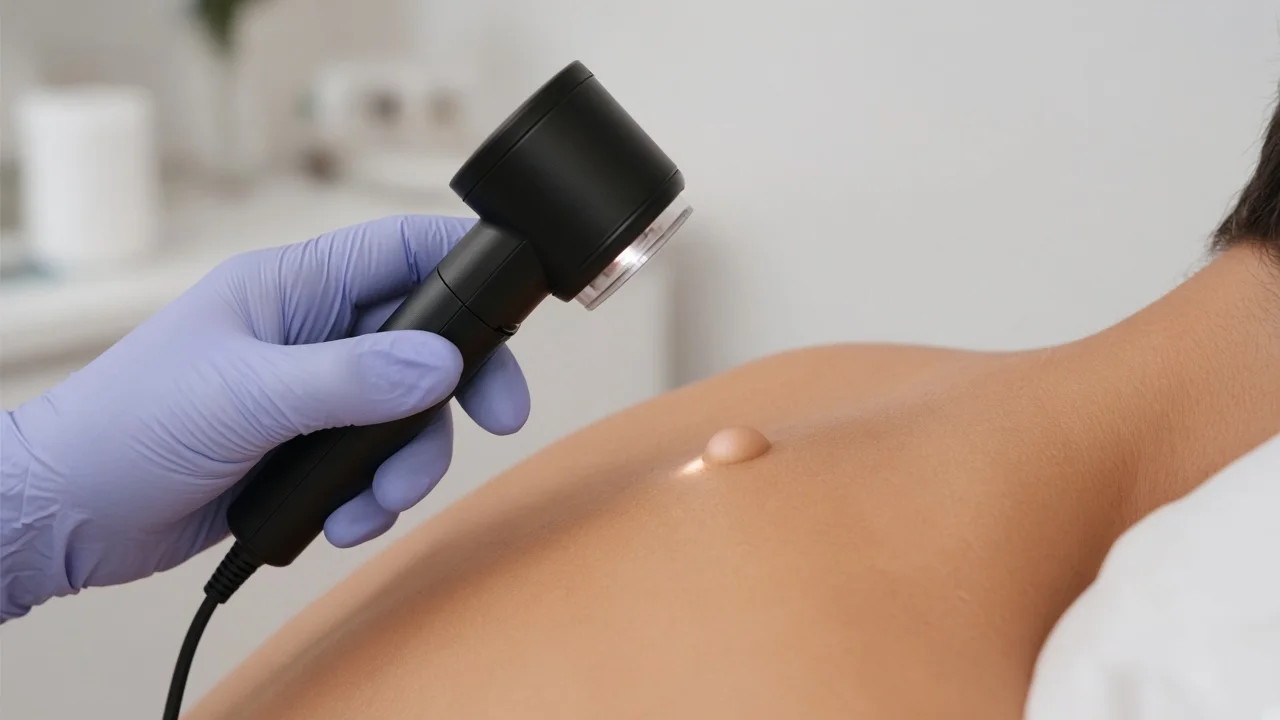
Most epidermoid cysts can be diagnosed clinically by a dermatologist based on appearance, location, feel and features such as a central pore. The doctor will ask how long it has been there, whether it has grown, whether it has been red or painful, whether you have squeezed it, and whether you have had similar lumps before.
During the visit, the doctor may use a dermatoscope to look at the punctum and surrounding skin. If the lump looks atypical, is in a special location, grows quickly, feels hard and fixed, or tissue needs to be confirmed after removal, the doctor may assess surgical removal with pathology testing. A typical cyst without symptoms usually does not require blood tests or imaging.
Before your visit, avoid squeezing it hard, poking it with a needle or applying ointments of unknown origin, as these can change its appearance or worsen inflammation and make assessment harder. It also helps to jot down when the lump appeared and how it has changed so the doctor can understand its course.
How is an epidermoid cyst different from a boil, acne, and a lipoma?
Lumps under the skin and red, swollen bumps are often confused, but their causes and management differ. The table below summarizes common differences for understanding only; to learn more, see the articles on boils, folliculitis and the four stages of acne. Diagnosis should still be made by a doctor.
| Feature | Epidermoid cyst | Boil / skin abscess | Acne (cystic) | Lipoma |
|---|---|---|---|---|
| Main cause | Keratin collecting inside a sac | Bacterial infection of a follicle or skin with pus | Oil, follicle keratinization and inflammation | Benign lump of fatty tissue |
| Appearance | Round lump under the skin, often with a central pore | Red, hot, painful pus bump that may open and drain | Deep, painful inflamed nodule or cyst-like pimple | Soft, movable lump under the skin, usually without a pore |
| Contents | Keratin (cheese-like), may have an odor | Pus | Oil and inflammatory material | Fatty tissue |
| Sensation | Usually painless; painful when inflamed | Clearly tender | Often tender | Usually painless |
| Contagious? | No | Possibly (depends on the germ) | No | No |
| Management | Observation, assessment of inflammation, or complete removal of the cyst wall | Warm compresses, drainage and infection assessment | Planned by a doctor based on severity | Usually observation; removal assessed if it affects function or appearance |
Does an epidermoid cyst go away? Course and common changes
An epidermoid cyst without symptoms does not necessarily go away by itself. It may stay about the same size for a long time or grow slowly. Some people feel it has “gone” after inflammation settles, but the cyst wall may still be there and swell up again later—one of the common reasons it comes back.
If the cyst is only cut open and emptied without dealing with the wall, it is more likely to come back. Complete removal of the wall usually lowers the chance of recurrence, but this still varies with the person, location and surgical conditions, and it may still recur. Improving appearance or reducing repeated inflammation takes time and also depends on the size, location and whether it has had a severe infection.
Rarely, a cyst that has been present for a long time or looks atypical may need pathology testing to rule out other conditions. If the lump grows noticeably in a short time, ulcerates, bleeds, or becomes hard and fixed, please see a doctor promptly rather than waiting too long.
What are the management options for an epidermoid cyst?
Management aims to relieve discomfort, reduce repeated inflammation and, when needed, lower the chance of recurrence. Common approaches include:
- Observation: if it is not painful, not repeatedly inflamed and does not affect appearance or function, the doctor may suggest observing it first and explain when to come back.
- Managing an inflamed cyst: when it is red and painful, the doctor may assess a local procedure (such as incision and drainage to relieve pressure) or anti-inflammatory measures. Most red, swollen epidermoid cysts are an inflammatory reaction rather than a bacterial infection, so whether oral or topical antimicrobial medicines are needed should be decided by a doctor.
- Complete removal of the cyst wall: if it keeps getting inflamed, is large, affects appearance, or you prefer treatment, the doctor may assess surgical removal of the whole wall when it is relatively calm to lower the chance of recurrence; incision size, stitches and scarring risk will be explained according to the location.
- Pathology testing: whether removed tissue is sent for testing is decided by the doctor based on clinical judgment.
- Related problems: if you also have acne, folliculitis or other skin infections, care will be assessed together.
For pregnancy, children, the face or special areas (near the eyes, ear canal, genitals and so on), the threshold and method for procedures may differ, so please have a doctor assess you in person. Do not cut it open, poke it with a needle or inject unknown substances at home. To learn about the dermatology assessment process, see Ruian Clinic Dermatology.
How to care for it at home: 7 key points for epidermoid cysts

Home care is based on “less irritation, watch for changes.” Adjust the following according to your doctor’s advice:
- Do not squeeze or poke it: this can rupture the wall, worsen inflammation and increase the risk of infection and scarring.
- Keep it clean, gently: wash the surrounding skin with a gentle cleanser and avoid scrubbing hard over the lump.
- Watch for redness and pain: if it suddenly becomes red, hard or very painful, or there is pus or fever, seek medical care promptly.
- Reduce friction: if it sits on the neck, waistband or where a backpack rubs, reduce repeated rubbing and pressure.
- Keep a record: note when it appeared, how its size changed and whether you squeezed it, and share this with your doctor.
- Wound care: if the doctor has drained or removed it, change dressings as instructed, keep it clean and dry, and return on time for stitch removal or follow-up.
- Let inflammation settle: a cyst in an acute red, swollen stage is not always suitable for immediate complete removal; doctors often treat the inflammation first and then plan the next step.
If a new topical product causes stinging or a spreading red rash, stop using it and ask your doctor. For more everyday skin care topics, visit our Health Library.
Common myths about epidermoid cysts
Myth 1: It is full of oil, so squeezing it clean will fix it?
Not necessarily. An epidermoid cyst contains mainly keratin. Even if you squeeze the contents out for now, the cyst often comes back if the wall remains, and squeezing can cause worse inflammation and scarring.
Myth 2: If it is red and swollen, it must be infected and needs antibiotics?
Not necessarily. Inflammation after the wall ruptures can look like an infection without bacteria being involved. Whether antimicrobial medicines are needed should be decided by a doctor after an examination; do not take medicines of unknown origin on your own.
Myth 3: Can an epidermoid cyst turn into cancer?
The vast majority are benign. For very rare atypical or long-changing lesions, a doctor may suggest pathology testing. If the lump grows quickly, ulcerates, becomes fixed or shows other warning signs, see a doctor promptly rather than assuming it is “definitely fine” or “definitely cancer.”
Myth 4: Can it spread to family members?
No. An epidermoid cyst is not a contagious disease. If several people at home have red, swollen pus bumps, folliculitis, boils or other infections are more likely and should be assessed separately.
Myth 5: Surgery always leaves a big scar, so it is better to leave it?
Scarring depends on the size and location of the lump, whether it has been severely infected, and your own tendency to scar. Repeated inflammation or squeezing it open yourself can sometimes leave more noticeable marks or scars. Whether and when to have surgery can be discussed with your doctor, including expected appearance and alternatives.
When should you see a dermatologist?
A stable epidermoid cyst without discomfort usually does not need urgent care, but it is recommended to see a dermatologist if:
- You are not sure it is an epidermoid cyst and want to tell it apart from a boil, acne, a lipoma or another lump.
- It is red, very painful or has pus, or you suspect infection.
- It grows noticeably in a short time, ulcerates or bleeds, or becomes hard and difficult to move.
- It keeps getting inflamed and affects sleep, clothing or appearance.
- It is near the eyes, ear canal, center of the face or another special area.
- Many appear at once, or there are other whole-body or digestive abnormalities that need further assessment.
- You want to discuss timing of removal, scarring and aftercare.
To find out the cause of a lump under the skin, visit Ruian Clinic Dermatology for an in-person assessment by a doctor.
Health Education References
Not necessarily. If it has no symptoms and does not affect daily life, the doctor may suggest observation. If it keeps getting inflamed, grows or bothers you cosmetically, removal of the cyst wall can be assessed. Whether and when surgery is suitable should be assessed in person by a doctor.
This is not recommended. Squeezing can rupture the wall, worsen inflammation and may increase the risk of infection and scarring; if the wall remains after the contents come out, it often comes back.
Acne is related to keratinization, oil and inflammation in the hair follicle and oil gland, often on the face, chest and back, with blackheads, whiteheads and red pimples. An epidermoid cyst is a keratin-filled cyst under the skin, often with a central pore, and is usually painless. They can occur together, so a doctor examination is needed to tell them apart. To improve acne, see also <a href="https://ruianc.com/taichung/how-to-improve-acne/">how to improve acne and when to see a doctor</a>.
Avoid squeezing it, keep the area clean and see a doctor promptly. The doctor may first manage the redness and any need for drainage, then decide whether complete removal is needed later. Do not cut it open or inject unknown substances yourself.
If the wall is not completely removed, it is more likely to come back. Complete removal usually lowers the chance of recurrence, but this still varies with location, past inflammation and individual factors. After surgery, follow your doctor’s wound care instructions and attend follow-up visits.
Children can also have epidermoid cysts or related small cysts. Most are benign, but if it is on a child’s face, in a special area or changing quickly, it is recommended to have a doctor assess it and not squeeze it at home.
Doctor’s note: do not squeeze an epidermoid cyst—see a doctor first when it is red and swollen
Most epidermoid cysts are benign, but squeezing or poking them often makes inflammation worse and may leave a scar. At your visit, you can describe when and where it appeared, whether it has grown or become red, and whether you have squeezed it, so the doctor can examine and decide. Whether drainage, antimicrobial medicines or complete removal of the cyst wall is needed, as well as the timing of surgery and expected scarring, should all be assessed in person by a medical professional.
This article is health education information, not a drug advertisement, and does not recommend or sell any specific medicine. It cannot replace a medical examination; diagnosis, tests and treatment should be assessed in person by a doctor based on each individual situation.
Dermatology doctor team

Dr. Tseng