

Rough brown spots on the face, the backs of the hands, the chest, or the back that look like a dab of wax stuck onto the skin are often called “age spots.” Many of them are seborrheic keratoses: benign skin growths that are not contagious and are not precancerous.
“Age spots” is only a nickname, though. Flat sun spots (solar lentigines) and raised seborrheic keratoses can both go by that name. A few skin cancers can also look quite similar, so a spot that grows unusually fast, has very mixed colors, or starts to bleed should still be checked by a doctor.
Key Takeaways: Seborrheic keratosis is a benign skin growth that becomes more common with age, frequently seen on the face, neck, chest, and back. It looks like a brown waxy bump stuck to the skin, is not contagious, and usually does not require treatment. If you find it unsightly, or if it often catches on clothing or itches, you can discuss options such as cryotherapy, electrocautery and curettage, or laser treatment with a dermatologist. A spot that grows quickly, has mixed colors, bleeds, or breaks open should be seen by a doctor soon. Whether a spot is benign needs a doctor’s assessment, sometimes with a biopsy to confirm.
What Is Seborrheic Keratosis? Why Is It Called an Age Spot?
Seborrheic keratosis is an overgrowth of skin cells (keratinocytes) in the outer layer of the skin that builds up into a raised spot. Medically, it is a benign skin tumor and does not spread to other parts of the body.
It often appears gradually after a person’s thirties or forties and increases in number with age, which is why it came to be called “age spots.” Although the name contains “seborrheic,” it is unrelated to oil secretion or seborrheic dermatitis—they are two separate conditions.
Some people have only a few scattered spots on their body, while others develop many, and family members often have a similar tendency.
What Does Seborrheic Keratosis Look Like?
At first, it is mostly a small, slightly rough spot, which then slowly thickens and becomes raised, with an uneven, wart-like surface.
Common Appearance Features
- It looks like a piece of wax or mud “stuck” on the surface of the skin, usually with well-defined borders.
- The color is mostly brown, though it may also be skin-colored, yellow, gray, dark brown, or black.
- The size ranges from tiny dots to the size of a coin.
- It feels rough, slightly greasy, or as if covered by a layer of scales.
Where Does It Commonly Grow?
The face, scalp, neck, chest, back, and abdomen are all very common sites, and it may grow on both sun-exposed and covered areas. One notable exception: it typically does not appear on the palms of the hands or the soles of the feet.
Does It Hurt or Itch?
It is usually painless. Some people may feel itching, or notice redness and broken skin from friction against clothing, necklaces, or bra straps.
Why Does Seborrheic Keratosis Develop? Is It Contagious?
The exact cause is still unclear, but several related factors have been observed:
- Age: The number of spots gradually increases with age, and it is considered one of the common signs of skin aging.
- Family tendency: People in certain families are particularly prone to developing many spots.
- Sun exposure: It is more common on areas frequently exposed to the sun, though it also grows on areas covered by clothing, so sun exposure is only one of the factors.
- Friction: Occurrences in skin folds such as the armpits, groin, and beneath the breasts may be related to long-term friction.
It is not contagious. Many people feel that “more keep appearing, as if it is spreading.” In fact, new ones simply appear with age; they do not spread from one spot to another.
How to Tell Seborrheic Keratosis Apart from Solar Lentigo, Melanocytic Nevus, and Melanoma?
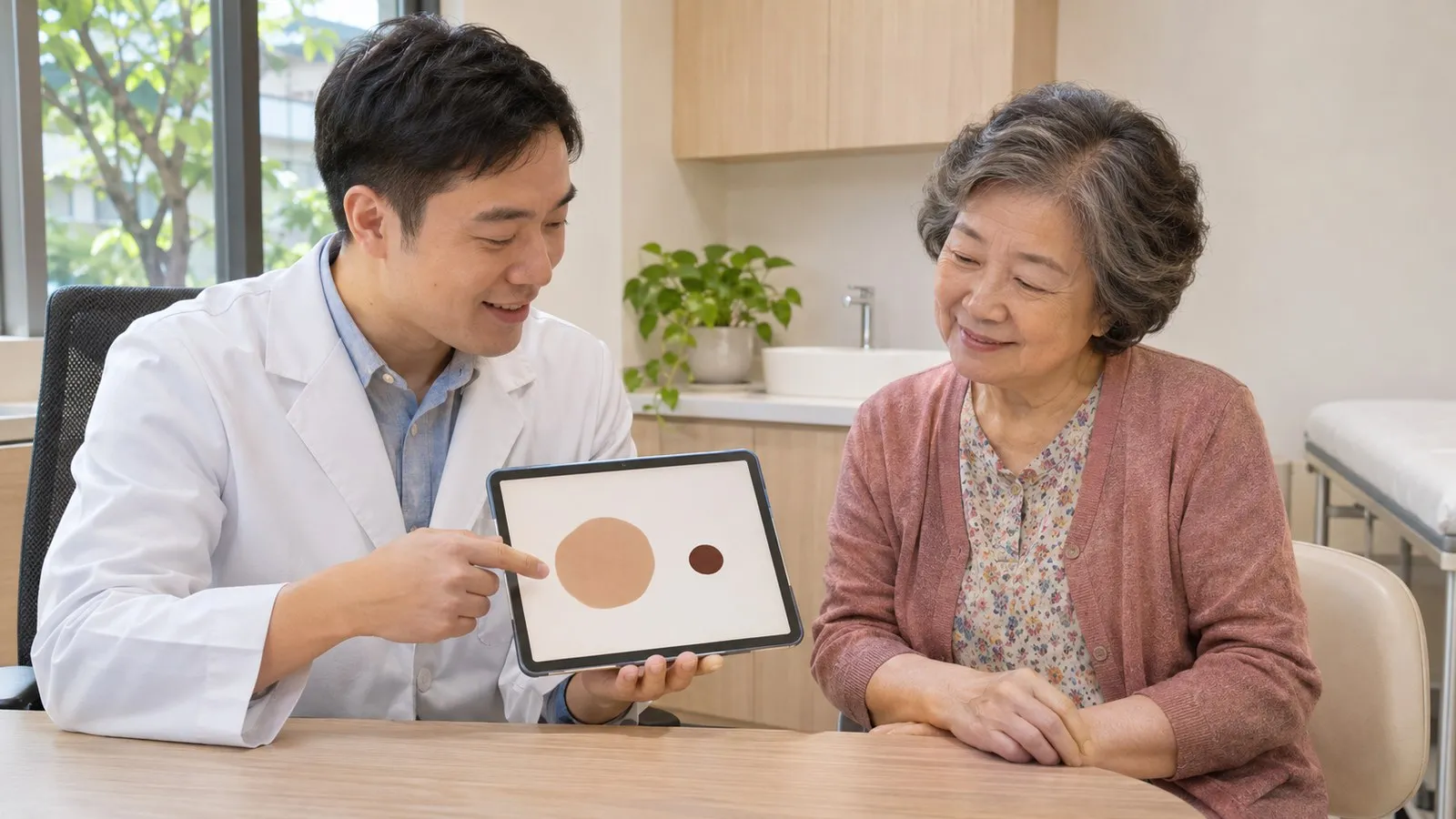
All of these may be referred to as “spots” or “age spots,” and they can sometimes look quite similar. The table below is only meant to help you decide whether to see a doctor and should not be used for self-diagnosis.
A solar lentigo can sometimes slowly thicken and develop into a seborrheic keratosis, so the line between the two is not always clear-cut. For how to check your moles at home, see Can a Mole Turn Into Skin Cancer? ABCDE Check.
How Does It Differ from a Viral Wart?
Both can have a rough surface. A viral wart is caused by a viral infection, may be contagious, and is more commonly found on the hands and feet; seborrheic keratosis is not contagious and usually does not appear on the palms or soles. When it is hard to tell them apart, having a doctor examine the spot is the safer approach. For more on viral warts, see Are Viral Warts Contagious?.
| Feature | Seborrheic Keratosis | Solar Lentigo (Sun Spot) | Common Melanocytic Nevus (Mole) | Lesion Requiring Prompt Medical Attention |
|---|---|---|---|---|
| Texture | Raised, rough, looks stuck onto the skin | Flat, cannot be felt by touch | Flat or slightly raised, relatively smooth surface | May become firm, raised, or ulcerated |
| Color | Mostly brown, ranging from skin-colored to black | Light brown to dark brown, uniform | Single color, uniform | Multiple mixed colors, or shades of red, white, or blue-gray |
| Common Locations | Face, neck, chest, and back; usually not on the palms or soles | Sun-exposed areas such as the face, backs of hands, and forearms | Anywhere on the body | Anywhere, including the palms, soles, and nails |
| Rate of Change | Slowly thickens over many years | Slowly darkens or increases in number | Little change over many years | Noticeable change within a few weeks to a few months |
| Symptoms | Occasional itching, redness when rubbed | Usually none | Usually none | Bleeding, non-healing sores, persistent itching or pain |
Does Seborrheic Keratosis Need Treatment?
It is benign and not a precancerous lesion itself, so most cases do not require treatment.
You may want to talk with a doctor about removal when:
- Its appearance is difficult to distinguish from skin cancer, and the doctor needs to remove it for a biopsy.
- It frequently catches on or rubs against clothing, jewelry, or belts, leading to repeated inflammation or bleeding.
- It feels itchy or uncomfortable.
- It is on the face or another visible area and bothers you cosmetically.
How Does a Dermatologist Treat Seborrheic Keratosis?
A doctor can usually identify it by visual examination and may sometimes use dermoscopy to magnify and inspect the surface patterns. If the lesion looks difficult to distinguish from skin cancer, the doctor will recommend removing part or all of it for a pathology biopsy, which is the standard way to confirm its nature.
Common Treatment Options
- Cryotherapy: Uses low-temperature liquid nitrogen to make the lesion shed. Blistering and crusting may occur afterward, and the scab will fall off on its own later.
- Electrocautery and curettage: After local anesthesia, electrocautery is used to treat the lesion before scraping away the surface layer; stitches are usually not needed.
- Laser therapy: An appropriate laser is chosen based on the thickness and location of the lesion, commonly used on areas where appearance is a concern, such as the face.
- Shave biopsy: When a lesion requires laboratory testing, the doctor may shave it off directly to send for examination.
Each method suits different thicknesses, body areas, and recovery processes, and should be evaluated by a doctor based on the condition of the lesion and your skin tone. For more on when laser treatment may be suitable, see Laser Mole and Spot Removal Treatments.
What Should You Watch Out for After Treatment?
The treated area may temporarily turn red and form a scab, and the skin tone afterward may look slightly lighter or darker than the surrounding skin. This color difference usually fades gradually over time, though it can sometimes last longer, which is more likely to happen in people with darker skin tones.
Avoid picking at the scab while it is healing, and practice sun protection when going outdoors. A lesion that has been removed usually does not grow back in the exact same spot, though new ones may still appear elsewhere on the body.
Can You Pick It Off Yourself or Remove It with Home Remedies?
This is not recommended. Picking at it with your fingernails, cutting it with scissors, or burning it off with corrosive “spot-removing solutions” from unknown sources can easily cause bleeding, infection, scarring, or post-inflammatory hyperpigmentation.
More importantly, if the growth is actually not seborrheic keratosis, but a lesion that requires testing, removing it yourself makes it very difficult for a doctor to evaluate later. If you want to have it removed, it is safer to let a dermatologist confirm its nature first.
Can Age Spots Be Prevented? How Should You Care for Your Skin Daily?
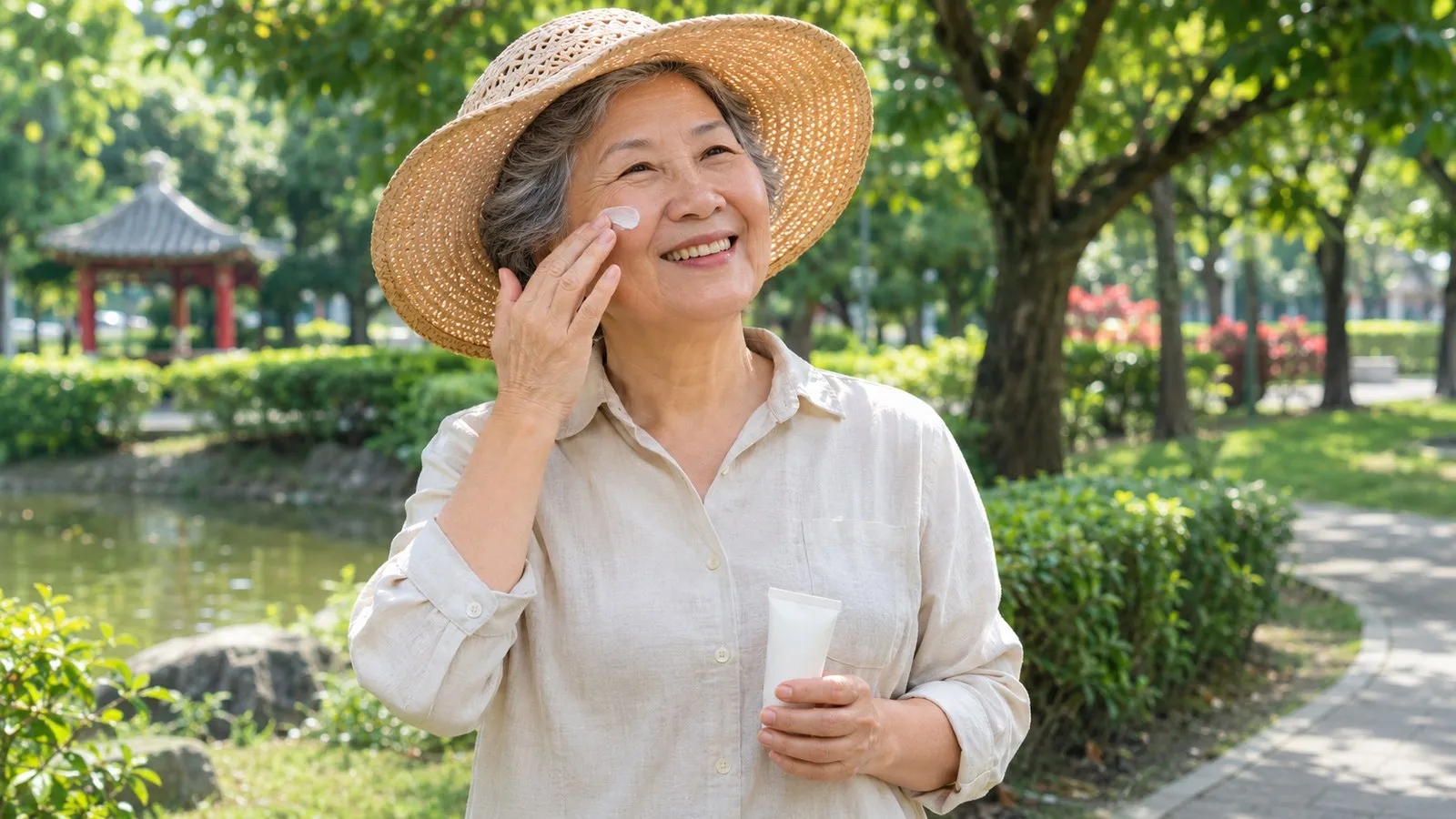
There is currently no proven way to prevent seborrheic keratosis. However, sun exposure may be linked to both seborrheic keratosis and solar lentigo, and daily sun protection also helps your skin as it ages:
- Avoid hours of strong midday sunlight, and wear a hat, carry an umbrella, or wear lightweight long sleeves when going outdoors.
- Apply sunscreen, and remember to reapply after sweating or swimming.
- For areas prone to friction, choose soft clothing that does not fit too tightly.
If the spots on your face are mainly flat, patchy brown marks, they may also be melasma or solar lentigo, which are managed differently. See How Can Melasma Be Improved?.
When Should You See a Dermatologist?
Consider having a dermatologist take a look if:
- A spot grows rapidly, becomes more raised, or changes color within a few weeks to a few months.
- A single growth has multiple uneven colors, or has irregular, spreading borders.
- There is bleeding, ulceration, or a wound that continues not to heal.
- Many growths suddenly appear over a short period of time.
- It grows on the palms, soles, or nails, because seborrheic keratosis usually does not develop in these areas.
- You cannot tell on your own whether it is an age spot, a melanocytic nevus (mole), or another condition.
During the visit, the doctor will ask how long the spot has been present and whether it has changed, examine it with the naked eye or dermoscopy, and arrange a biopsy if necessary. To learn more about our dermatology clinic, visit Ruian Clinic Dermatology.
Frequently Asked Questions
Can age spots turn into skin cancer?
Seborrheic keratosis itself is benign, not a precancerous lesion, and usually does not turn into skin cancer. However, some skin cancers look very similar to it, so it is recommended to have a doctor check any spots that change rapidly, bleed, or have very mixed colors.
Is seborrheic keratosis contagious?
No. It is not caused by an infection; the number increases because new ones appear with age, not because they spread from one to another.
Can young people also develop seborrheic keratosis?
Yes, though it is less common. They mostly begin to appear after a person’s thirties or forties, though people with a family tendency may develop them earlier. If uncertain raised spots appear on a young person’s body, it is recommended to have a doctor examine them.
Will age spots grow back after being removed?
A spot that has been treated is usually unlikely to grow back in the same place, but as you get older, new ones may still appear on other parts of the body, which you can discuss with your doctor as needed.
Can age spots be removed with laser treatment?
It can be one of the options. The doctor will evaluate whether laser treatment, cryotherapy, or electrocautery and curettage is suitable based on the spot’s thickness, location, and your skin tone; if the appearance is difficult to distinguish from skin cancer, a biopsy will be recommended first.
Health Education References
- American Academy of Dermatology: Seborrheic keratoses: Overview
- American Academy of Dermatology: Seborrheic keratoses: Signs and symptoms
- American Academy of Dermatology: Seborrheic keratoses: Causes
- American Academy of Dermatology: Seborrheic keratoses: Diagnosis and treatment
- DermNet: Seborrhoeic keratosis
- DermNet: Solar lentigo
A Note from the Doctor
Age spots are very common, and most of them are nothing to worry about. What requires closer attention is a spot that has “changed rapidly recently” or “looks different from your other spots.” If you cannot tell whether a spot on your body is an age spot, a mole, or another issue, or if you would like to discuss removal options, you are welcome to visit Ruian Clinic and have a dermatologist take a look.*This article provides health education information and cannot replace a doctor’s diagnosis; please have a qualified physician evaluate your actual condition in person.*
This article is health education information, not a drug advertisement, and does not recommend or sell any specific medicine. It cannot replace a medical examination; diagnosis, tests and treatment should be assessed in person by a doctor based on each individual situation.
Dermatology doctor team

Dr. Tseng