

You wake up with a cracked mouth corner that stings when you eat or laugh. A lip balm helps for a while, but it cracks again, turns red and peels, and sometimes the edge looks moist with a thin crust. Many people assume it is a “vitamin deficiency” or “too much heat in the body”, but it may be angular cheilitis—inflammation at the corners of the mouth where skin meets the lining of the mouth. It is a very common reason to visit a dermatology clinic.
There is rarely just one cause: constant wetting by saliva, deep creases that trap moisture, dentures or braces, mouth breathing, dry or allergic skin, and fungi or bacteria growing in the damp area can all play a part. If you keep applying skincare without finding the trigger, it tends to come back; it can also look like cold sores or contact dermatitis, so it is best checked in person by a dermatologist.
Key points: Angular cheilitis is inflammation of the skin at the corners of the mouth. Common signs are redness, cracking, peeling and stinging, and when damp the edges can become moist or crusted. It is often linked to constant saliva exposure, creases at the mouth corners, dentures or braces, mouth breathing and dry skin, and can be complicated by a fungal or bacterial infection; in some people nutrition or a chronic condition plays a role. The focus is on finding and improving the triggers while keeping the corners dry and protected. If it keeps returning, stays on one side without healing or comes with other symptoms, please have a doctor assess it in person, and avoid long-term use of creams of unknown content or home remedies.
What is angular cheilitis? Why do mouth corners crack?
Angular cheilitis is an inflammatory skin problem at the corners of the mouth, where skin meets the lining of the mouth, so it is easily affected by saliva, friction and the conditions inside the mouth.
When the mouth corners stay damp for long periods, the skin’s protective layer softens and weakens, leading to redness and cracks; the cracks then make it easy for fungi or bacteria to settle in, which keeps the inflammation going.
It can affect one or both sides. Children, older adults, people with dentures or braces, people who lick their lips, and people with naturally dry or sensitive skin tend to be affected more often.
What are the symptoms of angular cheilitis?
Angular cheilitis ranges from mild to more troublesome. Common signs include:
Mild redness and dry cracks
Pale red patches and flaking appear at the mouth corners, with a tight or mildly stinging feeling when you open wide. Some people also feel itching or burning.
Repeated cracking and moist breakdown
Small splits appear at the corners with a moist, whitish or crusted edge. Eating, talking or yawning pulls on them and hurts, and they may bleed; after healing they crack again easily.
Signs of infection
If the edges of the splits show yellow crusts, marked redness and swelling, oozing, or a white coating, a bacterial or fungal infection may be involved. If there are also white patches or burning inside the mouth, it is worth having the doctor check the mouth as well.
What causes angular cheilitis? Is it contagious?
Angular cheilitis is usually the result of several factors working together. Common causes and triggers include:
- Constant wetting by saliva: licking the corners, drooling during sleep, mouth breathing or nasal congestion keep the corners damp.
- Creases at the mouth corners: drooping corners and deeper folds (common in older adults or after weight changes) trap moisture and rub together.
- Dentures or braces: poorly fitting dentures, a change in bite height or wearing braces can concentrate saliva at the corners.
- Fungal or bacterial infection: damp skin makes it easy for Candida (a yeast) or Staphylococcus aureus and other microbes to grow, keeping the inflammation going.
- Dry or allergic skin: an atopic tendency, dry lips, or sensitivity to lip balms, toothpaste, mouthwash or food ingredients can trigger it.
- Nutrition and general health: in some people it is linked to uneven nutrition (for example low iron or B vitamins), poorly controlled blood sugar or weaker immunity, and a doctor can judge whether further tests are needed.
Angular cheilitis itself is usually not regarded as something that passes directly from person to person, but if an infection is involved, sharing utensils, cups or lip products may increase the chance of spreading microbes. It is best to keep personal items separate and let a doctor judge whether infection is part of the picture.
How is angular cheilitis different from cold sores, contact dermatitis and seborrheic dermatitis?
Red, flaky mouth corners have many causes and are often put down to a “vitamin deficiency”. The table below summarizes common differences for reference only and cannot replace an in-person examination; if clusters of small blisters appear at the mouth, see cold sores: how they spread and how to care for them.
| Feature | Angular cheilitis | Cold sores | Contact dermatitis | Seborrheic dermatitis |
|---|---|---|---|---|
| Main location | Mouth corners, one or both sides | Lip border or around the mouth | Wherever the skin touched the trigger | Oily areas such as beside the nose, between the brows and around the mouth |
| Appearance | Redness, cracks, flaking; crusting when moist | Clusters of small blisters that burst and crust | Redness, flaking, itching, sometimes small blisters | Greasy scaling and redness, often more widespread |
| Common triggers | Saliva, creases, dentures or braces, infection | Virus reactivation, linked to fatigue and stress | Irritation or allergy to lip balm, toothpaste, skincare | Skin oil production and skin microbe imbalance |
| Sensation | Stinging, tightness, pain on opening the mouth | Tingling or burning, then blisters | Itching, burning | Mild itch or none |
| Approach | Find the triggers and protect the corners, assessed by a doctor | Confirm the diagnosis, assessed by a doctor | Find and avoid the trigger, assessed by a doctor | Cleansing and care, assessed by a doctor |
How do dermatologists examine angular cheilitis?
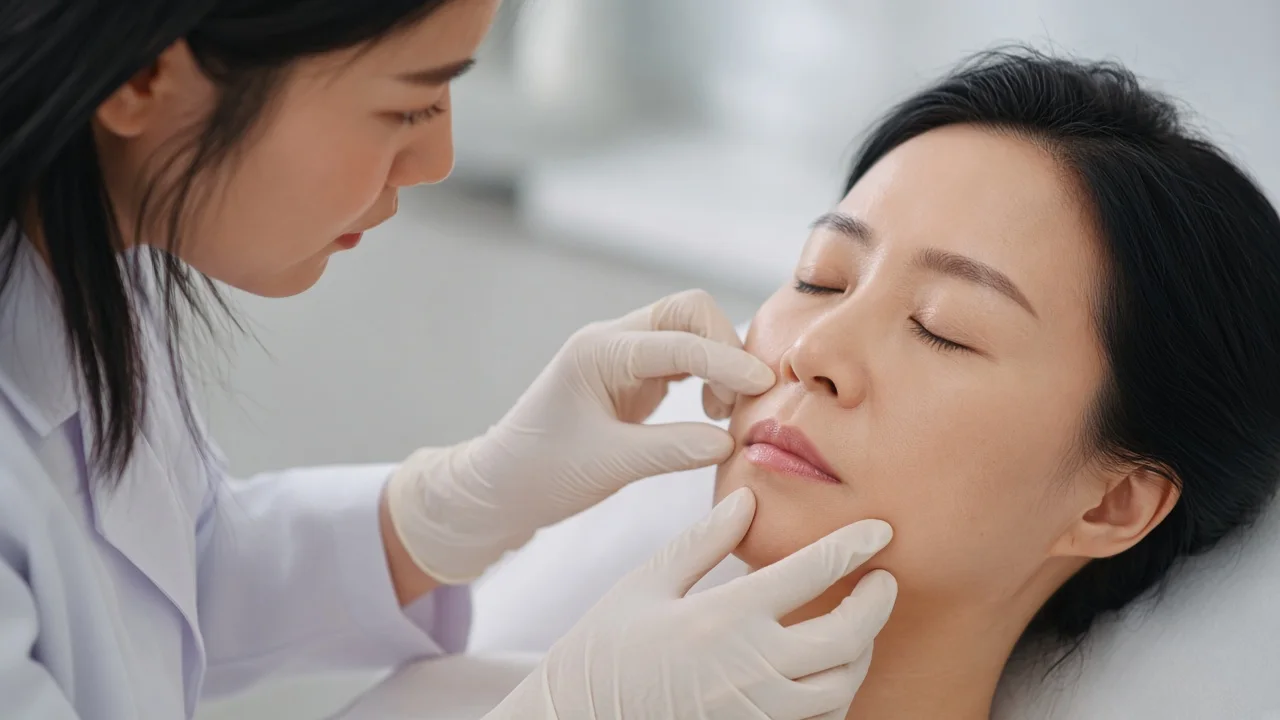
During the visit, the doctor usually asks how long the mouth corners have been bothering you, whether one or both sides are affected, whether it keeps coming back, whether you lick the corners or breathe through your mouth, whether you wear dentures or braces, which lip balms, toothpastes or skincare you have changed recently, and whether you have blood sugar, nutrition or other chronic conditions.
The doctor then looks at the mouth corners, the surrounding skin and the lips, and if needed checks the inside of the mouth for white patches or other changes, using magnification when helpful.
If infection is suspected, the doctor may take a swab or scraping for fungal microscopy or a bacterial culture; if allergy is suspected, patch testing may be arranged; if it recurs or may be related to general health, blood tests may be suggested. A one-sided crack that does not heal will also be assessed for whether further tests are needed. Whether these are needed is decided by the doctor based on your situation.
How is angular cheilitis managed? Do you need medicine?
Management focuses on finding the triggers, reducing dampness and protecting the damaged skin, and should be decided after a doctor’s in-person assessment. Common approaches include:
- Protection and moisturizing: as the doctor advises, use a gentle, non-irritating ointment-type protectant to form a barrier at the corners and reduce wetting and friction.
- Addressing triggers: adjust habits such as licking the corners or mouth breathing, and ask a dentist to check whether dentures or braces need adjusting.
- Topical antifungal medicine: if the doctor judges that a fungal infection is present, a topical antifungal may be prescribed and used as directed.
- Topical antibacterial medicine: if a bacterial infection is also present, the doctor may consider a topical antibacterial.
- Short-term anti-inflammatory topical medicine: when inflammation is marked, the doctor may consider a short course of a topical anti-inflammatory; long-term self-application is not recommended.
- Reviewing general health: if it keeps coming back, the doctor may discuss whether nutrition, blood sugar or other chronic conditions need follow-up.
Angular cheilitis often returns because the triggers have not improved, so applying medicine without dealing with dampness and habits often has limited effect. Whether to use medicine, which type and for how long should follow the doctor’s instructions, and mixing different creams on your own is not recommended.
What can you do at home? 8 care tips for angular cheilitis
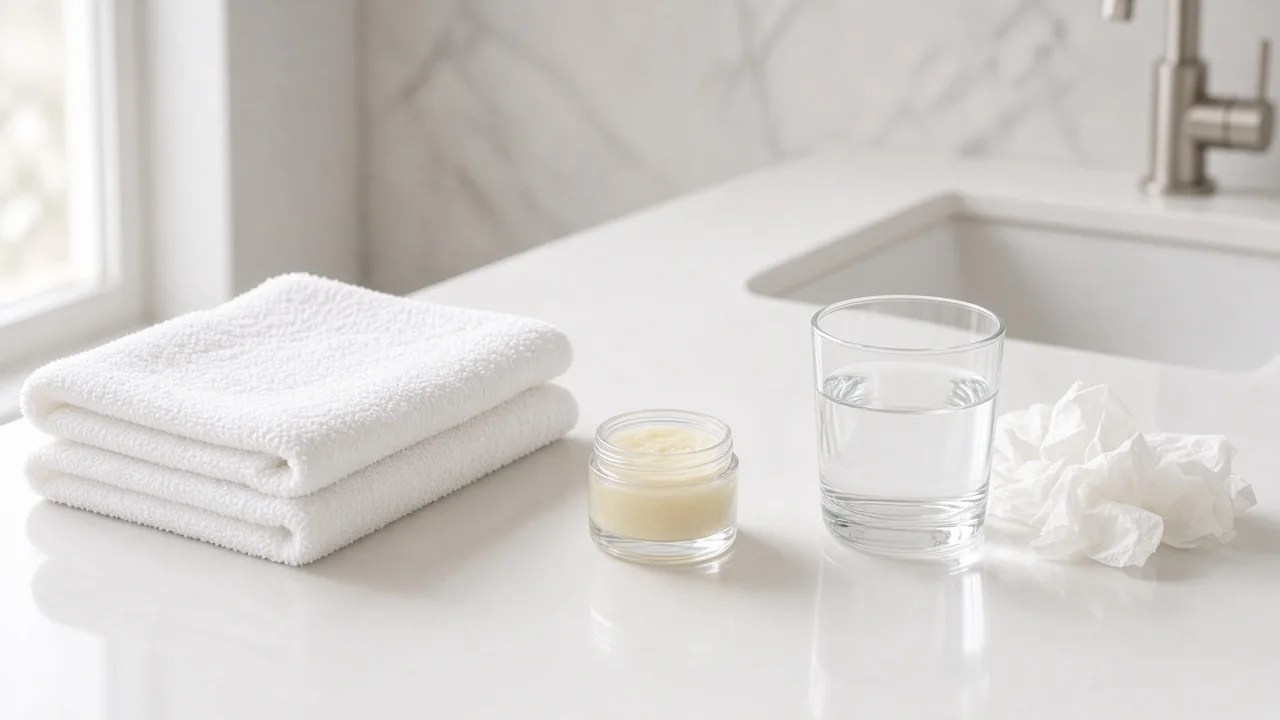
These habits help keep the mouth corners dry and less irritated and can be adjusted to your situation; if symptoms are marked or keep returning, see a doctor first to confirm.
- Do not lick the corners: wetting feels better briefly, but once the saliva dries the skin becomes drier and cracks more easily.
- Pat dry after eating: gently pat the corners with clean, soft tissue or a towel to keep them dry; do not rub hard.
- Protect before sleep: as the doctor advises, apply a gentle protective product to clean mouth corners before bed to reduce wetting from saliva overnight.
- Choose gentle lip and mouth products: avoid strongly fragranced or minty lip balms, toothpastes and mouthwashes, or any that make you sting.
- Do not pick at crusts or the corners: picking makes them crack and become infected again and may leave dark marks.
- Keep dentures and braces clean: clean and adjust them as the dentist advises, and take them out and store them properly at night as directed.
- Do not share personal items: use separate cups, utensils, lip products and towels to reduce cross-spread of microbes.
- Eat a balanced diet and keep regular sleep: a varied diet and enough sleep support overall skin health; talk with your doctor about whether supplements are needed.
If your skin barrier is naturally weak and prone to dryness and itch, see care points for atopic dermatitis and causes and care of dry, itchy skin for everyday moisturizing.
Common myths about angular cheilitis
Myth 1: Cracked mouth corners mean a vitamin deficiency, so supplements will fix it?
Not necessarily. Nutrition may be one factor, but saliva wetting, creases at the corners, dentures or braces, infection and skin allergy are all common. Taking supplements on your own for a long time without fixing the triggers may delay finding the real cause; whether supplements are needed should be judged by a doctor.
Myth 2: If the corners are dry, licking them moisturizes them?
Licking only moistens briefly; as the saliva evaporates it takes moisture with it and leaves the corners more easily wet and fragile, which is one common trigger for repeated angular cheilitis.
Myth 3: Small blisters at the mouth corner are also angular cheilitis?
Not necessarily. Angular cheilitis is mostly cracks and moist breakdown. Clusters of small blisters at the corner or lip border may be cold sores caused by a herpes virus, which are managed differently; see cold sores: when they spread and warning signs and have a doctor confirm in person.
When should you see a doctor?
When cracked, swollen mouth corners go beyond a minor dry split, it is best to have a dermatologist confirm the cause first. Please also see a doctor promptly or return for follow-up if:
- It keeps coming back, or does not improve after a period of home care.
- Only one side is affected and it does not heal, or the edge becomes firm or irregular.
- The splits develop yellow crusts, marked redness and swelling, oozing or increasing pain.
- There are white patches or burning inside the mouth, or swallowing feels uncomfortable.
- It comes with thirst, tiredness, weight change or other general symptoms.
- You suspect a new lip balm, toothpaste or skincare product; see contact dermatitis: causes and care and ask a doctor to assess.
Mouth corners are often affected together with seborrheic dermatitis or dry-skin problems; see also seborrheic dermatitis: symptoms and care. To find out why your mouth corners are red and cracked, visit Ruian Clinic Dermatology for an in-person assessment, and read more skin topics in the health library.
Health Education References
- DermNet: Angular cheilitis
- U.S. National Center for Biotechnology Information, StatPearls: Angular Cheilitis
- Primary Care Dermatology Society (PCDS, UK): Angular cheilitis
Angular cheilitis itself is usually not regarded as something that passes directly from person to person, but if a fungal or bacterial infection is involved, sharing utensils, cups or lip products may increase the chance of spreading microbes. Keep personal items separate and let a doctor judge whether infection is involved.
Not necessarily. Nutrition may be one factor, but saliva wetting, creases at the corners, dentures or braces, infection and dry or allergic skin are all common. Whether blood tests or nutritional support are needed should be decided by a doctor based on your situation.
A common reason is that the triggers have not improved, such as licking the corners, mouth breathing, poorly fitting dentures or braces, creases that trap moisture, or dry or allergic skin. Using medicine without addressing the triggers makes recurrence likely, so ask a doctor to help find the cause.
Angular cheilitis is mostly redness, cracks and moist breakdown at the mouth corners. Cold sores usually start with tingling or burning, then clusters of small blisters appear and crust over, usually at the lip border or around the mouth. They can look alike at times and are hard to tell apart from photos, so a doctor should examine you in person.
For mild dry cracks you can start with moisturizing and protection and avoid licking the corners. But long-term use of creams of unknown content may delay diagnosis and irritate the skin; if it keeps coming back or does not heal, see a doctor, who should decide whether to use medicine and which type.
If there is no improvement after a period of home care, or it keeps recurring, stays on one side without healing, develops yellow crusts and oozing, or there are white patches inside the mouth, have a dermatologist assess it promptly, with further tests if needed.
Doctor’s note: mouth corners that keep cracking—find the cause before deciding how to manage them
Cracked, red, peeling mouth corners may be angular cheilitis, but they may also be cold sores, contact dermatitis, seborrheic dermatitis or another problem that needs different management. At your visit, mention how long the corners have bothered you, whether it keeps coming back, whether you lick the corners or breathe through your mouth, whether you wear dentures or braces, which lip balms, toothpastes or skincare you have changed recently, and any chronic conditions, so the doctor can examine and assess. Please avoid long-term use of creams of unknown content or home remedies; whether tests or medicine are needed, which type and for how long should be decided by a doctor in person.
This article is health education about a medical condition. It is not a drug advertisement and does not recommend or sell any specific medicine. It cannot replace a doctor’s consultation; diagnosis, tests and treatment must be assessed in person by a doctor based on your individual situation.
Dermatology medical team

Dr. Tseng