

A round, flaky patch appears on a child’s scalp, the hair there thins and breaks easily, and on closer look there are tiny black dots; sometimes the scalp itches, or even becomes swollen and oozes pus. Many parents assume it is just dandruff or a dry scalp, but it may be tinea capitis (scalp ringworm)—an infection caused by skin fungi invading the scalp and hair. It is most common in preschool and school-age children, and is worth watching for in homes with cats or dogs, or when family members have fungal infections elsewhere.
Tinea capitis is contagious and can cause hair loss; if it is left too long or handled inappropriately, severe inflammation may leave scarring. It is easily confused with seborrheic dermatitis, psoriasis, alopecia areata or trichotillomania, so it is best checked in person by a dermatologist before deciding on treatment.
Key points: Tinea capitis is a fungal infection of the scalp and hair. Common signs include scaly bald patches, broken hairs that look like black dots and itching; in severe cases a swollen, pus-filled lump called a kerion can form. It is more common in children and can spread through close contact, shared combs, hats and pillows, or infected pets. Because the fungus lives inside hair follicles and hair shafts, treatment usually involves oral antifungal medicine after a doctor’s assessment, sometimes with an antifungal shampoo; creams alone are usually not enough. It looks similar to other scalp conditions, so please have a doctor assess it in person.
What is tinea capitis? Why does fungus grow on the scalp?
Tinea capitis is an infection of the scalp, hair follicles and hair shafts by dermatophytes (skin fungi that break down keratin). It belongs to the same group of fungal infections as athlete’s foot and body ringworm, but affects the head.
Once the fungus enters the follicle, it invades the hair and makes it brittle, so hairs break close to the scalp. That is why scaly patches with broken hair are so typical. In people with a stronger immune response, the scalp may develop a red, swollen, pus-filled soft lump.
Tinea capitis is most common in children and less common in adults, but it can still happen—for example, when caring for an infected child or pet, having a fungal infection elsewhere on the body, or having weaker immunity.
What are the symptoms and common types of tinea capitis?
Tinea capitis varies a lot: some cases are mild and look like dandruff, while others are clearly inflamed. Common types include:
Scaly type (grey patch)
One or more round, greyish, flaky areas appear on the scalp. The hair inside looks dull and breaks easily, as if it had been cut short, and there may be itching.
Black dot type
Hairs break right at the scalp surface, leaving small black dots. Scaling may be subtle, so it is easily mistaken for ordinary hair loss.
Kerion (inflammatory type)
A raised, soft, red, swollen and sometimes pus-filled lump develops on the scalp. It may be painful and can come with swollen lymph nodes in the neck or behind the ears, fever or feeling unwell. This is a strong inflammatory reaction to the fungus and needs prompt medical care to lower the risk of scarring hair loss.
How does tinea capitis spread, and who is more likely to get it?
Tinea capitis is contagious. Common routes of spread and risk factors include:
- Person-to-person contact: head-to-head contact with an infected person, often among family members or classmates at kindergarten or school.
- Shared items: combs, hair clips, hats, helmets, towels and pillowcases can carry fungal spores.
- Pets and animals: infected cats, dogs, rabbits and other pets can pass the fungus to people; sometimes the pet only has a small patch of hair loss or scaling.
- Children: it is more common in preschool and school-age children, possibly related to scalp oil characteristics and close contact during play.
- Fungal infections elsewhere: if you or family members have body ringworm or athlete’s foot, the chance of infection may be higher.
Fungal spores can survive on objects for some time, so after a diagnosis, talk with your doctor about whether other family members and pets should also be checked.
How is tinea capitis different from dandruff, seborrheic dermatitis and alopecia areata?
Tinea capitis is often mistaken for dandruff or other types of hair loss. The table below summarizes common differences for reference only and cannot replace an in-person examination; other scalp problems such as red, itchy patches or acne-like bumps are also best assessed by a doctor.
| Feature | Tinea capitis | Dandruff / seborrheic dermatitis | Alopecia areata | Trichotillomania |
|---|---|---|---|---|
| Who it affects | More common in children | More common in teens and adults | Any age | More common in children and teens |
| Scalp appearance | Scaling, redness; swelling and pus when severe | Oily or dry flakes, often widespread | Scalp usually smooth with little scaling | Usually no obvious inflammation |
| Hair changes | Broken hairs, black dots, bald patches | Usually no obvious bald patches | Well-defined round bald patches | Broken hairs of uneven length, irregular shape |
| Contagious | Yes | No | No | No |
| Approach | Confirm fungus, then a doctor decides on medicine | Cleansing and scalp care, assessed by a doctor | Treatment and follow-up assessed by a doctor | Identify pulling behaviour and stress, assessed by a doctor |
How do dermatologists test for tinea capitis?
During the visit, the doctor usually asks how long the symptoms have been present, whether the area is spreading, whether it itches or hurts, whether family members or pets have similar problems, and whether you have already used any shampoos or creams.
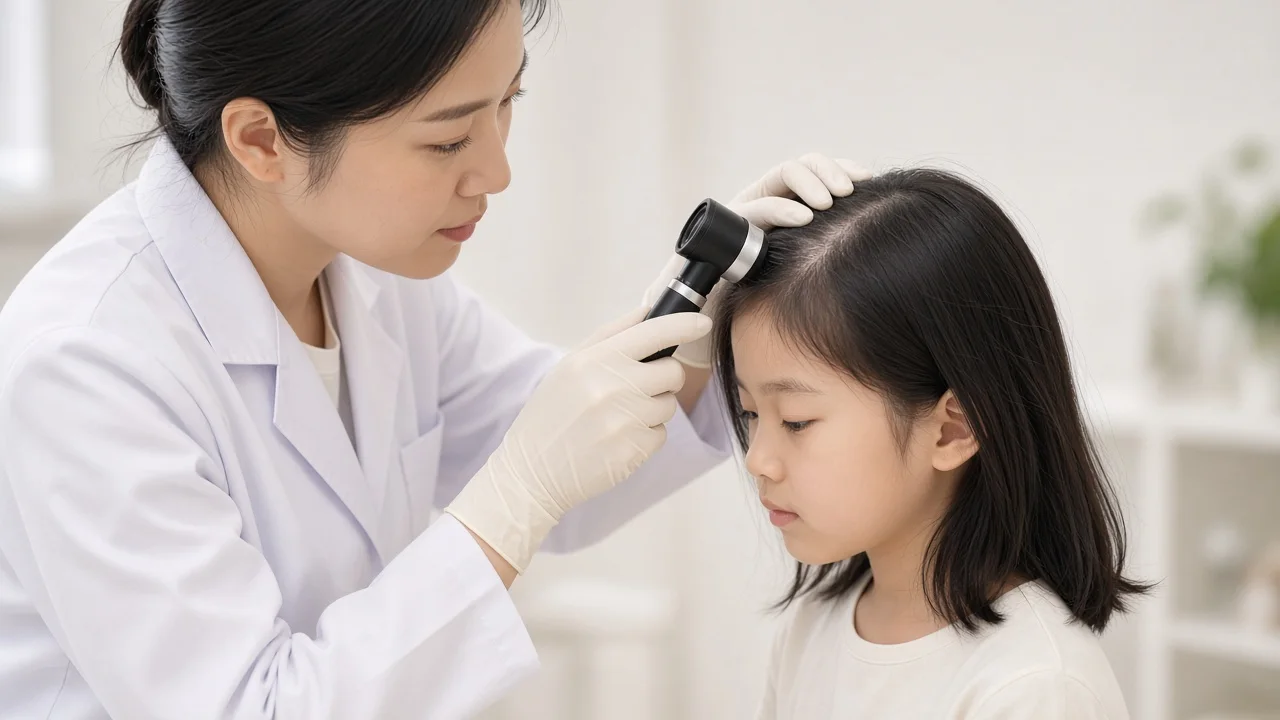
The doctor looks at the degree of scaling, hair breakage and inflammation, often using a dermatoscope to magnify the hair and follicles; in some cases a Wood’s lamp (a type of ultraviolet light) is used as well.
To confirm a fungal infection, the doctor may pluck a few hairs from the affected area or scrape some scale for microscopy, and send a fungal culture if needed to identify the species and guide treatment and follow-up. Antifungal products you have already applied may affect the results, so please mention them. Whether these tests are needed is decided by the doctor based on your situation.
How is tinea capitis treated? Do creams alone work?
The fungus in tinea capitis sits inside hair follicles and shafts, where creams do not easily reach, so treatment should be decided after a doctor’s in-person assessment. Common approaches include:
- Oral antifungal medicine: most cases need an oral antifungal medicine prescribed after a doctor’s assessment, taken for the period the doctor advises; stopping on your own as soon as symptoms improve is not recommended.
- Antifungal shampoo: the doctor may suggest an antifungal shampoo alongside treatment to reduce the spread of spores; whether other household members should use it too is the doctor’s call.
- Managing a kerion: when inflammation is marked, the doctor may consider anti-inflammatory medicine or treat any accompanying bacterial infection.
- Regular follow-up: during treatment, the doctor may arrange follow-up visits or repeat tests to check whether the fungus has cleared before deciding when to stop.
- Children and special groups: for children, pregnant people or those with other chronic conditions, medicine choices and follow-up need individual assessment by a doctor.
Hair usually grows back gradually once the infection is under control, but this takes time; a severely inflamed kerion may leave scarring hair loss in some people, which is why seeing a doctor early matters. Whether to use medicine, which type and for how long should follow the doctor’s instructions.
What can you do at home? 8 care and cleaning tips for tinea capitis
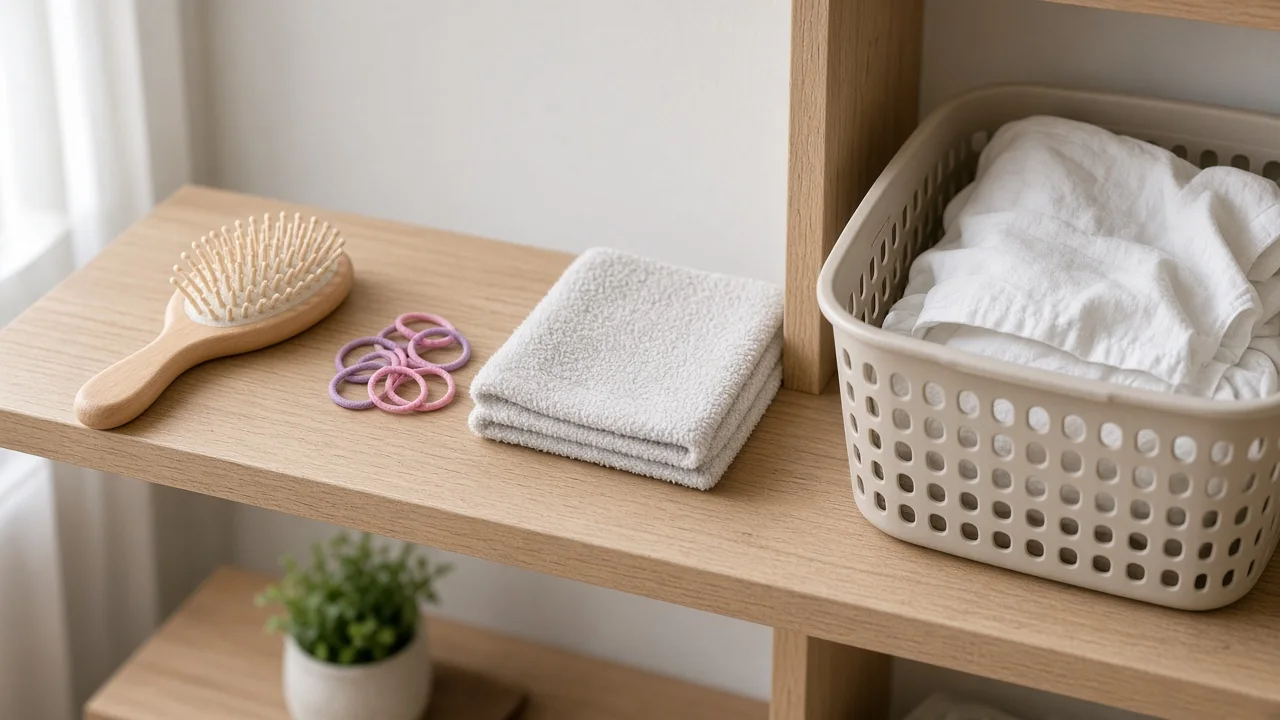
These habits can help reduce spread and recurrence alongside your doctor’s treatment plan; if you have not been diagnosed yet, see a doctor first to confirm.
- Keep combs and hair accessories personal: do not share combs, clips or hair ties, and wash them regularly.
- Keep hats, helmets and towels separate: avoid sharing with family or classmates, and wash or dry them after use.
- Change sheets and pillowcases often: wash them in hot water and dry them thoroughly in the sun or a dryer.
- Wash hair as the doctor advises: use the shampoo the doctor recommends and dry the hair and scalp thoroughly afterwards.
- Do not shave the head or squeeze pus: shaving does not replace treatment, and squeezing a kerion can worsen inflammation.
- Check your pets: if a pet has hair loss or scaling, take it to a vet to avoid repeated infection.
- Watch family members: if family members develop similar scaling on the scalp or round red patches on the body, they should be checked too.
- Take medicine and attend follow-ups on time: follow the course and follow-up schedule the doctor sets, and do not stop early on your own.
If you also have a fungal infection elsewhere, such as peeling, itchy skin between the toes, see how to recognize and care for athlete’s foot and treat both to reduce cross-infection.
Common myths about tinea capitis
Myth 1: A flaky scalp is just dandruff—switching shampoo will fix it?
Not necessarily. Early tinea capitis can look like dandruff, but if there is also hair breakage, a bald patch or black dots, see a doctor to confirm. Repeatedly switching shampoos may delay diagnosis.
Myth 2: Shaving the head will get rid of the fungus?
Shaving does not remove the fungus inside the follicles and cannot replace medical treatment. Follow your doctor’s advice on whether trimming the hair is needed.
Myth 3: A bald patch on the scalp must be alopecia areata?
Tinea capitis, alopecia areata and trichotillomania can all cause localized bald patches, but their causes and management differ. Alopecia areata needs a doctor’s examination to tell apart; if you suspect repeated hair pulling, see causes of trichotillomania and when to seek care.
When should you see a doctor?
When scaling on the scalp comes with hair loss or broken hair, it is best to have a dermatologist confirm the diagnosis first. Please also see a doctor promptly or return for follow-up if:
- A red, swollen, soft, raised, pus-filled or painful lump appears on the scalp.
- There is fever, or swollen lymph nodes in the neck or behind the ears.
- The bald patch keeps growing, or several bald patches appear.
- Other children, family members or pets develop similar symptoms.
- Symptoms do not improve after a period of treatment, or come back after stopping.
- You develop a skin rash, stomach upset or other discomfort while taking medicine.
For other common causes of hair loss in children, see child hair loss causes and warning signs. To find out what is behind a flaky scalp and hair loss, visit Ruian Clinic Dermatology or the hair loss clinic for an in-person assessment, and read more related topics in the health library.
Health Education References
- American Academy of Dermatology (AAD): Ringworm: Diagnosis and treatment
- DermNet: Tinea capitis
- U.S. National Library of Medicine, MedlinePlus: Ringworm of the scalp
Yes. Tinea capitis can spread through head contact, shared combs, hats and pillows, or contact with infected pets. After a diagnosis, talk with your doctor about whether family members and pets should be checked or use an antifungal shampoo too.
In most cases, hair grows back gradually once the infection is under control, though it takes time. A severely inflamed kerion may leave scarring hair loss in some people, so early care and following the doctor’s treatment plan are important.
Usually not. The fungus sits inside hair follicles and shafts where creams do not easily reach, so most cases need an oral antifungal medicine after a doctor’s assessment, sometimes with an antifungal shampoo. The doctor should decide how and how long to use medicine.
Whether a child needs to stay home can be decided based on the doctor’s assessment and school rules. Starting treatment, not sharing personal items, and changing pillowcases and hats often all help reduce the chance of spreading it to classmates.
It is possible. An infected cat or dog may only have a small patch of hair loss or scaling. If a child or family member is diagnosed and a pet has similar signs, take the pet to a vet to avoid repeated infection.
Yes, though less often than children. Adults may be affected when caring for an infected child or pet, having a fungal infection elsewhere, or having weaker immunity. If scalp scaling comes with hair loss, have a doctor examine it in person.
Doctor’s note: flaky scalp and hair loss? Confirm whether it is tinea capitis first
A flaky patch, broken hair or a red, pus-filled area on the scalp may be tinea capitis, but it may also be seborrheic dermatitis, psoriasis, alopecia areata, trichotillomania or a bacterial infection, and each is managed differently. At your visit, mention when the symptoms started, how the area has changed, whether family members or pets have similar problems, and which shampoos or topical products you have used, so the doctor can examine and assess. Please avoid self-treating, shaving the head or using home remedies; whether tests or medicine are needed, which type and for how long should be decided by a doctor in person.
This article is health education about a medical condition. It is not a drug advertisement and does not recommend or sell any specific medicine. It cannot replace a doctor’s consultation; diagnosis, tests and treatment must be assessed in person by a doctor based on your individual situation.
Dermatology medical team

Dr. Tseng